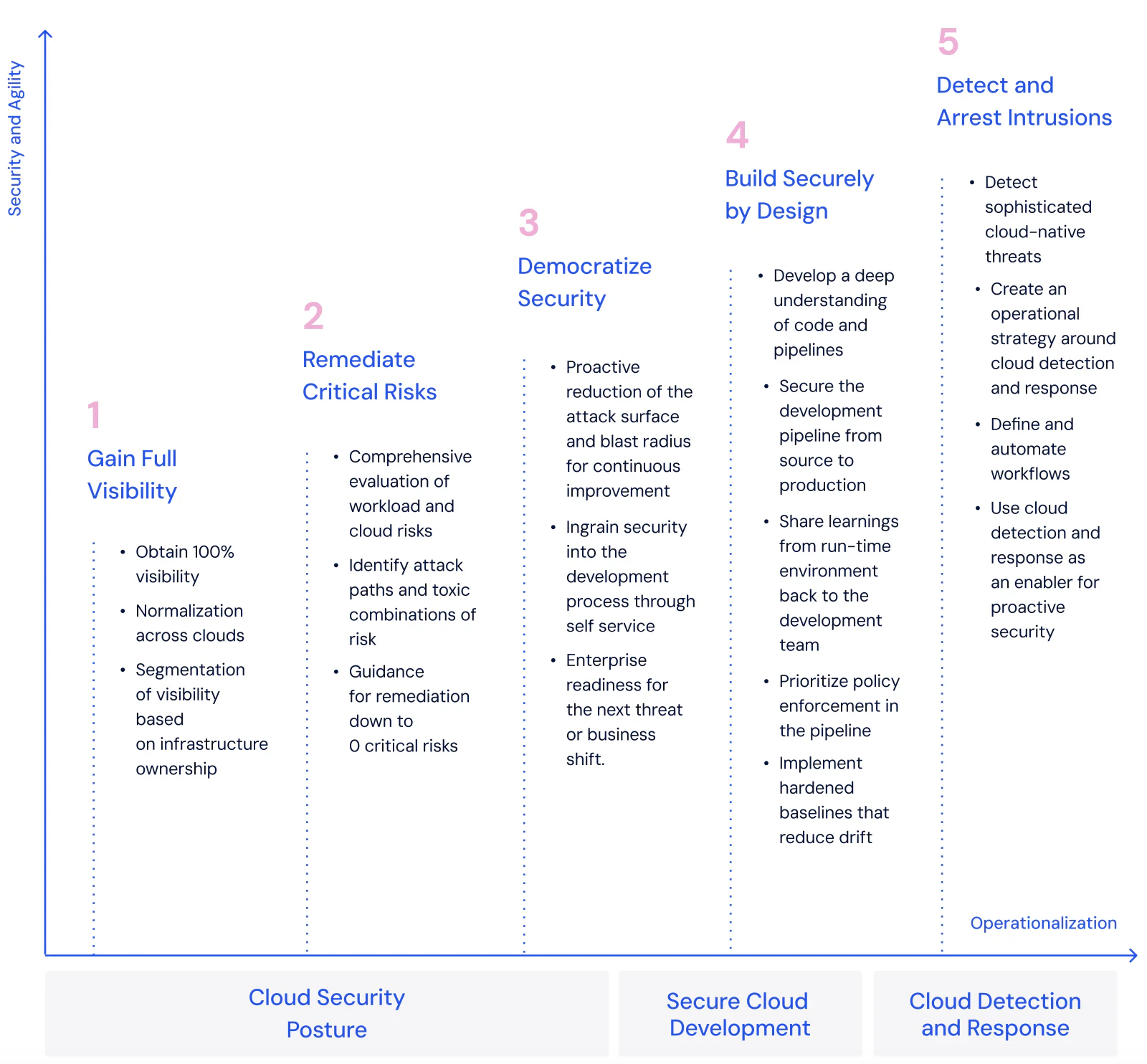
The evolving landscape of cloud security vulnerabilities in June 2026 reflects a critical juncture where automated threat detection, zero-trust architectures, and container-native protections intersect to address sophisticated multi-vector attacks. This comprehensive analysis outlines the twelve most significant milestones, technological developments, and regulatory shifts shaping cloud infrastructure security.
1. The Proliferation of Multi-Cloud Misconfiguration Vectors
As enterprises increasingly adopt distributed multi-cloud strategies spanning Amazon Web Services (AWS), Microsoft Azure, and Google Cloud Platform (GCP), misconfigurations remain the leading cause of initial access breaches. By June 2026, automated cloud posture management tools have evolved to detect complex identity and access management (IAM) cross-tenant trust anomalies in real time.
Security operations centers (SOCs) are no longer combating simple publicly exposed storage buckets. Instead, attackers exploit subtle policy evaluation order differences between cloud service providers (CSPs). For example, a privilege escalation path might exist where a role assumed in AWS grants unintended read-write access to secrets managed in an external vault. Addressing these vulnerabilities requires treating infrastructure-as-code (IaC) templates as core application code subjected to rigorous automated policy-as-code testing before deployment.
2. Shift-Left Security and Infrastructure-as-Code (IaC) Guardrails
The integration of security checks early in the software development lifecycle (SDLC) has matured from a recommended best practice into a mandatory engineering standard. In mid-2026, continuous compliance frameworks evaluate Terraform, OpenTofu, and Pulumi scripts against strict regulatory baselines before provisioning occurs.
Developers now utilize integrated development environment (IDE) plugins that highlight insecure resource definitions—such as overly permissive security group rules or unencrypted persistent disks—before code commits are finalized. This proactive posture drastically reduces the volume of critical vulnerabilities reaching production environments, shifting the burden of remediation from reactive incident responders to proactive software engineers.
3. Container Escape Techniques and Kernel-Level Isolation
Containerization underpins modern microservices architectures, but shared kernel vulnerabilities continue to present severe operational risks. In June 2026, security researchers have documented advanced container escape techniques leveraging unpatched Linux kernel flaws, allowing malicious actors to break out of isolated namespaces and compromise the underlying host node.
To counter these threats, organizations are aggressively adopting micro-virtualization and hardware-isolated execution environments such as Kata Containers and AWS Fargate. These technologies provide a dedicated guest kernel for individual workloads, ensuring that a successful exploit within a container boundary does not translate to full cluster compromise.
4. Serverless Architecture Vulnerabilities and Event-Driven Risks
Serverless computing models, including AWS Lambda and Google Cloud Functions, abstract away infrastructure management but introduce unique attack surfaces. Common vulnerabilities in 2026 include injection flaws within event payloads, insecure deserialization, and excessive function execution permissions.
Because serverless functions frequently interact with third-party application programming interfaces (APIs) and databases, compromised execution roles can expose downstream data repositories. Mitigating serverless vulnerabilities demands granular least-privilege scoping for every individual function, alongside runtime application self-protection (RASP) tools capable of intercepting malicious payloads mid-execution.
5. Software Supply Chain Security and SBOM Adoption
The software supply chain has experienced some of the most disruptive cloud security incidents in recent history. By June 2026, Software Bill of Materials (SBOM) generation and verification are universally mandated for software deployed in federal and enterprise cloud environments.
Vulnerabilities originating from open-source libraries, compromised base container images, and malicious package registry injections are mitigated through automated dependency graphs and cryptographic signing mechanisms like Sigstore. When a zero-day vulnerability is discovered in a widely used logging library or cryptographic utility, security teams can instantly query their artifact repositories to identify exact affected instances across thousands of microservices.
6. API Security and Unauthorized Data Exfiltration
APIs represent the primary communication fabric of cloud-native applications, making them a prime target for automated enumeration and credential-stuffing attacks. In 2026, the OWASP API Security Top Ten serves as a baseline for web application firewalls (WAFs) and API gateways.
Vulnerabilities such as Broken Object Level Authorization (BOLA) and excessive data exposure frequently lead to silent data exfiltration. Modern API security solutions deploy behavioral machine learning to establish baseline interaction patterns, instantly throttling or blocking clients that attempt to scrape unauthorized records or execute parameter tampering maneuvers.
7. Artificial Intelligence and Machine Learning (AI/ML) Pipeline Vulnerabilities
The rapid integration of generative AI models into cloud environments has introduced an entirely new category of security vulnerabilities. In June 2026, organizations face severe risks stemming from prompt injection attacks, training data poisoning, and unauthorized model extraction.
Cloud-hosted large language models (LLMs) connected to enterprise internal databases via retrieval-augmented generation (RAG) pipelines can inadvertently leak sensitive corporate data if proper input sanitization and output filtering are absent. Securing AI workloads requires specialized guardrails that inspect both the prompt and the generated response for malicious intent and confidential information before rendering outputs to end users.
8. Identity Threat Detection and Response (ITDR)
With the traditional corporate perimeter dissolved, identity has become the ultimate security boundary. In 2026, Identity Threat Detection and Response (ITDR) platforms have emerged as a critical pillar of enterprise security stacks, detecting anomalous user behaviors, session hijacking, and impossible travel scenarios.
Attackers increasingly bypass perimeter defenses by purchasing stolen session cookies or leveraging compromised service principal credentials. ITDR systems continuously monitor API call velocities, unusual administrative actions, and unauthorized permission grants, executing automated revocation workflows the moment malicious intent is inferred.
9. Regulatory Compliance and Automated Audit Frameworks
Regulatory compliance landscapes have grown increasingly stringent, with frameworks such as the European Union’s Cyber Resilience Act and updated global data privacy mandates enforcing strict accountability for cloud security postures. By June 2026, manual compliance audits have been largely superseded by continuous, automated compliance-as-code platforms.
These platforms map cloud resource configurations directly to regulatory controls, generating real-time audit logs and automated evidence collection. This continuous verification model ensures that organizations maintain compliance posture without enduring disruptive, periodic manual reviews.
10. Runtime Cloud Workload Protection Platforms (CWPP)
While preventative controls block a vast majority of threats, runtime visibility remains non-negotiable. Cloud Workload Protection Platforms (CWPPs) deployed across Kubernetes clusters and virtual machines provide deep-packet inspection, file integrity monitoring, and process execution telemetry.
In June 2026, eBPF (Extended Berkeley Packet Filter) technology is universally leveraged by CWPP agents to capture kernel-level telemetry with minimal performance overhead. This allows security analysts to trace sophisticated fileless malware attacks and memory-injection techniques that evade traditional signature-based disk scanners.
11. Cryptographic Agility and Post-Quantum Preparedness
The looming threat of quantum computing has elevated cryptographic security to an urgent operational priority. By June 2026, enterprises are actively auditing their cloud cryptographic assets to transition toward post-quantum cryptography (PQC) standards finalized by organizations like NIST.
Vulnerabilities related to weak cipher suites, hardcoded cryptographic keys, and improper certificate lifecycle management are systematically cataloged and remediated. Achieving cryptographic agility ensures that encrypted data stored in cloud repositories cannot be harvested today by threat actors for retroactive decryption once quantum hardware matures.
12. Incident Response Automation and SOAR Integration
When a cloud security vulnerability is successfully weaponized, response time dictates the ultimate blast radius. In 2026, Security Orchestration, Automation, and Response (SOAR) platforms integrated deeply with cloud APIs allow security teams to execute containment playbooks in milliseconds rather than hours.
Upon detecting a compromised instance or an unauthorized IAM role assumption, automated workflows can instantly isolate the virtual machine, revoke session tokens, preserve forensic snapshots, and notify on-call personnel. This automated triage minimizes human error during high-stress incident response scenarios.
Comparison of Cloud Security Vulnerability Vectors
| Vulnerability Vector | Primary Target | Associated Risk | Primary Mitigation Strategy |
|---|---|---|---|
| Multi-Cloud Misconfigurations | Identity & Storage | Unauthorized data access | Infrastructure-as-Code (IaC) guardrails |
| Container Escapes | Host Kernels | Full cluster compromise | Micro-virtualization & Kata Containers |
| Serverless Exploits | Function Runtimes | Downstream database breaches | Least-privilege IAM scoping & RASP |
| API Insecurities | Endpoints & Gateways | Mass data exfiltration | Behavioral ML gateways & BOLA checks |
| AI/ML Pipeline Flaws | LLMs & RAG Pipelines | Prompt injection & data leaks | Input sanitization & output guardrails |
Frequently Asked Questions
What are the most common cloud security vulnerabilities in 2026?
The most prevalent vulnerabilities include multi-cloud identity misconfigurations, insecure API endpoints lacking proper authorization, shared kernel container vulnerabilities, and unmanaged open-source dependencies within the software supply chain. Automated posture management tools are essential for identifying and remediating these issues before exploitation occurs.
How does eBPF improve cloud workload security?
Extended Berkeley Packet Filter (eBPF) technology allows security agents to safely execute sandboxed programs within the Linux kernel without modifying kernel source code. This enables real-time monitoring of system calls, network packets, and process executions with minimal performance overhead, providing deep visibility into advanced runtime threats.
What is the role of SBOMs in cloud security vulnerability management?
A Software Bill of Materials (SBOM) provides a comprehensive, structured inventory of all components, libraries, and dependencies included in a software application. When a zero-day vulnerability is announced, security teams utilize SBOMs to instantly determine whether affected packages exist anywhere within their cloud artifact repositories.
Why are AI and machine learning pipelines considered a cloud security risk?
AI pipelines introduce unique vulnerabilities such as prompt injection, data poisoning, and unauthorized model extraction. When generative AI models are connected to enterprise cloud databases via retrieval-augmented generation, inadequate access controls can result in the accidental exposure of confidential corporate information.
How can organizations prepare for post-quantum cryptography in the cloud?
Organizations achieve post-quantum preparedness by conducting comprehensive inventories of all cryptographic assets, transitioning away from legacy algorithms, and implementing cryptographic agility frameworks. This ensures that cloud-stored data encrypted today remains secure against future quantum decryption capabilities.
Recommended Next Actions
To safeguard your organization against emerging cloud security vulnerabilities, prioritize the implementation of automated Infrastructure-as-Code (IaC) scanning, enforce strict identity-based least-privilege policies, and deploy runtime eBPF-based Cloud Workload Protection Platforms. Continuously audit your software supply chain using verified SBOMs and establish automated incident response playbooks to minimize dwell time during security events.