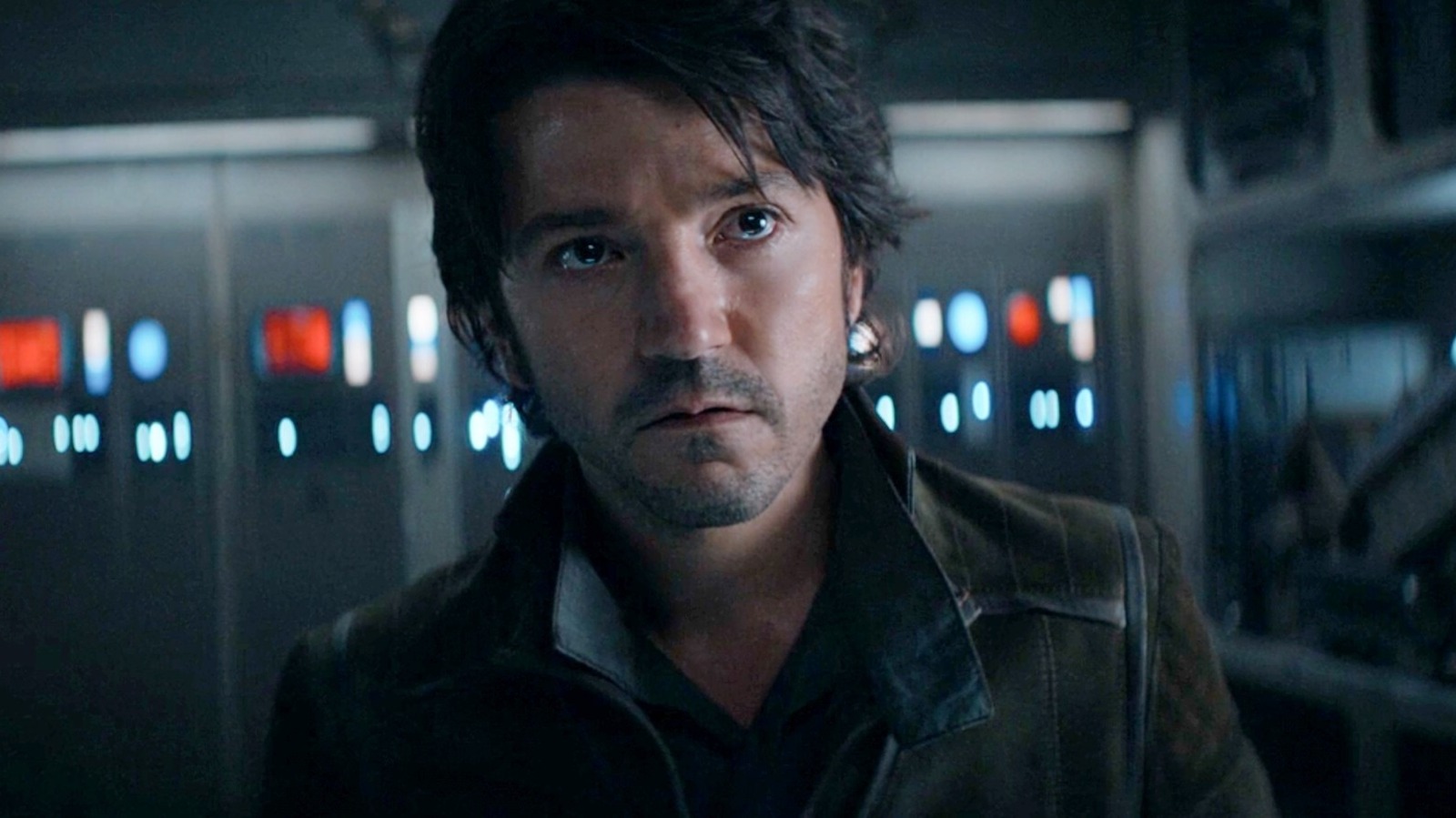
The full list of writer credits for the second and final season of Andor confirms that showrunner Tony Gilroy has reunited his core creative brain trust to conclude the series. The 12-episode season is divided into four distinct three-episode blocks, with writing duties handled by Tony Gilroy, Beau Willimon, Dan Gilroy, and series newcomer Tom Bissell.
As we move through 2026, looking back at the monumental conclusion of the Andor saga, the architectural precision of the writing room remains the series' defining characteristic. Unlike many contemporary streaming series that utilize a revolving door of writers and directors, Andor Season 2 maintained a rigid, arc-based structure. This approach allowed the creative team to navigate a narrative that spans four years of in-universe time, bridging the gap between the uprising on Ferrix and the fateful mission to Scarif seen in Rogue One: A Star Wars Story.
The reveal of these credits early in the production cycle signaled a commitment to the "prestige television" format that made the first season a critical darling. By assigning specific three-episode blocks to individual writers, Tony Gilroy ensured that each "year" of Cassian Andor’s life had a distinct thematic voice while remaining tethered to the overarching series bible.
The Architecture of Season Two: Four Years, Four Writers
The structural ambition of Andor Season 2 is perhaps its most discussed technical feat. While Season 1 covered roughly one year of Cassian’s life over 12 episodes, Season 2 covers the subsequent four years. This necessitated a "leap-frog" narrative style where every three episodes constitute a self-contained story arc representing one calendar year in the Star Wars timeline.
The writer credits align perfectly with this structure:
- Episodes 1–3 (Year One): Written by Tony Gilroy
- Episodes 4–6 (Year Two): Written by Beau Willimon
- Episodes 7–9 (Year Three): Written by Dan Gilroy
- Episodes 10–12 (Year Four): Written by Tom Bissell
This distribution of labor reflects a "novelistic" approach to television. Each writer was tasked with not only advancing the plot but also depicting the evolution of the Rebel Alliance from a collection of fractured cells into the organized military force seen in the original trilogy.
Tony Gilroy: The Architect of the Beginning and the End
Tony Gilroy, the Academy Award-nominated filmmaker behind Michael Clayton and the Bourne franchise, serves as the primary architect. By taking the lead on the first three episodes, Gilroy established the tone for the "new" Cassian—a man no longer running from the Empire, but actively seeking his place within the burgeoning rebellion.
Gilroy’s writing is characterized by a "no-nonsense" approach to the Star Wars galaxy. He famously instructed his team to "forget they were writing Star Wars" and instead focus on a gritty political thriller. His return to the script for the opening block ensured that the transition from Season 1 was seamless, maintaining the grounded, procedural feel of the Coruscant political scenes and the blue-collar struggle of the outer rim.
Beau Willimon: The Architect of Political Tension
Beau Willimon, best known for creating the American version of House of Cards, returned for the second block (Episodes 4-6). In Season 1, Willimon was responsible for the acclaimed Narkina 5 prison arc, which many critics cited as some of the best writing in the history of the franchise.
In Season 2, Willimon’s episodes focus on the second year of the narrative. His expertise in depicting the rot within political institutions and the psychological toll of power makes him the ideal choice for this middle chapter. As the Rebellion begins to codify its rules and the Empire tightens its grip through the Imperial Security Bureau (ISB), Willimon’s scripts delve into the moral compromises required to sustain a revolution.
Dan Gilroy: The Master of High-Stakes Operations
Dan Gilroy, writer and director of Nightcrawler, handled the third block (Episodes 7-9). Dan Gilroy’s contribution to Season 1 included the Aldhani heist arc, which showcased his ability to build excruciating tension through logistical preparation and character friction.
For Season 2, his episodes cover the third year. This period in the timeline is marked by increased Imperial surveillance and the transition of the Rebellion into more aggressive, large-scale operations. Dan Gilroy’s writing often focuses on the "process" of the work—how things are stolen, how messages are intercepted, and the cold reality of casualty rates.
Tom Bissell: The New Perspective
The most notable addition to the Season 2 writing staff is Tom Bissell. Bissell is a prolific author, critic, and screenwriter known for his work in both literature and high-end video game narratives (including Gears of War and Uncharted). He also co-authored The Disaster Artist.
Bissell was brought in to write the final three episodes (10-12), which cover the fourth year and lead directly into the opening minutes of Rogue One. His inclusion was seen as a way to inject a fresh perspective into the final act. Bissell’s background in non-fiction and character-driven gaming narratives provided a unique toolkit for handling the intense, action-oriented requirements of a finale that must bridge the gap to a major motion picture.
Comparative Breakdown of Writer Credits and Narrative Arcs
| Episode Block | Year in Timeline | Primary Writer | Narrative Theme | Key Focus |
|---|---|---|---|---|
| 1 - 3 | Year 1 | Tony Gilroy | Consequences | The fallout of Ferrix and the recruitment of new cells. |
| 4 - 6 | Year 2 | Beau Willimon | Consolidation | The political cost of uniting disparate rebel factions. |
| 7 - 9 | Year 3 | Dan Gilroy | Escalation | High-stakes Imperial sabotage and ISB counter-intelligence. |
| 10 - 12 | Year 4 | Tom Bissell | Convergence | The final transition to the events of Rogue One. |
The Impact of the Writing Team on Star Wars Lore
The revelation of these writer credits was more than just an industry update; it was a promise of thematic consistency. Unlike other Star Wars projects that have occasionally suffered from "creative differences" resulting in mid-production shifts, Andor has remained remarkably stable. This stability is largely due to the "Gilroy Circle"—a group of writers who share a common cinematic language rooted in 1970s conspiracy thrillers rather than space opera tropes.
Moving Beyond the "Easter Egg" Culture
The writing team's biggest contribution to the franchise has been the de-emphasis of "Easter eggs" in favor of character depth. While Season 2 does introduce more familiar elements—such as the appearance of K-2SO and the burgeoning presence of the Death Star—the writers have treated these elements as functional plot points rather than mere fan service.
For example, the introduction of K-2SO, voiced by Alan Tudyk, was handled within Tom Bissell's final arc. Rather than a "meet-cute" moment common in blockbuster films, the writers approached the droid's arrival as a logistical necessity for the Rebellion's intelligence-gathering efforts. This grounded approach is why Andor has maintained its standing as the most "adult" entry in the Star Wars canon through 2026.
The Role of Mon Mothma and Coruscant
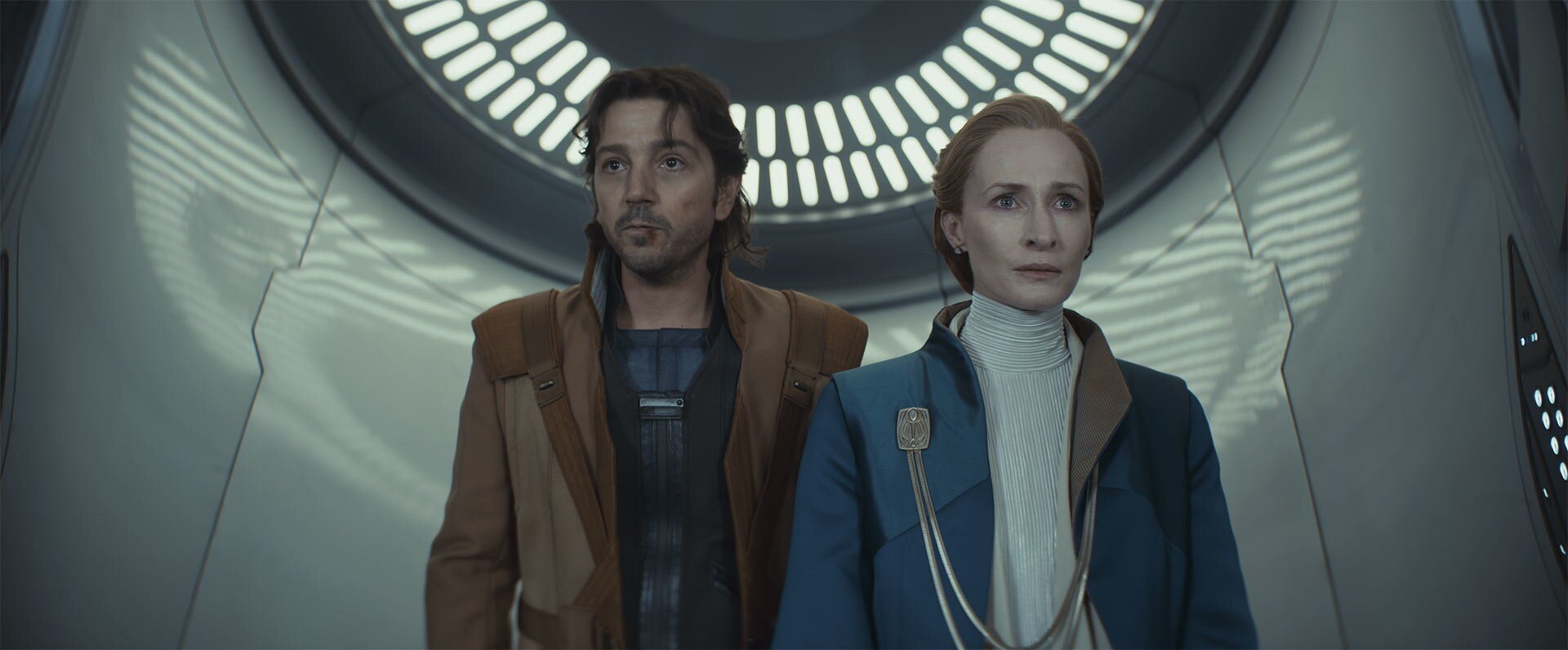
While the show is titled Andor, the writing credits reveal that equal weight was given to the Coruscant storyline. Beau Willimon and Tony Gilroy, in particular, spent significant time developing the tragic arc of Mon Mothma (Genevieve O'Reilly). The scripts meticulously detail the dismantling of her personal life as she funnels funds into the Rebellion—a slow-burn tragedy that contrasts sharply with the kinetic action of Cassian’s journey.
The complexity of the Coruscant scenes required writers who understood parliamentary procedure and the nuances of high-stakes diplomacy. By hiring writers with backgrounds in political drama (House of Cards) and corporate thrillers (Michael Clayton), Lucasfilm ensured that the "boring" parts of the Star Wars universe became its most compelling.
Technical Depth: The Writing Process for a Time-Jump Narrative
Writing a 12-episode season that covers four years is a daunting technical challenge. The writers had to ensure that characters evolved off-screen in believable ways. When a new three-episode block begins, the audience must immediately understand how the political landscape has shifted during the one-year gap.
The "Year-Start" Technique
The writers utilized a "Year-Start" technique where the first episode of each block (Episodes 1, 4, 7, and 10) functions as a mini-pilot. These episodes are heavy on exposition, but delivered through "active" dialogue—characters arguing over resources or reacting to Imperial decrees. This allows the audience to catch up on the missed time without the need for clunky title cards or narrators.
The Evolution of Cassian Andor
Cassian’s dialogue reflects his growth. In Tony Gilroy’s opening episodes, Cassian is still somewhat reactive. By the time we reach Tom Bissell’s final arc, Cassian’s voice has transformed into the hardened, pragmatic officer we meet in Rogue One. This subtle shift in cadence and decision-making is a testament to the coordination between the four writers, who had to ensure they were all writing the "same" character at different stages of his radicalization.
Production Timeline and Context (2024-2026)
The development of these scripts faced significant hurdles, most notably the 2023 WGA strike. Production on Season 2 was halted, but because the scripts were largely completed before the strike, the creative integrity of the "Gilroy vision" remained intact.
Once production resumed, the focus shifted to the massive practical sets at Pinewood Studios and locations across the UK and Spain. The writers were frequently on set (where allowed by union rules) to handle the minor adjustments required by the complex logistics of the shoot. This level of writer involvement is rare in large-scale franchise filmmaking but is a staple of the "Gilroy way."
For more details on the production history, official updates can be found on StarWars.com and through trade reports on The Hollywood Reporter.
FAQ: Understanding the Andor Season 2 Creative Team
Who wrote the final episode of Andor Season 2?
The final episode, which serves as the direct lead-in to Rogue One, was written by Tom Bissell. As part of the final three-episode block, Bissell was responsible for weaving the various plot threads—Cassian’s radicalization, Mon Mothma’s escape from Coruscant, and the rise of the ISB—into a cohesive conclusion that matches the tone of the 2016 film.
Did Tony Gilroy write every episode?
No. While Tony Gilroy is the showrunner and "creator," he only has primary writing credits on the first three episodes of Season 2. However, as showrunner, he oversaw the entire writing process, performed final passes on all scripts to ensure tonal consistency, and set the "series bible" that the other writers followed.
Why were there only four writers for 12 episodes?
The decision to use a small, tight-knit group of writers was intentional. Tony Gilroy prefers a "film-like" approach where a single voice controls a significant block of the story. This prevents the "episodic" feel common in television and allows for deeper thematic exploration over a three-hour narrative arc.
Is Beau Willimon returning to the show?
Yes, Beau Willimon returned to write Episodes 4, 5, and 6 of Season 2. Following his success with the "One Way Out" Narkina 5 arc in Season 1, his return was highly anticipated by fans and critics alike. His episodes in Season 2 continue to explore the themes of systemic oppression and the logistical challenges of building a resistance.
How does the writing in Season 2 differ from Season 1?
The primary difference is the temporal scope. Season 1 was a linear story covering a few months. Season 2 is a "ticking clock" narrative covering four years. The writing in Season 2 is more condensed and urgent, as the writers had to select the most pivotal moments from each year to showcase, rather than following a day-by-day progression.
Final Recommendations for Viewers
To fully appreciate the work of the Andor Season 2 writing team, viewers should approach the season as four distinct "movies."
- Watch in Blocks: Instead of the traditional week-to-week viewing, consider watching the episodes in their three-episode arcs. This aligns with the writers' intentions and allows the thematic weight of each "year" to land more effectively.
- Revisit Rogue One: Before starting the final arc (Episodes 10-12) written by Tom Bissell, a re-watch of Rogue One is highly recommended. The writers have planted numerous subtle setups that pay off in the final hours of the series.
- Pay Attention to the ISB Scenes: The writing team has invested heavily in the "villains" of the story. The scenes involving Dedra Meero and the Imperial bureaucracy are some of the most meticulously written sequences in the series, offering a terrifying look at how fascism functions on a day-to-day basis.
The revelation of these writer credits confirmed what many suspected: Andor Season 2 was built to be a masterpiece of structural storytelling. By leaning on the talents of the Gilroys, Willimon, and Bissell, the series ensured its place as a landmark achievement in the Star Wars universe.