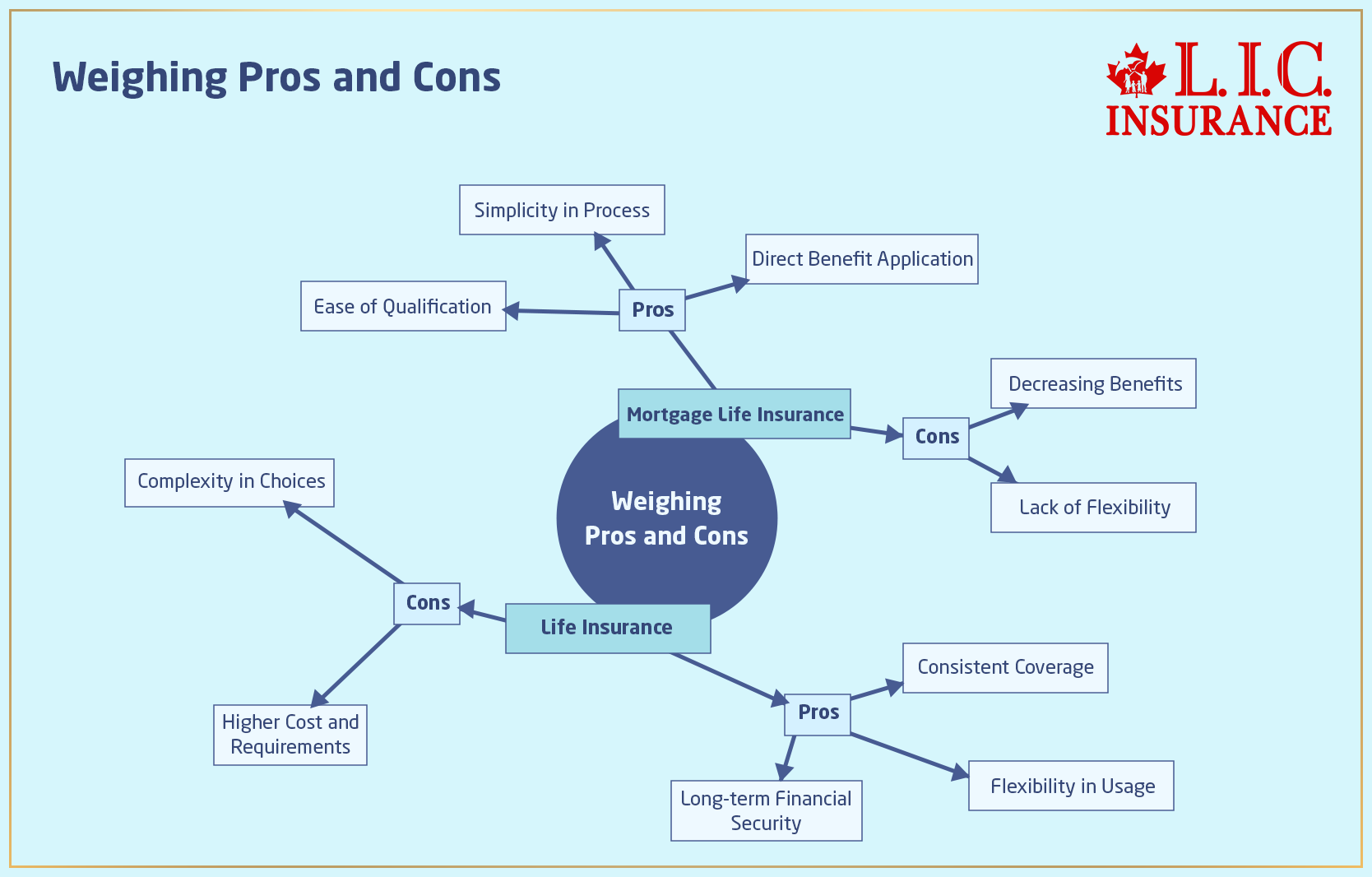
While both life insurance and mortgage protection are financial products designed to provide a death benefit that can settle debts or support survivors, they are fundamentally different in their structure, flexibility, and payout mechanisms. Mortgage protection insurance is a specialized, often declining-balance policy linked directly to a property loan, whereas traditional life insurance is a versatile contract that pays out a predetermined lump sum to beneficiaries, who may use the funds at their discretion.
Defining the Core Concepts
To understand the differences, one must first distinguish between a specialized debt-coverage product and a comprehensive financial safety net.
What is Mortgage Protection Insurance?
Mortgage protection insurance (MPI) is a form of term life insurance specifically designed to pay off your mortgage balance in the event of your death. In many cases, these policies are sold by mortgage lenders or independent insurance agencies at the time of closing. The hallmark of MPI is that the coverage amount typically decreases over time, mirroring the declining balance of your mortgage principal. If you pass away, the insurance company pays the lender directly, effectively clearing the debt so that your surviving family members are not burdened with monthly housing payments.
What is Traditional Life Insurance?
Traditional life insurance, such as term, whole, or universal life, is a contract between the policyholder and an insurer. The policyholder pays premiums in exchange for a guaranteed death benefit paid to named beneficiaries upon the insured’s passing. Unlike mortgage protection, traditional life insurance is not tied to a specific debt or asset. The beneficiaries receive a lump sum and are not restricted by how they use the funds; they can pay off the mortgage, cover funeral costs, pay for education, or supplement lost income.
Key Differences in Policy Structure and Flexibility
The primary divergence between these two products lies in who receives the money, how the benefit is calculated, and what happens if the mortgage is paid off or refinanced.
The Beneficiary and Payout Process
In a standard life insurance policy, the death benefit goes directly to the person or entity you designate as the beneficiary. This provides your family with liquid capital to make immediate decisions based on their needs at the time of your death.
With mortgage protection insurance, the beneficiary is often the lender. The payment is specifically intended to satisfy the mortgage debt. This removes the homeowner's family from the process of deciding how to prioritize expenses, but it also removes the freedom to use those funds for other emergency needs that might arise simultaneously with the death of a primary breadwinner.
The "Declining Balance" vs. "Fixed Benefit"
The most significant operational difference is the benefit schedule. Mortgage protection policies are often "decreasing term" insurance. As you pay down your mortgage principal over the years, the amount the insurance company would pay out decreases. While this keeps premiums relatively stable over the life of the policy, it also means that as you approach the end of your mortgage term, the death benefit may be minimal.
Conversely, a traditional term life insurance policy provides a fixed death benefit. If you purchase a $500,000 policy, your beneficiaries will receive $500,000 regardless of whether you have $400,000 left on your mortgage or only $50,000. This provides a "surplus" that can serve as an inheritance or emergency fund rather than just a debt-settlement tool.
Comparison of Coverage Types
| Feature | Mortgage Protection (MPI) | Traditional Life Insurance |
|---|---|---|
| Primary Purpose | Pay off mortgage balance | Financial security for beneficiaries |
| Payout Destination | Usually the lender | Named individuals/trusts |
| Benefit Amount | Decreases with mortgage balance | Remains fixed (or grows) |
| Flexibility | Limited to housing debt | High (use for any purpose) |
| Portability | May be tied to the specific loan | Remains with the individual |
| Requirement | Often simplified underwriting | Often requires medical exam/history |
Portability and Long-term Value
A common mistake homeowners make is assuming that mortgage protection will follow them if they move. Because MPI is frequently structured specifically for the duration and amount of a particular mortgage, it is often tied to that specific loan agreement. If you sell your home or refinance with a different lender, your MPI policy may become void or require a new application based on your current age and health, which could result in significantly higher premiums.
Traditional life insurance is "portable." Because it is not tied to an asset, the policy remains in effect as long as you pay the premiums, regardless of where you live or how much debt you carry. This makes traditional life insurance a more robust long-term asset, especially if you plan to move, downsize, or eventually pay off your home entirely.
Underwriting and Eligibility
Mortgage protection insurance is frequently marketed as having "simplified issue" underwriting. This means it may not require a comprehensive medical exam, relying instead on a series of health questions. While this makes the application process faster and more accessible for individuals with minor health concerns, it can also lead to higher premiums for the amount of coverage provided, as the insurer is taking on more risk without a full medical profile.
Traditional life insurance underwriting is generally more rigorous. Most policies require a medical examination and a thorough review of medical records. While this is more time-consuming, it typically results in lower premiums for healthy individuals compared to simplified-issue products. By going through the underwriting process, you are often able to secure a higher level of coverage for a lower monthly cost over the long term.
Practical Considerations for Homeowners
Before choosing between these options, evaluate your specific financial stage in 2026.
When Mortgage Protection Might Make Sense
Mortgage protection can be a logical choice if:
- You have medical conditions that make qualifying for traditional, medically underwritten life insurance difficult or prohibitively expensive.
- You specifically want the peace of mind that comes with knowing the mortgage will be cleared automatically without your survivors having to manage the process.
- You are looking for a short-term, "set it and forget it" solution to cover the debt during the high-risk years of raising a family.
When Traditional Life Insurance is Preferable
Traditional life insurance is generally the superior choice if:
- You are in good health and can qualify for preferred underwriting rates.
- You want your beneficiaries to have the flexibility to pay off the house or use the money for other essential living expenses.
- You want a policy that remains in effect regardless of whether you keep your current home or refinance your mortgage.
- You have other long-term financial goals, such as providing an inheritance or funding a child’s education.
Frequently Asked Questions
Can I have both mortgage protection and life insurance?
Yes. You can hold both, though it is often redundant. Most financial advisors suggest that if you have an adequate amount of traditional life insurance to cover your total debts, including your mortgage, you do not need a separate, restricted mortgage protection policy.
Does mortgage protection insurance pay out if I lose my job?
Standard mortgage protection insurance covers death. Some versions include riders for disability or involuntary unemployment, but these are add-ons that increase the premium. You must review the specific policy document to determine if "living benefits" or unemployment coverage is included.
What happens to the mortgage protection insurance if I pay off my home?
If you pay off your home early, the purpose of your mortgage protection policy is effectively eliminated. Because the benefit is tied to the debt, you should cancel the policy to stop paying unnecessary premiums. A traditional life insurance policy, by contrast, provides value even after the mortgage is gone.
Is the payout from mortgage protection insurance taxable?
In many jurisdictions, the death benefit from insurance policies is not considered taxable income for the beneficiary. However, tax laws can vary. You should consult with a tax professional regarding your specific financial situation in 2026 to ensure you understand any potential tax implications for your estate.
Can I cancel a mortgage protection policy if I change my mind?
Yes. Like most insurance products, you are not locked into a mortgage protection policy indefinitely. You can choose to cancel at any time by contacting the provider. However, keep in mind that if you cancel, you will have no protection, and if you decide to re-apply later, your premiums may be higher due to your older age.
Recommendation for Next Steps
If you are currently reviewing your home-buying or home-ownership financial plan, prioritize obtaining a quote for a term life insurance policy that covers the total value of your mortgage plus any other anticipated future expenses. This approach typically offers better value, greater flexibility, and more security than specialized mortgage protection insurance. Before committing to a contract, compare the premiums for a 15, 20, or 30-year term life policy against the cost of a mortgage protection plan offered by your lender. You may find that traditional life insurance provides a significantly larger safety net for a comparable, or even lower, monthly cost.