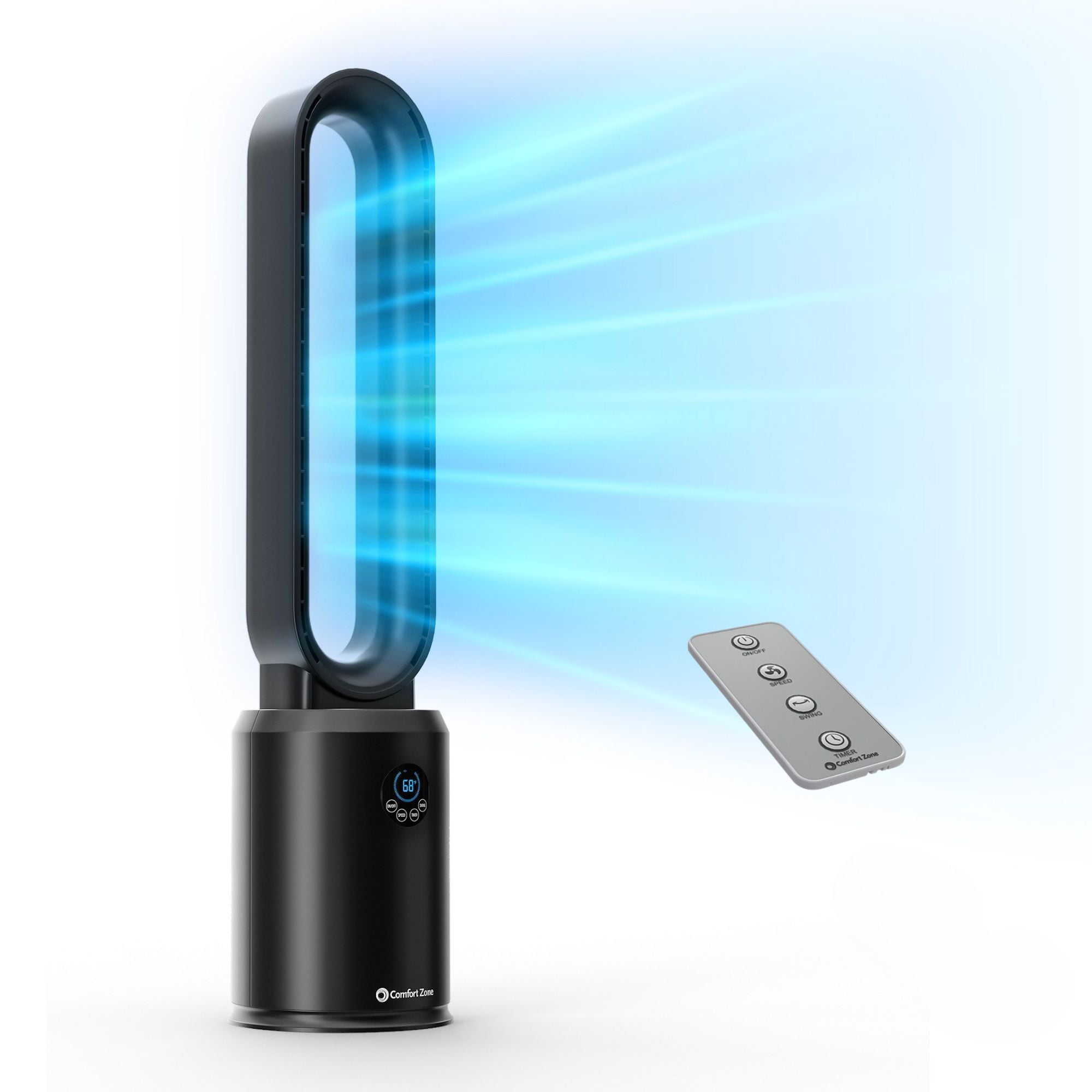
A good fan for bedroom comfort prioritizes low noise levels (typically under 40 decibels), adjustable airflow speeds, and minimal light pollution. In 2026, the ideal choice is often a DC-motor tower or bladeless fan, which provides consistent air circulation without the mechanical hum that disrupts deep sleep cycles.
Choosing the right fan for a bedroom environment involves more than simply picking a device that moves air. The bedroom is a unique sanctuary where the requirements for thermal regulation intersect with the physiological needs for silence and darkness. As we move through 2026, the technology behind residential air circulators has evolved significantly, moving away from simple "high-medium-low" AC-powered units toward sophisticated, sensor-driven devices that adapt to the ambient temperature of the room.
The Relationship Between Airflow and Sleep Quality
The primary function of a bedroom fan is to facilitate thermoregulation. The human body’s core temperature naturally drops as part of the circadian rhythm to initiate and maintain sleep. When a room is too warm, this cooling process is inhibited, leading to fragmented sleep and reduced time spent in deep REM cycles. A fan helps this process through two main mechanisms: convective cooling and evaporative cooling.
Convective cooling occurs as the fan replaces the "boundary layer" of warm air surrounding your body with cooler ambient air. Evaporative cooling, even if you are not visibly sweating, helps moisture move away from the skin, which provides a chilling effect. To achieve this without causing muscle stiffness or "dry eye" syndrome, the airflow must be consistent rather than turbulent. This is why high-quality fans emphasize "laminar flow"—a smooth, non-disruptive stream of air—over the erratic buffeting produced by cheap, poorly angled blades.
Technical Specifications: What Makes a Fan "Bedroom Grade"?
When evaluating fans for 2026, several technical specifications dictate whether a unit is suitable for a sleeping environment. Understanding these metrics allows you to move beyond marketing jargon and assess the actual performance potential of the device.
Decibel Levels and Sound Profiles
For a bedroom, noise is the most critical factor. Most standard pedestal fans operate between 50 and 60 decibels (dB), which is equivalent to a quiet conversation. While this may seem quiet during the day, in the stillness of the night, it can be jarring. A "good" bedroom fan should offer a "sleep mode" or low-setting performance of 20 to 35 dB.
However, the volume is not the only factor; the frequency of the sound matters. High-pitched whines or clicking sounds from the motor housing are far more disruptive than a low-frequency hum. Many modern fans are now engineered to produce "white noise" or "pink noise" profiles, which can actually help mask outside sounds like traffic or neighbors, rather than adding a distracting mechanical rattle.
AC vs. DC Motors
As of 2026, the transition from Alternating Current (AC) motors to Direct Current (DC) motors in premium fans is nearly complete. DC motors are significantly more efficient, often using up to 70% less energy than their AC counterparts. More importantly for bedroom comfort, DC motors allow for much finer control over blade speed. While an AC fan might have three speeds, a DC fan can have 10, 12, or even 20 speed settings. This allows you to find the exact "sweet spot" where air movement is sufficient but the noise is negligible.
Cubic Feet per Minute (CFM)
CFM measures the volume of air a fan moves. In a bedroom, a very high CFM is rarely necessary unless the room is exceptionally large. For a standard 12x12 foot bedroom, a fan with a CFM rating of 1,000 to 1,500 is usually more than adequate. High-velocity industrial fans with 3,000+ CFM are generally too powerful for sleeping areas, as they create a "wind tunnel" effect that can disturb bedding and cause dryness.
Comparison of Fan Types for Bedroom Use
Different fan architectures offer distinct advantages depending on your room layout and personal cooling preferences. The following table compares the most common types available in 2026.
| Fan Type | Noise Profile | Footprint | Best Feature | Primary Drawback |
|---|---|---|---|---|
| Tower Fan | Low/Medium | Minimal | Space-saving design | Harder to clean internally |
| Bladeless Fan | Very Low | Moderate | Uniform airflow; Safety | Higher price point |
| Pedestal Fan | Medium/High | Large | Powerful circulation | Aesthetic bulk; Noisier |
| Ceiling Fan | Lowest | None (Floor) | Whole-room cooling | Requires professional install |
| Tabletop Fan | Variable | Small | Focused cooling | Limited range |
The Impact of Light Pollution in 2026 Fan Design
A common oversight in bedroom fan selection is the interface lighting. Many older or cheaper models feature bright blue LED indicators that can illuminate a dark room, disrupting the production of melatonin. In 2026, top-tier bedroom fans include "Dark Mode" or "Auto-Dim" features. These sensors detect when the room lights are turned off and automatically extinguish all display lights on the fan. When selecting a unit, ensure that any digital display can be completely deactivated during operation.
Smart Features and Automation
Modern bedroom fans are increasingly integrated into the "Smart Home" ecosystem via protocols like Matter or Thread. For bedroom comfort, this integration provides several practical benefits:
- Temperature-Based Activation: Sensors can trigger the fan to increase speed if the room temperature rises above a certain threshold during the night, preventing you from waking up hot.
- Voice Control: Being able to adjust the fan speed via a voice assistant means you don't have to get out of bed or fumble for a remote in the dark.
- Gradual Deceleration: Some advanced fans can be programmed to start at a higher speed while you are falling asleep and gradually slow down as the night progresses and your body temperature drops.
Placement Strategies for Optimal Airflow
Even the best fan will underperform if placed incorrectly. For bedroom comfort, placement should be dictated by the room's ventilation points.
- Cross-Ventilation: If the outdoor air is cooler than the indoor air, placing the fan in front of an open window can pull fresh air in. Conversely, facing the fan out an open window can help exhaust warm air if there is a second opening elsewhere in the room to allow for a pressure balance.
- Corner Oscillation: Placing a tower or pedestal fan in a corner allows the 90-degree oscillation to cover the widest area of the room, preventing "dead zones" where air becomes stagnant.
- The Ceiling Fan "Winter Mode": In 2026, it is standard knowledge that ceiling fan direction matters. In the summer, blades should rotate counter-clockwise to push air down. In the winter, reversing the motor to a clockwise direction at a low speed pulls cool air up and pushes the warm air trapped at the ceiling back down into the living space.
Maintenance and Longevity
To maintain quiet operation, a fan must be kept clean. Dust accumulation on blades changes their aerodynamics and adds weight, which can lead to motor strain and "wobble." Tower fans are notoriously difficult to clean because their internal impellers are often shielded. In 2026, many manufacturers have addressed this by introducing tool-free access to the internal filters and blades.
When purchasing a fan, look for units with removable grilles. A quick vacuuming of the intake once a month can prevent the buildup of allergens and ensure the motor remains whisper-quiet. Furthermore, check the warranty for the motor; while the plastic housing may be under a 1-year warranty, high-quality DC motors often carry 5-to-10-year guarantees, reflecting their durability.
Addressing Common Concerns: Dryness and Allergies
While fans are excellent for cooling, they can exacerbate certain health issues if not used properly. Moving air can dry out nasal passages and eyes. To mitigate this, avoid pointing the fan directly at your face. Instead, aim it toward your feet or use the oscillation feature to keep the air moving generally throughout the room.
For allergy sufferers, a fan can act as a dust circulator. Some of the latest bedroom fans in 2026 include HEPA or carbon filters integrated into the base. These "air purifying fans" serve a dual purpose: they provide the cooling breeze necessary for sleep while simultaneously scrubbing the air of pet dander, pollen, and fine particulate matter. According to the Environmental Protection Agency (EPA), using high-efficiency filters can significantly improve indoor air quality, which is a major factor in respiratory-related sleep disturbances.
Final Considerations: Aesthetics and Budget
Finally, consider the visual impact of the fan. A bedroom is a personal space, and a bulky, industrial-looking pedestal fan can disrupt the "zen" of a well-decorated room. Bladeless fans and sleek tower fans offer a more modern, minimalist aesthetic.
In terms of budget, expect to pay between $80 and $150 for a high-quality DC-motor tower fan in 2026. Premium bladeless models with integrated air purification and smart home connectivity can range from $300 to $600. While the initial investment is higher, the energy savings and the improvement in sleep quality often justify the cost over the lifespan of the device.
Frequently Asked Questions
Is it healthy to sleep with a fan on every night?
For most people, sleeping with a fan is perfectly healthy and can improve sleep quality by maintaining a cool environment. However, individuals with severe allergies or asthma should ensure the fan is cleaned regularly or use a model with a built-in HEPA filter to avoid circulating dust and allergens. If you experience dry eyes or throat, use the oscillation setting to avoid direct, constant airflow.
Does a fan actually lower the room temperature?
Technically, no. A fan moves air to create a wind-chill effect on your skin, but it does not change the actual ambient temperature of the room like an air conditioner does. In fact, the motor of the fan generates a small amount of heat. However, by circulating air, a fan can prevent heat from layering (stratification) and make the room feel several degrees cooler.
Which is quieter: a tower fan or a pedestal fan?
Generally, tower fans are quieter because they use small impellers rather than large, broad blades. Pedestal fans move more air but produce more wind noise and mechanical vibration. For the quietest possible experience in 2026, look for a bladeless fan or a tower fan specifically marketed with "silent" or "sleep" technology and a DC motor.
How do I stop my fan from making a clicking noise?
Clicking or rattling is usually caused by loose components or an unbalanced blade. Ensure all screws on the grille and base are tightened. For pedestal fans, check if the blade is securely fastened to the motor shaft. If the clicking occurs during oscillation, it may be a sign that the internal gears need lubrication or have worn down.
Are bladeless fans worth the extra cost?
Bladeless fans (which actually have hidden blades in the base) offer the most consistent, non-turbulent airflow and are the easiest to clean. They are also the safest option if you have pets or small children in the bedroom. While they are more expensive, their quiet operation and safety features make them a top choice for many homeowners in 2026.
Practical Recommendation
For the best balance of price, performance, and silence, look for a DC-motor tower fan with a minimum of 10 speed settings and a dedicated "sleep mode" that deactivates the LED display. Position the fan in a corner opposite your bed and set the oscillation to 90 degrees to ensure even air distribution without the discomfort of a direct, constant breeze.