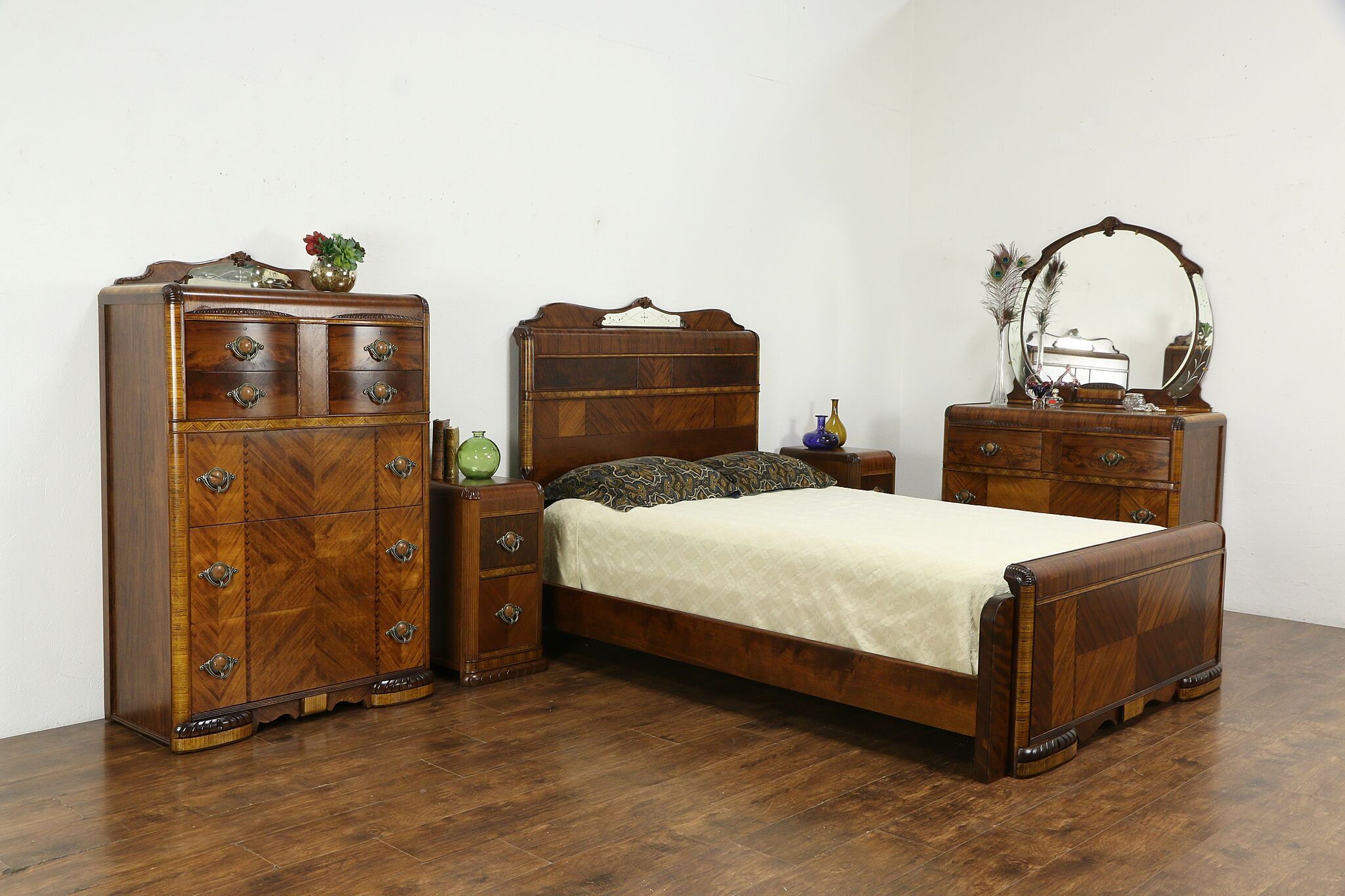
Art Deco waterfall furniture refers to a distinctive style of mass-produced, veneer-heavy domestic furnishings manufactured primarily in the United States between 1930 and 1945. Characterized by rounded, laminated edges that drape over the side of a piece like a waterfall, this aesthetic offered a streamlined, modern look for middle-class homes during the Great Depression and the post-war recovery era.
The Origins and Aesthetic of Waterfall Design
The waterfall style emerged as a response to the ornate, heavy, and often prohibitively expensive furniture of the Victorian and Edwardian eras. As the 1930s progressed, industrial advancements in plywood manufacturing and steam-bending techniques allowed furniture makers to create sleek, curved profiles that were both structurally sound and economically efficient.
The primary visual characteristic of this style is the "waterfall" edge—a smooth, continuous curve that transitions from the top surface to the front face of a piece, typically seen on dressers, vanities, bedside tables, and occasionally sideboards. This design element was not merely decorative; it was a testament to the era's fascination with aerodynamics, speed, and the "Machine Age" aesthetic that defined Art Deco. Unlike the expensive, inlaid, and exotic-wood-heavy Art Deco pieces found in high-end European galleries, American waterfall furniture was designed for the average consumer, often utilizing secondary woods like gumwood or poplar covered in elaborate, book-matched walnut or mahogany veneers.
Key Features and Construction Materials
To distinguish authentic 1930s-1940s waterfall furniture from later mid-century modern recreations or mass-produced "retro" furniture, one must look at the specific construction techniques used during the period.
- Veneer Application: The defining feature of this furniture is the use of high-quality, often book-matched, veneer. Manufacturers would slice thin sheets of wood—usually walnut—and arrange them so that the grain mirrored itself, creating intricate, symmetrical patterns that flowed over the rounded edges.
- The Waterfall Edge: A genuine piece features a solid or laminated wood core that has been bent or shaped to create the curve. If the edge appears to be a separate plastic or metal trim attached to a flat surface, it is likely a later imitation.
- Hardware: Original hardware often includes Bakelite handles, chrome accents, or simple, streamlined brass pulls. By the mid-1930s, the inclusion of mirrors—often circular or arch-shaped—became a staple for vanity sets, held in place by glass supports or wooden frames that mirrored the waterfall curvature.
- Drawer Construction: Examining the drawer boxes reveals the age of the piece. Authentic 1930s pieces typically utilize dovetail joints, though these may be less refined than 19th-century cabinet making. The presence of staples or particleboard almost certainly indicates a post-1960s production.
Comparison of Period-Specific Design Elements
When evaluating pieces, collectors often compare them based on construction quality and wood species.
| Feature | Authentic 1930s-40s | Post-1960s Reproduction |
|---|---|---|
| Edge Construction | Steam-bent solid/laminated wood | Mitered particleboard with trim |
| Veneer | Thick, hand-applied wood veneer | Paper-thin laminate or plastic film |
| Joinery | Dovetails or mortise and tenon | Staples, nails, or cam-lock screws |
| Hardware | Period-correct Bakelite or Chrome | Modern mass-produced pulls |
| Backing | Plywood or solid wood panel | Thin cardboard or fiberboard |
Assessing Value and Condition
The value of waterfall furniture in 2026 is driven less by rarity and more by the quality of the veneer and the structural integrity of the piece. Because these items were mass-produced, they are not typically considered high-value antiques in the same category as 18th-century cabinetry. However, high-quality, well-preserved examples remain popular in the mid-century and Art Deco interior design markets.
Factors impacting value include:
- Veneer Preservation: Veneer is thin and susceptible to lifting, cracking, and water damage. Pieces with "checked" (cracked) veneer are significantly harder to restore.
- Structural Stability: The curved waterfall edge is prone to internal delamination. If the wood has pulled away from the frame, the piece may require professional clamping and regluing, which can be costly.
- Completeness: Vanity sets that still possess their original, un-foxed mirrors are significantly more valuable than those that have been separated from their original hardware or glass.
- Provenance: While most pieces were produced by large factories (such as the Kroehler Manufacturing Company), a piece with an intact manufacturer's label or stamp on the interior drawer is generally preferred by collectors.
Restoration and Maintenance Guidelines
For owners looking to preserve or restore waterfall pieces, the process requires a delicate touch. The primary risk is aggressive sanding, which can easily burn through the thin veneer, revealing the secondary wood underneath and permanently damaging the piece.
- Cleaning: Use a damp cloth with a mild wood soap to remove surface grime. Avoid heavy solvents or wax-based polishes that can build up and darken the grain over time.
- Minor Veneer Repair: Small chips can often be filled with a color-matched wax stick or wood filler. For larger areas of lifted veneer, a specialized wood glue should be injected under the edge, followed by careful clamping for 24 hours.
- Refinishing: If the original lacquer finish is severely compromised, it must be removed via chemical stripping rather than sanding. Once stripped, modern shellac or a high-quality tung oil can replicate the soft, warm luster of the original finish without the thickness of polyurethane.
- Hardware Maintenance: Chrome pulls can usually be revived with a non-abrasive metal polish. Bakelite handles should only be cleaned with gentle soap and water; harsh chemicals can cause the material to bloom or discolor.
Common Mistakes to Avoid
Enthusiasts new to the style often make errors that detract from the historical integrity and value of the furniture. One common mistake is the application of modern paint. While "upcycling" furniture is a popular trend, painting over high-quality, book-matched walnut veneer destroys the primary artistic feature of the waterfall style. Once the grain is obscured by paint, the piece loses its character as a representative of the Art Deco era.
Another frequent error is the replacement of original hardware with generic modern pulls. Waterfall furniture relies on the geometric, streamlined look of 1930s hardware. Swapping these for ornate or overly rustic handles creates a visual dissonance that diminishes the piece’s aesthetic coherence.
Integration into Modern Interiors
As of 2026, there is a renewed interest in integrating vintage Art Deco pieces into contemporary homes to provide a sense of history and depth. Waterfall pieces work well as statement items in bedrooms or entryways. Because the style is inherently minimalist compared to traditional period furniture, it pairs effectively with neutral, modern wall colors and textures.
When placing these items, ensure they are kept away from direct heat sources, such as radiators or fireplaces. The combination of heat and low humidity is the primary cause of veneer failure, as the wood expands and contracts at a different rate than the underlying substrate, leading to the cracking and curling so common in waterfall pieces.
Frequently Asked Questions
How can I tell if my waterfall dresser is solid wood or veneer? Nearly all waterfall furniture is constructed from a secondary softwood core (such as pine or poplar) with a decorative wood veneer applied over the surface. If you see wood grain that appears to "wrap around" a corner seamlessly, it is almost certainly a veneer that has been carefully matched at the joint.
Is it possible to replace the mirror on a waterfall vanity? Yes, but finding a period-appropriate mirror can be difficult. Many owners choose to have a modern glass cut to the original shape. For a more authentic look, seek out a glass restorer who can provide "silvered" or slightly aged mirror glass to match the existing patina of the furniture.
Did all waterfall furniture come from the same manufacturer? No. While there were several major manufacturers, such as Kroehler, the style was a industry-wide trend during the 1930s. Hundreds of smaller furniture companies produced waterfall lines, which is why there is such a wide variation in the quality of the wood used beneath the veneer.
Why does the veneer on my waterfall piece look "cracked"? This is known as "checking." It occurs when the finish has dried out over decades or when the environment has been too dry. The wood veneer loses its flexibility and shrinks, causing small hairline fractures in the surface. In many cases, a high-quality furniture oil can hydrate the wood and minimize the appearance of these lines.
Next Steps for Collectors and Owners
If you own a piece of waterfall furniture, your first action should be to inspect the underside and interior drawers for a manufacturer's label. This label serves as your primary verification of the piece’s history. If you are looking to purchase a piece, prioritize items that have not been modified or painted. Ensure that all drawers slide smoothly and that the curved waterfall edges are free of significant delamination. If you plan to use the piece daily, consider applying a high-quality furniture wax every six to twelve months to protect the finish from moisture and UV damage, ensuring that this classic 1930s design remains a functional part of your home for years to come.