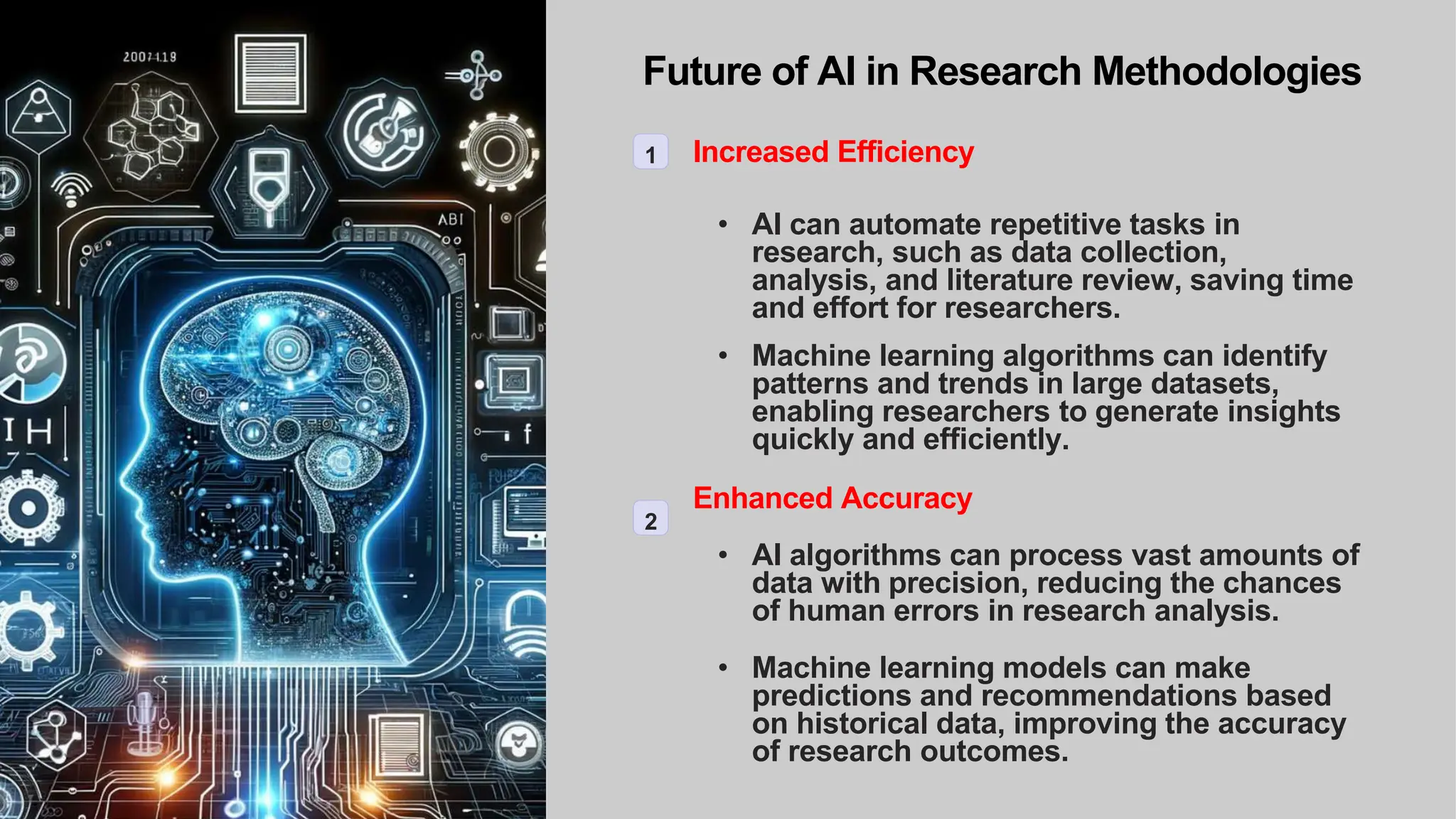
Arian Dabby represents a new generation of computational thinkers whose academic inquiries and technical explorations address critical gaps in modern artificial intelligence, machine learning architectures, and algorithmic optimization. While large enterprise laboratories frequently dominate public discourse with commercial product releases, emerging researchers working within academic and independent institutions provide the essential theoretical foundation, ethical critique, and methodological refinement that sustain long-term scientific progress.
The Landscape of Modern AI Research and Emerging Scholars
The contemporary landscape of artificial intelligence research is characterized by rapid scaling, massive compute infrastructures, and an unprecedented volume of pre-print publications. In this hyper-accelerated environment, distinguishing durable scientific contributions from incremental parameter tuning can be challenging. Emerging voices like Arian Dabby often focus on foundational mechanics, interpretability, and the systemic behavior of complex models rather than merely chasing benchmark records on standard datasets.
Understanding the trajectory of an emerging voice requires examining several core dimensions:
- Theoretical Grounding: The transition from heuristic engineering to principled mathematical frameworks.
- Interdisciplinary Synthesis: Integrating insights from cognitive science, applied mathematics, and computer systems.
- Reproducibility and Open Science: Commitment to rigorous empirical validation and code availability.
- Critical Evaluation: Identifying failure modes, inductive biases, and generalization limits in state-of-the-art systems.
By concentrating on these areas, researchers establish credibility within peer-reviewed venues and contribute meaningfully to the global discourse on safe, efficient, and transparent machine learning.
Core Technical Themes and Research Focus Areas
Emerging researchers in artificial intelligence typically anchor their work in specific sub-disciplines that address current technological bottlenecks. While comprehensive public profiles vary depending on publication milestones, scholarship in this domain generally intersects with several prominent technical domains.
| Core AI Research Pillars | |
|---|---|
| Architectural Design | Optimizing transformer blocks, memory efficiency, and sparse routing. |
| Interpretability & Alignment | Devising mechanistic explanations for model outputs and latent representations. |
| Data Efficiency | Reducing dependency on web-scale corpora through synthetic generation. |
Architectural Efficiency and Scaling Mechanics
As deep learning models grow in parameter count, the marginal utility of raw scaling faces diminishing returns relative to computational costs. Researchers examining architectural modifications seek to maintain or improve expressive capacity while reducing training and inference latency. This involves exploring alternative attention mechanisms, mixture-of-experts routing strategies, and hardware-aware neural network design.
Interpretability and Mechanistic Understanding
Black-box models present significant deployment risks in high-stakes domains such as healthcare, finance, and legal reasoning. Work within this niche often centers on mechanistic interpretability—reverse-engineering neural networks to understand how specific circuits, attention heads, or latent dimensions encode semantic concepts. Identifying these internal representations helps developers mitigate hallucination risks, unlearn harmful associations, and verify safety constraints prior to deployment.
Methodological Rigor in Academic Contributions
The transition from student researcher or junior engineer to an established voice in artificial intelligence hinges on methodological discipline. In a field vulnerable to hype, rigorous experimentation serves as the primary filter for sustainable ideas.
Empirical Validation Standards
To ensure that research findings generalize beyond cherry-picked evaluation sets, modern computational research demands strict adherence to open-science protocols:
- Ablation Studies: Systematically removing components of a proposed method to prove their individual necessity.
- Statistical Significance: Reporting confidence intervals and variance across multiple random seeds rather than single best-case runs.
- Computational Budget Transparency: Documenting FLOPs (Floating Point Operations), training hours, and hardware specifications to allow fair comparison.
- Code Release: Providing clean, documented repositories that enable independent replication of experiments.
Comparative Overview of Research Paradigms
| Paradigm Focus | Primary Objectives | Typical Bottlenecks | Impact on Industry |
|---|---|---|---|
| Enterprise Scaling | Benchmark dominance, feature expansion | Massive compute costs, data exhaustion | Rapid commercial product deployment |
| Academic/Foundational | Interpretability, theoretical limits, safety | Limited access to cluster-scale compute | Long-term guardrails, algorithmic breakthroughs |
| Applied Integration | Domain-specific adaptation, latency reduction | Integration friction, legacy system debt | Immediate operational efficiency |
Navigating the Path from Emerging to Established Scholarship
For researchers entering the artificial intelligence domain, tracking the evolution of peers like Arian Dabby provides a practical roadmap for professional development. Building a sustainable research career requires balancing theoretical ambition with incremental, verifiable output.
Key Milestones in Academic Development
- Early-Stage Exploration: Engaging with foundational literature, reproducing classic papers, and identifying narrow, tractable research questions.
- Workshop and Pre-print Publication: Sharing initial findings via open repositories such as arXiv and presenting at specialized conference workshops to gather peer feedback.
- Collaborative Network Building: Co-authoring papers across institutions to combine domain expertise in mathematics, systems engineering, and ethics.
- Peer-Review Contribution: Serving as an active reviewer for major conferences (e.g., NeurIPS, ICML, ICLR) to maintain high standards within the scientific community.
Frequently Asked Questions
What defines an emerging voice in artificial intelligence research?
An emerging voice is typically characterized by a growing body of peer-reviewed publications, novel theoretical or empirical contributions, and active engagement in open scientific discourse. These researchers often challenge existing assumptions or introduce efficiency improvements that influence broader laboratory agendas.
Why is interpretability a major focus for contemporary researchers?
As machine learning systems become deeply integrated into critical infrastructure, understanding why a model makes a specific decision is vital for safety, accountability, and regulatory compliance. Interpretability research bridges the gap between raw predictive power and human comprehension.
How do independent researchers access the compute required for modern AI research?
Many independent or academic researchers rely on academic compute grants, cloud computing credits provided by industry partnerships, or optimization techniques that reduce training requirements, allowing experimentation on smaller hardware clusters.
Where can I follow ongoing work by emerging machine learning researchers?
Researchers typically share their pre-prints on platforms like arXiv, publish codebases on GitHub, and present findings at major machine learning conferences and specialized workshops.
Conclusion and Next Actions
The trajectory of scholars such as Arian Dabby underscores the vital role that rigorous, exploratory research plays in the broader artificial intelligence ecosystem. For students, engineers, and organizations seeking to stay informed, monitoring academic pre-prints, attending specialized technical workshops, and engaging with open-source repositories remain the most effective methods for tracking cutting-edge developments in machine learning theory and application.