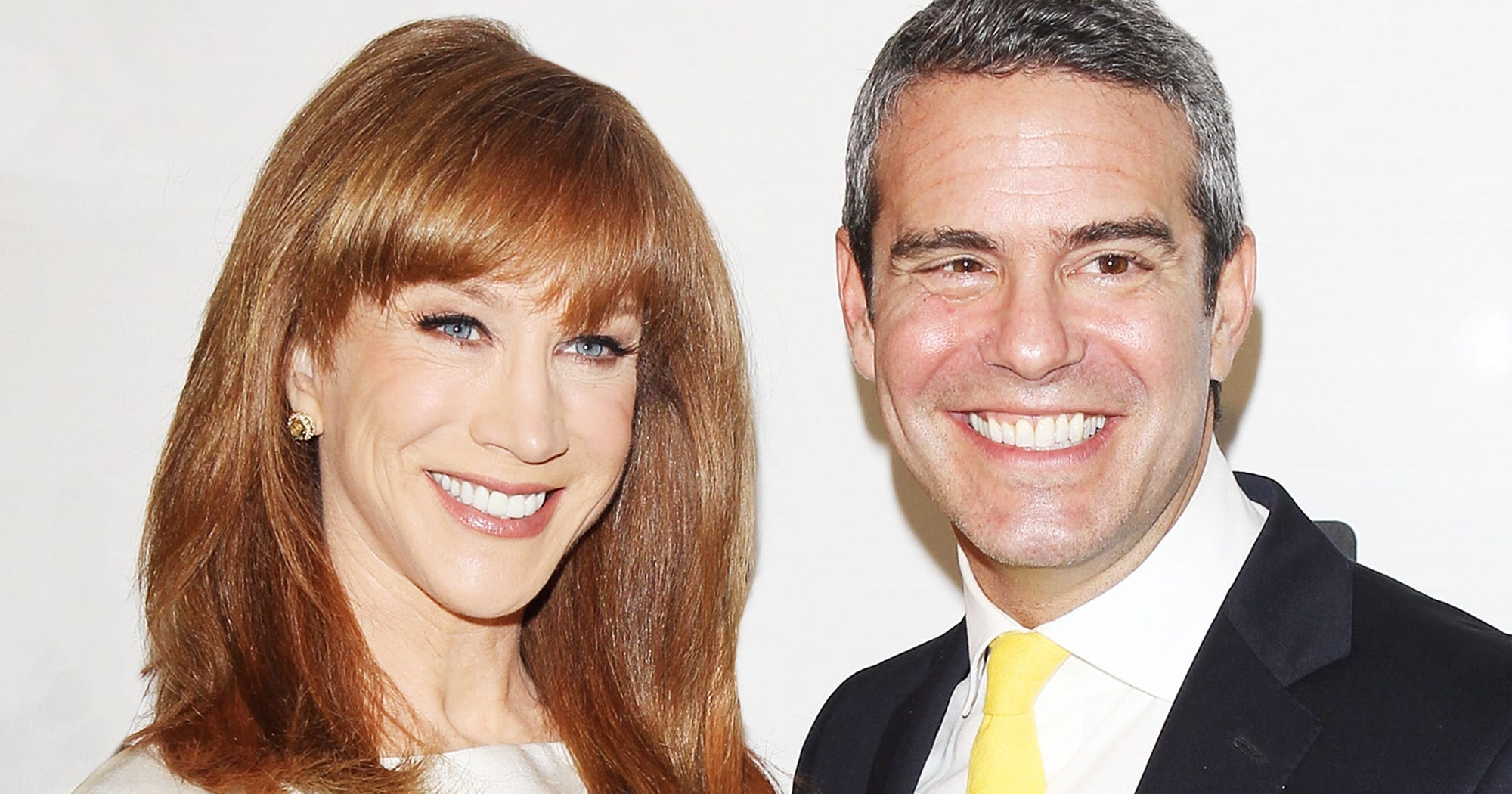
Andy Cohen and Kathy Griffin share a complex pop culture history defined by years of successful New Year's Eve television broadcasts, subsequent professional collaboration, and a very public, high-profile falling out. Their trajectory from close friends and co-hosts to estranged public figures highlights the volatile nature of media partnerships, personal boundaries, and modern celebrity feuds.
The Foundation of a Pop Culture Partnership
The professional and personal bond between Andy Cohen and Kathy Griffin blossomed during an era when both figures were ascending to peak mainstream visibility. Andy Cohen, a veteran television executive who became the face of Bravo through the Watch What Happens Live franchise and executive-producing duties on the Real Housewives empire, found a kindred spirit in Kathy Griffin. Griffin, an acerbic, Emmy Award-winning stand-up comedian known for her unvarnished commentary on celebrity culture and her reality series Kathy Griffin: My Life on the D-List, shared Cohen's razor-sharp wit and penchant for unfiltered television.
Their partnership found its most lucrative and visible platform on CNN. Beginning in 2007, Griffin had co-hosted CNN’s annual New Year’s Eve Live broadcast alongside Anderson Cooper, Cohen’s close friend. When Griffin parted ways with the network following a series of controversies, CNN tapped Cohen to take over the co-hosting role alongside Cooper starting in December 2017.
Before this transition, Cohen and Griffin had established a strong rapport across various talk show appearances and media events. They operated within the same Manhattan and Los Angeles social circles, frequently celebrating their shared affinity for pop culture satire, entertainment gossip, and irreverent humor. Their mutual support cultivated an image of an unbreakable industry alliance, making their eventual public split all the more jarring to observers and fans of late-night television.
The CNN New Year's Eve Transition and Rising Tensions
The catalyst for the public fracture between Andy Cohen and Kathy Griffin largely centers on the shifting dynamics of the CNN New Year's Eve broadcast and underlying personal grievances. When Cohen stepped into the co-hosting position alongside Anderson Cooper, it cemented a professional succession that Griffin viewed through a critical lens.
Griffin had previously expressed frustration regarding the circumstances of her departure from CNN in 2017, following intense backlash over a controversial photo shoot. When Cohen assumed the role that she had occupied for a decade, tensions that had been simmering beneath the surface began to manifest publicly. Griffin asserted that Cohen had not been supportive during her professional struggles and publicly criticized his demeanor, famously labeling him as profoundly misogynistic and icy during an interview with Australian television program Sunrise in 2018, where she claimed he had once offered her cocaine before an appearance on Watch What Happens Live.
| Event / Milestone | Approximate Timeline | Key Context and Participants |
|---|---|---|
| CNN NYE Co-Hosting Era | 2007–2016 | Kathy Griffin co-hosts CNN’s New Year’s Eve special alongside Anderson Cooper. |
| Cohen Joins CNN | December 2017 | Andy Cohen replaces Griffin as Cooper's co-host for the annual live broadcast. |
| Public Accusations | 2018–2019 | Griffin makes public statements regarding Cohen on international media outlets. |
| "I Don't Know Her" Incident | 2021 | Cohen claims on a live broadcast that he does not know Griffin, sparking renewed media coverage. |
The "I Don't Know Her" Phenomenon and Ongoing Estrangement
One of the most widely discussed moments in the ongoing saga occurred during a live broadcast of Watch What Happens Live in late 2021. During a segment where Cohen was asked about his relationship with Griffin, he offered a blunt dismissal, stating simply, "I don't know her."
This phrasing, an intentional nod to a famous pop culture meme popularized by Mariah Carey, signaled a definitive walling-off of any potential reconciliation. For Griffin, who had built her career on radical transparency and confronting slights head-on, the public dismissal was met with swift counter-commentary across her social media channels. She highlighted what she perceived as hypocrisy within the television industry, where male executives and hosts could dismiss female counterparts while maintaining mainstream platform support.
The estrangement underscores the fragility of alliances forged within the entertainment industry. While Anderson Cooper managed to maintain a professional standing with both parties—retaining his long-standing friendship with Cohen while navigating the fallout with Griffin—Cohen and Griffin remained entirely detached from one another, treating each other as persona non grata in public forums.
Media Analysis and Cultural Impact
The public feud between Andy Cohen and Kathy Griffin transcends a mere celebrity disagreement; it serves as a case study in how social media, cable television politics, and personal grievances intersect in the public eye.
The Role of Late-Night and Cable Television
Cable networks like CNN and Bravo thrive on personality-driven programming. When personalities collide outside the structured environment of a scripted show or managed talk segment, the resulting drama frequently spills over into ratings-driven public spectacles. Cohen’s position as a senior executive and prominent on-air talent for NBCUniversal/Bravo contrasts sharply with Griffin’s status as an independent touring comedian who has often positioned herself as an industry outsider willing to burn bridges for the sake of creative freedom.
Gender Dynamics and Industry Politics
Cultural commentators have frequently analyzed the feud through the lens of gender politics in Hollywood. Griffin’s defenders have argued that female comedians face harsher professional consequences for being outspoken or controversial compared to their male counterparts. Conversely, supporters of Cohen point to professional etiquette and the necessity of establishing firm personal boundaries when working relationships deteriorate beyond repair.
Frequently Asked Questions
Did Andy Cohen and Kathy Griffin ever work together directly?
While they never hosted a regular series together, they frequently crossed paths in media green rooms, talk shows, and shared social circles. Cohen hosted Griffin multiple times as a guest on Watch What Happens Live before their relationship soured.
Why did Kathy Griffin leave CNN's New Year's Eve broadcast?
Kathy Griffin parted ways with CNN in May 2017 following severe public backlash and network condemnation over a controversial, satirical photo shoot in which she held a likeness of a bloodied mask resembling then-President Donald Trump.
Who replaced Kathy Griffin on CNN?
Andy Cohen was chosen by CNN management to replace Kathy Griffin alongside Anderson Cooper, beginning with the December 31, 2017, New Year's Eve broadcast.
Have Andy Cohen and Kathy Griffin reconciled?
As of 2026, there is no public indication of a reconciliation. Both figures have maintained their distance, with Cohen publicly distancing himself from the comedian and Griffin continuing to voice her grievances in interviews and stand-up performances.
How does Anderson Cooper factor into their relationship?
Anderson Cooper remains one of Andy Cohen's closest personal and professional friends, co-hosting the CNN New Year's Eve special with him annually. Cooper previously maintained a friendship with Griffin during her tenure at CNN, leading to a delicate balancing act amid the public fallout between Cohen and Griffin.
Summary and Next Actions
The relationship between Andy Cohen and Kathy Griffin remains a defining chapter in modern entertainment gossip, illustrating how quickly industry camaraderie can dissolve into permanent estrangement. For media consumers and pop culture historians, following this dynamic requires looking past sensationalized headlines to examine the underlying pressures of television broadcasting, personal accountability, and public image management. To explore further, examine archival footage of their respective talk show appearances or read contemporary media analyses regarding the evolution of cable television personalities.