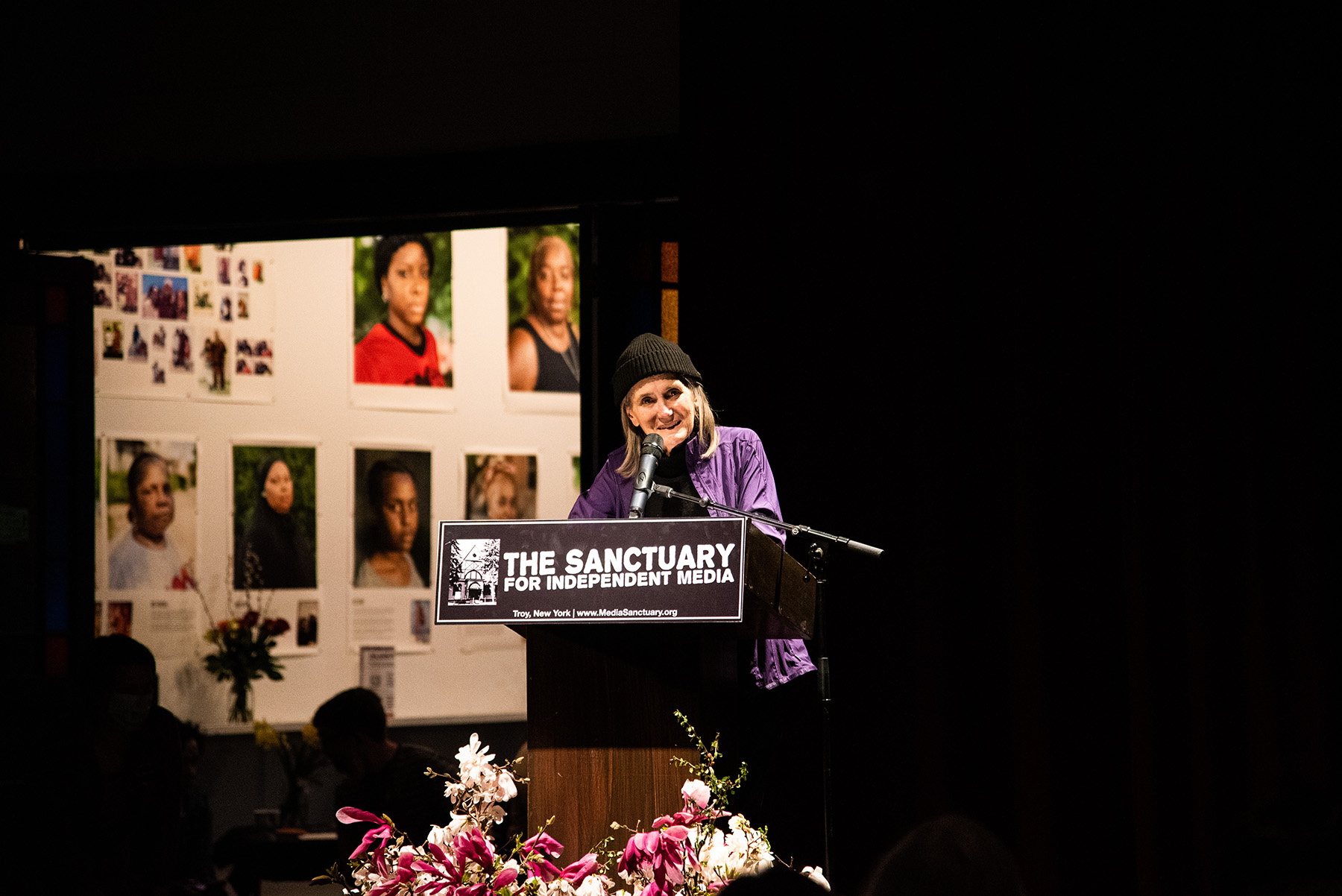
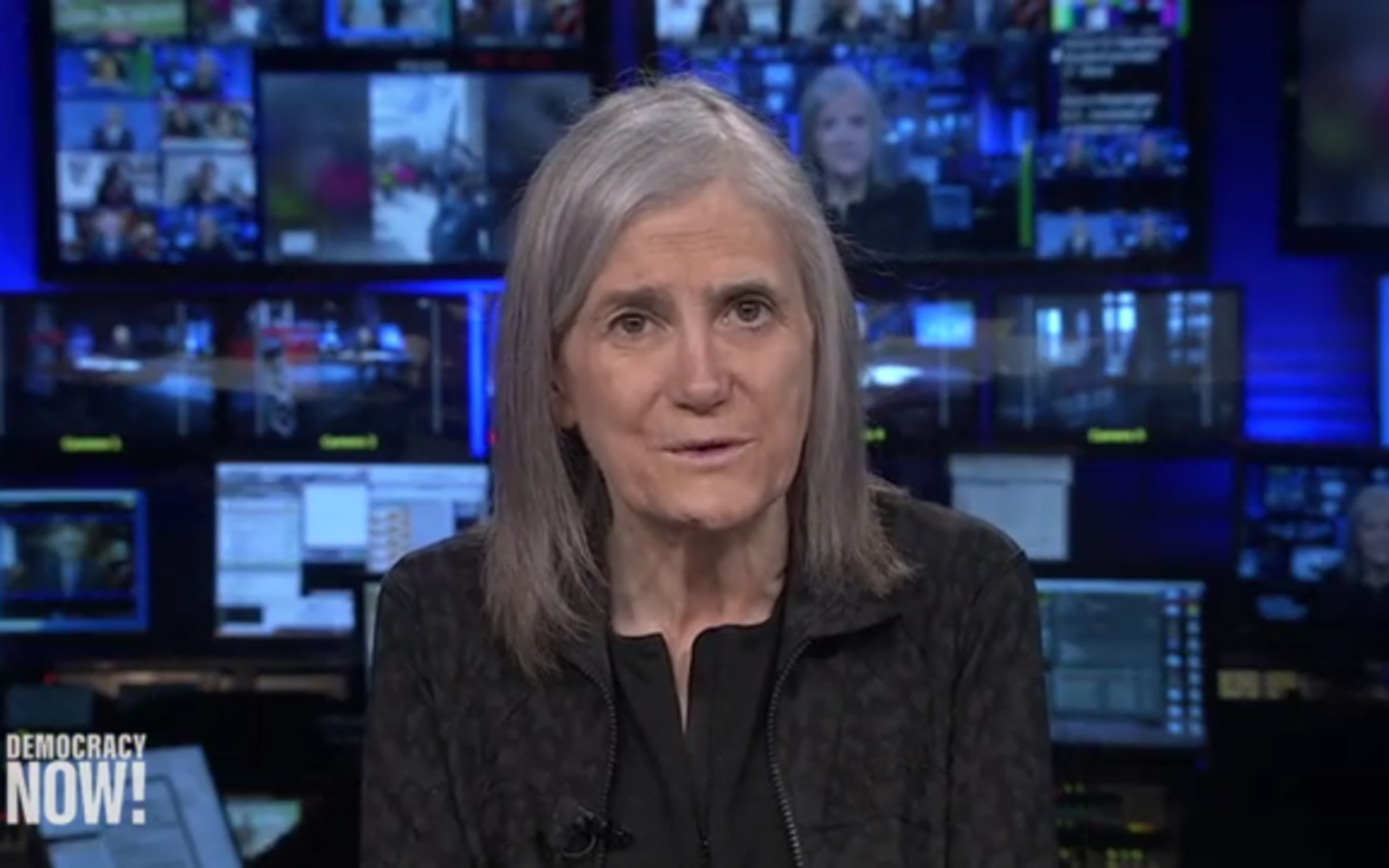
Amy Goodman is an American broadcast journalist and investigative reporter renowned for founding Democracy Now!. As a leader in independent media, she specializes in covering stories often ignored by corporate outlets, including international conflict, social justice movements, and human rights, while maintaining a non-commercial, listener-supported broadcasting model.
In an era where media consolidation often narrows the scope of public discourse, Amy Goodman remains a definitive figure in independent journalism. Her career, spanning over four decades, serves as a blueprint for "unembedded" reporting—a style that prioritizes ground-level perspectives over official government or corporate narratives. As of 2026, Goodman continues to influence a new generation of journalists who seek to maintain editorial independence in an increasingly polarized and algorithmic digital landscape.
The Origins of a Radical Voice
To understand Amy Goodman’s impact, one must look at her roots in community-supported radio. Goodman began her career in the mid-1980s at WBAI-FM, a member of the Pacifica Radio network in New York City. Pacifica, founded by pacifist Lewis Hill, provided the perfect incubator for Goodman’s brand of journalism. Unlike commercial stations, Pacifica was built on the principle of being beholden only to its listeners, not to advertisers or political patrons.
During her tenure at WBAI, Goodman served as the news director for over a decade. It was here that she honed the skills of investigative "street" reporting, focusing on local grassroots movements and international human rights crises. Her early work demonstrated a willingness to go "where the silence is," a phrase she frequently uses to describe the duty of the press to cover marginalized communities and overlooked injustices.
The Significance of the Pacifica Model
The Pacifica model is essential to Goodman’s identity as an independent journalist. Because the network does not accept corporate underwriting, Goodman and her colleagues were free to critique the very industries that usually fund mainstream news—defense contractors, pharmaceutical giants, and fossil fuel companies. This structural freedom allowed Goodman to develop a relentless interviewing style that focuses on accountability rather than access.
The Genesis of Democracy Now!
In 1996, on the eve of the U.S. presidential election, Goodman co-founded Democracy Now! alongside journalists Juan González, Larry Bensky, Salim Muwakkil, and Julie Drizin. Originally intended as a temporary election-year program, the show’s popularity and the depth of its reporting led to its permanent status as a daily news hour.
What began as a radio program quickly evolved. Under Goodman’s leadership, the show transitioned into a multi-platform news powerhouse, becoming the first daily program to be broadcast simultaneously on radio, satellite television, and the internet. This technological leap was crucial for independent media; it proved that a non-profit, non-commercial entity could compete with the reach of multi-billion-dollar conglomerates.
The "War and Peace Report"
Subtitled "The War and Peace Report," the program focuses heavily on the human cost of foreign policy. Goodman’s approach involves interviewing the people on the receiving end of policy decisions—refugees, soldiers, and civil rights activists—rather than relying solely on "talking heads" from think tanks or government agencies. This shift in perspective has made the program a vital resource for scholars and activists globally.
Landmark Reporting and the Risk of the Profession
Amy Goodman’s reputation as an independent journalist is cemented by her presence at the world’s most volatile events. Her career is marked by a willingness to face physical danger and legal repercussions to bring stories to the public.
The Santa Cruz Massacre (1991)
One of the most pivotal moments in Goodman’s career occurred in East Timor. While covering the independence movement against Indonesian occupation, Goodman and fellow journalist Allan Nairn witnessed the Santa Cruz massacre. Indonesian soldiers opened fire on a peaceful funeral procession, killing more than 250 people.
Goodman and Nairn were badly beaten by soldiers, but they managed to survive and smuggle out footage and audio. Their reporting was instrumental in bringing international attention to the genocide in East Timor, eventually leading to a shift in U.S. policy toward Indonesia. This event highlighted the power of independent journalism to influence global human rights outcomes by providing eyewitness testimony that contradicted official denials.
Arrests and Press Freedom: RNC 2008 and Standing Rock
Goodman’s commitment to independence has frequently put her at odds with law enforcement. In 2008, while covering the Republican National Convention in St. Paul, Minnesota, Goodman was arrested and detained along with two Democracy Now! producers. She was charged with "obstructing a legal process" while attempting to intervene on behalf of her colleagues. The charges were eventually dropped, and the incident became a rallying point for First Amendment advocates.
In 2016, Goodman faced another high-profile legal battle. While covering the Dakota Access Pipeline protests at Standing Rock, her team captured footage of security guards using attack dogs and pepper spray on Native American protesters. North Dakota authorities issued an arrest warrant for Goodman, initially charging her with criminal trespass and later "riot."
The journalistic community viewed these charges as a direct attack on press freedom. A judge eventually dismissed the charges, but the incident reaffirmed Goodman’s role as a journalist who documents what the state would sometimes prefer to remain hidden. Her footage from Standing Rock was eventually picked up by mainstream networks, proving that independent media often sets the agenda for the broader media ecosystem.
The Philosophy of Independent Media vs. Corporate News
Goodman often contrasts her work with what she calls the "corporate media" or the "punditocracy." The difference lies not just in the content, but in the structural intent of the journalism.
| Feature | Independent Journalism (e.g., Democracy Now!) | Corporate Journalism |
|---|---|---|
| Funding Source | Listener/viewer donations, foundations. | Corporate advertising, private equity, underwriting. |
| Primary Goal | Inform the public and hold power accountable. | Generate profit and maintain high ratings. |
| Source Priority | Grassroots leaders, victims, whistleblowers. | Government officials, CEOs, paid analysts. |
| Coverage Focus | Long-term social issues, human rights, labor. | "Horse race" politics, celebrity news, consumer trends. |
| Editorial Control | Journalists and producers. | Executive boards and advertising interests. |
Editorial Autonomy
The primary advantage of Goodman's model is editorial autonomy. In corporate newsrooms, stories that might offend a major advertiser or a parent company’s board of directors are often softened or killed. Goodman’s independence allows her to maintain a "no-compromise" stance on topics like climate change, where she frequently critiques the fossil fuel industry’s influence on politics—an industry that is a major advertiser on mainstream networks.
The Global Reach and Influence in 2026
As of 2026, the reach of Democracy Now! is vast. It is broadcast on over 1,400 stations worldwide, including community radio, college stations, and PBS outlets. Its digital presence has grown exponentially, utilizing decentralized platforms and high-definition streaming to reach international audiences who may not have access to a free press in their own countries.
Mentorship and the Next Generation
Goodman’s influence extends beyond her own reporting. She has mentored hundreds of young journalists, many of whom have gone on to found their own independent outlets or bring an investigative rigor to mainstream organizations. Her insistence on "unembedded" journalism—the idea that reporters should not be integrated into military or corporate units—has become a standard for ethical reporting in conflict zones.
Awards and Recognition
Despite her critical stance toward established power structures, Goodman has received some of the most prestigious awards in the field. These accolades serve as a validation of the rigor and accuracy of independent journalism.
- Right Livelihood Award (2008): Often called the "Alternative Nobel Prize," this was awarded to Goodman for "developing an innovative model of truly independent grassroots political journalism."
- George Polk Award (1998): For her radio documentary "Drilling and Killing," which investigated Chevron’s role in the killing of two Nigerian environmental activists.
- Park Center for Independent Media’s Izzy Award: Named after legendary independent journalist I.F. Stone, this award recognizes those who operate outside of corporate structures.
Practical Steps for Engaging with Independent Media
For readers and aspiring journalists looking to support or enter the field of independent journalism as modeled by Amy Goodman, the following steps are recommended:
- Diversify Information Streams: Do not rely on a single source for news. Compare the reporting on Democracy Now! with official government statements and corporate reports to see where the narratives diverge.
- Support Listener-Funded Models: Independent journalism is only sustainable if the public supports it. Consider donating to community radio stations or non-profit news organizations to ensure they remain free from advertising pressure.
- Learn Investigative Ethics: Study the legal rights of journalists, specifically the First Amendment and shield laws. Goodman’s career demonstrates that a journalist must be prepared to defend their work legally.
- Practice "Unembedded" Reporting: For those in the field, focus on interviewing those most affected by an issue rather than just the official spokespeople.
Frequently Asked Questions
Why is Amy Goodman called an "independent" journalist?
She is considered independent because her work is not funded by corporate advertisers, government grants, or private equity firms. Her primary outlet, Democracy Now!, relies on donations from its audience and grants from non-partisan foundations, which allows for total editorial freedom.
Is Democracy Now! a non-profit organization?
Yes, Democracy Now! is a 501(c)(3) non-profit organization. This status is central to its mission, as it ensures that the organization does not have to answer to shareholders or prioritize profit over the public interest.
What was Amy Goodman’s role in the Standing Rock protests?
Goodman provided some of the most critical early coverage of the Dakota Access Pipeline protests. Her team’s footage of private security guards using dogs against protesters went viral and forced mainstream media to cover the event. The subsequent attempt by North Dakota officials to arrest her was widely condemned as a violation of press freedom.
How can I watch or listen to Amy Goodman?
Her daily news program, Democracy Now!, is available for free at democracynow.org. It is also broadcast on hundreds of community and public radio/television stations and is available as a podcast on all major platforms.
What is "unembedded" journalism?
"Unembedded" journalism refers to reporters who do not travel with or rely on military or government protection during conflicts. This allows the journalist to move freely and report on all sides of a conflict, including the impacts on civilian populations, without being subject to military censorship or bias.
Next Action for Readers
To truly understand the depth of independent reporting, visit the Democracy Now! archives. Search for a major historical event—such as the Iraq War or the 2016 Standing Rock protests—and compare the program's daily coverage with the archives of a major corporate network from the same period. This exercise provides a clear demonstration of how independent journalism offers a different, often more nuanced, perspective on global events.