In the context of Emergency Medical Services (EMS), ALS stands for Advanced Life Support. It represents a sophisticated tier of prehospital emergency care provided by highly trained clinicians, typically paramedics. ALS involves invasive medical procedures, advanced airway management, cardiac monitoring, and the administration of specialized medications to stabilize patients during life-threatening crises.
Defining ALS within the EMS Hierarchy
Emergency Medical Services is not a monolithic entity; it is a tiered system designed to provide the right level of care based on the severity of a patient's condition. At the foundation of this system is Basic Life Support (BLS), which focuses on non-invasive interventions such as CPR, automated external defibrillation (AED), and basic wound care. ALS serves as the secondary, more intensive tier of that response.
As of 2026, the distinction between these tiers remains the cornerstone of modern paramedicine. While BLS providers (EMTs) focus on stabilizing the patient and preventing further injury, ALS providers (Paramedics and sometimes Advanced EMTs) are equipped to perform interventions that were once reserved strictly for the hospital emergency department. This "mobile ER" approach allows for the immediate treatment of cardiac arrhythmias, severe respiratory distress, and complex trauma before the patient even reaches the hospital doors.
The transition from BLS to ALS is governed by specific "protocols" or "standing orders." These are medical guidelines established by a physician medical director. When an EMS crew arrives on a scene and determines that a patient’s condition exceeds the scope of BLS—for instance, if a patient is experiencing chest pain that may indicate a myocardial infarction—an ALS-capable unit is either dispatched or the existing crew begins ALS-level interventions.
The Core Components of Advanced Life Support
ALS is defined by its complexity and the level of risk associated with its interventions. Because ALS providers perform invasive procedures, they require a deeper understanding of anatomy, physiology, and pharmacology. The core components of ALS can be categorized into three primary pillars: airway management, cardiac care, and pharmacological intervention.
Advanced Airway Management
One of the most critical aspects of ALS is the ability to secure a patient's airway when they can no longer breathe on their own. While BLS providers use simple tools like oral airways and bag-valve masks, ALS providers utilize "definitive" airway techniques.
Endotracheal intubation is a primary ALS skill. It involves placing a plastic tube directly into the trachea to ensure oxygen reaches the lungs and to protect the airway from aspiration. In 2026, many ALS units also utilize video laryngoscopy, which provides a camera view of the vocal cords to increase the success rate of the procedure. Beyond intubation, ALS providers may perform surgical airways (cricothyrotomy) in extreme cases where the upper airway is completely obstructed.
Cardiac Monitoring and Electrical Therapy
ALS providers are trained to interpret complex cardiac rhythms using a 12-lead Electrocardiogram (ECG). This allows them to identify specific types of heart attacks (such as a STEMI) and transmit that data to the receiving hospital while still en route.
In addition to monitoring, ALS includes advanced electrical therapies:
- Manual Defibrillation: Unlike an AED, which decides when to shock, an ALS provider manually interprets the rhythm and selects the appropriate energy level.
- Synchronized Cardioversion: Used to treat unstable rapid heart rates by delivering a timed shock.
- Transcutaneous Pacing: Providing external electrical impulses to the heart to maintain a heart rate in patients with severe bradycardia (slow heart rate).
Pharmacology and Medication Administration
The ability to administer a wide range of medications is perhaps the most significant differentiator for ALS. ALS units carry "crash boxes" or drug bags containing dozens of different medications. These are administered via intravenous (IV) or intraosseous (IO) routes—the latter involving a specialized drill to access the marrow of a bone for rapid fluid and drug delivery when a vein cannot be found.
Common ALS medications include:
- Epinephrine: Used in cardiac arrest and severe allergic reactions.
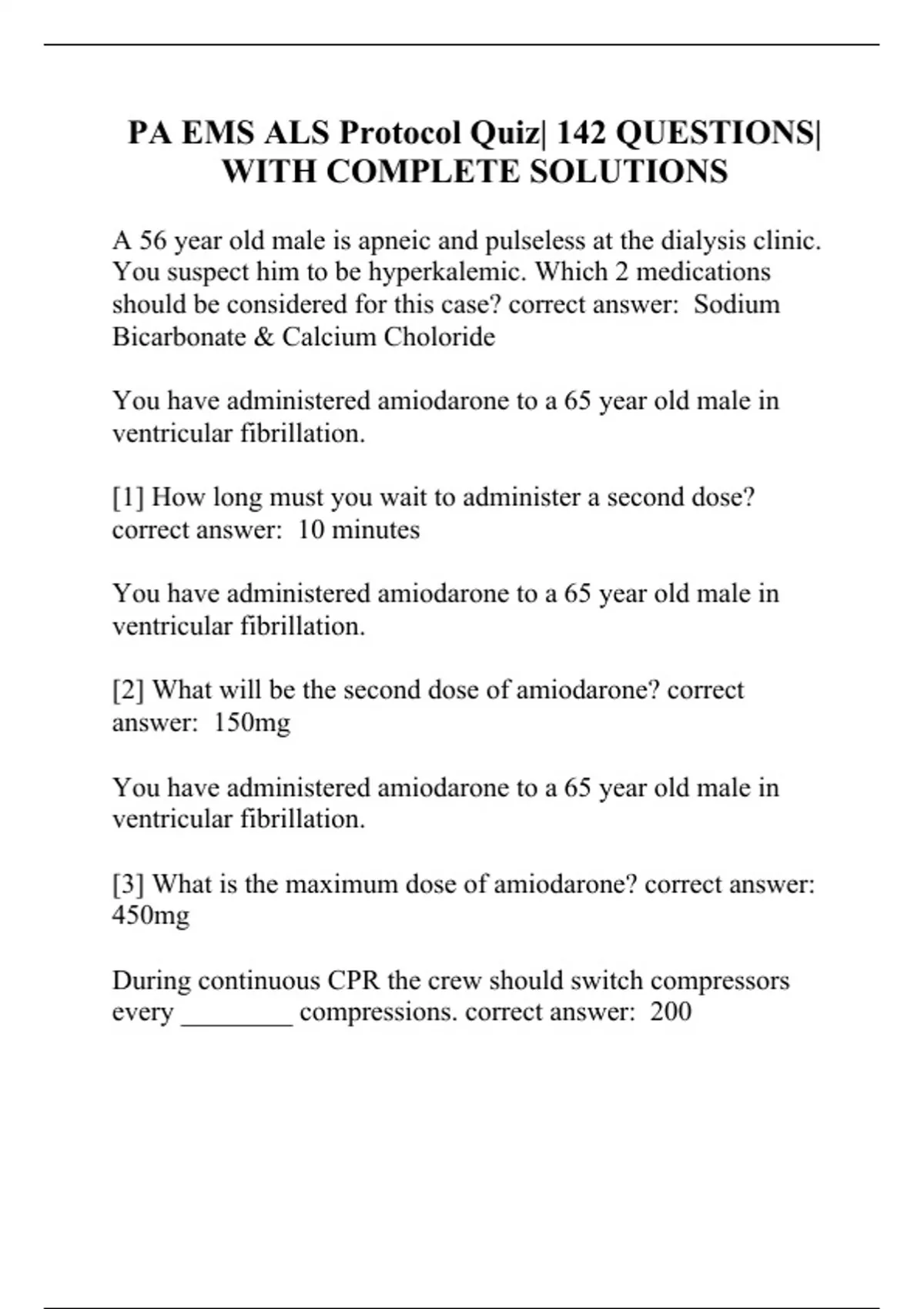
- Amiodarone/Lidocaine: Used to treat life-threatening heart rhythm disturbances.
- Fentanyl/Morphine: For advanced pain management in trauma.
- Benzodiazepines: To stop active seizures.
- Beta-agonists: To open airways during severe asthma or COPD exacerbations.
ALS vs. BLS: Key Differences and Triage
Understanding the difference between ALS and BLS is essential for both healthcare professionals and the public. The decision to send an ALS unit over a BLS unit depends on the "dispatch priority" and the perceived severity of the incident.
| Feature | Basic Life Support (BLS) | Advanced Life Support (ALS) |
|---|---|---|
| Primary Provider | Emergency Medical Technician (EMT) | Paramedic |
| Airway Tools | Oral/Nasal Airways, CPAP, BVM | Intubation, Video Laryngoscopy, Ventilators |
| Cardiac Care | AED (Automated) | 12-Lead ECG, Manual Defibrillation, Pacing |
| Medications | Oxygen, Glucose, Aspirin, Epi-Pen | Over 30+ drugs including Narcotics and Sedatives |
| Invasive Procedures | None | IV/IO access, Needle Decompression |
| Training Hours | ~150 - 200 hours | 1,200 - 2,000+ hours |
In many systems, a "tiered response" is used. If a 911 call reports a minor injury, a BLS ambulance is sent. If the call reports "difficulty breathing" or "unconsciousness," an ALS unit is automatically dispatched. However, if a BLS crew arrives and finds the patient is worse than reported, they will "request ALS" to intercept them.
The Role of the Paramedic in ALS
The paramedic is the highest level of prehospital provider in the standard EMS system. To provide ALS care, a paramedic must undergo rigorous clinical training. This education includes college-level courses in anatomy and physiology, followed by extensive clinical rotations in hospitals (ER, ICU, Labor and Delivery) and a field internship on an ALS ambulance.
In 2026, the role of the paramedic has expanded into "Community Paramedicine." In this capacity, ALS-trained providers use their diagnostic skills to treat patients in their homes for chronic conditions, reducing the need for hospital admissions. However, the core mission remains emergency response. The paramedic must be able to work under extreme pressure, often in uncontrolled environments like the side of a highway or inside a cramped residence, to perform the high-stakes procedures associated with ALS.
Medical oversight is a critical component of the paramedic’s role. Every ALS intervention is performed under the license of a Medical Director (an MD or DO). Paramedics follow strict "Protocols," but they also have "Online Medical Control," where they can call a physician via radio or phone to discuss complex cases and receive orders for treatments not covered by standing protocols.
ALS Equipment and Technology in 2026
The equipment carried on an ALS unit is significantly more advanced and expensive than that on a BLS unit. A modern ALS ambulance is essentially a mobile intensive care unit.
One of the most important pieces of technology is the Multi-parameter Monitor/Defibrillator. These devices, such as those made by Zoll or Stryker, can monitor blood pressure, oxygen saturation (SpO2), end-tidal CO2 (capnography), and 12-lead ECGs simultaneously. Capnography, which measures the carbon dioxide exhaled by a patient, has become a "gold standard" in ALS for verifying tube placement and monitoring the quality of chest compressions during CPR.
Other essential ALS equipment includes:
- Mechanical Ventilators: Portable units that provide consistent breaths to intubated patients.
- Point-of-Care Testing (POCT): Small handheld devices that can measure blood glucose, electrolytes, or lactate levels in the field.
- Ultrasound (POCUS): In 2026, many ALS units utilize portable ultrasound to check for internal bleeding (FAST exam) or to assist in starting difficult IVs.
- Infusion Pumps: Used to deliver precise doses of potent medications, such as "pressors" used to raise dangerously low blood pressure.
When is an ALS Response Required?
Not every emergency requires ALS. In fact, over-utilizing ALS for minor calls can lead to "provider burnout" and leave the system shorthanded when a true life-threatening emergency occurs. Triage systems are designed to identify specific "ALS Indicators."
An ALS response is generally required for:
- Altered Mental Status: Any patient who is not fully awake or acting normally may have a metabolic, neurological, or respiratory issue requiring advanced diagnostics.
- Respiratory Distress: While BLS can provide oxygen, ALS is needed if the patient requires intubation, nebulized medications, or CPAP.
- Chest Pain: To rule out or treat a heart attack using ECGs and medications like nitroglycerin or heparin.
- Multi-System Trauma: Patients with significant injuries from falls or car accidents often require IV fluids and advanced pain management.
- Seizures: Active seizures require benzodiazepines to prevent brain injury, which is an ALS-level skill.
- Sepsis: Identifying and beginning fluid resuscitation for severe infections is a major focus of ALS care in the mid-2020s.
Training and Certification Requirements for ALS Providers
To become an ALS provider, an individual must first be certified as an EMT. This provides the foundational knowledge of scene safety, patient assessment, and basic care. After gaining experience, the candidate enters a Paramedic program.
In the United States, the National Registry of Emergency Medical Technicians (NREMT) provides the national standard for certification. ALS training typically takes 12 to 24 months and results in either a certificate or an Associate’s Degree in Paramedicine.
Ongoing education is mandatory. Because ALS skills like intubation or specialized drug dosing are "high-risk/low-frequency" (meaning they aren't done every day but must be done perfectly), paramedics must undergo regular simulation training and recertification every two years. This ensures that their knowledge of the latest AHA (American Heart Association) ECC Guidelines remains current.
The Future of ALS in Prehospital Care
Looking toward the end of the 2020s, the "meaning" of ALS continues to evolve. We are seeing a shift from simple "scoop and run" transport toward "definitive field stabilization."
Telemedicine is now a standard part of ALS. Paramedics can wear body cameras or use tablets to give a trauma surgeon or neurologist a real-time view of the patient. This is particularly vital in "Stroke Alerts," where a neurologist can perform a visual exam remotely and direct the ALS crew to bypass the local hospital in favor of a specialized Comprehensive Stroke Center.
Furthermore, the integration of Artificial Intelligence (AI) in cardiac monitors helps ALS providers identify subtle patterns in ECGs that might be missed by the human eye, leading to faster treatment for cardiac events.
Summary of ALS Capabilities
Advanced Life Support is the bridge between the scene of an emergency and the hospital. It is a high-level medical service that combines clinical judgment with invasive procedures to save lives. Without the "ALS meaning" in EMS, patients in cardiac arrest or severe respiratory failure would have significantly lower chances of survival, as the time-to-treatment for life-saving interventions would be delayed until hospital arrival.
Frequently Asked Questions
1. Does every ambulance have ALS capabilities? No. Many ambulance services operate "BLS units" for non-emergency transports or minor injuries. ALS units are typically labeled as "Medic" units or "Advanced Life Support" and are staffed by at least one paramedic.
2. Is ALS more expensive than BLS? Yes. Due to the higher level of training for the staff, the cost of advanced medications, and the expensive equipment (like the $30,000+ cardiac monitors), the billing for an ALS transport is significantly higher than for a BLS transport.
3. Can an EMT perform ALS skills? Generally, no. An EMT-Basic is restricted to non-invasive care. However, there is an intermediate level called an "Advanced EMT" (AEMT) who can perform a limited subset of ALS skills, such as starting IVs and administering a few specific medications.
4. What is the difference between ALS and "Critical Care" transport? ALS is the standard for 911 emergency response. "Critical Care" (CCT) is a tier above ALS, usually used for inter-hospital transfers of extremely unstable patients. CCT crews often include a nurse or a respiratory therapist and use even more advanced equipment like intra-aortic balloon pumps.
5. How do I know if I should ask for an ALS ambulance? When you call 911, the dispatcher will ask a series of questions. You do not need to specify ALS or BLS. Based on your answers regarding the patient's breathing, consciousness, and symptoms, the dispatch system will automatically send the appropriate level of care.
Practical Recommendation
If you are interested in a career in EMS, start by obtaining your EMT-Basic certification. This allows you to work in the field and see ALS providers in action. For the general public, the most important "ALS" action you can take is to learn high-quality CPR and how to use an AED. While ALS providers bring the advanced tools, the "Chain of Survival" begins with immediate bystander intervention before the ALS unit even arrives.