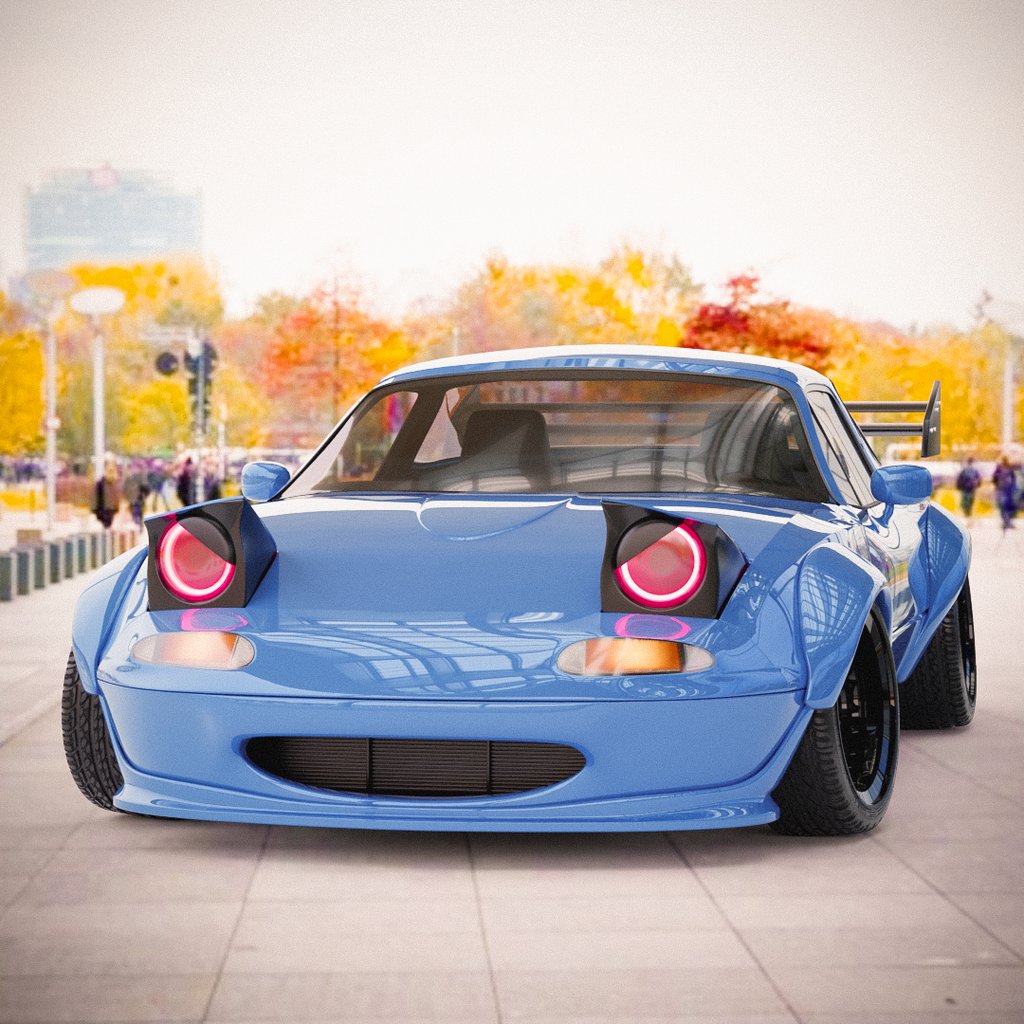
Every Mazda Miata generation offers a unique balance of analog engagement and modern usability. While the current ND3 (2024–2026) provides the most seamless technology and safety for daily use, older NA and NB models remain viable through aftermarket modernization, and the NC offers a refined, comfortable middle ground for highway commuting and long-distance touring.
The Evolution of the Mazda MX-5 Miata
The Mazda MX-5 Miata, introduced in 1989, was designed with the philosophy of Jinba Ittai, a Japanese phrase meaning "horse and rider as one." For the modern driver in 2026, this philosophy is more relevant than ever as vehicles become increasingly heavy, automated, and detached from the road. The Miata remains one of the few platforms that prioritizes driver engagement over raw horsepower or digital complexity.
Spanning four distinct generations—the NA, NB, NC, and ND—the Miata has evolved from a simple throwback to British roadsters into a sophisticated sports car that can hold its own against much more expensive machinery. However, choosing the right model requires balancing a desire for "pure" driving with the practical needs of 2026 traffic, safety standards, and connectivity requirements. Whether you are looking for a weekend canyon carver or a fuel-efficient daily driver, understanding the nuances of each generation is the first step toward ownership.
First Generation (NA): The Analog Icon (1990–1997)
The NA Miata is the car that started the revolution. Easily identified by its iconic pop-up headlights, the NA is the purest expression of the lightweight roadster concept. For the modern driver, the NA represents a digital detox. There are no drive modes, no touchscreen interfaces, and very few electronic interventions.
Driving Dynamics and Pop-Up Nostalgia
The NA was originally launched with a 1.6-liter four-cylinder engine producing 116 horsepower, later upgraded to a 1.8-liter unit in 1994 producing 128 horsepower. While these numbers seem low by 2026 standards, the car’s weight—roughly 2,100 pounds—ensures it feels lively. The four-wheel double-wishbone suspension provides a level of mechanical grip and communication that modern electric power steering systems often struggle to replicate.
Modernizing the NA for 2026 Standards
Owning an NA in 2026 comes with challenges. Safety features are minimal; early models may lack airbags, and anti-lock brakes (ABS) were optional and rare. To make an NA "modern-ready," many owners focus on "restomodding." This includes:
- LED Lighting: Replacing the dim halogen sealed-beam headlights with high-output LED units for better night visibility.
- Audio Upgrades: Installing a "single-DIN" head unit with Bluetooth or hidden Apple CarPlay modules to maintain the dash's vintage aesthetic while providing modern navigation.
- Cooling System: The NA is prone to "plastic end-tank failure" in its radiators. Replacing these with aluminum units is a mandatory reliability upgrade for modern traffic.
Second Generation (NB): Refinement and Performance (1999–2005)
The NB Miata removed the pop-up headlights due to pedestrian safety regulations, replacing them with fixed units that gave the car a "mini-RX-7" appearance. While it shares the same basic chassis architecture as the NA, the NB is more rigid, more aerodynamic, and offers a significantly improved interior.
The Evolution of Power
The NB exclusively used the 1.8-liter engine, which benefited from Variable Intake Control Systems (VICS) and later Variable Valve Timing (VVT) in the NB2 (2001–2005) models. This pushed output to approximately 142 horsepower. For the modern driver, the NB2 is often seen as the "sweet spot" for value, offering a stiffer body and better seats without the high collector prices currently attached to the NA.
The Mazdaspeed Variant
A unique highlight of this generation is the Mazdaspeed Miata (2004–2005). It is the only factory-turbocharged Miata ever produced. With 178 horsepower and a six-speed manual transmission, it offers a level of torque that makes it much more competitive in modern highway merging scenarios. However, buyers should be aware that its shorter gearing makes it a busier car at high speeds compared to later generations.
Third Generation (NC): The Grand Tourer’s Choice (2006–2015)
Often unfairly criticized for being the "heavy" Miata, the NC (Third Generation) is actually the most practical choice for many modern drivers. It was built on a modified version of the RX-8 platform, which meant a more spacious cabin, better crash protection, and a more sophisticated multi-link rear suspension.
Why the NC is Underestimated
The NC introduced the Power Retractable Hard Top (PRHT). Unlike a traditional cloth soft top, the PRHT provides the security and weatherproofing of a coupe with the ability to transform into a convertible in just 12 seconds. For a driver in 2026 who lives in an apartment or lacks a garage, the PRHT is a game-changer for long-term durability and theft prevention.
Performance and Modern Amenities
The NC features a 2.0-liter MZR engine producing 166 to 170 horsepower. It was the first Miata to offer modern conveniences like side-impact airbags, stability control, and a Bose sound system that actually functions well at highway speeds. For drivers who find the NA and NB too cramped, the NC offers significantly more hip and shoulder room, making it the superior "Grand Tourer" of the lineage.
Fourth Generation (ND): The Peak of Modern Engineering (2016–2026)
The ND Miata is a feat of engineering, as Mazda managed to make it shorter and lighter than the previous generation, bringing the weight back down to near-NA levels (approx. 2,300 lbs). As of 2026, the ND remains the gold standard for a modern sports car that balances efficiency with pure joy.
ND1 vs. ND2 vs. ND3: Which to Buy?
The ND has seen several significant revisions during its decade-long production run:
- ND1 (2016–2018): Features the 2.0L SkyActiv-G engine with 155 hp. It is known for its high torque but lower redline.
- ND2 (2019–2023): A major engine revision increased the redline to 7,500 RPM and boosted power to 181 hp. This is widely considered the best-performing engine in Miata history.
- ND3 (2024–2026): The current iteration features a new 8.8-inch infotainment system, modernized safety tech (like Adaptive Cruise Control in some markets), and a revised DSC-Track mode for enthusiasts who want to push the car on circuits without fully disabling safety nets.
For the modern driver, the ND3's inclusion of native wireless Apple CarPlay and Android Auto, along with a significantly clearer backup camera, makes it the only generation that feels truly "current" in the digital ecosystem of 2026.
Comparison of All Miata Generations
The following table compares the essential specifications and modern-day suitability of the four generations. Weights and power figures are approximate based on US-spec base models.
| Feature | NA (Gen 1) | NB (Gen 2) | NC (Gen 3) | ND (Gen 4) |
|---|---|---|---|---|
| Production Years | 1990–1997 | 1999–2005 | 2006–2015 | 2016–Present |
| Curb Weight | ~2,100 lbs | ~2,350 lbs | ~2,500 lbs | ~2,340 lbs |
| Horsepower | 116 – 128 hp | 140 – 142 hp | 166 – 170 hp | 155 – 181 hp |
| Safety Tech | Basic/None | Dual Airbags | Side Airbags/ABS | Full ADAS Suite |
| Infotainment | Tape/CD | CD/Cassette | CD/Aux | 8.8" Touchscreen |
| Best For | Purists/Collectors | Budget Enthusiasts | Daily Commuters | Tech-Savvy Drivers |
Key Considerations for Today’s Buyers
Purchasing a Miata in 2026 requires a different mindset than it did a decade ago. Prices for clean, low-mileage NA and NB models have risen significantly, often crossing the $15,000 threshold. Meanwhile, the ND continues to hold its value exceptionally well due to its status as one of the last internal combustion sports cars.
Reliability and Maintenance
Regardless of the generation, the Miata is legendary for its reliability. However, "Miata problems" are age-specific:
- Rust: This is the primary "killer" of NA and NB models. Check frame rails and rocker panels specifically. By 2026, many northern-climate cars have succumbed to corrosion.
- Top Maintenance: Soft tops have a lifespan of about 10–15 years. If buying an NC or older ND, check for leaks and clogged "rain drains," which can lead to flooded interiors and electrical issues.
- Transmission: Early ND1 models (2016–2017) had some documented issues with manual transmission durability. If buying an early ND, ensure the gearbox has been replaced with the revised "Version 5" or later unit.
Safety in Modern Traffic
Modern SUVs are larger and heavier than ever. Driving a 2,100-pound NA Miata among 6,000-pound electric trucks requires heightened situational awareness. The ND generation offers modern crumple zones and blind-spot monitoring, which can be life-saving in heavy 2026 traffic. For those prioritizing safety, the NC and ND are the only logical choices.
Upgrading Older Models for Daily Use
If you choose an NA or NB, you don't have to live with 1990s technology. The aftermarket for Miatas is the most robust in the automotive world. For modern usability, consider the following upgrades:
- Sound Deadening: Older Miatas are loud inside. Adding Butyl-based sound deadening to the doors and floorboards significantly improves the "modern" feel of the car.
- Smart Mirrors: Since rear visibility can be poor with the top up, many modern owners install digital rear-view mirrors that use a camera to provide a wide-angle view of what’s behind them.
- Upgraded Bushings: Rubber components degrade over 30 years. Replacing old suspension bushings with modern polyurethane or fresh rubber restores the "factory new" handling that made the car famous.
Frequently Asked Questions
Which Miata is the most comfortable for tall drivers?
The NC (2006–2015) is generally considered the best for taller drivers. It has the widest cabin and the most adjustable seating position. The ND is surprisingly cramped for those over 6'2", and the NA/NB steering wheels do not tilt, which can cause legroom issues.
Can a Miata be a reliable daily driver in 2026?
Yes. The Mazda MX-5 is built on simple, proven mechanical components. Even a 30-year-old NA can be daily driven if the cooling system and rubber components have been refreshed. However, for a "turn-key" daily experience with modern fuel economy (up to 35 MPG highway), the ND2 or ND3 is the superior choice.
Is the automatic transmission worth considering?
While the Miata is famous for having one of the best manual shifters in the world, the 6-speed automatic in the NC and ND models is competent. In the ND, it features paddle shifters and a dedicated sport mode. For drivers in high-traffic cities like Los Angeles or Tokyo, the automatic allows you to enjoy the chassis without the fatigue of a clutch pedal.
What is the "RF" model?
The ND RF (Retractable Fastback) is a version of the ND Miata with a power-folding hardtop that leaves the rear buttresses in place. It looks like a coupe when closed and a "Targa" when open. It is quieter and more secure than the soft top but adds about 100 pounds to the car's weight.
Are Miatas expensive to insure?
Generally, no. Miatas are often insured as secondary "pleasure" vehicles, which can lower premiums. However, the lack of modern safety tech on NA and NB models may lead to higher liability costs compared to a modern ND equipped with automatic emergency braking.
Final Recommendation for 2026 Drivers
The best Miata for you depends entirely on your tolerance for "analog" living. If you want a modern car that happens to be a world-class roadster, buy a 2024–2026 ND3. It offers the connectivity and safety you expect from a 2026 vehicle while maintaining the soul of a lightweight sports car.
If you are on a budget but want a reliable commuter, look for a 2009–2015 NC2 or NC3 with the Power Retractable Hard Top. It is the most "grown-up" Miata and offers the best protection against the elements. For those who want the pure, unfiltered experience and are willing to perform their own maintenance and upgrades, the NA remains a timeless masterpiece that will only continue to grow in character as the automotive world moves toward full electrification.