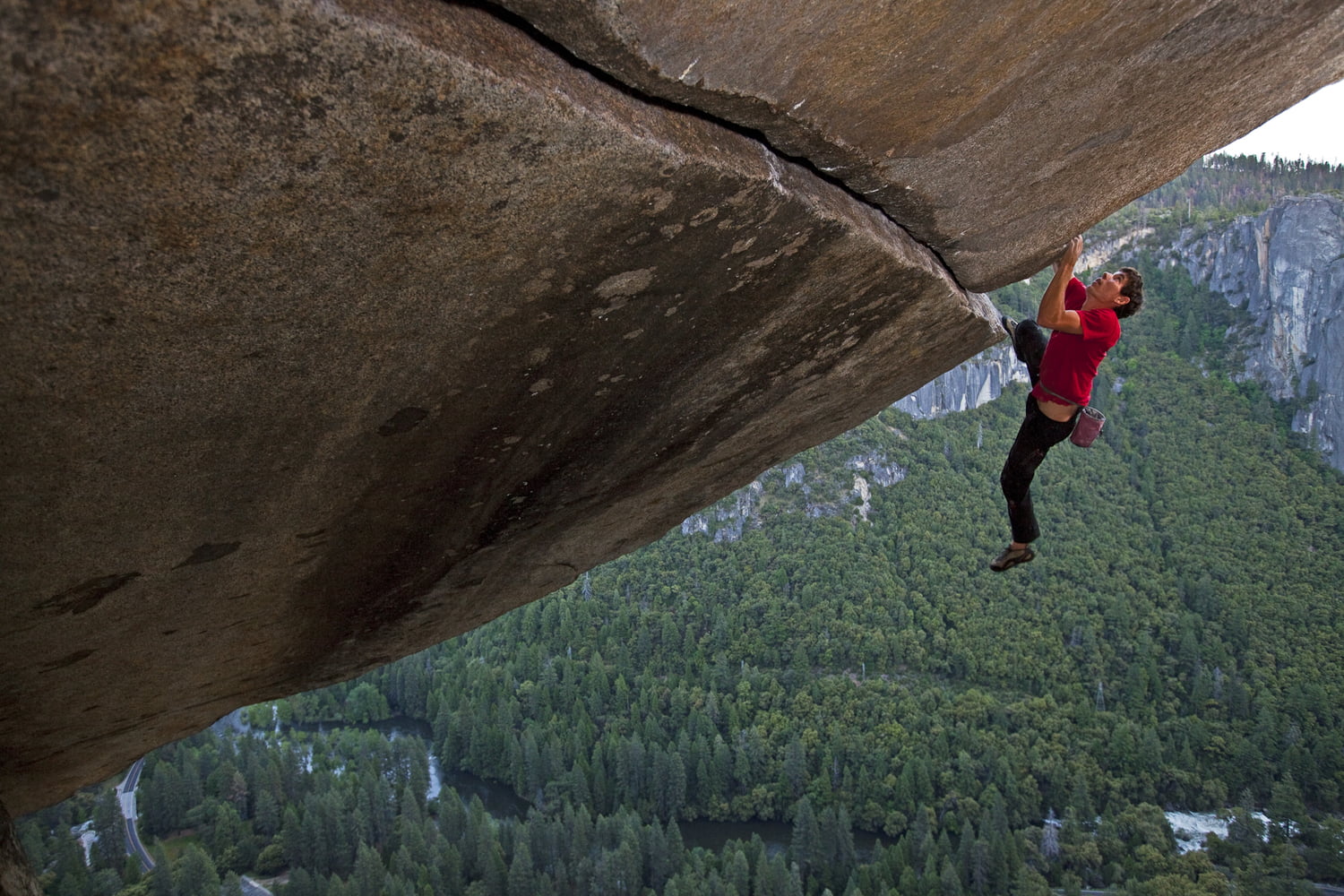
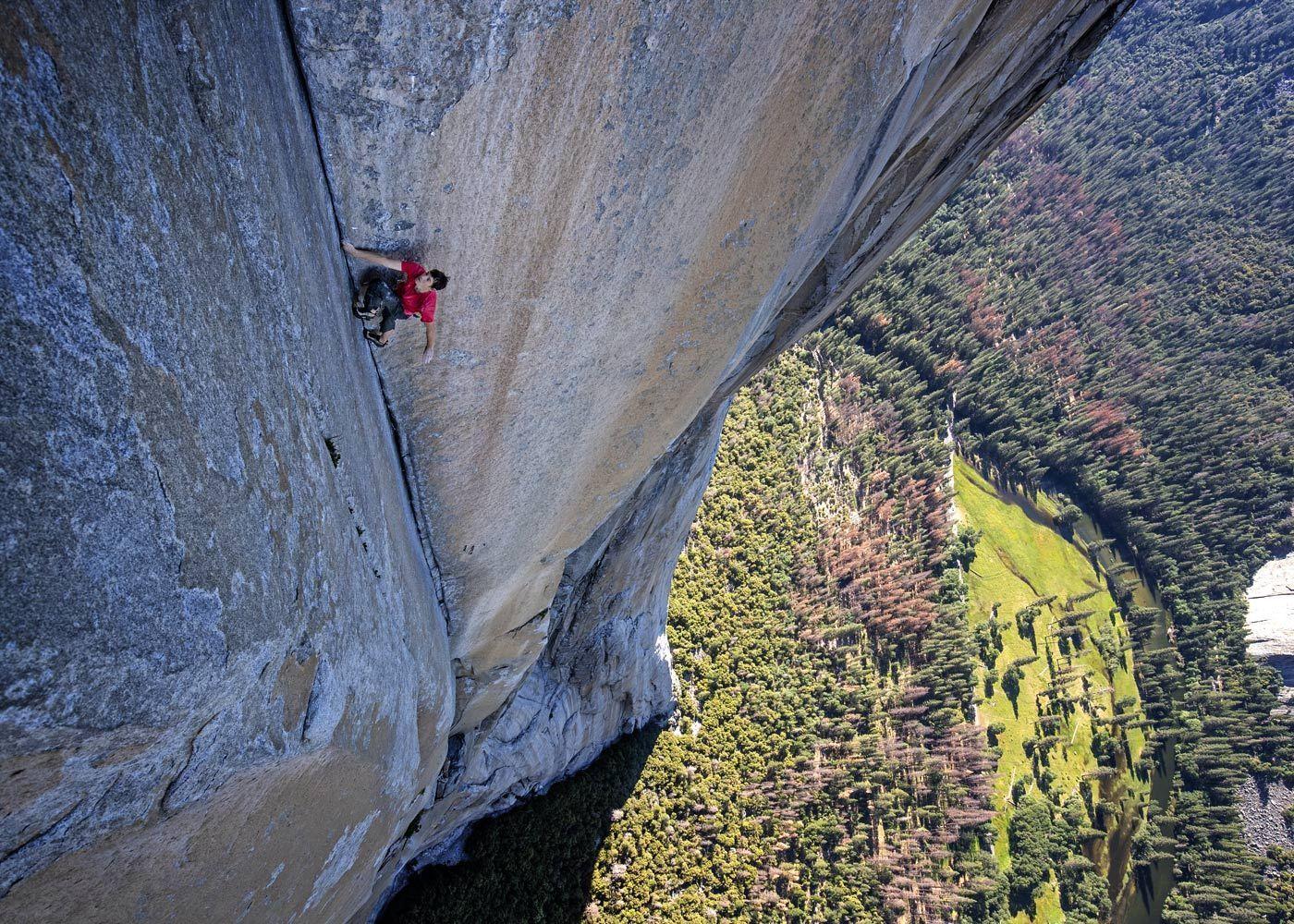
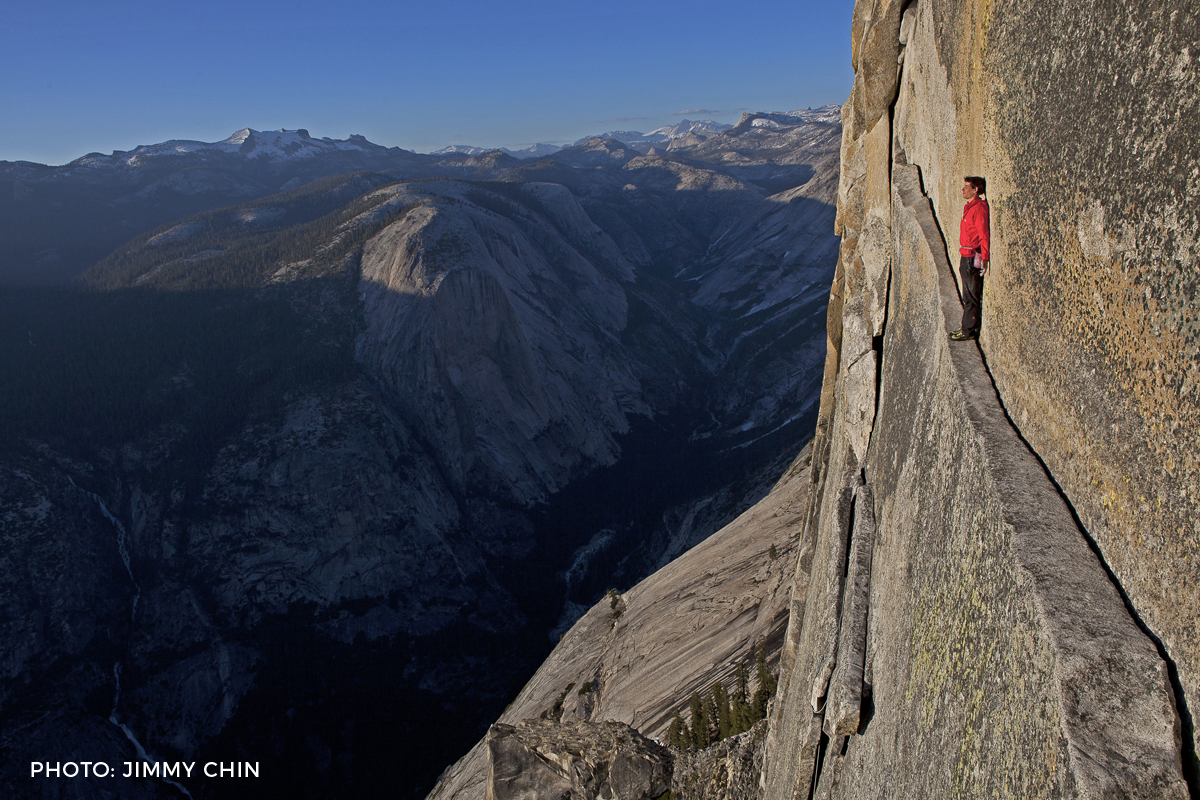
On June 3, 2017, Alex Honnold completed the first-ever free solo ascent of El Capitan in Yosemite National Park, reaching the summit in exactly 3 hours and 56 minutes. Climbing the 2,900-foot "Freerider" route (5.13a) without ropes, harnesses, or protective gear, Honnold began his ascent at 5:32 AM and pulled over the lip of the summit at 9:28 AM.
This feat is widely regarded as one of the greatest athletic achievements in human history. To understand the significance of that sub-four-hour window, one must look beyond the clock and into the decades of preparation, the technical demands of the granite monolith, and the psychological mastery required to navigate "The Big Stone" without a safety net. As of 2026, Honnold’s achievement remains the benchmark against which all extreme climbing endeavors are measured.
The Timeline of June 3, 2017: Minute by Minute
To appreciate the speed of Honnold’s ascent, it is necessary to compare it to the traditional pace of climbing El Capitan. For most experienced climbing parties, the Freerider route takes between three and five days of sustained effort, involving hauling heavy bags of water, food, and sleeping ledges (portaledges).
Honnold’s "light and fast" approach allowed him to bypass the logistical nightmares of rope management and gear placement. Here is how the morning of the record-breaking climb unfolded:
- 05:32 AM: Honnold begins the climb at the base of the Freerider route. He is dressed in a simple t-shirt and trousers, equipped only with his climbing shoes and a chalk bag.
- 06:15 AM: He clears the initial slabs and the "Freeblast" section. This area is notoriously "smeary," relying on the friction between the rubber of the shoe and the smooth granite.
- 07:30 AM: Honnold reaches the "Monster Offwidth," a grueling 200-foot crack that requires a physical struggle known as "chimneying." While most climbers find this exhausting, Honnold moves through it with systematic efficiency.
- 08:30 AM: He approaches the "Boulder Problem," the technical crux of the route. This is a sequence of highly specific, small holds that require absolute precision.
- 09:28 AM: Honnold reaches the sandy summit of El Capitan. He is greeted by a small camera crew and the realization that he has fundamentally changed the sport of climbing forever.
The 3-hour and 56-minute time was not a result of "rushing" in the traditional sense. Instead, it was the result of extreme efficiency. By removing the need to stop and build anchors or belay a partner, Honnold turned a multi-day marathon into a focused morning workout.
Technical Specifications of the Freerider Route
The Freerider route is a variation of the classic Salathé Wall. It was first climbed "free" (using ropes only for safety, not for upward progress) by Alexander and Thomas Huber in 1998. To free solo it, Honnold had to master 30 distinct pitches of climbing, each presenting its own unique lethal risk.
The Crux Sections
There are several sections on Freerider that are considered "no-fall zones," where the difficulty of the movement is high and the consequences of a mistake are absolute.
- The Freeblast Slabs: Located early in the climb, these slabs are tilted at a steep angle but lack distinct handholds. Climbers must trust the friction of their feet. For a free soloist, this is psychologically taxing because there is no "grip" to hold onto if a foot slips.
- The Monster Offwidth: This is a wide crack that is too big for hands but too small for the whole body. It requires a specific technique called "leaching," where the climber uses their back, knees, and feet to wedge themselves upward.
- The Teflon Corner: A notoriously smooth, dihedral corner where the granite feels as slick as the namesake material. Honnold eventually chose a variation known as the "Boulder Problem" to bypass the most precarious parts of the corner, though the Boulder Problem itself is technically more difficult (rated 5.13a).
- The Enduro Corner: A long, sustained section of finger-cracks that requires immense forearm endurance. At this point, several thousand feet above the valley floor, physical fatigue becomes a major safety factor.
Route Complexity and Grading
The Yosemite Decimal System (YDS) grades Freerider at 5.13a. In the world of professional climbing, 5.13a is a high level of difficulty, but it is a grade that many top-tier athletes can climb with a rope. The "impossible" nature of Honnold’s feat lies in the fact that he performed these moves 2,500 feet in the air with zero margin for error. A single bead of sweat, a loose flake of rock, or a momentary lapse in concentration would have resulted in a fatal fall.
Comparing El Capitan Ascent Methods
To put the 3:56 time into perspective, we can compare it to other methods of ascending El Capitan. While Honnold holds the free solo record, other records exist for "speed climbing" (using ropes and gear for safety/speed) and traditional "big wall" ascents.
| Ascent Method | Typical Time | Record Holder | Notes |
|---|---|---|---|
| Traditional Big Wall | 3 - 5 Days | N/A | Involves hauling gear and sleeping on the wall. |
| Speed Climbing (The Nose) | 2 - 10 Hours | Alex Honnold & Tommy Caldwell | 1:58:07 (2018). Used ropes and "simul-climbing." |
| Free Solo (Freerider) | 3h 56m | Alex Honnold | The first and only successful free solo of El Cap. |
| Single-Day Free Climb | 12 - 24 Hours | Various | Climbing all pitches "free" with a partner and ropes. |
As shown in the table, Honnold’s free solo time is comparable to the times achieved by elite pairs of speed climbers using ropes. This highlights the fluidity with which Honnold moved; he was essentially running up the vertical face of the mountain.
The Psychological and Physical Preparation
Honnold did not wake up one day and decide to solo El Capitan. The 3:56 time was the culmination of nearly a decade of specific preparation. He had climbed the Freerider route dozens of times with ropes, memorizing every single handhold and foothold (referred to as "beta").
Visualization and Muscle Memory
Honnold famously kept a "climbing diary" where he recorded the nuances of every pitch. He spent hundreds of hours hanging on a rope, cleaning the holds of dust and lichen, and practicing the most difficult sequences until they were automatic. By the time he stepped onto the wall on June 3rd, he wasn't "guessing" where his hands should go; he was executing a choreographed routine.
Amygdala Research
Scientific interest in Honnold’s brain has led to fMRI scans that suggest his amygdala—the part of the brain responsible for the fear response—requires a much higher level of stimulus to trigger than the average person. While he still feels fear, his ability to compartmentalize it and focus on technical execution is statistically anomalous. This neurological trait allowed him to remain calm during the 3 hours and 56 minutes when his life was constantly at risk.
The Impact of the Documentary "Free Solo"
The feat was captured by a film crew led by Jimmy Chin and Elizabeth Chai Vasarhelyi for the documentary Free Solo. The film, which won the Academy Award for Best Documentary Feature, provided a visceral look at the climb.
Crucially, the presence of the cameras added a layer of complexity. Honnold had to ensure that the pressure of being filmed did not influence his decision-making. In fact, he aborted his first attempt in 2016 because "it didn't feel right," demonstrating a level of discipline that prioritized his life over the production's needs. The eventual success in 2017 was a "clean" ascent, meaning the cameras were positioned in a way that did not provide any physical assistance or distraction.
El Capitan in 2026: The Legacy of the Ascent
Nearly nine years after the event, Honnold’s 3:56 ascent remains a singular event in the history of mountaineering. While younger climbers continue to push the limits of speed and difficulty in Yosemite, no one has yet attempted to free solo El Capitan again. The "Freerider" route is still a pilgrimage for climbers worldwide, but almost all choose to use the traditional protection of ropes and cams.
The ascent also sparked a global conversation about risk and mastery. It transitioned Honnold from a "climbing celebrity" to a household name, allowing him to use his platform for environmental philanthropy through the Honnold Foundation.
For the National Park Service, the event reinforced Yosemite’s status as the center of the climbing universe, though it also led to increased scrutiny regarding the safety and ethics of extreme soloing in public lands.
Frequently Asked Questions
Has anyone ever beaten Alex Honnold's free solo time on El Capitan?
No. As of 2026, Alex Honnold remains the only person to have ever successfully free soloed El Capitan. While other climbers have set faster times on "The Nose" using ropes and gear, the free solo record is unique to Honnold.
What route did Alex Honnold take for his free solo?
He climbed the Freerider route. It is a 5.13a variation of the Salathé Wall. He chose this route because it is the most "climbable" line on the wall that avoids the massive blank sections of granite found on other routes like The Nose or Dawn Wall.
How much did Alex Honnold's gear cost for the climb?
The physical gear Honnold used was minimal. A pair of La Sportiva TC Pro climbing shoes (approx. $200) and a chalk bag with chalk (approx. $30). However, the "cost" in terms of years of training and previous gear used for practice runs totals thousands of dollars and thousands of hours of labor.
Did he have any help during the 3 hours and 56 minutes?
No. To qualify as a free solo, a climber must receive no physical assistance. While there were cameramen on the wall (hanging on ropes), they did not provide any gear, food, water, or physical help. Honnold was entirely self-reliant from the ground to the summit.
What happens if a free soloist gets tired or stuck?
There is no "undo" button in free soloing. If a climber gets stuck, they must either find a way to climb down (which is often harder than climbing up) or find a way through the difficulty. If they become too physically exhausted to hold on, they will fall. This is why Honnold's preparation focused so heavily on endurance and "over-training" for the grade.
Summary of the Feat
- Date: June 3, 2017
- Time: 3 hours, 56 minutes
- Height: ~2,900 feet
- Route: Freerider (5.13a)
- Location: El Capitan, Yosemite National Park
If you are a climber inspired by this feat, the best next action is to focus on technical proficiency and safety systems. Climbing El Capitan is a pinnacle achievement for any athlete, but the use of ropes and traditional protection is the standard for 99.9% of the climbing community. Aspiring big-wall climbers should begin by mastering multi-pitch efficiency and aid climbing techniques in a controlled, safe environment.