Alaska does not experience a traditional cycle of day and night during the summer months. Due to the state's high latitude, the sun remains above the horizon for extended periods, leading to the phenomenon of the "Midnight Sun." In northern regions, the sun may not set at all for weeks, while in the south, the sky remains in a state of civil or nautical twilight throughout the night.
The Science Behind Alaska’s Summer Light
To understand why Alaska experiences light differently than the contiguous United States, one must look at the Earth's axial tilt. The Earth is tilted on its axis at approximately 23.5 degrees. As the planet orbits the sun, this tilt causes different parts of the globe to receive varying amounts of direct sunlight depending on the time of year.
During the summer solstice, which occurs annually in June, the Northern Hemisphere is tilted at its maximum angle toward the sun. For regions located north of the Arctic Circle (66.5 degrees North latitude), this tilt results in the sun staying above the horizon for a full 24-hour cycle. This is the literal "Midnight Sun."
As you move further south within Alaska—toward cities like Anchorage, Fairbanks, or Juneau—the effect is slightly less extreme than in the Arctic, but it remains significant. While the sun does technically dip below the horizon in places like Anchorage, it does not drop low enough for the sky to reach true astronomical darkness. Instead, the region experiences "twilight," where the sun is just far enough below the horizon that the sky retains a glow, often lasting until the sun begins its ascent early the next morning.
Defining Twilight vs. True Darkness
In scientific and navigational terms, there are three distinct stages of twilight that occur when the sun is below the horizon:
- Civil Twilight: The sun is up to 6 degrees below the horizon. During this phase, there is enough natural light for most outdoor activities, and artificial lighting is often unnecessary for general visibility.
- Nautical Twilight: The sun is between 6 and 12 degrees below the horizon. At this stage, the horizon is still visible, and general outlines of objects remain discernible, but finer details become difficult to see.
- Astronomical Twilight: The sun is between 12 and 18 degrees below the horizon. This is when the sky begins to darken enough for astronomical observations, but it is not "true" night yet, as some residual light from the sun still permeates the upper atmosphere.
In many parts of Alaska during the summer, the sun rarely drops below the 12-degree mark, and in some northern areas, it never even reaches the 6-degree mark. Consequently, you are effectively living in a perpetual state of daylight or twilight. The "dark" that residents of lower latitudes expect—where the sky turns black and stars become clearly visible—is virtually absent in the Alaskan summer.
Geographical Variations Across the State
The experience of summer light varies significantly depending on your specific location in Alaska. The state spans roughly 20 degrees of latitude, which creates a wide spectrum of light intensity and duration.
- Northern Alaska (Barrow/Utqiaġvik): Located well above the Arctic Circle, this region experiences the most extreme light. The sun stays above the horizon continuously from mid-May through early August. There is no darkness whatsoever during this window; the sun simply circles the sky, lower at "midnight" and higher at "noon."
- Interior Alaska (Fairbanks): Fairbanks experiences nearly 22 hours of daylight during the summer solstice. While the sun technically sets, the sky remains bright enough to read a book outside at midnight.
- Southcentral Alaska (Anchorage/Kenai): Anchorage experiences about 19 to 20 hours of daylight in late June. The "sunset" occurs late at night, but the sun stays close enough to the horizon that the sky glows with deep blues and purples until sunrise.
- Southeast Alaska (Juneau/Ketchikan): Being the southernmost part of the state, these areas see the shortest duration of daylight compared to the north, yet they still experience significantly longer days than states like California or Florida. They enjoy roughly 18 hours of daylight during the peak of summer.
The Impact on Daily Life and Physiology
The lack of darkness poses unique challenges and benefits for those living in or visiting Alaska. Human beings possess a circadian rhythm—an internal 24-hour clock regulated by light and dark cycles. When this cycle is disrupted, it can influence sleep patterns, mood, and productivity.
For many Alaskans, the summer is a time of high energy and outdoor activity. The extended light allows for hiking, fishing, and gardening late into the evening. However, the lack of a dark, natural environment for sleep can lead to "summer insomnia." Many homes in Alaska are equipped with "blackout curtains" or specialized window films designed to block as much light as possible to simulate a dark environment.
For visitors, the adjustment period can be jarring. It is not uncommon for tourists to find themselves staying awake until 2:00 AM, feeling energized by the ambient light, only to realize the next morning that their bodies have not recovered as they would after a night in total darkness.
Comparison of Daylight Characteristics
The following table outlines the general characteristics of light across different regions of Alaska during the peak of summer (June).
| Region | Max Daylight Duration | Light Quality at Midnight |
|---|---|---|
| Arctic North | 24 Hours | Bright sunshine (Low angle) |
| Interior | ~22 Hours | Constant twilight/bright glow |
| Southcentral | ~19-20 Hours | Nautical twilight (Deep blue/purple) |
| Southeast | ~18 Hours | Nautical/Astronomical twilight |
Common Myths and Misconceptions
A frequently encountered myth is that the "darkness" in Alaska simply shifts to a different time of day. While it is true that the sun moves, there is no hour during the peak summer months where the sky achieves the true blackness of night found in winter or at lower latitudes.
Another misconception is that the heat is oppressive because the sun is out for so long. While the light is constant, the sun’s angle—especially in the far north—is often quite low. This means the intensity of the solar radiation is less concentrated than at the equator, preventing the extreme temperatures one might expect from 24 hours of sun.
Practical Tips for Surviving the Midnight Sun
If you are traveling to Alaska in the summer, preparation is key to managing the lack of darkness:
- Invest in a High-Quality Eye Mask: An eye mask is the single most effective tool for ensuring quality sleep. Choose one with contoured cups to avoid pressure on the eyelids.
- Utilize Blackout Curtains: If staying in a hotel or rental, check if the property specifies blackout window treatments. If not, consider bringing portable suction-cup blackout shades.
- Respect Your Circadian Rhythm: Try to maintain a consistent bedtime regardless of what the sky looks like. Using a clock to dictate your sleep schedule rather than visual cues from the window will help mitigate exhaustion.
- Hydrate and Schedule: Because you will likely feel more active due to the constant light, it is easy to forget to rest. Follow a structured schedule to ensure you are getting adequate downtime.
Frequently Asked Questions
Does the sun ever fully set in Anchorage during the summer? Technically, yes, the sun dips below the horizon in Anchorage. However, it does not drop deep enough to reach "astronomical twilight." The sky remains illuminated by the sun's position just beneath the horizon, resulting in a persistent, long-lasting sunset-to-sunrise glow.
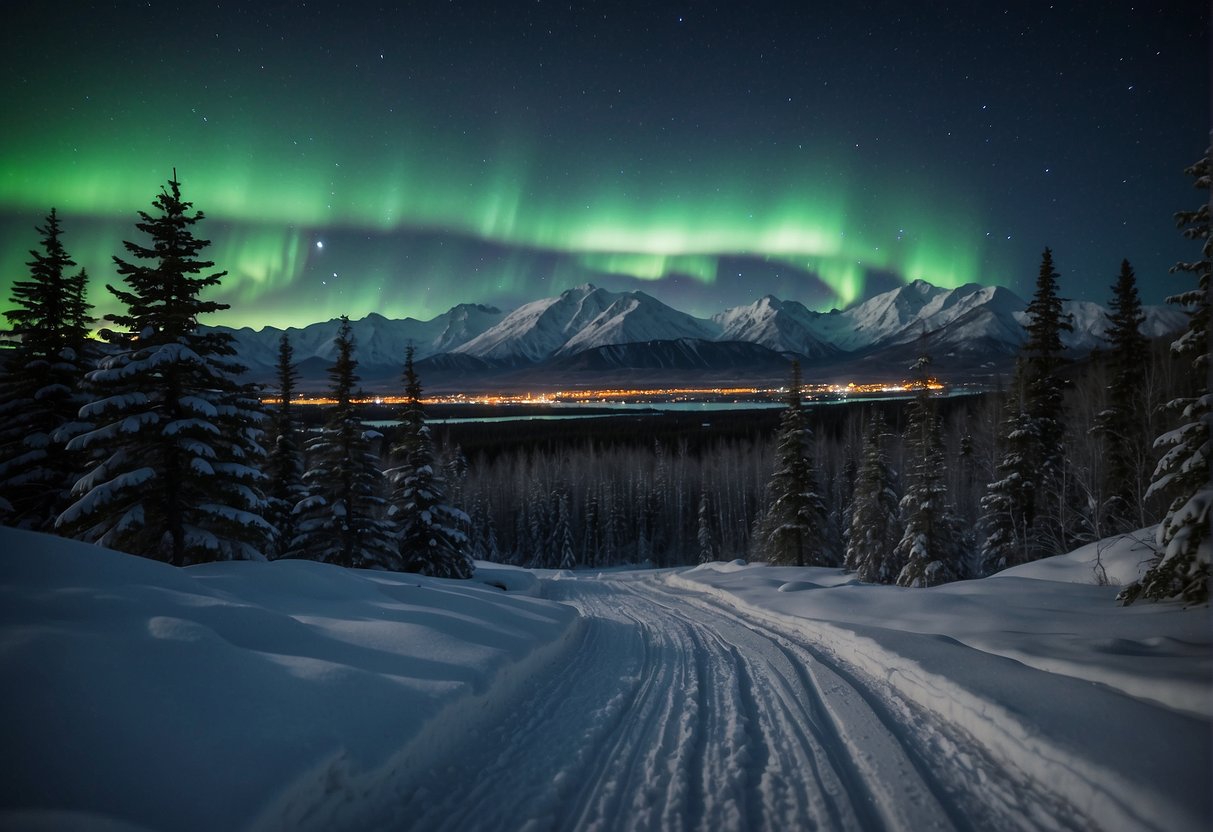
Can you see the Northern Lights during the summer? No, the Northern Lights (Aurora Borealis) require dark skies to be visible to the naked eye. Because Alaska does not experience true darkness during the summer, the ambient light washes out the auroral activity. The best time to see the lights is between September and March.
Does this lack of darkness affect Alaskan wildlife? Yes, wildlife in Alaska is highly adapted to these cycles. Many animals, such as moose and bears, adjust their activity levels to take advantage of the extended daylight for foraging, while some migratory birds rely on the continuous light to feed their young for longer periods.
Is it always hot because the sun is up? No. Alaska’s temperature is influenced more by latitude, proximity to the ocean, and elevation than by the duration of daylight. While summer days are pleasant, the sun remains at a lower angle compared to tropical regions, meaning it does not heat the air as aggressively.
Will I get sunburned in the middle of the night? While the risk of sunburn is significantly lower when the sun is at its lowest point (near midnight) because the rays are hitting the atmosphere at an extreme angle, the UV index can still be high during the "daylight" hours of 10:00 AM to 6:00 PM. Always use sun protection if you are outdoors.
Next Steps for Your Journey
If you are planning to visit or relocate to Alaska, the best approach is to embrace the phenomenon rather than fight it. Plan your outdoor excursions for the evening hours when the crowds are thinner and the light provides a unique, ethereal quality to the landscape. If you find the lack of darkness difficult, prioritize accommodations that guarantee light-controlled environments. By understanding that the cycle of light is fundamentally different in the north, you can adjust your expectations and fully enjoy the expansive, long-lasting days that make the Alaskan summer a singular experience.