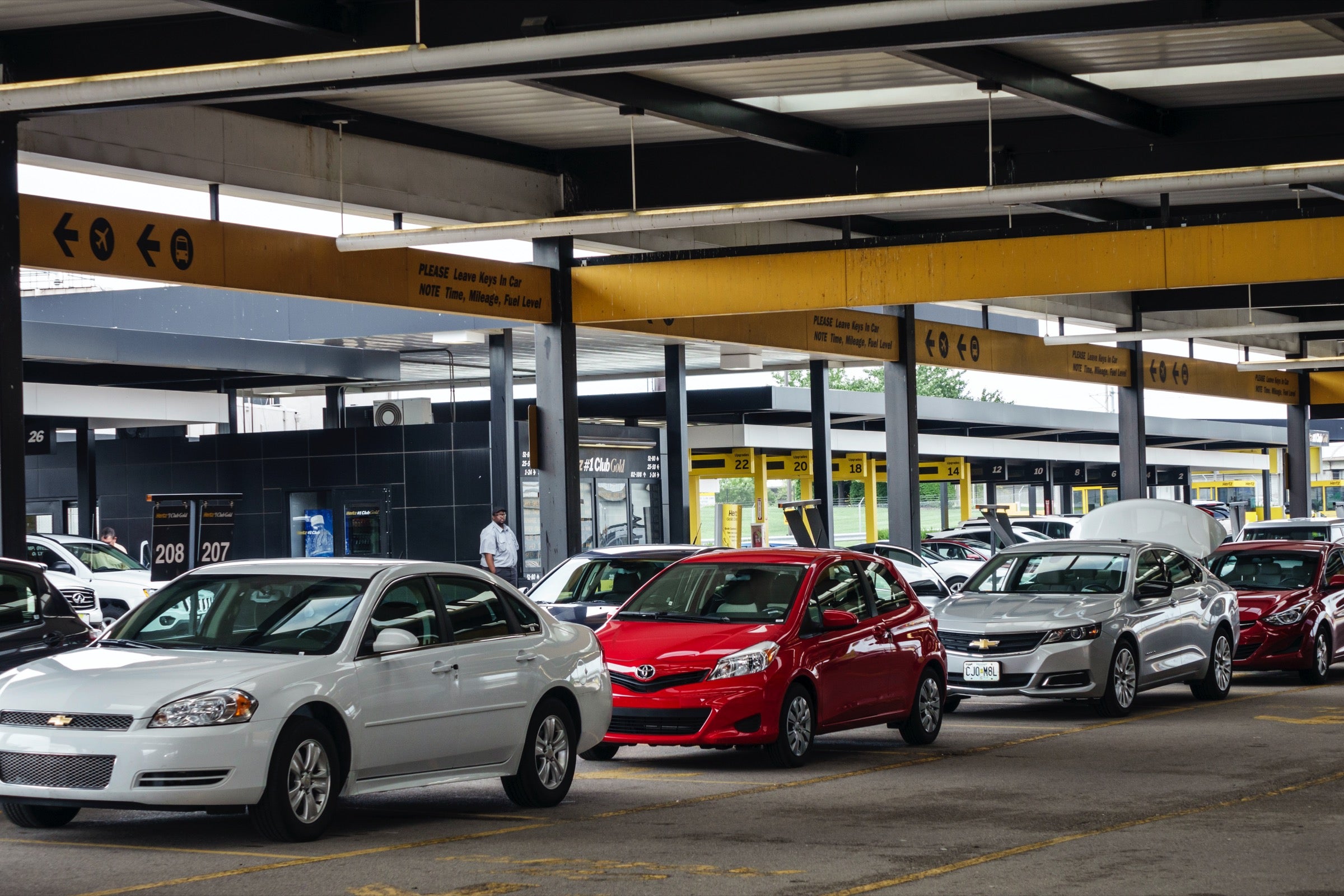
Airport car rental involves hiring a vehicle from a terminal-based or nearby facility immediately upon arrival at an aviation hub. To secure a vehicle in 2026, travelers must navigate digital booking platforms, provide valid identification and credit credentials, and understand airport-specific surcharges that prioritize convenience for high-volume transit environments.
Renting a car at an airport is often the first logistical hurdle travelers face after landing. While it offers unparalleled convenience compared to public transit or ride-sharing for long-distance travel, the environment is unique. Airport operations are governed by specific concession agreements, federal safety standards, and local tax structures that differentiate them from "neighborhood" rental locations. As we navigate the travel landscape of 2026, understanding these nuances is essential for avoiding delays and unexpected expenses.
Core Requirements for Airport Car Rental
Before stepping off a plane, travelers must ensure they possess the necessary documentation and financial credentials. In 2026, while digital integration has streamlined the process, the legal and financial "gatekeepers" remain stringent to mitigate the risk of high-value asset loss.
Identification and Licensing
A valid driver’s license is the primary requirement. For domestic travelers within their own country, a standard state or provincial license usually suffices. However, in 2026, many jurisdictions have fully transitioned to Digital Driver’s Licenses (mDLs) stored in secure mobile wallets. While most major airport kiosks (such as those at Hertz or Enterprise) now accept these, it is still highly recommended to carry a physical backup, especially if traveling across international borders or into regions with legacy infrastructure.
For international travelers, an International Driving Permit (IDP) is often mandatory. The IDP acts as a standardized translation of your home license and is required by law in many European and Asian countries. Even if the rental agency does not ask for it at the counter, local law enforcement may require it during a traffic stop.
Financial Credentials and Deposits
The credit card remains the industry standard for airport rentals. Agencies prefer credit cards because they allow for an "authorization hold"—a temporary freeze of funds that covers the estimated rental cost plus a security deposit (typically ranging from $200 to $500).
Using a debit card is possible at many 2026 airport locations, but it comes with caveats:
- Proof of Return Flight: Many agencies require debit card users to show a confirmed return airline ticket.
- Credit Checks: Some providers perform a "soft" credit inquiry for debit users.
- Delayed Refunds: Security deposits on debit cards are physically withdrawn from the account and can take 5–10 business days to be returned after the vehicle is checked back in.
Age Restrictions and Surcharges
The minimum age to rent a car at most airports is 21, though some specialized agencies allow 18-year-olds in specific jurisdictions (like New York or Michigan in the U.S.). However, travelers under the age of 25 are almost universally subject to a "Young Driver Surcharge," which can range from $20 to $50 per day. This fee reflects the higher actuarial risk associated with younger drivers.
Navigating Airport Logistics: Pickup and Transport
Modern airports have moved toward Consolidated Rental Car Facilities (ConRACs) to reduce terminal congestion. Understanding how to reach these facilities is key to a smooth transition from the gate to the driver's seat.
On-Site vs. Off-Site Locations
- On-Site (Terminal): These counters are located within the airport terminal or within walking distance of the baggage claim. While they offer the highest level of convenience, they often carry the highest "Concession Recovery Fees."
- ConRAC Facilities: These are massive, multi-level hubs located on airport grounds but away from the terminals. Travelers typically reach them via a dedicated automated people mover (APM) or a specialized shuttle bus.
- Off-Site: These agencies (often budget brands like Fox or Payless) are located several miles away. They require a longer shuttle ride but generally offer lower daily rates because they avoid high airport concession taxes.
The Rise of Contactless Pickup
In 2026, "Skip the Counter" technology is no longer a premium perk but a standard expectation. Loyalty program members (such as National Emerald Club or Avis Preferred) can bypass the physical counter entirely. After landing, the traveler receives a push notification with the stall number of their assigned vehicle. The keys are either inside the car or accessed via a digital key on a smartphone, and the final verification happens at the exit gate.
Understanding the Cost Structure and Airport Fees
The daily rate advertised on booking sites is rarely the final price paid at an airport location. Airports are unique commercial environments where local governments and aviation authorities levy specific fees to fund infrastructure.
Common Surcharges
- Concession Recovery Fee: A percentage (often 10–15%) that the rental company pays to the airport for the right to operate on-site. This is almost always passed directly to the consumer.
- Customer Facility Charge (CFC): A flat daily fee used to pay for the construction and maintenance of the ConRAC or shuttle systems.
- Vehicle License Recovery Fee: Covers the cost of registering and titling the fleet.
- Local Tourism Taxes: Many cities impose a specific tax on rental cars to fund local stadiums, convention centers, or transit projects.
Fuel Policies
Travelers generally have three options for refueling:
- Pre-pay: You pay for a full tank upfront at a competitive local rate and return the car empty. This is convenient but rarely cost-effective unless you plan to return the car with a bone-dry tank.
- Agency Refuel: If you return the car without filling it, the agency will charge a premium per gallon/liter—often 2–3 times the market rate.
- Self-Refill: The most economical choice. You fill the tank at a station within 5–10 miles of the airport and provide the receipt if requested.
Comparing Airport Rental Modalities
| Feature | On-Site/ConRAC Agency | Off-Site Budget Agency | Peer-to-Peer (e.g., Turo) |
|---|---|---|---|
| Access Speed | High (5–15 mins) | Moderate (20–40 mins) | Variable (Depends on host) |
| Cost | Premium | Budget-friendly | Mid-range to Premium |
| Vehicle Choice | Large fleet, standardized | Older or limited fleet | Specific, unique models |
| Loyalty Perks | Yes (Free upgrades) | Rarely | No |
| Customer Support | 24/7 at most hubs | Limited hours | Host-dependent |
Insurance and Protection Products
One of the most complex parts of the airport rental process is deciding on insurance. Rental agents are often trained to sell these products aggressively, so knowing your existing coverage is vital.
Loss Damage Waiver (LDW) / Collision Damage Waiver (CDW)
This is not technically insurance but a contractual waiver that relieves you of financial responsibility if the car is damaged or stolen. While expensive (often $30+ per day), it provides "walk-away" protection. In 2026, many premium credit cards (like Chase Sapphire Reserve or Amex Platinum) provide Primary Rental Car Insurance, meaning you can decline the LDW and rely on your card's coverage without involving your personal auto policy.
Supplemental Liability Insurance (SLI)
This covers damage you cause to others (other people’s cars or medical bills). If you have a robust personal auto policy at home, your liability usually transfers to a rental car within the same country. However, if you are renting internationally, purchasing SLI is often highly recommended as domestic policies rarely extend across borders.
Personal Accident and Effects
This covers your medical bills and stolen luggage. Most travelers can skip this if they have health insurance and homeowners/renters insurance, which typically covers personal property even when it is off-premises.
Essential Vehicle Inspection Protocols
Before leaving the airport lot, a thorough inspection is mandatory to avoid being charged for pre-existing damage. In 2026, many agencies use automated "damage scanners" (camera arches) as you exit, but manual documentation is still your best defense.
- High-Resolution Video: Walk around the car and film the entire exterior, including the roof and the undercarriage of the bumpers.
- Focus on the Glass: Check for small "stars" or chips in the windshield. Airport environments are prone to gravel damage, and windshield replacement is a common charge.
- Interior Check: Look for cigarette burns, stains, or odors. In 2026, "smoke-free" fleet policies are strictly enforced with cleaning fees often exceeding $250.
- Tire Condition: Check for side-wall bulges or low tread. Rental cars at busy airports can accumulate high mileage quickly, and safety is paramount.
Returning the Vehicle: Managing the Timeline
The return process at an airport requires more time than at a standard location. Traffic congestion near major hubs can be unpredictable.
- The "Grace Period": Most agencies offer a 29-minute grace period. If you return the car 31 minutes late, you may be charged a full extra day or a hefty hourly late fee.
- After-Hours Returns: If your flight is at 4:00 AM and the counter is closed, ensure you know the "key drop" location. Be aware that you remain responsible for the vehicle until it is checked in by an employee the following morning. Taking a final set of photos in the return stall is a critical 2026 best practice.
- EV Returns: If renting an Electric Vehicle (EV), verify the required battery level for return. Some agencies require 80%, while others only require you to return it with the same level it had at pickup. Failure to meet this can result in a "recharging fee" that far exceeds the cost of electricity.
Frequently Asked Questions (FAQ)
Can I rent a car at the airport without a credit card?
Yes, but it is more difficult. Most major brands (Enterprise, Dollar, Alamo) allow debit cards if you provide proof of a return flight and can afford a higher security deposit. In 2026, some locations also accept pre-payment via digital platforms, but a card is still typically required at the gate for incidentals. Cash is almost never accepted for the initial rental.
Is it cheaper to rent a car away from the airport?
Generally, yes. Airport locations include "concession fees" (10% or more) and facility charges that off-airport locations do not. However, you must factor in the cost and time of an Uber, Lyft, or taxi to the off-site location. For rentals of 3 days or less, the airport convenience usually outweighs the savings of going off-site.
What happens if my flight is delayed and I arrive after the rental counter closes?
Most major airport rental counters stay open until the last scheduled flight arrives. However, if you are significantly delayed, it is vital to call the specific local branch (not the national reservation line) to keep your reservation active. Many agencies will hold a car for up to 24 hours, but they may mark you as a "no-show" if you don't communicate.
Does my personal car insurance cover an airport rental?
In most cases, if you are renting in the same country where you live, your liability and comprehensive/collision coverage will extend to the rental car. However, you should verify if your policy covers "loss of use" fees—charges the rental company levies for the time the car is in the shop and cannot be rented. Many credit cards cover "loss of use," but many personal policies do not.
Can I take an airport rental car across international borders?
This depends on the region. In the European Union, it is common to drive between countries, though you must notify the agency (a "cross-border fee" may apply). In North America, driving from the U.S. to Canada is usually permitted, but taking a rental car into Mexico is strictly prohibited by most major agencies unless specialized insurance is purchased in advance.
Final Recommendation
For the most efficient airport car rental experience in 2026, join a free loyalty program before you book. This allows you to skip the physical lines at the terminal—which can exceed an hour during peak holiday periods—and go directly to your vehicle. Always verify your existing insurance coverage via your credit card provider to avoid paying for redundant protection at the counter. Finally, always document the vehicle's condition with video upon both pickup and return to ensure a transparent and dispute-free transaction.