Administrative remedies for a denied life insurance benefit involve a structured internal appeal process mandated by the insurer or federal law, specifically the Employee Retirement Income Security Act (ERISA). Beneficiaries must submit a formal written appeal, provide supplemental evidence to correct the insurer’s stated reasons for denial, and exhaust all internal review levels before they are legally permitted to pursue litigation in court.
Understanding the Framework of Administrative Remedies
When a life insurance claim is denied, the path to recovery is not immediately through a courtroom. Instead, beneficiaries must navigate a series of "administrative remedies." These are essentially internal review procedures where the insurance company is given the opportunity to reconsider its decision based on new evidence or corrected information. The nature of these remedies depends heavily on how the insurance policy was obtained.
In 2026, the landscape of life insurance claims continues to be divided between policies purchased privately and those provided as part of an employee benefits package. If your policy was provided by an employer, it is almost certainly governed by federal ERISA law. ERISA mandates that beneficiaries "exhaust" their administrative remedies before filing a lawsuit. This means you cannot sue the insurer until you have completed their internal appeal process. For private policies, state laws often dictate the administrative requirements, which may be less rigid than ERISA but still provide a necessary first step in resolving disputes without the expense of a trial.
The administrative remedy process is designed to be a "full and fair review." However, it is also a trap for the unwary. Under ERISA, the "Administrative Record" created during this phase is often the only evidence a judge will ever see if the case goes to court. Therefore, the administrative appeal is not just a request for a second look; it is the most critical stage for building the evidentiary foundation of your case.
The Distinction Between ERISA and Non-ERISA Claims
The specific administrative remedies available to you—and the legal standards applied to them—depend on the type of policy in question. Understanding this distinction is the first prerequisite to a successful appeal.
ERISA-Governed Policies (Group Life Insurance)
Most life insurance policies obtained through an employer fall under the Employee Retirement Income Security Act of 1974. ERISA was designed to protect employee benefits, but it also provides significant procedural advantages to insurance companies. In an ERISA appeal, the administrative remedy is mandatory. If you miss the deadline to file your internal appeal (usually 60 to 180 days from the date of the denial letter), you lose your right to sue the insurer forever.
Furthermore, in 2026, many ERISA plans still contain "discretionary clauses." These clauses grant the insurer the discretion to interpret the plan's terms. When these clauses are present, a court will only overturn the insurer's denial if it was "arbitrary and capricious"—an incredibly high legal hurdle. Consequently, your administrative appeal must be robust enough to prove that the insurer’s decision had no reasonable basis in fact.
Non-ERISA Policies (Individual Life Insurance)
Policies purchased directly from an agent or an insurance company are governed by state law. While these insurers still offer administrative remedies—such as an internal claims review—these are often not legally mandatory before filing a lawsuit, depending on the state’s insurance code. However, utilizing these remedies is usually advisable. It is faster and cheaper than litigation, and it allows the beneficiary to see the insurer's full "claim file," revealing exactly why the benefit was denied. In non-ERISA cases, if you eventually go to court, you are often entitled to a "de novo" review, where the judge looks at the case with fresh eyes, and you may even be entitled to a jury trial and punitive damages, which are unavailable under ERISA.
| Feature | ERISA (Group/Employer) | Non-ERISA (Individual/Private) |
|---|---|---|
| Primary Law | Federal (US Dept. of Labor) | State (Dept. of Insurance) |
| Mandatory Appeal | Yes, "Exhaustion of Remedies" | Often Optional, but Recommended |
| Standard of Review | Often "Arbitrary and Capricious" | Usually "De Novo" (Fresh Look) |
| New Evidence in Court | Generally Prohibited | Usually Allowed |
| Jury Trial | No (Bench Trial Only) | Yes |
| Punitive Damages | No | Yes (in cases of Bad Faith) |
Common Grounds for Denial and Rebuttal Strategies
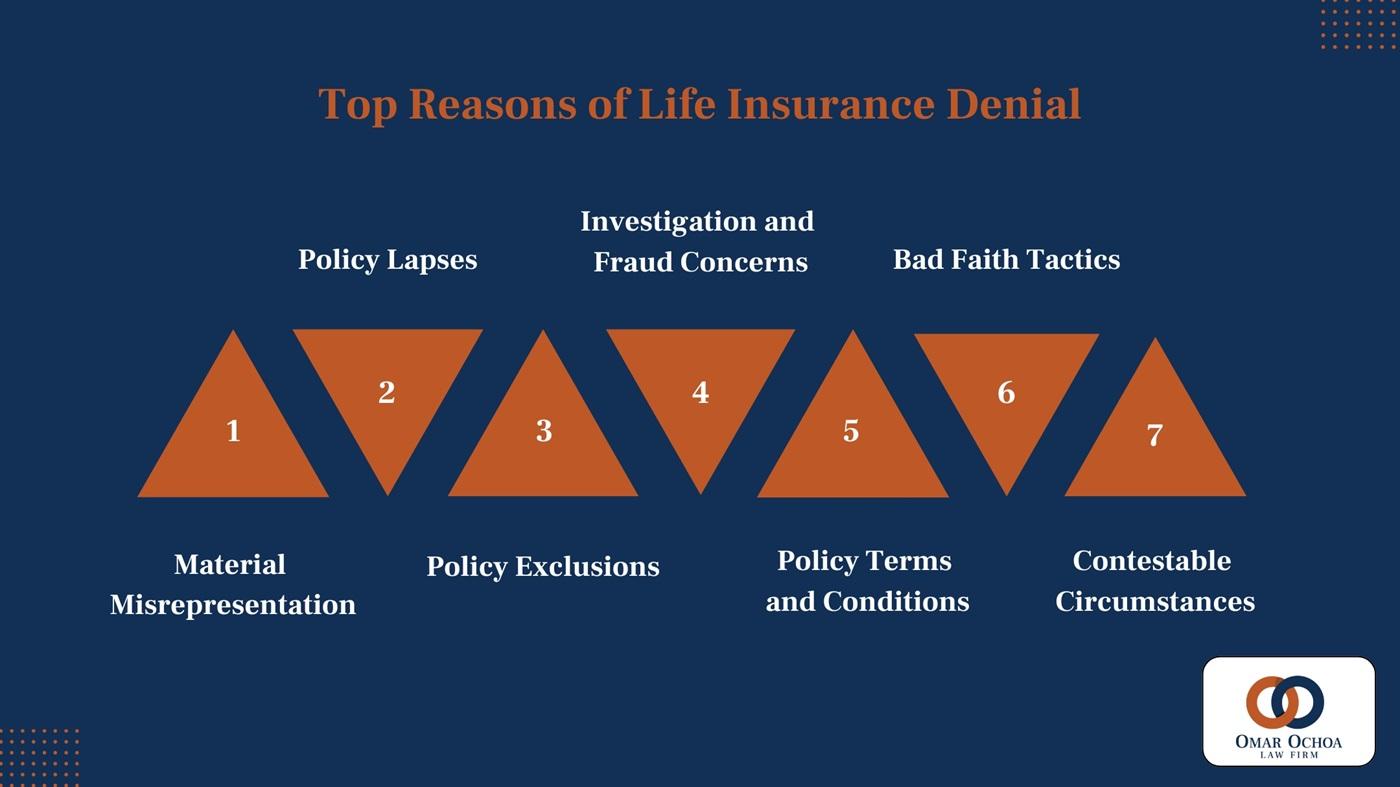
To effectively use administrative remedies, you must address the specific reasons the insurer gave for the denial. These reasons are legally required to be disclosed in the denial letter. In 2026, several common justifications dominate the industry.
Material Misrepresentation
This is the most frequent reason for denial, particularly during the "contestability period" (usually the first two years of the policy). The insurer claims the deceased lied on their application—for example, failing to disclose a history of high blood pressure or smoking. Your administrative remedy here involves gathering medical records that show the condition was either not diagnosed, was not "material" to the risk, or that the applicant did not knowingly provide false information. In some jurisdictions, the insurer must prove that the misrepresentation was intentional.
Policy Lapse
Insurers may claim the policy lapsed due to non-payment of premiums. To counter this, your administrative appeal should focus on whether the insurer followed state-mandated notice requirements. Many states require insurers to provide a "grace period" and send a specific warning notice to both the policyholder and a secondary addressee before terminating coverage. If the insurer failed to send these notices in the exact manner required by law, the administrative remedy is to demand the reinstatement of the policy and payment of the benefit.
Excluded Cause of Death
Life insurance policies often exclude certain causes of death, such as suicide (within the first two years), participation in "hazardous activities" (like skydiving), or death resulting from the commission of a felony. Administrative remedies in these cases require expert evidence. For instance, if a death was ruled a suicide but was actually an accidental overdose, you must provide toxicology reports, therapist notes, and perhaps an independent forensic pathologist’s opinion to rebut the insurer’s conclusion.
The Importance of the Administrative Record
In the context of administrative remedies, the "Administrative Record" refers to every document, email, medical report, and piece of evidence the insurance company considered when making its decision. Under ERISA, this record is effectively "frozen" once the final administrative appeal is denied.
This means that if you fail to include a crucial piece of evidence during the administrative appeal phase, you cannot "save it for the judge" later. If it isn’t in the record, it doesn't exist for the purposes of a federal lawsuit. This is why the administrative remedy phase is the most labor-intensive part of the process.
A comprehensive appeal package should include:
- The Formal Appeal Letter: A detailed legal and factual argument explaining why the denial was incorrect.
- Medical Evidence: Not just the records the insurer used, but comprehensive histories that provide context.
- Expert Opinions: Statements from doctors, vocational experts, or accident reconstructionists that contradict the insurer’s findings.
- Affidavits and Statements: Written testimony from family, friends, or coworkers regarding the deceased’s health or the circumstances of their death.
- The Summary Plan Description (SPD): For ERISA cases, the legal document that outlines the terms of the plan. Insurers often rely on internal "guidelines" that may actually conflict with the SPD; pointing out these inconsistencies is a powerful administrative remedy.
Steps to Exhaust Administrative Remedies
Following a structured approach ensures that you do not waive your rights or provide the insurer with easy grounds to uphold their denial.
1. Request the Complete Claim File
Immediately upon receiving a denial, you must write to the insurer and request a complete copy of the "claim file." Under federal law (for ERISA plans) and many state laws, the insurer is required to provide this free of charge. This file contains the internal notes of the claims adjuster, the medical reviews performed by the insurer’s doctors, and the specific policy language they are using to justify the denial.
2. Note All Deadlines
Missing a deadline is the fastest way to lose a life insurance claim. ERISA appeals typically give you 60 to 180 days. Calculate this date from the date on the denial letter, not the date you received it. If you need more time to gather medical records, you must request an extension in writing before the deadline passes.
3. Identify "Full and Fair Review" Violations
Administrative remedies are only effective if the insurer plays by the rules. In 2026, the Department of Labor (DOL) maintains strict regulations on what constitutes a "full and fair review." For example, the person reviewing your appeal cannot be the same person who issued the initial denial, nor can they be a subordinate of that person. Furthermore, if the insurer relies on new evidence or different reasons for denial during the appeal, they must give you a chance to respond to that new information before making a final decision.
4. Submit the Supplemental Evidence
Once you have identified the gaps in the insurer's reasoning, you must fill them. If the insurer says the deceased died of a heart condition that wasn't disclosed, and you have a doctor's note saying the condition was actually a minor, unrelated issue, that note must be submitted as part of the administrative record.
Independent External Review: A Newer Administrative Remedy
In some states and under certain specific types of policies, a beneficiary may have access to an "External Review." This is a process where an independent third party—often a medical professional or a former judge—reviews the claim after the insurer has denied the internal appeal.
This remedy is particularly common when the denial is based on "medical necessity" or a "clinical judgment." In an external review, the insurer's "discretionary authority" is usually removed, and the independent reviewer looks at the case objectively. If the external reviewer decides in favor of the beneficiary, the insurance company is typically bound by that decision. While external reviews are more common in health insurance, they are increasingly being utilized in 2026 for life insurance claims involving complex medical issues or "accidental death" determinations.
Common Pitfalls in Administrative Appeals
- Treating it Like a Simple Letter: Many beneficiaries write a short letter saying, "I disagree with this decision because it's unfair." This is not an effective administrative remedy. An appeal must be a data-driven, evidence-based challenge to the specific legal and factual findings of the insurer.
- Failing to Address the Policy Language: The insurance policy is a contract. If the policy defines "accident" in a specific way, your appeal must argue within that definition. Ignoring the policy's specific terminology makes the appeal easy for the insurer to dismiss.
- Providing Only Partial Records: If the insurer's doctor only looked at two pages of a hundred-page medical file, you must provide the other ninety-eight pages. Do not assume the insurer will go looking for the evidence that proves them wrong.
- Ignoring the "Finality" of the Decision: Once the insurer issues a "Final Adverse Determination," the administrative remedy phase is over. You have "exhausted" your remedies, and your only remaining option is to file a lawsuit in state or federal court.
Frequently Asked Questions
Do I need a lawyer for an administrative appeal?
While not strictly required, it is highly recommended, especially for ERISA claims. Because the administrative record is frozen after the appeal, mistakes made during this phase often cannot be fixed later. An experienced life insurance attorney understands how to "load" the record with the evidence necessary to win at the trial stage if the administrative remedy fails.
How long does the administrative remedy process take?
Under ERISA, an insurer typically has 60 days to respond to your appeal, though they can request a 60-day extension if there are "special circumstances." For non-ERISA claims, the timeline varies by state but usually ranges from 30 to 90 days.
Can I sue the insurance company before the appeal is finished?
For ERISA-governed policies, generally no. Courts will dismiss a lawsuit if the plaintiff hasn't "exhausted administrative remedies." For private policies, you might be able to sue immediately, but it is often more strategic to attempt an internal appeal first to gather information.
What if the insurance company doesn't respond to my appeal?
If an insurer fails to follow the mandated timelines for an ERISA appeal, the claim is often "deemed exhausted." This allows the beneficiary to proceed directly to court. However, you must document the insurer's failure to respond meticulously.
Can I add more evidence after the final denial?
Usually, no. Once the final administrative decision is rendered, the record is closed. This is why it is vital to ensure that every possible piece of supporting evidence is submitted before the final decision is made.
Practical Recommendations
If you are facing a denied life insurance claim in 2026, your first step is to identify whether the policy is governed by ERISA. This single fact will dictate your entire strategy. Secure your complete claim file immediately and begin a thorough review of the "Summary Plan Description" against the denial letter.
Do not view the administrative appeal as a mere formality; treat it as the most important trial of your life. Every document you submit becomes a permanent part of the legal record. If the insurer’s denial remains unchanged after the internal appeal, your next step is to consult a litigation attorney to evaluate a "Section 502(a)" claim under ERISA or a "Bad Faith" claim under state law.