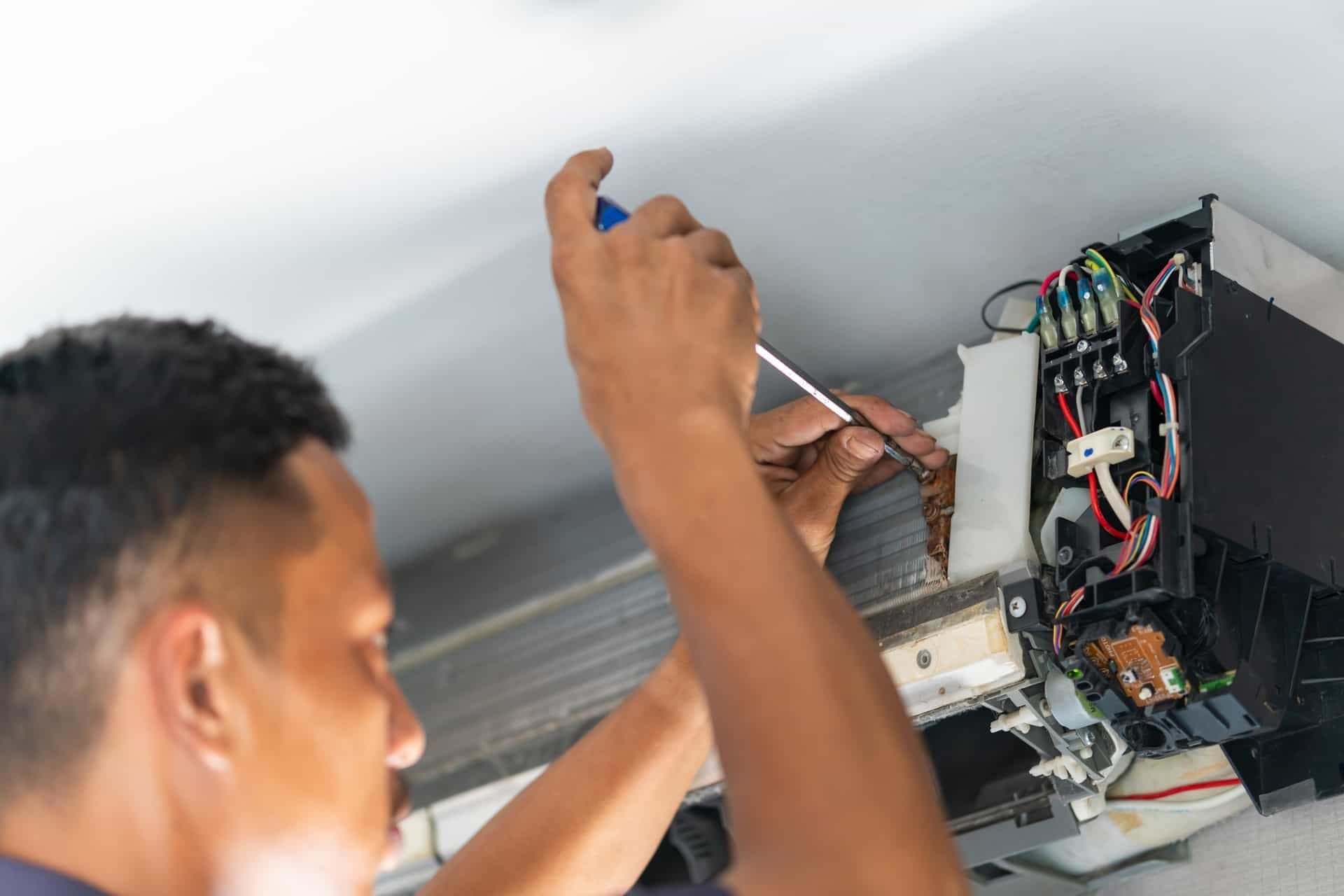
AC emergency repair essentials include identifying immediate safety hazards, performing basic troubleshooting to rule out simple power issues, and knowing when to call a certified HVAC technician. Key steps involve checking the circuit breaker, inspecting air filters, and verifying thermostat settings. In 2026, essential repairs also require understanding newer A2L refrigerant standards and smart diagnostic tools.
Defining a True AC Emergency
Distinguishing between a minor inconvenience and a genuine emergency is the first step in managing home cooling systems. In the climate of 2026, where summer temperature spikes have become more frequent, an air conditioning failure is often more than just a comfort issue; it can be a health and safety crisis.
A true AC emergency typically falls into one of three categories: health risks, property damage, or safety hazards. Health risks occur when indoor temperatures exceed 85°F (29°C), especially in households with infants, the elderly, or individuals with chronic respiratory or cardiovascular conditions. High humidity coupled with heat can lead to heat exhaustion or heat stroke within hours.
Property damage emergencies often involve the condensate drainage system. If an AC unit is located in an attic or a secondary floor and the primary drain line clogs, water can overflow the secondary pan. This leads to structural damage, ruined drywall, and the rapid growth of mold. Finally, safety hazards include electrical issues such as a burning smell coming from the vents, buzzing sounds from the compressor, or frequent circuit breaker trips. These symptoms indicate a high risk of electrical fire or terminal component failure that requires an immediate shutdown of the system.
Essential Troubleshooting Before Calling a Technician
Before committing to a premium-priced emergency service call in 2026, homeowners should perform a systematic check of the system's basic components. Many "failures" are actually simple issues that do not require a technician's specialized tools.
Thermostat Verification and Power Supply
The thermostat acts as the brain of the HVAC system. Ensure the display is active; a blank screen often indicates dead batteries or a tripped C-wire connection. Verify that the system is set to "Cool" and the temperature setting is at least five degrees below the current room temperature. In 2026, many smart thermostats integrate with home energy management systems. Check your mobile app for any "eco-mode" overrides or utility-company-initiated "demand response" events that might be temporarily throttling your cooling.
Next, inspect the electrical panel. HVAC systems draw significant amperage, especially during the compressor’s startup phase. If the breaker has tripped to the middle position, flip it fully to "Off" and then back to "On." If it trips again immediately, do not attempt a third reset, as this indicates a direct short circuit or a grounded compressor.
Airflow and Filtration
Restricted airflow is a leading cause of system "freezing." When air cannot move across the evaporator coil, the refrigerant temperature drops below the dew point, causing condensate to turn into ice. This ice acts as an insulator, further blocking airflow and eventually causing the system to shut down to protect the compressor. Check the air filter; if it is coated in dust or pet dander, replace it immediately. Ensure all supply registers are open and that return air grilles are not blocked by furniture or curtains.
The Condensate Drain Line
Modern high-efficiency units produce significant amounts of water. Most systems are equipped with a "float switch" in the drain pan. If the drain line is clogged with algae or debris, the water level rises, lifting the float and breaking the electrical circuit to the condenser. Inspect the PVC drain line outside. If you do not see water dripping during operation, or if you see standing water in the indoor emergency pan, use a wet/dry vacuum to clear the blockage from the exterior exit point.
The 2026 HVAC Landscape: Refrigerants and Regulations
The year 2026 marks a significant period in HVAC technology due to the full implementation of the AIM (American Innovation and Manufacturing) Act. This legislation has phased out the production of R-410A refrigerant in favor of lower Global Warming Potential (GWP) alternatives, primarily R-454B and R-32.
These newer refrigerants are classified as A2L, meaning they are "mildly flammable." While they are safe for home use when installed correctly, emergency repairs on 2026-era systems require specialized leak detection equipment and spark-proof tools. If your system was installed after 2024, it likely contains sensors designed to detect refrigerant leaks and automatically shut down the system while activating the indoor blower to dilute any gas concentration.
Understanding which refrigerant your system uses is essential for emergency planning. Repairing an older R-410A system in 2026 is significantly more expensive than it was five years ago due to dwindling supplies and high reclamation costs. In many cases, an emergency repair involving a major leak in an R-410A system may warrant a full system replacement rather than a temporary "top-off."
Safety Protocols During AC Failure
If you identify a safety-related emergency, such as a burning smell or sparks, your first action must be to cut power to the unit. Do not merely turn it off at the thermostat. Locate the high-voltage disconnect box near the outdoor condenser unit and pull the "pull-out" handle or flip the internal switch. Inside, locate the dedicated double-pole breaker in your main electrical panel and turn it off.
If you suspect a refrigerant leak (often identified by a hissing sound or a sweet, chemical odor), evacuate the immediate area and open windows to provide ventilation. While A2L refrigerants have low toxicity, high concentrations in enclosed spaces can displace oxygen. Never attempt to "patch" a copper refrigerant line with tape or sealants; the internal pressures of an operating AC system can exceed 400 PSI, which can cause these makeshift repairs to fail violently.
Emergency vs. Standard Repair Comparison
| Feature | Standard Repair | Emergency Repair |
|---|---|---|
| Typical Response Time | 24 to 72 hours | 2 to 6 hours |
| Average Dispatch Fee (2026) | $89 – $150 | $200 – $450 |
| Labor Rates | Standard hourly rate | Time-and-a-half or double-time |
| Common Trigger | Minor noise, slight efficiency drop | Total cooling loss, electrical smell, flooding |
| Scheduling | During business hours (Mon-Fri) | Nights, weekends, and holidays |
| Warranty Impact | Usually covered by standard terms | May involve "temporary fix" charges |
Costs and Budgeting for Emergency Service
In 2026, the cost of emergency HVAC service reflects increased labor specialized training for A2L refrigerants and the rising cost of precision electronic components. Homeowners should budget between $350 and $1,200 for a typical emergency visit, excluding the cost of major parts like compressors or evaporator coils.
Labor remains the most volatile variable. In major metropolitan areas, emergency hourly rates can exceed $250 per hour with a two-hour minimum. Furthermore, the complexity of modern inverter-driven compressors means that "generic" parts are rarely an option. Technicians must often source OEM (Original Equipment Manufacturer) boards and sensors, which can be difficult to obtain during late-night or holiday calls.
To mitigate these costs, many homeowners in 2026 utilize HVAC maintenance agreements. These contracts often include "priority service" clauses that waive or reduce emergency dispatch fees and provide a guaranteed response window, even during peak summer heatwaves.
Vetting an Emergency Technician
When the temperature is rising, it is tempting to hire the first company that answers the phone. However, emergency repairs require a high level of expertise to avoid misdiagnosis.
- EPA 608 Certification: Every technician handling refrigerant must hold this federal certification. In 2026, verify they are also trained in A2L refrigerant handling protocols.
- NATE Certification: North American Technician Excellence (NATE) is the gold standard for HVAC competency. A NATE-certified tech is less likely to recommend unnecessary parts.
- Insurance and Licensing: Ensure the company carries at least $1 million in general liability insurance and a valid state contractor's license. This protects you if a botched repair leads to an electrical fire or refrigerant accident.
- Transparent Pricing: Ask for the "diagnostic fee" or "trip charge" upfront. Reputable companies will provide a fixed price for the diagnosis before beginning any actual repair work.
Long-Term Prevention: Avoiding the Emergency
The most effective emergency repair is the one you never have to schedule. By 2026, "predictive maintenance" has become the industry standard. This involves installing smart sensors on the compressor and blower motor that monitor amperage draw and vibration. When these sensors detect a deviation from the baseline, they alert the homeowner via a smartphone app weeks before the component actually fails.
Standard preventative measures include:
- Bi-Annual Inspections: A spring "tune-up" focuses on cleaning coils and checking refrigerant pressures, while a fall checkup focuses on the heating elements.
- Duct Integrity: Leaky ducts can cause the system to work 30% harder, leading to premature compressor failure. Professional duct sealing (using technologies like Aeroseal) can significantly extend system life.
- Clearance: Maintain a three-foot "clear zone" around the outdoor condenser. Remove weeds, leaves, and debris that can choke the fan and cause the unit to overheat.
Frequently Asked Questions
Is a frozen AC unit an emergency?
Yes, a frozen unit is an emergency because it indicates a complete failure of the cooling cycle and can lead to "slugging" the compressor. Slugging occurs when liquid refrigerant returns to the compressor, which is designed only to pump gas, leading to instant mechanical failure. Turn off the system immediately and allow it to thaw for at least 4-6 hours before a technician arrives.
Why is my AC blowing warm air but the fan is running?
This usually indicates that the indoor blower motor is functional, but the outdoor condenser unit has lost power or suffered a component failure. Check the outdoor disconnect and the capacitor. In 2026 systems, this can also be a sign that the electronic expansion valve (EEV) has failed or that the system’s computer has locked out the compressor due to a detected sensor error.
Can I add refrigerant to my AC myself?
No. Under EPA regulations, it is illegal for anyone without a Section 608 certification to purchase or handle most refrigerants. Furthermore, modern 2026 systems require precise "sub-cooling" or "super-heat" measurements to charge correctly. Overcharging a system by even a few ounces can destroy a high-efficiency compressor.
How long does an emergency AC repair usually take?
Most emergency repairs, such as replacing a capacitor, contactor, or cleared drain line, can be completed in 1 to 2 hours. However, if the issue involves a refrigerant leak or a failed control board, it may take several days to source the specific parts required for 2026-compliant high-efficiency models.
Does homeowner's insurance cover emergency AC repairs?
Generally, homeowner's insurance only covers AC units if the damage was caused by a "covered peril," such as a lightning strike, fire, or a falling tree limb. It typically does not cover mechanical failures due to wear and tear or lack of maintenance. For those types of repairs, a home warranty or an HVAC service agreement is the appropriate financial tool.
What should I do if my AC is leaking water inside?
Immediately turn off the system and the water supply if the AC is connected to a whole-home humidifier. Clear any standing water to prevent floor damage and mold. The most common cause is a clogged primary condensate drain or a cracked drain pan. Use a wet/dry vac on the exterior drain line to attempt to suck out the clog.
Practical Recommendation
If your AC fails during a 2026 heatwave, your first action should be to check the circuit breaker and the air filter. If these are not the cause, and the indoor temperature is rising toward 80°F, contact a NATE-certified technician immediately. While waiting for the repair, close all blinds, avoid using heat-generating appliances like ovens, and use portable fans to create a cross-breeze. If you have an older R-410A system, ask the technician for a "cost-to-benefit" analysis of the repair versus upgrading to a modern A2L-refrigerant unit, as the long-term savings in energy and refrigerant costs often outweigh the price of a temporary fix.