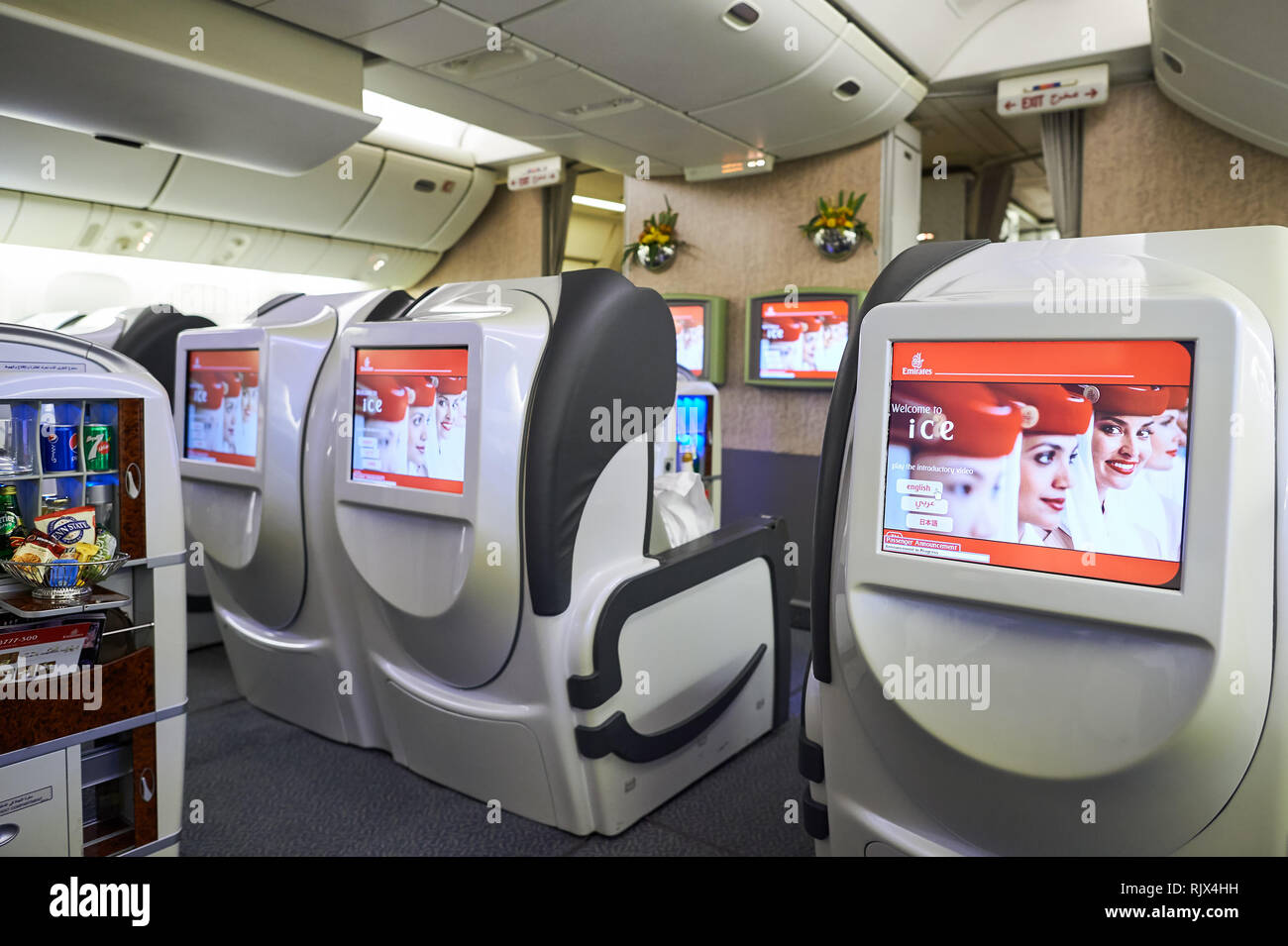
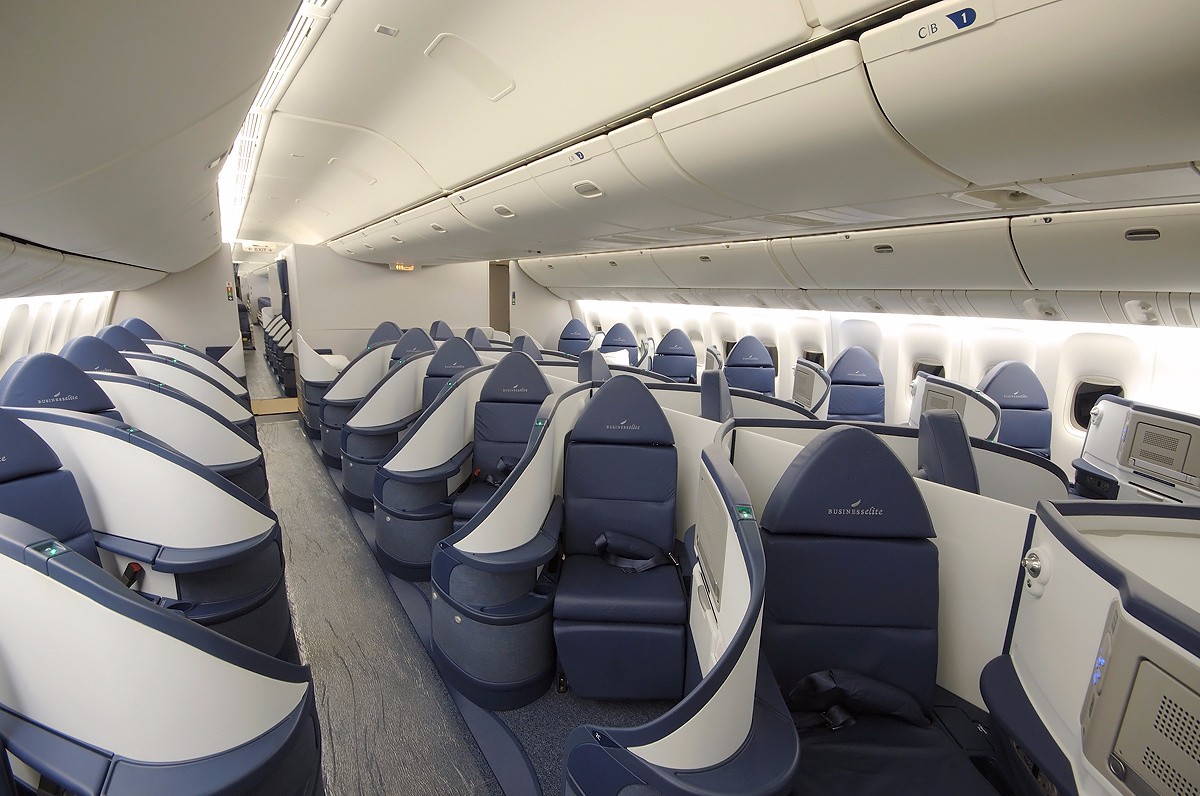
The interior of a Boeing 777 is defined by its "Signature Interior" architecture, characterized by a circular fuselage cross-section that provides a spacious 19-foot 11-inch (6.07-meter) cabin width. It features large overhead pivot bins, customizable LED mood lighting, and flexible seating configurations ranging from ultra-luxury first-class suites to high-density ten-abreast economy layouts designed for long-haul efficiency.
The Boeing 777, often referred to as the "Triple Seven," remains one of the most successful wide-body twin-engine aircraft in aviation history. As of 2026, the fleet has evolved from the original 777-200 and the dominant 777-300ER to the latest 777X variants, which have introduced further refinements to the internal passenger experience. Understanding the "inside" of a 777 requires looking beyond just the seats; it involves an analysis of the architectural design, environmental control systems, and the hidden compartments that allow this aircraft to fly for over 16 hours at a time.
The Architecture of Space: The Boeing Signature Interior
When Boeing designed the 777, it introduced the "Boeing Signature Interior," a design philosophy that moved away from the boxy, narrow-feeling cabins of previous generations. The 777 inside is notable for its curved panels and indirect lighting, which create an illusion of even greater height and width.
Cabin Width and Cross-Section
The 777's fuselage diameter is approximately 20 feet 4 inches, which translates to a usable cabin width of nearly 20 feet. This width is the foundation of the aircraft's versatility. In the early years of the 777, nine-abreast seating (3-3-3) was the industry standard for economy class, providing some of the widest seats in the sky (roughly 18 to 18.5 inches).
However, by 2026, the majority of global carriers have transitioned to a ten-abreast (3-4-3) configuration. While this reduces individual seat width to approximately 17 inches, the sheer volume of the cabin prevents it from feeling as cramped as smaller narrow-body aircraft. The sculpted sidewalls on the newer 777X models have actually carved out an additional 4 inches of internal width without changing the external fuselage size, demonstrating the constant engineering refinement occurring inside the airframe.
Overhead Pivot Bins
One of the most recognizable features inside a 777 is the overhead storage system. Unlike the "shelf" style bins found on older aircraft, the 777 uses large pivot bins. These bins drop down to a convenient height for loading and then pivot upward and away into the ceiling structure. This design serves two purposes: it allows for massive storage capacity (often enough for every passenger to have a roll-aboard bag) and keeps the center of the cabin open, contributing to the sense of "airiness" that defines the Triple Seven experience.
Seating Configurations and Passenger Classes
The internal layout of a Boeing 777 varies significantly depending on the airline’s business model. Because the 777-300ER and 777-9 are so large, they often serve as the flagship for international carriers, showcasing the latest in cabin technology.
First Class: The "Private Suite" Era
In a three- or four-class 777, the forward section is reserved for First Class. Modern 777 interiors, particularly on carriers like Emirates or Singapore Airlines, feature fully enclosed suites. These units often include floor-to-ceiling sliding doors, individual climate control, and "zero-gravity" seating positions designed by NASA-inspired ergonomics. Inside these suites, the 777’s high ceilings allow for a feeling of a private room rather than an airplane seat.
Business Class: The Move to 1-2-1
The 777’s wide cabin is ideal for the modern "staggered" or "herringbone" Business Class layouts. Most premium airlines now use a 1-2-1 configuration, ensuring that every passenger has direct aisle access. These seats typically convert into 78-to-80-inch fully flat beds. The 777's stable flight characteristics and advanced soundproofing in the forward cabin sections make it a preferred choice for business travelers seeking sleep on long-haul routes.
Premium Economy: The Middle Ground
As the gap between Business and Economy widened, the 777 became the primary vessel for the growth of Premium Economy. Inside, this usually manifests as a 2-4-2 layout. These seats offer significantly more recline and legroom (38 inches of pitch) compared to standard economy, taking advantage of the 777's wide floor plan to provide a 2-inch increase in seat width.
Economy Class: Efficiency at Scale
The "back of the bus" on a 777 is a feat of industrial engineering. Modern 777 economy cabins utilize slimline seats to maximize legroom while maintaining high passenger counts. In 2026, standard features include 13-inch 4K resolution entertainment screens, high-power USB-C charging ports at every seat, and "bionic" seat cushions that distribute weight more evenly to prevent fatigue during long flights.
The Flight Deck: The 777's Nerve Center
The "inside" of the 777 isn't just for passengers. The flight deck (cockpit) was a revolutionary jump in technology when it debuted and has continued to see upgrades.
- Glass Cockpit: The 777 was the first Boeing aircraft to feature a fully digital glass cockpit with large liquid crystal displays (LCDs). By 2026, many older 777s have been retrofitted with even larger, multi-touch capacitive screens similar to those found on the Boeing 787 Dreamliner.
- Fly-by-Wire: The 777 was Boeing's first jetliner to use fly-by-wire technology. Instead of heavy cables and pulleys, pilot inputs are sent as electronic signals to computers that move the flight control surfaces. Inside the cockpit, however, Boeing retained traditional "yokes" (control wheels) rather than side-sticks to provide tactile feedback to the pilots.
- Electronic Flight Bag (EFB): The 777 interior design for pilots includes dedicated mounts and power for EFBs, which have entirely replaced paper charts and manuals.
Hidden Compartments: Crew Rest Areas
On flights lasting 12 to 16 hours, the crew must sleep. One of the most fascinating aspects of the 777 inside is the "hidden" second story. Known as the Overhead Crew Rest (OCR), these areas are located above the passenger cabin and are accessed via a small, inconspicuous door and a steep ladder-style staircase.
- Pilot Rest: Usually located just behind the cockpit, this area contains two bunks and sometimes a reclining seat and a private lavatory.
- Flight Attendant Rest: Located at the rear of the aircraft (above the aft economy cabin), this area can contain up to 8 or 10 bunks. These bunks are equipped with thick curtains, reading lights, and oxygen systems, providing a quiet, dark environment for the crew to cycle through rest periods.
Technical Specifications: 777 Interior Comparison
The following table compares the internal capacities and dimensions of the most common 777 variants in operation as of 2026.
| Feature | Boeing 777-300ER | Boeing 777-9 (777X) |
|---|---|---|
| Max Seating (Typical 3-Class) | 396 | 426 |
| Interior Cabin Width | 19 ft 3 in (5.87 m) | 19 ft 7 in (5.97 m) |
| Window Size | 140 sq in | 162 sq in |
| Overhead Bin Volume | Large Pivot Bins | Enhanced Next-Gen Bins |
| Cabin Altitude (Max) | 8,000 ft | 6,000 ft |
| Air Filtration | HEPA (99.97% efficiency) | Advanced HEPA + Gas Filter |
Environmental Control and Cabin Pressure
A significant part of what makes the 777 "inside" feel the way it does is invisible: the air. The 777 uses two massive packs to manage the environmental control system (ECS).
- Humidity: Historically, airplane cabins have been very dry. While the 777 doesn't use the carbon-fiber fuselage of the 787 (which allows for much higher humidity), the 777X has incorporated improved humidification systems to reduce "jet lag" symptoms and throat irritation.
- Pressure: The 777-300ER is typically pressurized to an altitude of 8,000 feet. The newer 777-9 (777X) uses advanced structural reinforcements to lower this to 6,000 feet. A lower cabin altitude means more oxygen in the blood and less physical fatigue after a long journey.
- Sound: The 777 interior is remarkably quiet for its size. This is achieved through advanced insulation blankets between the interior panels and the outer aluminum skin, as well as the design of the GE90 or GE9X engines, which are engineered to reduce low-frequency hum.
Galley and Lavatory Engineering
The 777 galleys are designed as modular units. Depending on the airline's needs, these can be configured for "dry" storage or full steam ovens and espresso machines. Because the 777 is a "Twin Aisle" aircraft, the galleys are often located in "cross-aisle" areas, allowing flight attendants to move from one side of the plane to the other without entering the passenger seating zones.
Lavatories on the 777 have also seen a technological shift. By 2026, almost all 777 aircraft feature "touchless" lavatories. Sensors control the flushing mechanism, the faucets, and even the soap dispensers, which significantly improves hygiene in the confined space of a long-haul aircraft. Some 777X models also feature larger, ADA-compliant lavatories that can be expanded using a folding wall system to accommodate passengers with limited mobility.
Frequently Asked Questions
Where is the best place to sit on a Boeing 777 for a quiet ride?
The quietest seats are located forward of the engines, typically in the First or Business Class sections. If you are in Economy, try to select a seat as far forward as possible, away from the galley and lavatory areas, which tend to be high-traffic zones. The very rear of the aircraft is often the loudest due to engine exhaust noise and aerodynamic buffeting.
How do the windows on the 777 compare to the 787?
The original 777-200 and -300ER have standard-sized windows with manual plastic shades. The newer 777X (777-8 and 777-9) has windows that are significantly larger—nearly 30% larger than the 777-300ER. While they are not as large as the 787’s windows, they are positioned higher on the fuselage, allowing passengers to see the horizon even from center seats.
Is the air inside a 777 clean?
Yes. The 777 uses High-Efficiency Particulate Air (HEPA) filters, which are identical to those used in hospital operating rooms. The air in the cabin is completely refreshed every 2 to 3 minutes. About 50% of the air is recycled through these filters, while the other 50% is fresh air bled from the engines and cooled by the ECS packs.
What is the "777X" interior upgrade?
The 777X interior is an evolution that brings 787 Dreamliner technology to the 777 frame. This includes larger windows, a wider cabin via thinner (but stronger) sidewalls, higher humidity levels, lower cabin altitude, and "Next-Generation" LED lighting that can simulate sunrise and sunset to help passengers adjust to new time zones.
Practical Recommendations for Travelers
When booking a flight on a Boeing 777 in 2026, it is essential to check the specific seating map for your airline. Not all 777 interiors are created equal. Use services like SeatGuru or AeroLOPA to verify if your flight uses the 9-abreast or 10-abreast configuration in Economy. If you have a choice, the 9-abreast configuration (often found on specialized long-range 777-200LRs or older 777-300ERs) offers a measurably more comfortable experience. Additionally, for long-haul flights, prioritize the 777X (777-8 or 777-9) if available, as the lower cabin altitude and improved humidity levels will significantly reduce the physical toll of the journey.