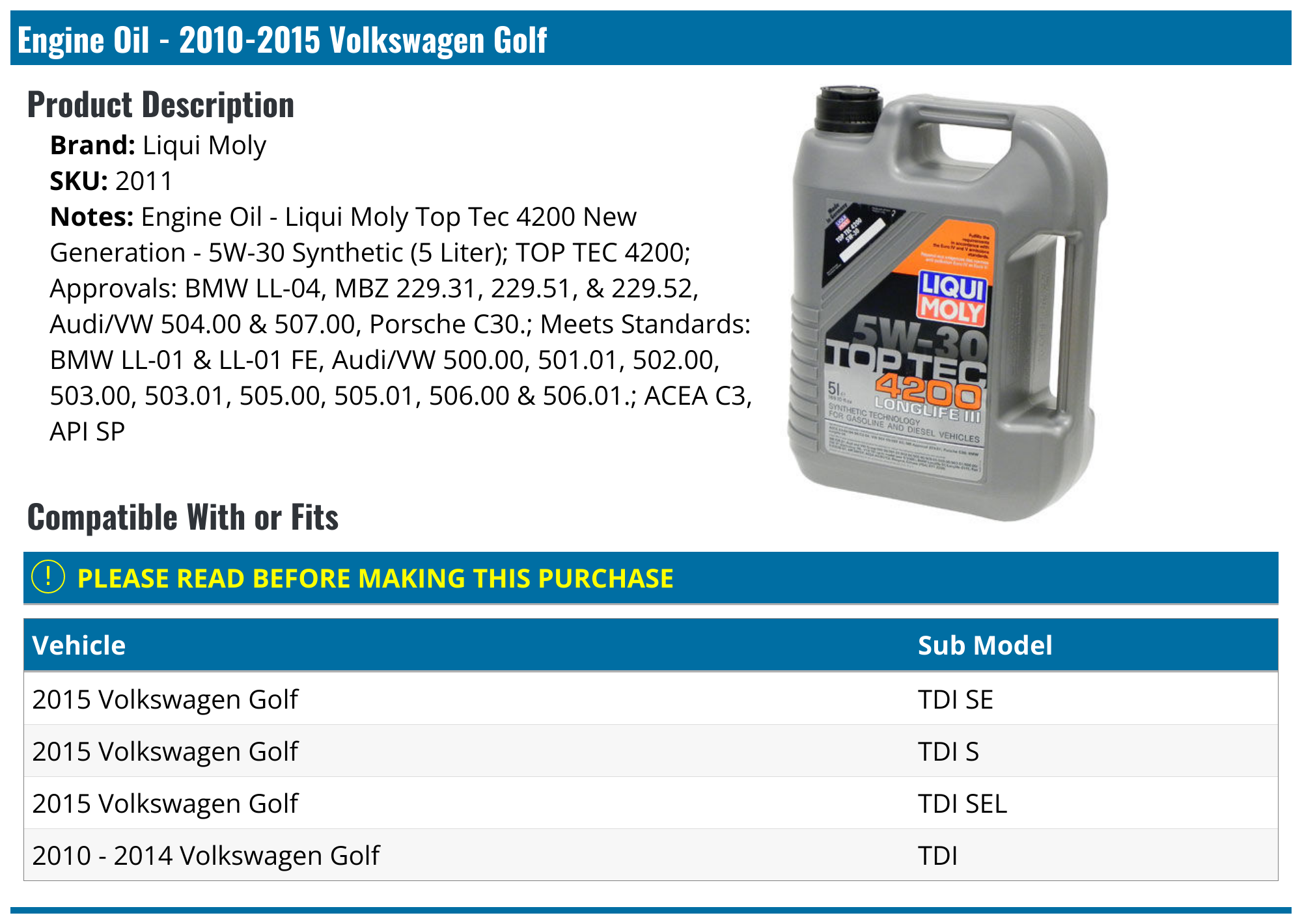
The VW 502 00 engine oil standard is a high-performance specification established by the Volkswagen Group for gasoline (petrol) engines operating under fixed service intervals. It mandates a high-temperature high-shear (HTHS) viscosity of at least 3.5 mPa·s, ensuring robust protection against mechanical wear and thermal breakdown in turbocharged, direct-injection (TSI/FSI), and naturally aspirated engines.
While automotive lubrication technology has evolved significantly by 2026, the VW 502 00 standard remains a cornerstone of maintenance for a vast global fleet of Volkswagen, Audi, SEAT, and Škoda vehicles. Understanding this standard is essential for ensuring engine longevity, maintaining warranty compliance for older models, and selecting the correct lubricant for specific driving environments.
The Technical Foundations of VW 502 00
To understand VW 502 00, one must look at the underlying chemical and physical requirements set by the Volkswagen Group. Unlike generic oil grades (like a simple 5W-40), a manufacturer-specific standard like 502 00 dictates exactly how an oil must behave under the unique stresses of VW engine architecture.
High-Temperature High-Shear (HTHS) Viscosity
One of the defining characteristics of the VW 502 00 standard is its requirement for an HTHS viscosity of ≥ 3.5 mPa·s. HTHS measures a lubricant's resistance to flow in the narrowest, hottest parts of the engine, such as between the piston rings and cylinder walls or within the crankshaft bearings.
In 2026, many modern "fuel economy" oils (like the VW 508 00 0W-20 standard) utilize lower HTHS values to reduce internal friction. However, engines designed for VW 502 00 rely on the thicker oil film provided by a 3.5+ HTHS rating to prevent metal-to-metal contact. Using an oil with a lower HTHS in an engine requiring 502 00 can lead to accelerated wear of the camshafts and bearings.
ACEA A3/B4 Roots
The VW 502 00 standard is closely aligned with the European Automobile Manufacturers' Association (ACEA) A3/B4 category. An oil meeting 502 00 typically also meets ACEA A3/B4, which signifies it is a "stay-in-grade" oil intended for use in high-performance gasoline and direct-injection diesel engines with extended drain intervals. This alignment ensures the oil has a high Total Base Number (TBN), which helps neutralize acidic combustion byproducts—a crucial feature for engines that may encounter varying fuel qualities.
Fixed vs. Flexible Service Intervals
A common point of confusion for Volkswagen owners is the distinction between "Fixed" and "Flexible" service intervals. The VW 502 00 standard is specifically engineered for the Fixed Service Interval (often coded as QG0 or QG2 in the vehicle's PR codes).
The Fixed Interval (QG0/QG2)
Under a fixed interval, the vehicle typically requires an oil change every 15,000 kilometers (approx. 9,300 miles) or once every 12 months, whichever comes first. VW 502 00 is the primary standard for this cycle. Because these oils are often "High SAPS" (Sulphated Ash, Phosphorus, and Sulphur) formulations, they provide excellent detergent and anti-wear properties but are not optimized for the extremely long intervals (up to 30,000 km) seen in some European markets.
The Flexible Interval (QG1)
Vehicles set to "Flexible" or "LongLife" intervals require the VW 504 00/507 00 standard. While VW 504 00 can generally be used where 502 00 is called for, the reverse is not true. Using VW 502 00 in a vehicle programmed for LongLife intervals can lead to oil degradation before the onboard computer triggers a service alert, potentially damaging the engine.
Chemical Composition and Formulation
The VW 502 00 standard is almost exclusively satisfied by synthetic or high-quality semi-synthetic formulations. In the landscape of 2026, most 502 00 approved oils are Group III (Hydrocracked) or Group IV (PAO) synthetics.
Viscosity Grades
While the standard specifies performance rather than a single weight, you will most commonly find VW 502 00 in the following viscosities:
- 5W-40: The most common grade for 502 00. It offers an excellent balance of cold-start protection and high-temperature stability.
- 0W-40: Often found in premium "Euro" synthetic oils, providing superior flow in extreme sub-zero temperatures.
- 5W-30: Less common for 502 00 but exists in specific formulations that maintain the required 3.5 HTHS.
Detergency and Deposit Control
Direct-injection engines (FSI and TSI) are prone to carbon buildup on intake valves because fuel does not wash over them to clean away oil mist. VW 502 00 oils are formulated with robust additive packages designed to minimize "noack volatility" (the tendency of oil to evaporate and form deposits). By keeping volatility low, 502 00 helps reduce the amount of oil vapor entering the intake system via the PCV (Positive Crankcase Ventilation) valve.
Comparing VW Oil Standards
It is helpful to see how 502 00 fits into the broader hierarchy of Volkswagen Group specifications. By 2026, the transition toward lower-viscosity oils is nearly complete for new production, but 502 00 remains the standard for older generations.
| Specification | Primary Fuel Type | Service Interval | Typical Viscosity | HTHS (mPa·s) | Compatibility |
|---|---|---|---|---|---|
| VW 502 00 | Gasoline | Fixed (1yr/15k km) | 5W-40, 0W-40 | ≥ 3.5 | Backwards compatible with 501.01 |
| VW 504 00 | Gasoline | Flexible/LongLife | 5W-30, 0W-30 | ≥ 3.5 | Replaces 502.00 in most cases |
| VW 508 00 | Gasoline | High Efficiency | 0W-20 | ~2.6 | Not backwards compatible |
| VW 505 01 | Diesel (Pumpe Düse) | Fixed | 5W-40 | ≥ 3.5 | Specifically for unit-injectors |
Why VW 502 00 Remains Relevant in 2026
Even with the advent of ultra-thin 0W-8 and 0W-12 oils in the wider automotive industry, VW 502 00 remains vital for several reasons:
- The Legacy Fleet: There are millions of 1.8T, 2.0T (EA113 and early EA888), and VR6 engines still on the road. These engines were clear-cut for 502 00. Using modern 508 00 (0W-20) in these engines would result in insufficient oil film thickness and potential catastrophic failure.
- Severe Operating Conditions: In regions with extreme heat or for drivers who use their vehicles for towing or track days, the 5W-40 weight typically associated with 502 00 provides a "safety margin" of viscosity that thinner oils lack.
- Fuel Quality Resilience: VW 502 00 oils are generally "High SAPS" formulations. In markets where gasoline still contains higher levels of sulfur, the robust additive package in 502 00 is better at neutralizing acids than the "Low SAPS" oils (like 504.00) designed for newer emissions systems.
Selecting the Right Oil: Approval vs. Recommendation
When shopping for oil in 2026, it is critical to distinguish between a manufacturer's "approval" and a "recommendation."
- Official Approval: The bottle will state "VW 502 00 Approved" or "Meets VW 502 00." This means the oil blender submitted the formulation to Volkswagen, and it passed their rigorous testing sequence.
- Recommendation/Meets Requirements: Phrases like "Recommended for applications requiring VW 502 00" mean the oil manufacturer claims the oil works, but it has not necessarily undergone official Volkswagen testing.
For vehicles under any form of extended or powertrain warranty, always use an officially approved oil. Major brands like Castrol, Shell/Pennzoil, Mobil 1, and Liqui Moly typically maintain official VW 502 00 approvals for their European-specific product lines.
Potential Risks and Misapplications
Using the wrong oil standard can have immediate or long-term consequences.
Using 502 00 in Diesel Engines
VW 502 00 is a gasoline standard. While many oils that meet 502 00 also meet VW 505 00 (for older diesels), they often do not meet VW 505 01 or 507 00. If you have a TDI engine with a Diesel Particulate Filter (DPF), using a 502 00 oil can clog the DPF due to the higher sulfated ash content.
Mixing Standards
If you need to top off your oil and cannot find VW 502 00, you can safely use VW 504 00. Both share the same HTHS requirement (≥ 3.5). However, you should avoid topping off with VW 508 00 (the green-dyed 0W-20), as this will lower the overall viscosity of the oil sumps below the safety threshold for a 502 00-spec engine.
Common Mistakes to Avoid
- Ignoring the Year/Model Transition: Around 2018-2019, many VW engines transitioned from 502 00 to 508 00. Never assume your 2.0T engine uses 502 00 without checking the sticker in the engine bay or the owner’s manual.
- Focusing Only on Viscosity: Buying any 5W-40 is not enough. Many 5W-40 oils are designed for heavy-duty diesel trucks or older domestic V8s and lack the specific shear stability and deposit control required by the VW 502 00 standard.
- Over-extending Drain Intervals: Because 502 00 is not a "LongLife" oil, exceeding the 15,000 km/1-year limit can lead to oil oxidation and sludge formation, particularly in the hot turbocharger bearings.
Frequently Asked Questions
Can I use VW 504 00 instead of 502 00?
Yes, in almost every instance where VW 502 00 is required, VW 504 00 is an acceptable and often superior substitute. VW 504 00 is a "Low SAPS" oil designed to be backwards compatible with 502 00, offering better cleanliness and protection for catalytic converters. The only exception is if you are in a region with very poor fuel quality (high sulfur), where the higher TBN of a 502 00 oil might be preferable.
Is VW 502 00 a synthetic oil?
Virtually all oils that meet the VW 502 00 standard are synthetic. The performance requirements for shear stability and high-temperature deposit control are difficult to achieve with conventional mineral oils. In 2026, you would be hard-pressed to find a non-synthetic oil that carries this approval.
Does 5W-40 vs. 0W-40 matter for VW 502 00?
Both are common for this standard. The "0W" or "5W" indicates cold-start performance. If you live in an extremely cold climate (temperatures regularly below -25°C), a 0W-40 will provide faster oil circulation upon startup. In more temperate climates, a 5W-40 is perfectly adequate. Both will behave like a 40-weight oil once the engine reaches operating temperature.
Can I use VW 502 00 in my 2026 Volkswagen?
Likely not. Most Volkswagen vehicles manufactured between 2020 and 2026 require the VW 508 00 (0W-20) or newer standards for fuel economy and emissions reasons. Using 502 00 in a new engine designed for 0W-20 could decrease fuel efficiency and potentially interfere with the operation of sophisticated variable oil pumps.
Why is the oil for my VW green?
If your oil is green, it is likely VW 508 00/509 00 (0W-20). Volkswagen adds a green dye to this specific oil to prevent mechanics from accidentally putting it into older engines that require VW 502 00 or 504 00. VW 502 00 oil typically has the standard amber color of traditional motor oil.
Final Recommendations
When maintaining a vehicle that requires the VW 502 00 engine oil standard, the most important action is to verify the approval on the bottle. Look for the specific text "VW 502 00" rather than just a 5W-40 viscosity rating.
For most owners of older gasoline Volkswagens and Audis, sticking to a high-quality 5W-40 synthetic that carries the 502 00/505 00 dual approval is the safest and most effective way to ensure engine health. If you drive in a "severe" manner—which includes frequent short trips where the engine doesn't reach full temperature, or driving in heavy stop-and-go traffic—consider shortening your oil change interval to 8,000–10,000 kilometers (5,000–6,000 miles) to account for the increased stress on the lubricant's additive package.