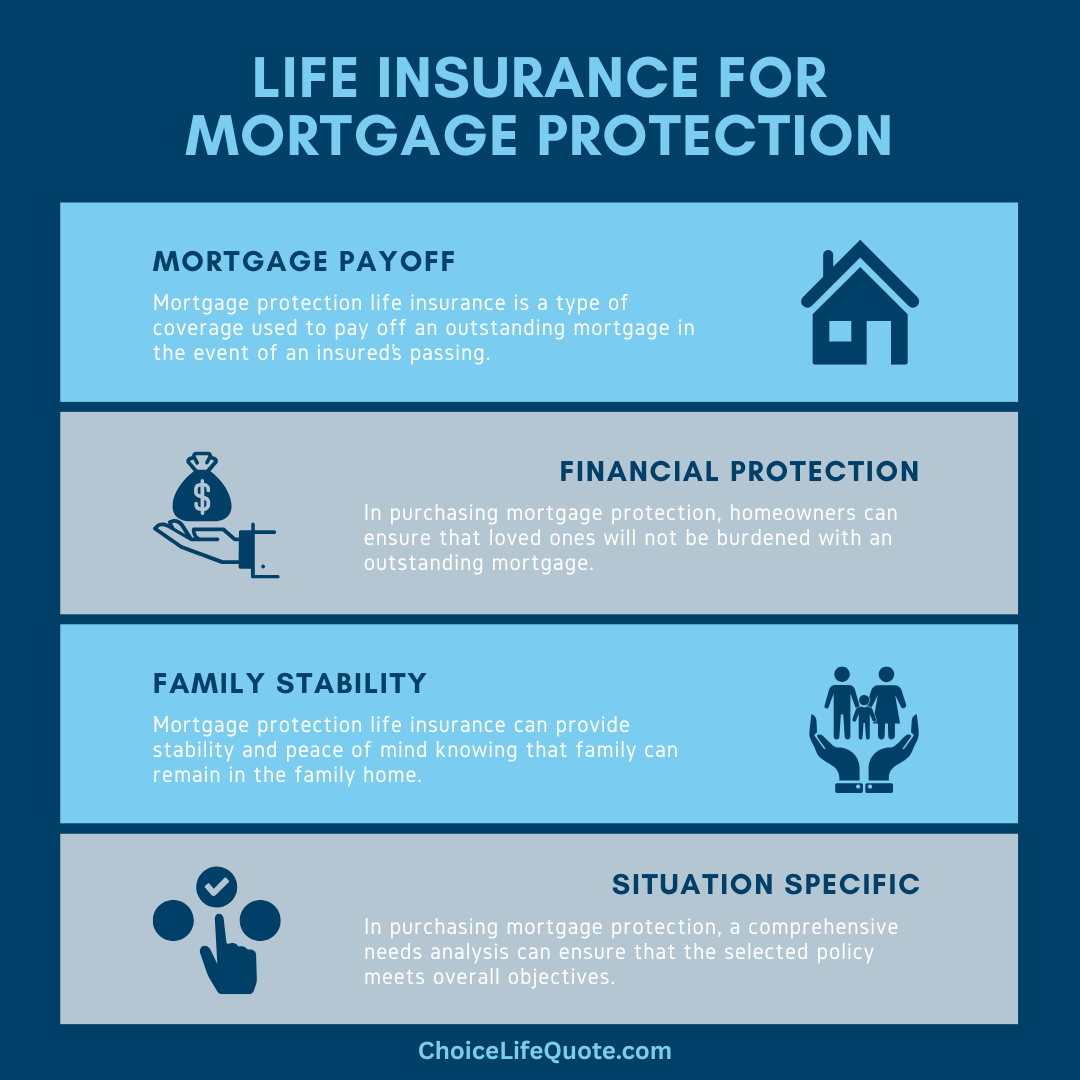
Securing life insurance to cover a mortgage balance ensures your family can remain in their home if you pass away unexpectedly. The five best options are level term life insurance, decreasing term life insurance, mortgage protection insurance (MPI), joint term life insurance, and convertible term life insurance. Each structure offers distinct trade-offs between cost, flexibility, and underwriting requirements.
Disclaimer: This guide is for educational and informational purposes only and does not constitute individual financial, legal, or tax advice. Insurance regulations and product availability vary by jurisdiction. Speak with a licensed insurance professional or accredited financial planner before purchasing or altering a life insurance policy.
Understanding Mortgage Balance Protection
A mortgage is frequently the largest single financial obligation a household undertakes. If a primary wage earner dies before the mortgage is paid off, surviving dependents may face severe financial strain, potential foreclosure, or the forced sale of the home during an already difficult emotional period. Using life insurance to cover an outstanding mortgage balance mitigates this risk by transferring the financial burden from your family to an insurance carrier.
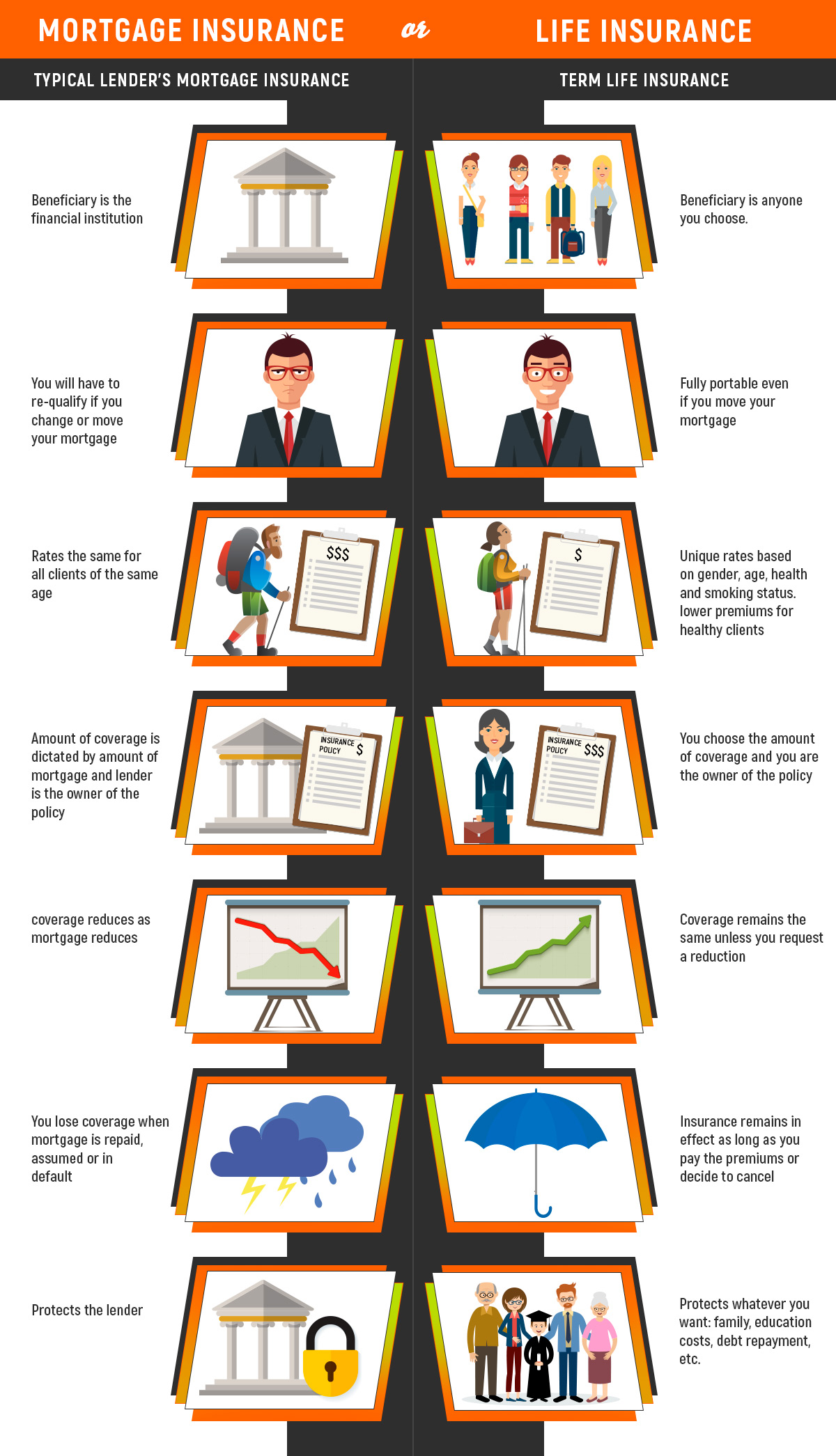
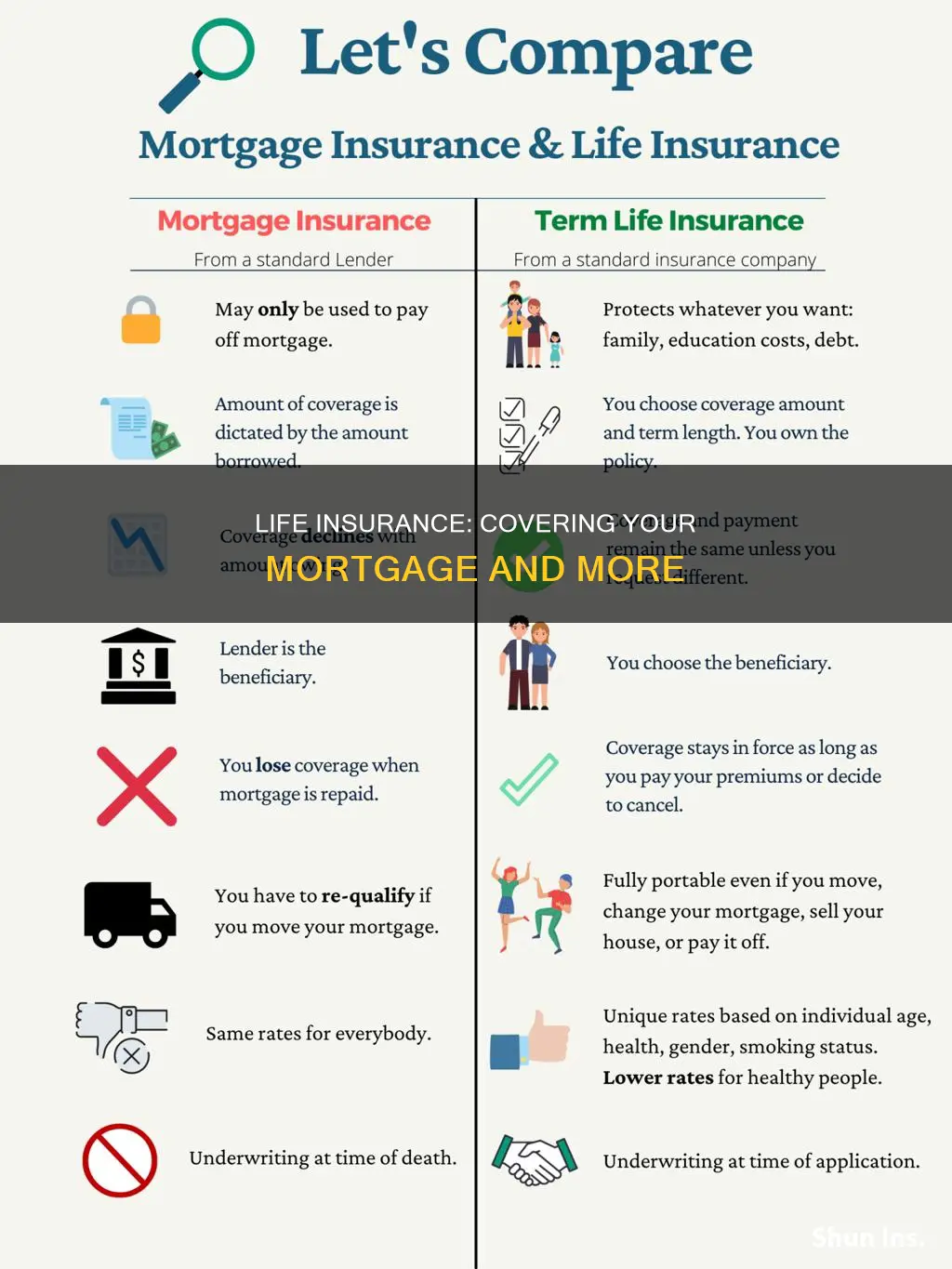
When structuring life insurance specifically for a mortgage, policyholders must choose between policies that pay out directly to designated beneficiaries (such as a spouse or child) and policies that pay out directly to the mortgage lender.
It is also critical to distinguish between Mortgage Protection Insurance (MPI) and Private Mortgage Insurance (PMI):
- PMI is required by lenders when a borrower puts down less than 20% on a conventional home loan. PMI protects the lender against default and provides zero benefit to the homeowner's heirs.
- Mortgage life protection (whether via traditional life insurance or dedicated MPI) is an optional policy purchased by the homeowner to safeguard their family's ability to clear or service the debt upon the policyholder's death.
The 5 Best Life Insurance Options for a Mortgage Balance
Different financial situations, health profiles, and household structures demand different policy formats. Below are the five most effective life insurance options to cover a home loan balance.
Mortgage Protection Strategies:
- Level Term Life: Fixed benefit, flexible cash use
- Decreasing Term Life: Benefit shrinks alongside loan balance
- Mortgage Protection (MPI): No medical exam, optional disability
- Joint Term Life: Dual-income payout on first death
- Convertible Term Life: Mortgage coverage now, wealth later
1. Level Term Life Insurance (Best Overall for Value and Flexibility)
Level term life insurance is widely considered the gold standard for protecting a mortgage balance. Under a level term structure, your premium payments and your death benefit remain identical throughout the entire duration of the policy (typically 10, 15, 20, or 30 years).
How It Works
If you take out a 30-year fixed-rate mortgage for $400,000, you can purchase a 30-year level term policy with a $400,000 death benefit. If you pass away in year 5, your beneficiary receives $400,000 tax-free. If you pass away in year 25—when your remaining mortgage balance might only be $80,000—your beneficiary still receives the full $400,000.
Key Benefits
- Complete Beneficiary Autonomy: Your surviving family receives the cash directly and can decide whether to pay off the mortgage entirely, invest the funds, or maintain monthly mortgage payments while allocating the surplus toward other financial needs.
- Cost Efficiency: Fully underwritten level term insurance generally offers the lowest cost per dollar of coverage for healthy applicants.
- Excess Capital: As your mortgage principal decreases over time, the fixed death benefit creates growing financial cushion beyond the loan balance.
Limitations
- Requires full medical underwriting (paramedical exam, blood work, medical record reviews) to secure the lowest rates.
- Coverage expires at the end of the term period; renewing after expiration is typically cost-prohibitive.
2. Decreasing Term Life Insurance (Best for Direct Alignment with Loan Amortization)
Decreasing term life insurance is designed specifically to mirror the declining principal balance of an amortizing loan.
How It Works
When you purchase a decreasing term policy, the death benefit declines over time according to a predetermined schedule that tracks a standard mortgage repayment plan. While the payout amount decreases over the 15- or 30-year term, your monthly premium remains locked at a flat rate for the life of the policy.
Key Benefits
- Direct Alignment with Debt: The policy tracks your loan principal, preventing you from over-insuring against a debt that shrinks over time.
- Simplified Underwriting Options: Many decreasing term policies feature streamlined underwriting, making them easier to obtain quickly during a home purchase.
Limitations
- Lower Value Over Time: Because the death benefit decreases while your premium remains constant, the effective cost per unit of remaining coverage increases as the policy matures.
- No Extra Financial Buffer: Unlike level term, decreasing term leaves little to no residual cash benefit for your heirs beyond what is required to satisfy the bank.
3. Dedicated Mortgage Protection Insurance / Guaranteed Issue MPI (Best for Substandard Health)
Mortgage Protection Insurance (MPI) is a specialized product often marketed directly by lenders, bank partners, or specialized insurers. MPI policies frequently feature simplified issue or guaranteed acceptance terms.
How It Works
MPI is designed explicitly around home loan balances. In many traditional MPI products, the death benefit is tied directly to the lender, meaning the insurer pays the remaining loan balance directly to the mortgage servicer upon proof of death. Many modern MPI policies also feature riders that cover monthly mortgage payments if the insured becomes disabled or involuntarily unemployed.
Key Benefits
- No Medical Exams Required: Most MPI products rely on simplified health questionnaires or offer guaranteed issue coverage, making them accessible to individuals with severe pre-existing health conditions who cannot qualify for traditional term life.
- Built-in Living Benefits: MPI products often package disability income riders or job-loss protections directly into the policy contract.
Limitations
- Higher Premiums: Because the insurer accepts higher risk by skipping medical exams, premiums per dollar of coverage are significantly higher than underwritten level term life insurance.
- Restricted Beneficiary Control: If the policy pays the bank directly, surviving heirs lack the flexibility to use funds for higher-priority needs, such as medical bills or education costs.
4. Joint Term Life Insurance (Best for Dual-Income Households)
For dual-income married couples or co-borrowers whose combined earnings are necessary to afford monthly mortgage payments, joint term life insurance provides unified coverage under a single policy.
How It Works
Joint term life insurance typically operates on a first-to-die basis. The policy covers two individuals, but pays out the death benefit upon the death of the first spouse. Once the benefit is paid out to clear the mortgage, the policy terminates.
Key Benefits
- Lower Administrative Overhead: Purchasing a single joint policy can be slightly less expensive and easier to manage than managing two separate term policies.
- Targeted Purpose: It directly addresses the specific risk of losing one household income required to sustain homeownership.
Limitations
- Policy Termination After First Death: Once the first spouse passes away and the claim is settled, the surviving spouse is left without life insurance coverage and may find it expensive or difficult to obtain new coverage due to advanced age or health changes.
- Equal Underwriting Impact: If one spouse has severe health issues, it can drive up the premium cost for the entire joint policy.
5. Convertible Term Life Insurance (Best for Long-Term Wealth & Legacy Planning)
Convertible term life insurance combines lower-cost term protection during your prime mortgage-paying years with the option to convert the policy into permanent life insurance later.
How It Works
You purchase a 20- or 30-year level term policy to cover your mortgage balance. Built into the policy contract is a conversion rider. This allows you to convert all or a portion of your term policy into a permanent cash-value policy (such as Whole Life or Universal Life) before a specified age (often age 65 or 70) without undergoing a new medical exam or proving insurability.
Key Benefits
- Guaranteed Insurability: If you develop a chronic condition, cancer, or heart disease during your mortgage term, you can still convert to a permanent policy at standard rate classes without medical screening.
- Flexibility for Changing Goals: As your mortgage declines, you can scale back coverage or transition part of the benefit toward estate planning, tax-advantaged cash accumulation, or final expenses.
Limitations
- Higher Premium Post-Conversion: While the initial term phase is affordably priced, converting to permanent life insurance drastically increases your monthly premium rate based on your attained age at the time of conversion.
Comparing the Top Mortgage Insurance Options
The table below contrasts the core features, beneficiary controls, and relative pricing of each mortgage life insurance strategy:
| Insurance Option | Primary Death Benefit Structure | Beneficiary Control | Medical Exam Required? | Relative Cost | Best Suited For |
|---|---|---|---|---|---|
| Level Term Life | Fixed payout across full term | High (Direct payout to heirs) | Yes (Standard underwriting) | Low | Healthy homeowners wanting maximum financial flexibility |
| Decreasing Term Life | Amortizes downward over time | High (Direct payout to heirs) | Varies (Simplified or Standard) | Moderate | Borrowers wanting coverage that strictly matches loan principal |
| Mortgage Protection (MPI) | Matches exact loan balance | Low to Moderate (Often pays lender) | No (Guaranteed / Simplified issue) | High | Individuals with pre-existing health conditions |
| Joint Term (First-to-Die) | Fixed payout on first partner's death | High (Direct payout to survivor) | Yes (Both applicants assessed) | Moderate | Dual-income couples sharing equal responsibility for debt |
| Convertible Term Life | Fixed term payout with permanent option | High (Direct payout to heirs) | Initial policy only (No exam to convert) | Low to Moderate | Buyers who want long-term estate planning options |
Calculating Your Required Coverage and Policy Term
Determining how much life insurance you need to protect your home requires evaluating more than just your remaining loan balance.
Required Coverage = Outstanding Principal + Expected Interest Burden + Escrow Shortfalls + Transition Buffer
1. Match the Policy Term to the Loan Amortization Schedule
Select a policy term that aligns with your mortgage repayment schedule:
- 30-Year Fixed Mortgage: A 30-year level term policy provides full coverage until the final payment is made.
- 15-Year Fixed Mortgage: A 15-year term policy matches the accelerated schedule at significantly lower monthly premiums than a 30-year policy.
- Adjustable-Rate Mortgages (ARMs): Consider a 20-year term policy to account for potential payment increases if interest rates adjust upward.
2. Factor In Escrow and Associated Housing Costs
A home loan payment often includes property taxes, homeowners insurance, and homeowners association (HOA) fees held in escrow. Simply paying off the mortgage principal does not eliminate these recurring obligations. Adding an extra $50,000 to $100,000 in coverage gives your family a financial buffer to handle ongoing taxes and maintenance.
3. Account for Inflation and Refinancing
If you plan to refinance or draw home equity in the future, choosing a slightly larger level term policy prevents you from being under-insured down the road.
Essential Policy Riders for Mortgage Protection
When customizing your life insurance contract, several optional riders can provide valuable living benefits while your mortgage is active:
- Waiver of Premium Rider: If you become totally disabled and unable to work due to injury or illness, the insurance company waives your monthly premium payments while keeping your policy active.
- Disability Income Rider: Pays a direct monthly cash benefit (often calculated as a percentage of your policy benefit) to help meet monthly mortgage obligations while you recover from a covered disability.
- Accelerated Death Benefit (Living Benefits) Rider: Allows you to access a portion of your policy’s death benefit early if you are diagnosed with a terminal illness, organ failure, or qualified critical condition.
- Return of Premium (ROP) Rider: Refund all or a portion of the premiums paid at the end of the term if you outlive the policy. While ROP riders increase monthly costs by 20% to 50%, they function as a forced-savings mechanism for risk-averse homeowners.
Common Pitfalls to Avoid
Navigating life insurance options during or after a home purchase requires careful evaluation. Avoid these common missteps:
- Naming the Mortgage Company as Sole Beneficiary: Unless required by specific loan programs, avoid assigning death benefits directly to your lender. Naming your spouse or a family trust gives your heirs the choice to retain low-interest mortgage debt while investing the capital elsewhere.
- Confusing PMI with Life Insurance: Private Mortgage Insurance protects the financial institution against borrower default—it provides zero payout to your family. Ensure you hold a separate life policy.
- Buying Default Solicitations Without Shopping Around: New homeowners often receive direct-mail solicitations for mortgage life insurance shortly after closing. These mass-market offers are frequently overpriced simplified-issue policies. Always compare quotes from independent brokers across fully underwritten level term products first.
- Ignoring Policy Expirations After Refinances: If you refinance a 30-year mortgage ten years into ownership with a new 30-year loan, your initial 20-year life policy will expire a decade before your new loan matures. Review your coverage whenever you alter your mortgage terms.
Step-by-Step Guide to Applying for Coverage
Follow these steps to lock in mortgage life coverage efficiently:
Step 1: Calculate Need
Step 2: Compare Quotes
Step 3: Complete Application
Step 4: Medical Exam
Step 5: Underwriting
Step 6: Policy Issue
Calculate Financial Need: Total your current mortgage balance, projected interest, remaining term, and secondary expenses (taxes, HOA fees).
Gather Health and Personal Data: Document your medical history, current medications, family health background, lifestyle habits, and dangerous occupations or hobbies.
Compare Independent Quotes: Request quotes for level term, decreasing term, and convertible term options from multiple highly rated carriers (rated A- or higher by A.M. Best).
Submit Application & Complete Exam: Complete the formal application. If applying for traditional level term, schedule your paramedical exam (which includes height, weight, blood pressure, blood samples, and urine testing).
Review Underwriting Decision: The insurer reviews your medical records, motor vehicle records, and prescription histories. If rated higher due to a medical condition, evaluate simplified-issue or MPI alternatives.
Establish Beneficiary Designation and Auto-Pay: Name primary and contingent beneficiaries, set up automatic premium deductions to prevent coverage lapse, and store your policy documents in a secure, accessible location.
Frequently Asked Questions
Is mortgage life insurance required by law or lenders?
No. Mortgage life insurance is completely optional. Lenders may require Private Mortgage Insurance (PMI) if your down payment is below 20%, but they cannot force you to buy life insurance or mortgage protection insurance (MPI) to qualify for a residential home loan under federal lending regulations.
What happens to my life insurance policy if I refinance or pay off my mortgage early?
If you hold a individual level term or convertible term policy, paying off your home loan or refinancing has zero effect on your insurance contract. The policy stays active, your premium remains unchanged, and your beneficiaries receive the full death benefit if you die within the term. If you hold a specialized MPI policy tied directly to your lender, paying off the loan terminates the policy.
Can I use traditional term life insurance instead of dedicated mortgage protection insurance?
Yes. Traditional term life insurance is usually superior to dedicated mortgage protection insurance. Fully underwritten level term life offers lower rates for healthy applicants, flexible payout options, and guarantees that your family receives the funds directly rather than handing total control to the bank.
What is the primary difference between PMI and Mortgage Life Insurance?
PMI (Private Mortgage Insurance) protects the bank if you default on your loan payments; it pays nothing to your family if you pass away. Mortgage Life Insurance pays a monetary cash benefit to your surviving family (or satisfies your outstanding balance) if you die during the coverage period.
Will mortgage life insurance cover my payments if I lose my job?
Standard term life policies only pay out upon the insured's death. However, specialized Mortgage Protection Insurance (MPI) policies or term policies with an added involuntary unemployment rider or disability rider can step in to cover your monthly mortgage payments for a limited duration (typically 6 to 24 months) if you lose your job or become disabled.
Next Steps for Homeowners
To ensure your home remains secure for your family, take these immediate actions:
- Review your current mortgage statement to verify your exact remaining balance, interest rate, and remaining loan duration.
- Estimate your household's post-loss budget to determine whether your family needs a policy that pays off the entire loan or simply supplements monthly cash flow.
- Consult an independent insurance broker to obtain multi-carrier quotes for a 30-year or 15-year level term life policy alongside specialized MPI products to find the optimal balance of price and coverage.