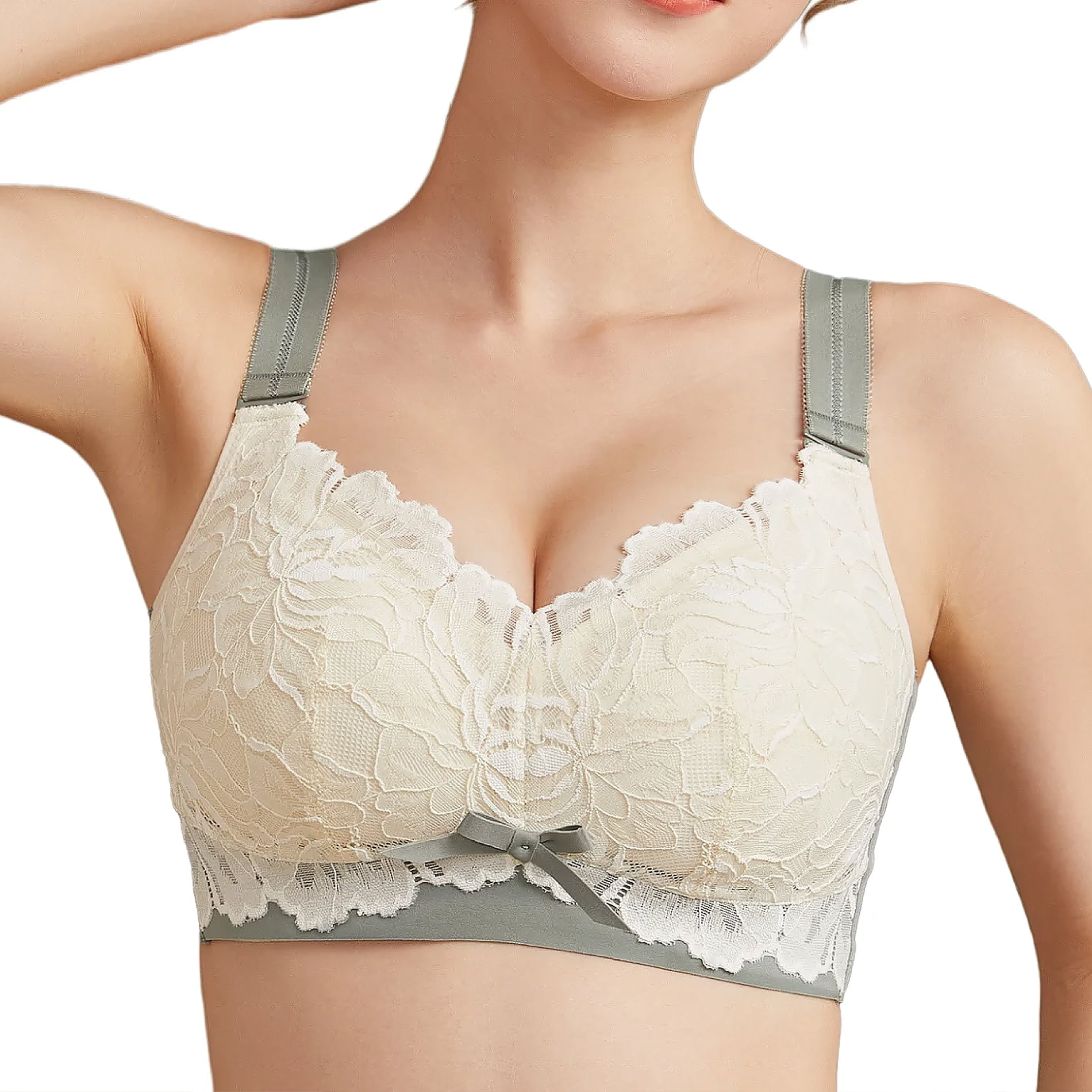
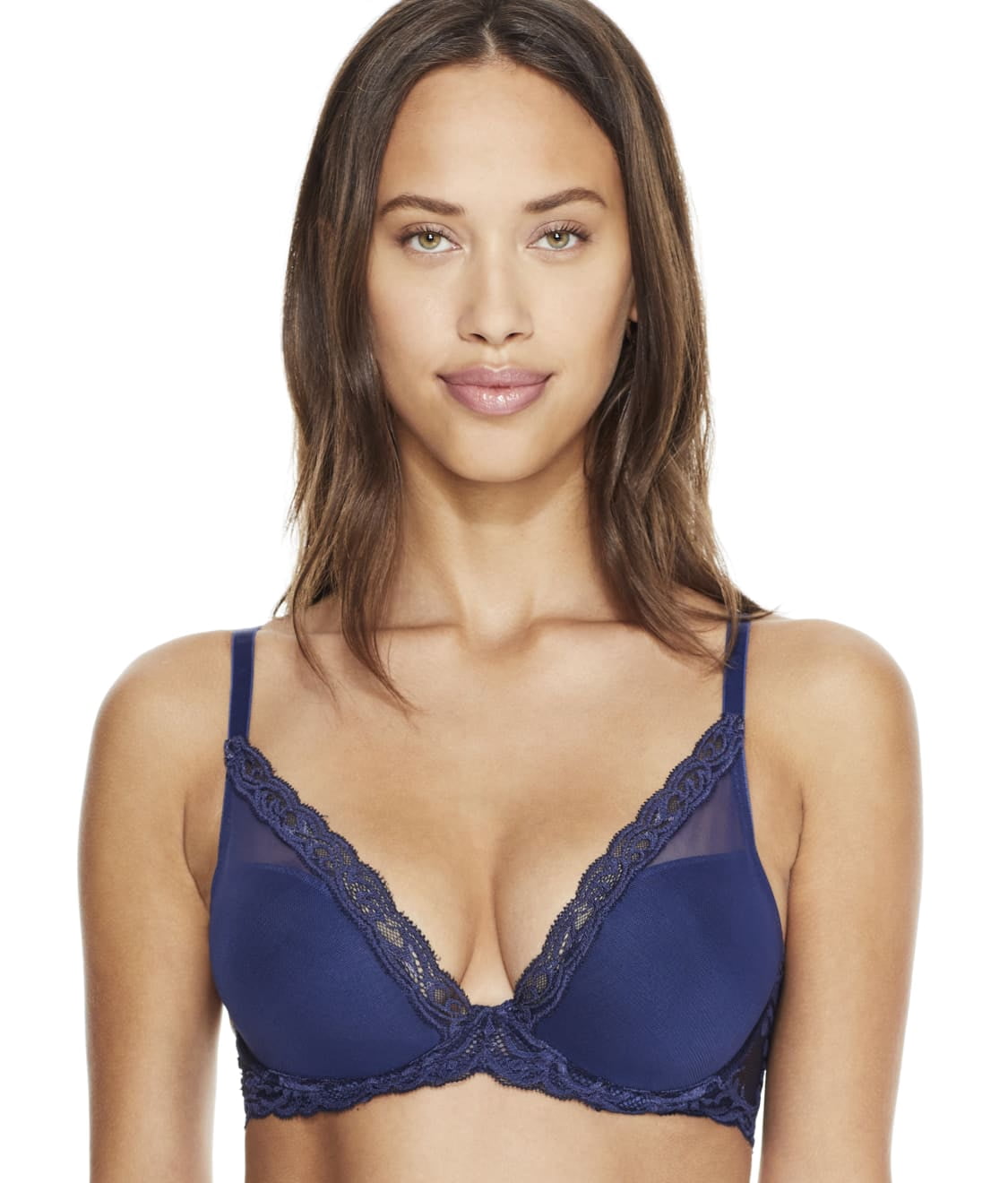
A 34DDD minimizer bra is a specialized piece of foundation wear engineered to reduce the perceived volume of the bust by one to one and a half inches. Unlike standard bras that lift and project the tissue forward, the minimizer redistributes breast tissue more broadly across the chest wall and toward the underarms. This creates a streamlined silhouette, prevents button-gapping on professional attire, and provides a more balanced aesthetic for those with a 34-inch ribcage and a significantly larger bust volume.
Understanding the Engineering of a Minimizer Bra
The 34DDD minimizer bra is often misunderstood as a "sports bra lite" or a garment that simply flattens the chest. In reality, the mechanics are far more sophisticated. In 2026, the design of these garments has evolved to prioritize both aesthetic reduction and anatomical health.
Compression vs. Redistribution
Standard bras are typically designed with a "parabolic" cup shape, which gathers the tissue from the sides and pushes it toward the center and forward. This creates the classic "teardrop" or "round" profile. A minimizer bra uses a "shallow" cup design. By making the cup wider and less deep, the bra encourages the breast tissue to occupy a larger surface area on the chest.
This redistribution is not about crushing the tissue; it is about changing its orientation. High-quality 34DDD minimizers use "encapsulation" rather than "compression." While compression bras (like many sports bras) press the tissue against the ribcage, an encapsulation minimizer holds each breast in a specific, shallower pocket that guides the tissue toward the outer edges of the frame. This prevents the "uniboob" look while successfully reducing the distance the bust projects from the body.
The Role of High-Denier Fabrics
The efficacy of a minimizer depends heavily on the tensile strength of the fabric. For a 34DDD, where the weight of the breast tissue is substantial, the cups must be made of high-denier (thickness) non-stretch or low-stretch materials. In 2026, many leading manufacturers use simplex fabrics or power mesh. These materials offer the rigidity necessary to hold the tissue in its redistributed state without stretching out over the course of a day. If the fabric stretches too easily, the "minimizing" effect is lost as the tissue naturally pushes the fabric forward into a standard projection.
Why the 34DDD Size Presents Unique Engineering Challenges
The 34DDD size is a specific point in the sizing spectrum where the ratio between the ribcage and the bust volume creates a high center of gravity. A 34 band indicates a relatively narrow frame, while the DDD cup (equivalent to an E or F in some international sizing systems) indicates a six-inch difference between the underbust and the fullest part of the chest.
Support Distribution and the 34 Band
In a 34DDD bra, approximately 80% of the support must come from the band, not the straps. Because the bust volume is high, a band that is too loose will be pulled up the back by the weight of the breasts in front. When choosing a minimizer in this size, the band must be exceptionally firm.
Minimizers for 34DDD wearers often feature "leotard backs" (a U-shaped back design). This design helps keep the straps in place and provides a wider surface area for the band to grip the ribcage, preventing the "digging" sensation often associated with heavy-duty bras. Furthermore, the side wings of a 34DDD minimizer are typically taller than those of a standard bra. This serves two purposes: it prevents tissue from "spilling" over the sides (often called side-set or auxiliary tissue) and it provides the necessary leverage to pull the breast tissue flat across the front.
The "Sister Size" Trap
Many 34DDD shoppers are tempted to move to a 36DD if a 34DDD is not available. However, for a minimizer to function correctly, this "sister sizing" is often counterproductive. A 36-inch band is designed for a larger frame; on a 34-inch ribcage, the 36DD will lack the tension required to hold the cup flush against the body. Without that tension, the redistribution of tissue fails, and the wearer ends up with a standard-profile bra that simply fits poorly.
Key Construction Elements of a 34DDD Minimizer
When evaluating a 34DDD minimizer bra in 2026, several technical features differentiate a high-performance garment from a generic one.
Underwire Shape and Placement
Underwires in minimizers are distinct. In a standard 34DDD bra, the underwire is a narrow "U" shape. In a minimizer, the underwire is a wider, flatter "C" shape. This wider wire is essential for capturing the tissue and guiding it toward the underarm area.
Wearers should ensure the wire sits entirely behind the breast tissue. If the wire rests on the tissue itself (a common issue in the 34DDD range), it can cause discomfort and long-term health issues like mastitis or blocked ducts. In 2026, "ergonomic wires" that follow the natural curve of the ribcage are common in premium brands like Wacoal and Chantelle.
Center Gore Stability
The center gore is the piece of fabric that connects the two cups at the sternum. For a 34DDD minimizer to work, the gore must "tack" (sit flat) against the skin. Because the goal is to spread the tissue apart and flat, the gore acts as the anchor point. If the gore is lifting off the chest, the bra is being pushed forward, which means it is not minimizing. High-performance minimizers often feature a reinforced, non-stretch gore to maintain this anchor.
Seamless vs. Seamed Cups
- Seamless (Molded) Cups: These are the most popular for minimizers. They are heat-molded into a shallow shape, providing a very smooth look under thin knits or T-shirts.
- Seamed Cups: These offer more structural support. A seamed 34DDD minimizer can use different fabric strengths in different parts of the cup (e.g., a rigid side sling and a slightly more flexible top panel). Seamed bras are generally better for very heavy or soft breast tissue that needs more guidance than a molded cup can provide.
Comparison of Popular 34DDD Minimizer Types
The following table compares the primary styles available in the 2026 market for 34DDD wearers.
| Feature | Seamless Molded Minimizer | Seamed Support Minimizer | Wireless Minimizer |
|---|---|---|---|
| Primary Material | Molded Microfiber/Lycra | Rigid Lace or Simplex | Power Mesh / High-Tension Knit |
| Profile Shape | Rounded and Wide | Slightly Pointed / Compressed | Flat and Natural |
| Visibility | Invisible under T-shirts | Visible seams under thin fabric | Low profile, comfort-focused |
| Support Level | Medium-High | Maximum | Medium |
| Best For | Daily office wear | Full-day support / Heavy tissue | Lounging / Low-impact activity |
| Projection Reduction | 1.0 to 1.25 inches | 1.25 to 1.5 inches | 0.75 to 1.0 inch |
Troubleshooting Common Fit Issues
Even with the correct size of 34DDD, the specific "shape" of the breast (full on top, full on bottom, or shallow) can affect how a minimizer performs.
The "Quadriboob" Effect
If the breast tissue is spilling over the top of the minimizer cup, it often suggests that the cup is too shallow for the density of the tissue, or the size is actually a 34G or 34H. Because a 34DDD minimizer is already designed to be shallow, it is very easy to overflow the cup if the sizing isn't exact. If this occurs, try a brand that offers a "full-coverage" minimizer, which has a higher neckline to contain the upper tissue.
Side Spillage and Poking Wires
If the underwires are poking the sensitive tissue near the armpit, the wires are likely too narrow. This is a sign that the bra is a "standard" bra being marketed as a minimizer rather than a true minimizer with wide-set wires. A true 34DDD minimizer should have wires that end well behind the breast root.
Strap Digging
If the straps are digging into the shoulders, the 34 band is likely too loose. As mentioned previously, the band should be doing the heavy lifting. In 2026, many 34DDD minimizers feature "cushioned" or "honeycomb" straps to mitigate pressure, but these are secondary to a properly fitted band.
Care and Longevity of Your Minimizer
A 34DDD minimizer is an investment in engineering. To maintain its ability to redistribute tissue, the elasticity must be preserved.
- Rotation: Never wear the same bra two days in a row. The elastic fibers need 24 hours to "snap back" to their original shape.
- Hand Washing: The heat and agitation of a washing machine will break down the Lycra and Spandex that provide the minimizing tension. Use a gentle detergent and cool water.
- Air Drying: Never put a minimizer in the dryer. Heat is the primary enemy of bra longevity, especially for the 34DDD size where the fabric is already under significant tension during wear.
- Replacement Cycle: In 2026, with daily rotation, a high-quality 34DDD minimizer should last 6 to 9 months. Once the band starts to feel loose on the tightest hook, the bra can no longer provide the tension necessary to minimize.
Health and Posture Benefits
While many seek out 34DDD minimizers for fashion, there are significant physical benefits. Large bust volumes can lead to "kyphosis" (a rounded upper back) or chronic neck pain. By redistributing the weight of the bust closer to the center of gravity and wider across the chest, a minimizer can help shift the wearer's balance.
According to various orthopedic studies, reducing the forward projection of the bust can alleviate the strain on the trapezius muscles. For 34DDD wearers, this often results in improved posture and a reduction in the "slouching" that many individuals do subconsciously to hide their bust size. Information on the relationship between bra fit and back health can be explored through resources like Healthline.
Frequently Asked Questions
Does a minimizer bra actually make you look smaller?
Yes. A 34DDD minimizer works by reducing the "peak" projection of the bust. While it doesn't make the breast tissue disappear, it spreads it over a larger area. This typically results in a 1 to 1.5-inch reduction in the circumference of the chest at its widest point, which is often enough to allow a blazer or button-down shirt to fit without pulling.
Is a 34DDD the same as a 34F?
It depends on the brand. In most US-based sizing systems, DDD is the size immediately following DD. In UK-based systems (like Panache or Freya), a DDD is often equivalent to an E or F cup. It is crucial to check the brand's specific sizing chart, as a "34DDD" in one brand might be significantly smaller than a "34F" in another.
Can I wear a 34DDD minimizer every day?
Yes, provided it is properly fitted. Some older minimizer designs were criticized for being too restrictive, but 2026 designs use breathable, ergonomic materials that are suitable for all-day wear. However, for sleeping or high-impact exercise, specialized sleep bras or sports bras are recommended over a minimizer.
Will a minimizer bra give me a "uniboob"?
A well-designed 34DDD minimizer will not. The key is the center gore. If the gore sits flat against your sternum, the breasts are kept separate. "Uniboob" occurs in compression-style bras (like some sports bras) that lack a center divider. High-quality minimizers from brands like Wacoal or Lilyette are specifically engineered to maintain separation while reducing projection.
Why do minimizer bras often have such wide straps?
For a 34DDD, the weight of the bust is significant. Wide straps help distribute that weight across a larger surface area of the shoulder, preventing the straps from cutting into the skin and causing "shoulder grooves." Even though the band provides most of the support, the wide straps are a necessary secondary support feature for larger cup sizes.
Final Recommendation
For those wearing a 34DDD, a minimizer bra is an essential tool for achieving a polished, professional look and improving physical comfort. When shopping, prioritize a firm 34 band, a wide underwire, and a non-stretch center gore. If you are looking for the best balance of invisibility and reduction, a seamless molded minimizer is the standard choice. However, if you require the absolute maximum reduction in projection, a seamed, high-coverage model will provide the most structural control. Always perform a "scoop and swoop" when putting the bra on to ensure all tissue is properly positioned within the wide-set wires for the most effective minimization.