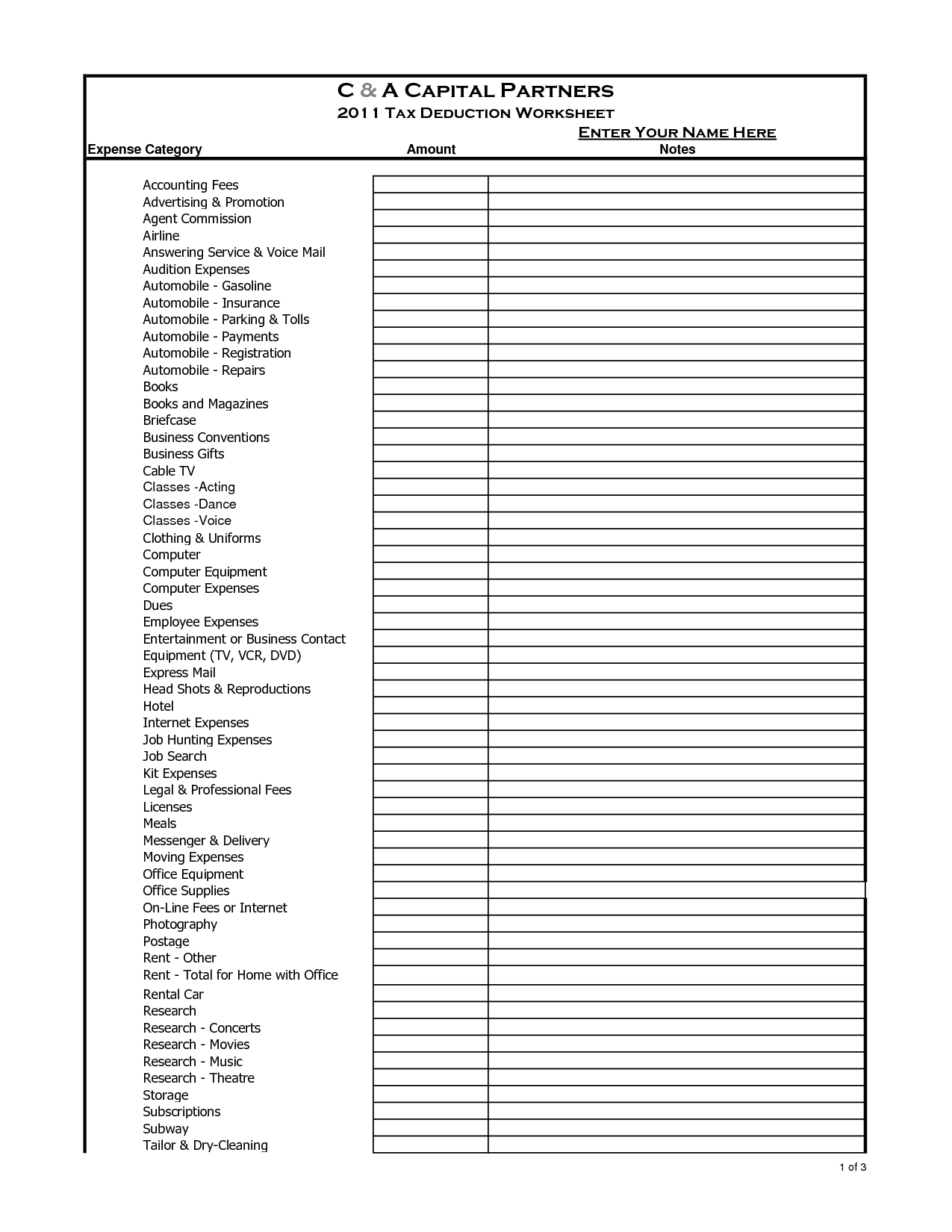
The 2025 tax year, which taxpayers file in early 2026, introduces specific nuances regarding how itemized deductions are calculated and reported. While the core framework for Schedule A remains largely consistent with prior years, changes to the interaction between Schedule 1 and the broader Form 1040 structure have shifted how taxpayers verify their eligibility for specific adjustments and deductions. Understanding these mechanics is essential for accurately reporting your income and ensuring you maximize the tax benefits available to your household.
The Role of Schedule 1 in Your 2026 Filing
To understand the 2025 itemized deductions worksheet, one must first recognize the structural purpose of Schedule 1 (Form 1040). Schedule 1 serves as the bridge between your gross income and your adjusted gross income (AGI). It is categorized into two parts: Part I, "Additional Income," and Part II, "Adjustments to Income."
For the 2025 tax year, the importance of Schedule 1 lies in its role as a pre-filter for deductions. Many taxpayers mistakenly believe that itemized deductions—those reported on Schedule A—are completely independent of Schedule 1. However, the order of operations in tax preparation requires that you first determine your "Adjustments to Income" (often called "above-the-line" deductions) on Schedule 1 before you determine whether it is more beneficial to itemize or take the standard deduction on Schedule A.
Itemized Deductions vs. The Standard Deduction
The decision to use the 2025 itemized deductions worksheet depends on a simple mathematical comparison: is the total of your itemized deductions greater than the standard deduction amount for your filing status?
For the 2025 tax year, the standard deduction amounts are:
- Single or Married Filing Separately: $15,000
- Married Filing Jointly or Qualifying Surviving Spouse: $30,000
- Head of Household: $22,500
If your eligible expenses—such as state and local taxes (SALT), mortgage interest, charitable contributions, and medical expenses exceeding 7.5% of your AGI—do not exceed these thresholds, the standard deduction remains the default, and you may not need to file a full Schedule A. However, if your expenses exceed these amounts, the itemized deductions worksheet becomes a vital tool in minimizing your taxable income.
Navigating the 2025 Itemized Deductions Worksheet
The worksheet is not a tax form you submit to the IRS; rather, it is an internal calculation guide designed to help you tally your potential deductions. As you work through the lines, keep in mind the current 2026 tax environment, where documentation standards remain stringent.
1. Medical and Dental Expenses
You can deduct unreimbursed medical expenses that exceed 7.5% of your AGI. Note that this calculation must be performed after you have completed the adjustments on Schedule 1. If you miscalculate your AGI by failing to account for adjustments (like student loan interest or IRA contributions), your threshold for medical expenses will be incorrect, potentially leading to an inaccurate deduction claim.
2. Taxes You Paid
The Tax Cuts and Jobs Act (TCJA) cap remains in effect for 2025. You are limited to a combined deduction of $10,000 ($5,000 if married filing separately) for state and local income taxes (or sales taxes) and property taxes. This limit is one of the most common points of confusion; taxpayers often list their full tax burden on the worksheet only to realize later that the total is capped.
3. Interest You Paid
This includes home mortgage interest for up to $750,000 of mortgage debt ($375,000 for married filing separately) for loans taken out after December 15, 2017. Interest on home equity loans is only deductible if the funds were used to "buy, build, or substantially improve" the home that secures the loan.
4. Gifts to Charity
Cash and non-cash charitable contributions remain deductible, but they are subject to limitations based on your AGI. Ensure you have the necessary receipts, especially for donations over $250, as the IRS requires contemporaneous written acknowledgment for such claims.
The Interaction Between Schedule 1 and Schedule A
Why does the "new" Schedule 1 matter for your itemized deductions? Because the IRS has streamlined the reporting of various "Adjustments to Income." In 2025, adjustments like educator expenses, health savings account (HSA) deductions, and student loan interest deductions are calculated on Schedule 1.
By lowering your AGI, these adjustments increase your ability to clear the "floor" for certain itemized deductions. For example, if you have high medical expenses, a lower AGI (achieved via Schedule 1 adjustments) makes it statistically easier to surpass the 7.5% threshold. This is the "new" strategy many taxpayers are utilizing: viewing Schedule 1 as a preparatory step to maximize the utility of the Schedule A itemized deductions worksheet.
Comparative Analysis: Standard vs. Itemized
To determine your strategy, utilize the following table to estimate your path forward.
| Feature | Standard Deduction (2025) | Itemized Deductions (Schedule A) |
|---|---|---|
| Documentation | Minimal requirements | Detailed records/receipts required |
| Complexity | Low; automatic application | High; requires detailed calculation |
| Eligibility | Universal | Dependent on exceeding thresholds |
| Best Used When | Total expenses are below caps | Total expenses exceed standard deduction |
| Audit Risk | Very Low | Higher due to manual claims |
Common Mistakes and How to Avoid Them
When preparing your 2025 taxes in 2026, avoiding common pitfalls is critical to ensuring your return is processed without unnecessary delays or IRS inquiries.
- Failure to Adjust for AGI: As noted, skipping Schedule 1 adjustments means your AGI is artificially high. This affects your "floor" for medical expenses and can also impact other phase-outs or limitations. Always finalize your Schedule 1 adjustments before finalizing your itemized worksheet.
- Including Non-Deductible Expenses: Many taxpayers attempt to deduct pet medical expenses or personal expenses that they view as "medical." Review IRS Publication 502 to ensure every medical expense listed is indeed qualified.
- Ignoring the SALT Cap: Do not include state and local taxes beyond the $10,000 limit. Including them will result in an adjustment during IRS processing, which can trigger a flag on your return.
- Missing Documentation: Digital record-keeping is increasingly accepted, but you must be able to produce receipts upon request. A summary spreadsheet is not sufficient; you need the physical or digital source documents.
Practical Steps to Finalize Your Worksheet
- Gather Forms: Collect your W-2s, 1099s, and all relevant documentation for expenses (1098s for mortgage interest, letters from charities, medical receipts).
- Calculate Schedule 1: Complete your adjustments to income first to establish your correct AGI.
- Draft the Worksheet: Fill out the 2025 itemized deductions worksheet using the amounts determined from your records.
- Compare: Compare the total on the worksheet to your standard deduction amount.
- File Accordingly: If the itemized total is higher, report those figures on Schedule A of Form 1040. If the standard deduction is higher, use that amount on Form 1040 and do not attach Schedule A.
Frequently Asked Questions
Does the 2025 tax year introduce any new "above-the-line" deductions? No, there are no major new categories added to Schedule 1 for 2025. The core adjustments, such as student loan interest, educator expenses, and retirement contributions, remain consistent with the prior year's structure.
Can I itemize if my total deductions are less than the standard deduction? Technically, yes, but there is no tax benefit to doing so. You would simply be doing extra work that results in a higher taxable income than if you had just taken the standard deduction. Always choose the path that results in the lowest taxable income.
What happens if I make a mistake on my Schedule 1 adjustments? If you discover a mistake after filing, you must file an amended return (Form 1040-X). Because Schedule 1 impacts your AGI, an error there often requires a complete recalculation of your return, including any itemized deductions that were dependent on that AGI.
Are medical expenses for family members who are not dependents deductible? Generally, no. You can only include medical expenses for yourself, your spouse, and your dependents. If you have a family member who does not qualify as a dependent, their medical expenses cannot be included on your itemized deductions worksheet.
Will the IRS automatically adjust my return if I calculate my itemized deductions incorrectly? The IRS automated systems often detect simple math errors or obvious limit violations (like exceeding the SALT cap). If they detect an error, they may send a notice explaining the adjustment. However, reliance on this is dangerous; it is better to perform the calculation correctly the first time to avoid interest or penalties.
Next Steps for Taxpayers
If you are currently preparing your 2026 filing for the 2025 tax year, start by organizing your receipts into the categories mentioned above. Use the Schedule 1 "Adjustments to Income" section as your first priority to establish your AGI. Once your AGI is locked, use the itemized deductions worksheet to see if you can surpass the standard deduction threshold. If your situation is complex—particularly regarding business income, self-employment, or significant investment assets—consult with a Certified Public Accountant (CPA) or a tax attorney to ensure that your interpretation of the 2025 guidelines is accurate for your specific financial profile.