The 2016 Chevrolet Silverado 1500 generally features a 26-gallon fuel tank for short and standard bed configurations, while models equipped with an 8-foot long bed utilize a larger 34-gallon tank. For the heavy-duty 2500HD and 3500HD variants, a 36-gallon tank is the standard across most cab and bed lengths.
As of 2026, the 2016 Chevrolet Silverado remains a staple of the used truck market and a workhorse for many fleets. Known for its introduction of the mid-cycle refresh for the third-generation (K2XX) platform, this model year brought updated styling and technology. However, for owners and prospective buyers, understanding the mechanical specifications—specifically fuel capacity—is critical for calculating towing range, planning long-distance travel, and managing operational costs. The fuel tank size on a 2016 Silverado is not "one size fits all"; it is determined by the truck's series (1500 vs. HD), the frame length, and the specific bed configuration.
Understanding the 2016 Silverado 1500 Fuel Capacities
The light-duty Silverado 1500 is the most common version of this pickup found on the road. In 2016, Chevrolet designed the fuel system to optimize weight distribution and frame space. Because the fuel tank is mounted inside the frame rails, its physical dimensions are strictly limited by the distance between the crossmembers and the wheelbase of the truck.
The Standard 26-Gallon Tank
The vast majority of 2016 Silverado 1500s—including the popular Crew Cab with a short bed (5'8") or a standard bed (6'6") and the Double Cab models—are equipped with a 26-gallon (approx. 98 liters) fuel tank. This size was chosen as a balance between providing a respectable driving range and keeping the vehicle's curb weight low enough to maximize payload capacity.
In real-world driving scenarios, a 26-gallon tank provides a significant buffer, but drivers rarely utilize the full 26 gallons. Typically, the "low fuel" warning light illuminates when there are approximately 2 to 4 gallons of fuel remaining. This serves two purposes: preventing the driver from becoming stranded and ensuring that the electric fuel pump remains submerged in fuel, which helps dissipate heat and prevents premature pump failure.
The 34-Gallon Long Bed Expansion
For those who opted for the Regular Cab or Double Cab with an 8-foot long bed, Chevrolet utilized the extra frame length to install a 34-gallon (approx. 128.7 liters) fuel tank. This 30% increase in capacity is highly sought after by those who use their trucks for rural work or long-haul transport. By extending the tank further along the driver-side frame rail, Chevrolet allows these drivers to push their highway range significantly further, often exceeding 600 miles on a single fill-up when paired with the 5.3L V8 engine.
2016 Silverado HD: 2500HD and 3500HD Tank Specifications
When moving up to the Heavy Duty (HD) lineup, the requirements for fuel change. These trucks are designed for maximum towing and hauling, tasks that consume fuel at a much higher rate than daily commuting. Consequently, the 2016 Silverado 2500HD and 3500HD were engineered with larger standard capacities.
The Universal 36-Gallon Tank
Whether you are looking at a 2500HD or a 3500HD, the standard fuel tank size for the 2016 model year is 36 gallons (approx. 136 liters). Unlike the 1500 series, this 36-gallon capacity remains consistent across almost all configurations, including the standard 6'6" bed and the 8-foot long bed.
The rationale behind the 36-gallon standard is the higher fuel consumption of the HD engines. The 6.0L Vortec V8 gasoline engine and the 6.6L Duramax Turbo-Diesel both require more fuel volume to maintain the same range as a light-duty truck, especially when pulling a trailer. For the diesel models, this tank is supplemented by a 7-gallon Diesel Exhaust Fluid (DEF) tank, which is necessary for the emissions reduction system.
Chassis Cab Variations
For specialized 3500HD Chassis Cab models (trucks sold without a factory bed for aftermarket flatbeds or service bodies), fuel capacity can vary significantly. Some Chassis Cabs feature a single rear-mounted 40-gallon tank, while others offer a dual-tank configuration (a 23.5-gallon front tank and a 40-gallon rear tank) for a combined capacity of 63.5 gallons. This is essential for commercial applications like ambulances or tow trucks that may idle for long periods or travel between remote job sites.
| Silverado Model | Bed Length | Tank Size (Gallons) | Tank Size (Liters) |
|---|---|---|---|
| 1500 (All Cabs) | Short (5'8") / Standard (6'6") | 26 Gallons | 98.4 L |
| 1500 (All Cabs) | Long (8') | 34 Gallons | 128.7 L |
| 2500HD | All Bed Lengths | 36 Gallons | 136.3 L |
| 3500HD (Pickup) | All Bed Lengths | 36 Gallons | 136.3 L |
| 3500HD Chassis Cab | N/A | 40 or 63.5 (Dual) | 151.4 / 240.4 L |
Driving Range and Engine Efficiency
Understanding the tank size is only half of the equation; the other half is how quickly that fuel is consumed. The 2016 Silverado offered several engine options, each impacting the total range.
4.3L V6 and 5.3L V8 (EcoTec3)
The 4.3L V6 and the 5.3L V8 engines were the most common choices for the 1500 series. With the 26-gallon tank, a 2016 Silverado 1500 2WD with the 5.3L V8 (averaging roughly 19 MPG combined) has a theoretical range of approximately 494 miles. In 2026, as these engines age, efficiency may drop slightly due to wear on fuel injectors or carbon buildup, making it more common to see a practical range closer to 450 miles.
6.2L V8 Performance
The 6.2L V8 engine, often found in the High Country or LTZ trims, offers significantly more power but requires premium fuel for optimal performance. While it shares the 26-gallon tank in most configurations, its higher fuel consumption slightly reduces the overall range compared to the 5.3L. Furthermore, because this engine is typically paired with higher-geared axles for towing, the "highway cruising" range is often shorter than its smaller-displacement siblings.
6.6L Duramax Diesel Range
The 2016 Duramax diesel (LML engine code) is a favorite for long-distance towing. With the 36-gallon tank, an unloaded 2500HD can achieve upwards of 18–20 MPG on the highway, resulting in a staggering range of over 700 miles. However, when towing a 10,000-pound trailer, that efficiency can drop to 10–12 MPG, bringing the range down to a more modest 360 miles.
Fuel Types and Compatibility
The 2016 Silverado was designed during a transition period for fuel technology, leading to several compatibility considerations for owners.
- FlexFuel (E85): Many 2016 Silverados with the 4.3L V6 or 5.3L V8 are E85 compatible. You can identify this by a yellow fuel cap or a "FlexFuel" badge on the tailgate. While E85 is often cheaper, it has a lower energy density than gasoline. Using E85 in your 26-gallon tank will result in roughly 20-25% fewer miles per tank.
- Top Tier Detergent Gasoline: Chevrolet recommends using "Top Tier" gasoline to prevent deposits from forming on the direct-injection fuel injectors. Direct injection, which was standard on the 2016 EcoTec3 engines, is sensitive to fuel quality.
- Diesel Requirements: The 2016 Duramax requires Ultra-Low Sulfur Diesel (ULSD). Using older off-road diesel with high sulfur content can permanently damage the Diesel Particulate Filter (DPF) and the Selective Catalytic Reduction (SCR) system.
Maintenance of the Fuel System
By 2026, a 2016 Silverado is likely approaching or exceeding 150,000 miles. At this stage in the vehicle's lifecycle, the fuel system requires specific attention to ensure the tank capacity remains usable and the delivery system remains reliable.
Fuel Pump and Sending Unit
The fuel sending unit is responsible for telling your dashboard how much gas is in the tank. A common issue with trucks of this age is "sulfur coating" on the sending unit's contact points, which can cause the gas gauge to fluctuate wildly or show "Empty" even after a fill-up. If you find that you can only pump 15 gallons into a 26-gallon tank when the gauge says empty, the sending unit is likely the culprit.
EVAP System and the "Clicking" Pump
If you experience the gas station pump clicking off repeatedly while trying to fill your 2016 Silverado, it is usually not a problem with the tank size but rather a failure in the Evaporative Emissions (EVAP) system. Specifically, the charcoal canister or the vent solenoid can become clogged with dust or saturated with fuel (often caused by "topping off" the tank after the first click). This prevents air from escaping the tank as fuel enters, triggering the pump's shut-off mechanism.
Aftermarket Tank Upgrades
For owners who find the 26-gallon or 36-gallon tanks insufficient, the 2016 Silverado has a robust aftermarket ecosystem.
- Replacement Tanks: Companies like Titan Fuel Tanks and S&B Tanks offer high-capacity replacement units for the HD models. It is possible to replace the factory 36-gallon diesel tank with a 50-60 gallon mid-ship tank that fits in the same location. These are typically made of high-density cross-linked polyethylene (XLHDPE) for durability.
- Transfer Tanks: For those with 1500 or HD trucks who need even more fuel, bed-mounted transfer tanks are a popular option. These can add anywhere from 30 to 100 gallons of extra capacity. However, these require a manual or electric pump to transfer fuel into the main tank and take up valuable bed space.
- Auxiliary Systems: Some systems connect directly to the factory filler neck, automatically keeping the main tank full until the auxiliary tank is depleted. These are strictly regulated by the Department of Transportation (DOT), so ensure any system installed in 2026 meets current safety standards.
Comparing the 2016 Silverado to Competitors
To put the 2016 Silverado's fuel capacity in perspective, it is helpful to look at its primary rivals from the same era: the Ford F-150 and the Ram 1500.
- 2016 Ford F-150: Ford offered a wider variety of tanks, including a 23-gallon standard tank and an optional 36-gallon "Extended Range" tank available on most configurations. This gave Ford a slight edge in maximum highway range for light-duty trucks.
- 2016 Ram 1500: The Ram typically came with a 26-gallon tank, with an optional 32-gallon tank available on most models.
In the Heavy Duty segment, the Silverado’s 36-gallon tank was highly competitive, matching the standard offerings from both Ford and Ram for that model year.
Frequently Asked Questions
How do I know if my 2016 Silverado has a 26 or 34-gallon tank?
The easiest way to determine your tank size is to check the bed length. If you have a Short Bed (5'8") or a Standard Bed (6'6"), you have a 26-gallon tank. If you have a Long Bed (8') on a 1500 model, you have a 34-gallon tank. You can also verify this by checking your VIN with a Chevrolet dealer or looking at the original window sticker if available.
Why does my 2016 Silverado only take 22 gallons when the gauge is on empty?
This is a standard safety margin designed by GM. The fuel system keeps a "reserve" of roughly 3 to 4 gallons to prevent the fuel pump from running dry. Additionally, the fuel pump uses the gasoline in the tank to keep itself cool; running the tank to absolute zero frequently can lead to fuel pump failure.
Can I install a 34-gallon tank from a Long Bed into my Short Bed Silverado?
No, the 34-gallon tank is physically longer and will not fit within the frame rails of a Short Bed or Standard Bed truck. The mounting brackets and the clearance between the transmission crossmember and the rear axle are different between the two frame lengths.
Does the 2016 Silverado Diesel have a different fuel tank size than the gas version?
For the 2500HD and 3500HD pickup models, both the gas and diesel versions use the same 36-gallon fuel tank. The diesel model simply has an additional, separate 7-gallon tank for Diesel Exhaust Fluid (DEF), usually located under the passenger side of the cab or along the frame rail.
Is the fuel tank on the 2016 Silverado plastic or metal?
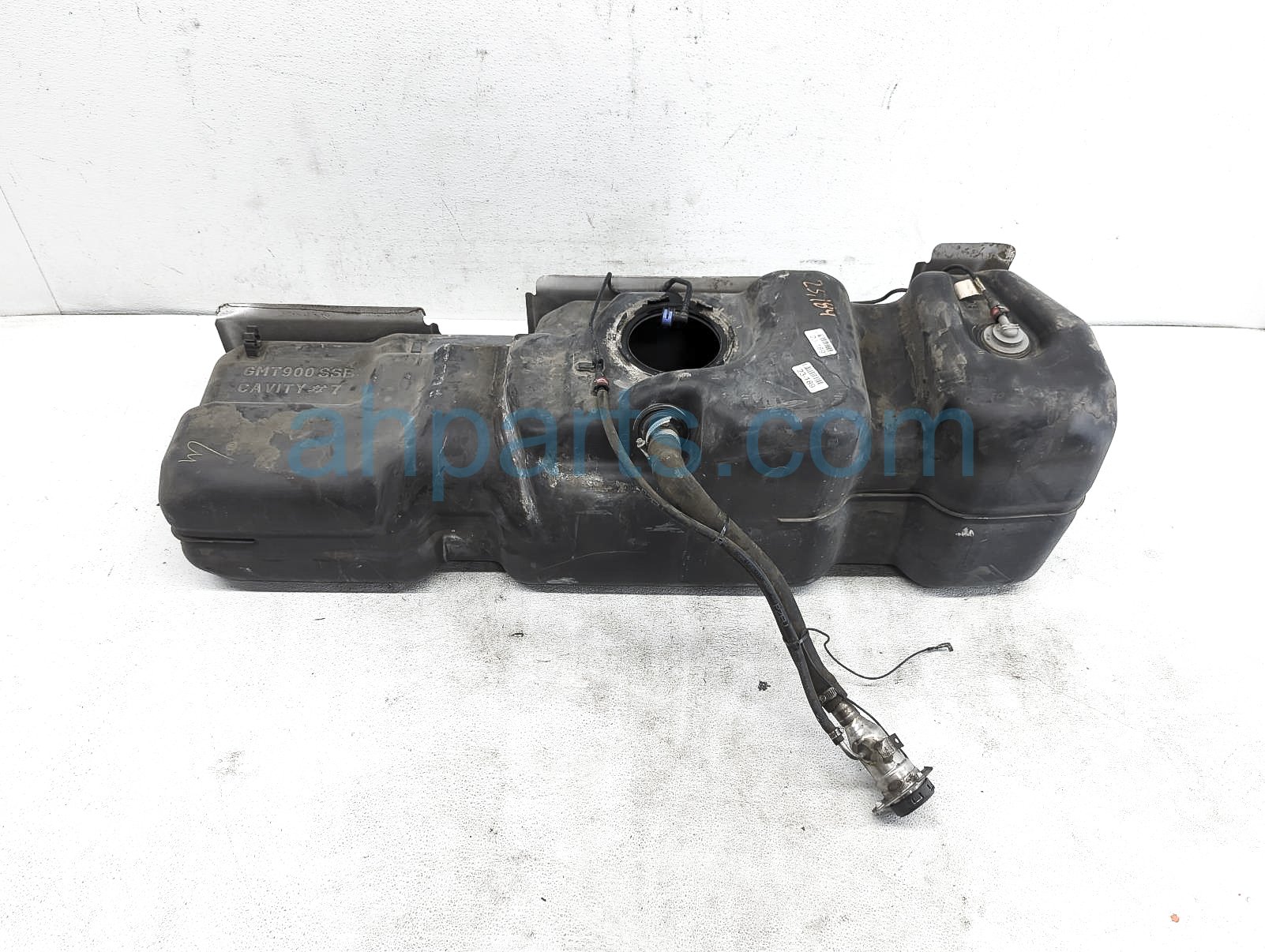
The fuel tanks on the 2016 Silverado are made of high-density polyethylene (HDPE) plastic. This material is preferred in modern truck manufacturing because it is lighter than steel, does not rust or corrode, and can be molded into complex shapes to maximize the available space inside the frame.
Summary of Next Steps for Owners
If you are planning a trip or a heavy tow in 2026 with your 2016 Silverado, start by verifying your specific configuration's capacity. For those with the 26-gallon tank who find the range lacking, consider maintenance items like new fuel filters (for diesel) or an induction cleaning (for gas) to restore efficiency. If range remains a critical issue, exploring a DOT-approved bed-mounted auxiliary tank is the most effective way to extend your distance between fill-ups without modifying the truck's core chassis.