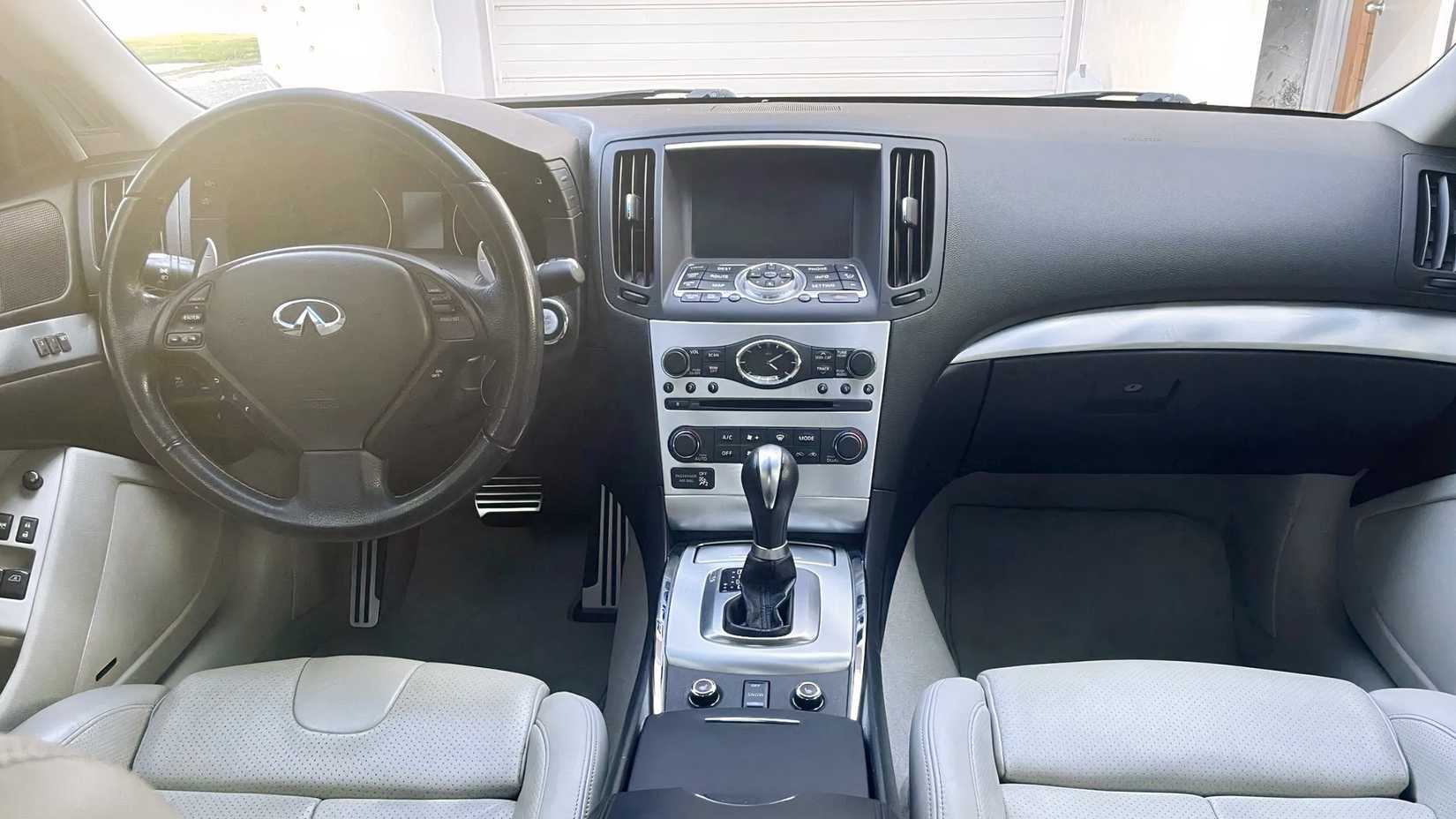
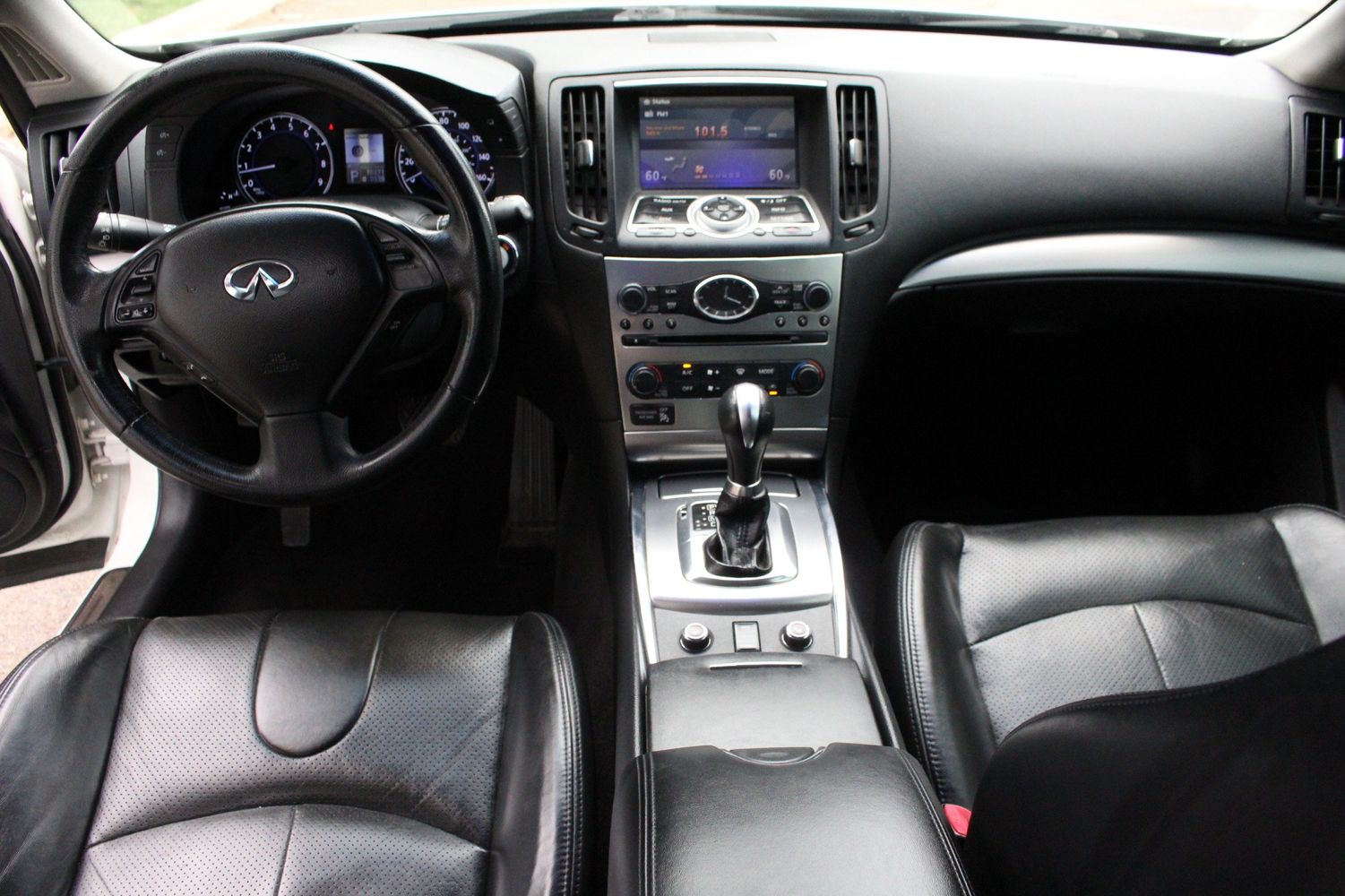
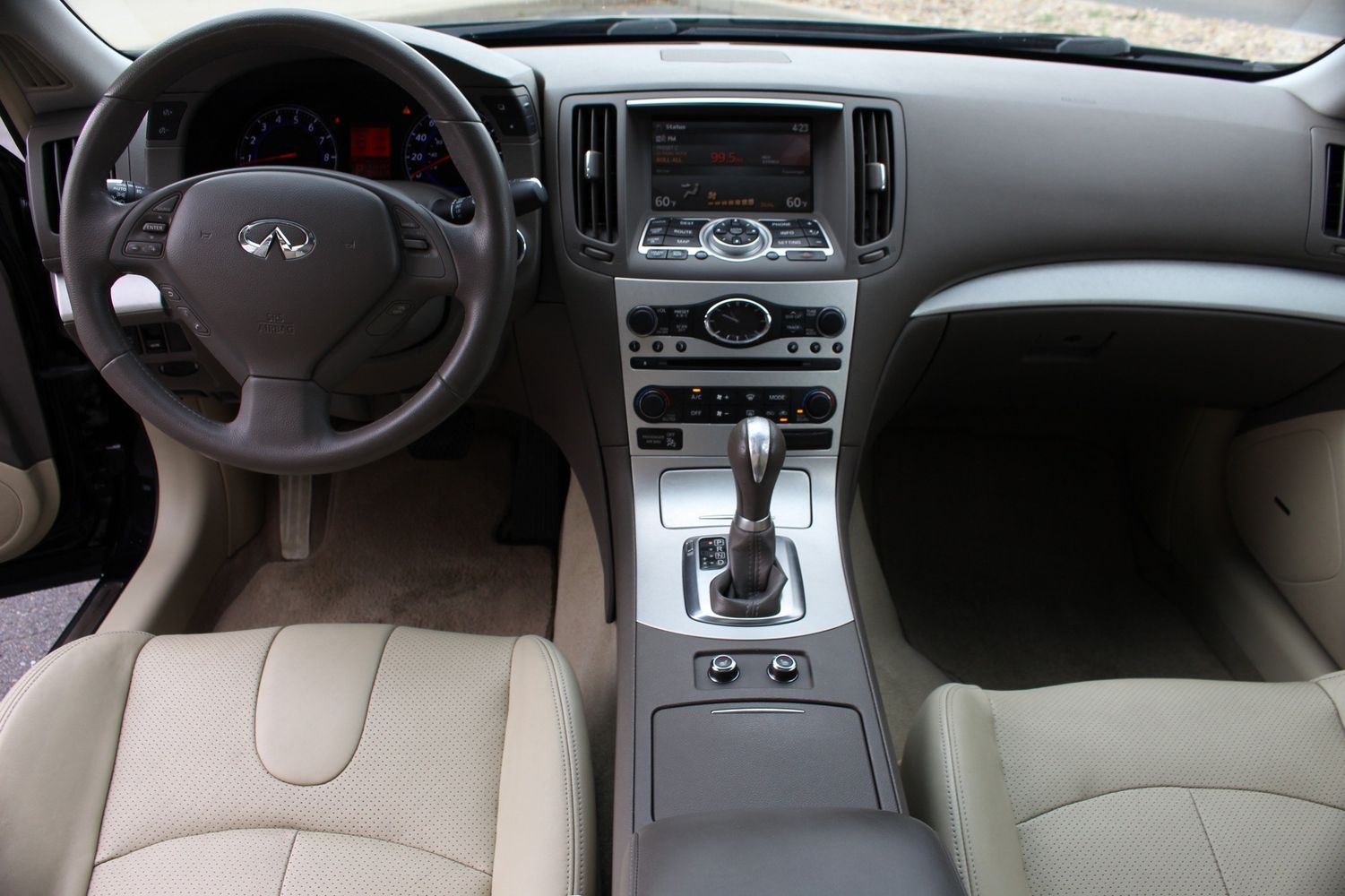
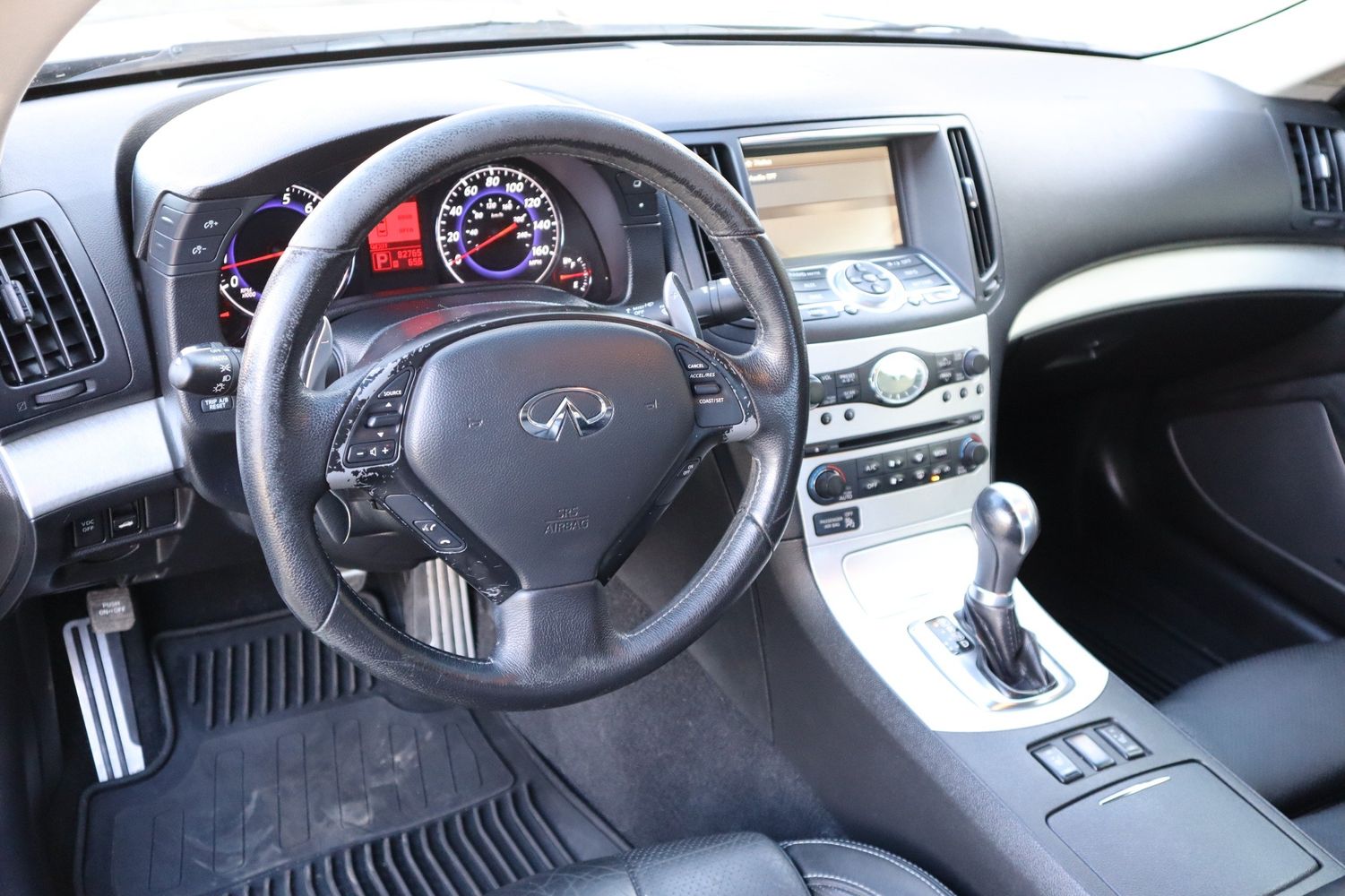
The 2011 Infiniti G37 interior is defined by a driver-centric cockpit that balances luxury materials with performance-oriented ergonomics. It features a signature "double-wave" dashboard design, high-quality soft-touch surfaces, and an integrated technology suite that includes a standard multi-information display and optional hard-drive-based navigation, reflecting a sophisticated blend of Japanese craftsmanship and modern automotive utility.
Design Philosophy and Aesthetic Appeal
The interior of the 2011 Infiniti G37 remains a landmark in automotive design for its era, favoring a distinct "wave" architecture that visually separates the driver and passenger zones. Unlike the more angular or utilitarian interiors of some contemporary competitors, the G37 cabin utilizes organic, sweeping lines to create a sense of movement.
The dashboard layout is characterized by its ergonomic efficiency. Infiniti utilized a "center-stack" design that places essential controls—climate and audio—at a comfortable reach, keeping the driver's focus on the road. The inclusion of genuine aluminum trim, which was standard on many trims, provided a cool, high-end contrast to the leather surfaces. For those opting for the "Shodo" aluminum trim, the finish features a unique pattern inspired by Japanese calligraphy, adding a layer of cultural identity to the cabin’s aesthetic that separates it from standard brushed metal.
Seating Comfort and Interior Ergonomics
For the driver and front passenger, the 2011 Infiniti G37 offers a highly adjustable environment. The standard power-adjustable front seats provide a wide range of movement, allowing for a low, sports-car-like seating position that enthusiasts appreciate. The side bolsters are pronounced enough to hold occupants in place during spirited driving, yet soft enough for daily commuting comfort.
The rear seat accommodation varies significantly based on the body style. In the sedan version, the rear seating is functional for adults, though the transmission tunnel creates a noticeable hump that limits middle-seat legroom. In the coupe and convertible variants, the rear quarters are best described as "occasional use" only. Legroom is tight, and the sloping roofline of the coupe restricts headroom for taller passengers. However, the interior is consistently finished, with high-quality upholstery extending to the rear, ensuring that the back seat does not feel like an afterthought.
Materials and Build Quality
Infiniti’s approach to the G37 cabin was to provide a tactile experience that justified its luxury market positioning. The primary contact points—the steering wheel, gear shifter, and armrests—are upholstered in leather that wears well over time. The dashboard and door panels feature high-quality "soft-touch" plastics that feel substantial and dampen noise effectively.
One of the standout features of the 2011 model is the consistency in build tolerances. Gaps between panels are minimal and uniform, reflecting a high level of manufacturing precision. This build quality not only contributes to the luxury feel but also assists in reducing cabin rattles and squeaks as the vehicle ages. Whether you opt for the standard leather or the available semi-aniline leather in premium trims, the materials have proven to be durable when maintained with standard automotive cleaning products.
Technology and Infotainment Systems
In 2011, the G37 served as a showcase for Infiniti’s technological integration. The centerpiece is the Infiniti Hard Drive Navigation System, which, in the 2011 model year, featured a 9.3GB Music Box hard drive. This allowed owners to rip and store music directly from CDs or USB devices, a significant luxury feature at the time.
The system is controlled via a combination of a central high-resolution touch-screen, a multi-function controller knob, and physical buttons on the center console. While modern drivers might find the interface dated compared to current smartphone-integrated systems, the 2011 unit is highly reliable. It includes:
- Bluetooth Connectivity: For hands-free phone integration and wireless audio streaming.
- Voice Recognition: A system designed to control navigation, audio, and climate functions.
- RearView Monitor: A standard or available feature depending on the trim, which provides a clear feed when the vehicle is placed in reverse.
Comparative Analysis: Sedan vs. Coupe vs. Convertible
Understanding the interior differences between the three body styles is essential for potential buyers, as the "G37" designation applies to distinct physical spaces.
| Feature | Sedan | Coupe | Convertible |
|---|---|---|---|
| Front Headroom | 40.3 inches | 37.7 inches | 39.0 inches |
| Rear Legroom | 34.7 inches | 29.8 inches | 27.2 inches |
| Cargo Capacity | 13.5 cubic feet | 7.4 cubic feet | 2.0/10.3 cubic feet* |
| Primary Focus | Daily Utility | Driver Engagement | Open-Air Luxury |
*Convertible cargo capacity is significantly reduced when the hardtop roof is retracted.
The sedan offers the most practical interior, providing a legitimate four-door experience with a usable trunk. The coupe sacrifices rear space for a more aggressive, cockpit-like interior that centers the driver. The convertible features a unique, complex three-piece retractable hardtop. When the top is down, the interior becomes an open-air environment, though the trunk space drops to a negligible size, requiring a compromise on cargo utility.
Maintenance and Troubleshooting Common Issues
As these vehicles reach mid-teen ages, owners should pay attention to common interior wear points to preserve the cabin’s condition:
- Steering Wheel Wear: The leather on the steering wheel can show "shiny" spots or peeling over time. Professional cleaning and conditioning can mitigate this, but once the texture is gone, a wrap or professional re-upholstery is the standard fix.
- Center Console Button Fading: The silver-painted finish on some console buttons can wear off after years of use. This is primarily a cosmetic issue and does not affect functionality.
- Navigation/Screen Issues: Older hard drives can occasionally fail or become sluggish. Performing a factory reset or clearing stored music files can often restore responsiveness.
- Cabin Air Filter: The filter is located behind the glove box. Replacing this every 15,000 miles is vital to ensure the climate control system remains efficient and the air quality inside the cabin remains fresh.
Frequently Asked Questions
Does the 2011 Infiniti G37 have an auxiliary input for music? Yes, the 2011 G37 includes both a USB port and a 3.5mm auxiliary jack located in the center console storage bin. This allows for direct integration with older digital media players or flash drives, in addition to the standard Bluetooth streaming capabilities.
Is the interior noise level high in the G37? The G37 is generally considered quiet for a sports sedan, using sound-deadening materials in the floor and door panels. However, it is designed to be an "engaging" car, so you will hear more engine and exhaust note than you would in a softer luxury sedan like an Infiniti M-series.
Can I upgrade the 2011 navigation system to support modern smartphone interfaces? While you cannot easily "patch" the native software, many owners install third-party aftermarket head units or specialized multimedia interface modules that allow for Apple CarPlay or Android Auto integration through the factory screen, effectively modernizing the vehicle's tech suite.
How do I clean the "Shodo" aluminum trim without scratching it? The Shodo finish is delicate. Use only a microfiber cloth dampened with mild soap and water. Avoid abrasive cleaners, ammonia-based glass cleaners, or stiff brushes, as these can strip the pattern or create micro-scratches on the surface of the metal.
Is the interior leather real or synthetic? The seats in the 2011 G37 feature leather seating surfaces for the primary areas of contact, while non-critical areas like the side skirts and seat backs typically use high-quality synthetic vinyl (leatherette) for durability.
Final Recommendation
The interior of the 2011 Infiniti G37 is a well-engineered space that prioritizes the driver's connection to the machine. If you are shopping for a used G37, prioritize models that show documented care of the upholstery and consistent maintenance of the climate control systems. For those seeking the best experience, look for a "Journey" or "Sport" trim, as these often come with the upgraded leather and the most comprehensive technology packages, providing the most refined version of the G37's classic design.