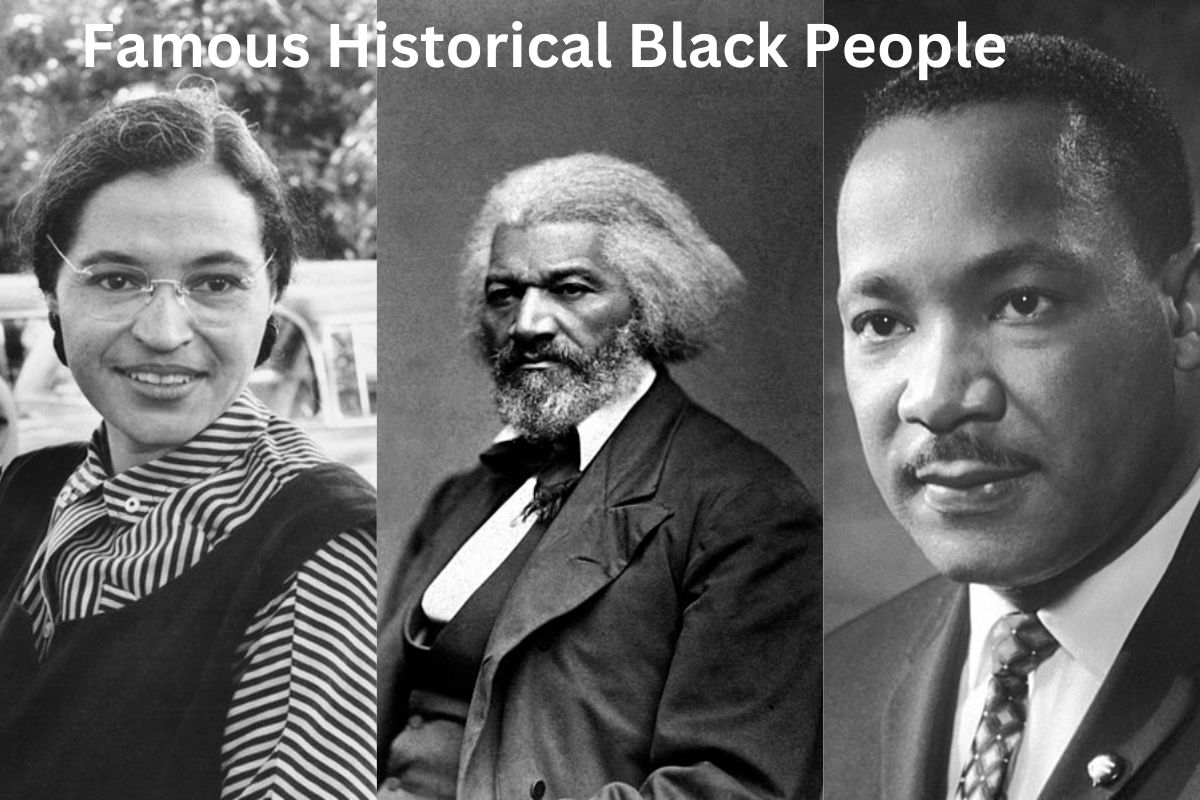
Defining the 10 most influential figures in American history requires examining individuals whose actions, leadership, and ideas permanently reshaped the political, social, economic, and cultural fabric of the United States. These figures did not merely participate in historical events; they catalyzed shifts that continue to define the nation's governance, civil rights, and global standing in 2026.
1. George Washington (1732–1999... wait, 1799)
George Washington’s influence on American history is foundational. As the commander-in-chief of the Continental Army during the American Revolutionary War, he forged a disparate group of colonial militias into a functional fighting force capable of defeating the British Empire. His leadership during the war established a precedent of civilian control over the military, a core tenet of American democracy.
Following military victory, Washington presided over the Constitutional Convention of 1787, lending his immense prestige to the creation of a new federal government. Unanimously elected as the first President of the United States under the Constitution, he established vital institutional precedents. Most notably, by voluntarily stepping down after two terms, Washington ensured that the presidency would not devolve into a monarchy, cementing the principle of peaceful democratic transitions of power.
2. Abraham Lincoln (1809–1865)
Abraham Lincoln guided the United States through its greatest existential crisis: the American Civil War. Serving as the 16th president, his political acumen and moral clarity kept the fractured Union together while systematically dismantling the institution of chattel slavery.
Lincoln's issuance of the Emancipation Proclamation in 1863 transformed the war from a struggle to preserve the Union into a moral crusade for human freedom. Furthermore, his Gettysburg Address redefined the American democratic ideal, framing the conflict as a test of whether a nation "conceived in Liberty, and dedicated to the proposition that all men are created equal" could long endure. His leadership established the absolute supremacy of the federal government over individual states and redefined citizenship in the post-war era.
3. Thomas Jefferson (1743–1826)
As the principal author of the Declaration of Independence, Thomas Jefferson articulated the philosophical foundations of the American republic, drawing on Enlightenment thinkers like John Locke to enshrine natural rights—life, liberty, and the pursuit of happiness—as the basis of legitimate government.
During his presidency, Jefferson achieved the Louisiana Purchase of 1803, doubling the geographic size of the United States and securing control of the Mississippi River, which fundamentally altered the geopolitical trajectory of the nation. Though his record on slavery remains a profound historical contradiction, his written words established the aspirational benchmarks for democratic equality globally.
4. Alexander Hamilton (1755 or 1757–1804)
As the first Secretary of the Treasury, Alexander Hamilton laid the institutional and financial groundwork of the American capitalist state. He recognized that political independence required economic autonomy and stability.
Hamilton’s financial program—comprising the assumption of state war debts, the establishment of a national bank, and the promotion of manufacturing and federal credit—transformed the United States from an agrarian collection of states into a unified, creditworthy economic power. His expansive interpretation of the U.S. Constitution's "necessary and proper" clause also established the legal doctrine of implied powers, shaping federal authority for centuries.
5. Benjamin Franklin (1706–1790)
Benjamin Franklin was the quintessential American polymath: a printer, scientist, inventor, philosopher, and diplomat. His influence spans both the cultural and political development of the nation.
Franklin’s scientific work on electricity brought him international acclaim, bridging the intellectual gap between the American colonies and European academia. Politically, his diplomatic acumen secured the critical French alliance during the Revolutionary War, without which colonial victory would have been highly improbable. He was also the only founding figure to sign all four of the key documents establishing the United States: the Declaration of Independence, the Treaty of Alliance with France, the Treaty of Paris, and the U.S. Constitution.
6. Martin Luther King Jr. (1929–1968)
Martin Luther King Jr. was the primary leader of the American Civil Rights Movement, utilizing nonviolent civil disobedience inspired by Mahatma Gandhi and Christian theology to dismantle institutionalized racial segregation and disenfranchisement.
As the head of the Southern Christian Leadership Conference, King organized pivotal campaigns such as the Montgomery Bus Boycott and the March on Washington, where he delivered his iconic "I Have a Dream" speech. His moral leadership directly pressured the federal legislation that ended legal segregation, specifically the Civil Rights Act of 1964 and the Voting Rights Act of 1965, thereby realizing the unfulfilled promises of the nation's founding documents for millions of citizens.
7. Susan B. Anthony (1820–1906)
Susan B. Anthony was a pioneer of the women’s suffrage movement, dedicating her life to securing voting rights for women and advancing broader social equality. Recognizing that the ballot was the fundamental instrument of democratic power, she co-founded the National Woman Suffrage Association in 1869.
Anthony traveled extensively across the United States, delivering speeches and petitioning lawmakers for constitutional change. Though she did not live to see the passage of the Nineteenth Amendment in 1920, her tireless organizing, legal challenges (such as her deliberate arrest for voting in 1872), and strategic focus laid the institutional groundwork that permanently enfranchised women in American political life.
8. James Madison (1751–1836)
Often hailed as the "Father of the Constitution," James Madison was the intellectual architect of the American system of government. His extensive preparation, known as the Virginia Plan, served as the blueprint for the Constitutional Convention.
Madison subsequently co-authored The Federalist Papers alongside Alexander Hamilton and John Jay, producing the definitive commentary on the division of power, checks and balances, and the mechanics of a large republic. Furthermore, as a member of the House of Representatives, he drafted the Bill of Rights, cementing individual liberties—such as freedom of speech, religion, and assembly—into foundational constitutional law.
9. Franklin D. Roosevelt (1882–1945)
Franklin D. Roosevelt served as the 32nd president of the United States, leading the nation through its two greatest crises of the 20th century: the Great Depression and World War II.
Through his New Deal legislative programs, FDR fundamentally redefined the relationship between American citizens and the federal government, establishing the modern welfare state with initiatives like Social Security, federal work programs, and banking regulations. Globally, his leadership galvanized the Allied powers against Axis fascism, transforming the United States from an isolationist nation into a dominant global superpower and a chief architect of the post-war international order.
10. Harriet Tubman (ca. 1822–1913)
Harriet Tubman’s impact on American history stems from her extraordinary courage, abolitionist leadership, and humanitarian activism. Having escaped slavery herself, she risked her life repeatedly as a "conductor" on the Underground Railroad, guiding dozens of enslaved individuals to freedom in the North and in Canada without ever losing a passenger.
During the Civil War, Tubman served the Union Army as a scout, nurse, and armed spy, becoming the first woman to lead an armed military assault in the conflict (the raid at Combahee Ferry), which liberated over 700 enslaved people. Her legacy embodies the grassroots resistance that shattered the slave system from within.
Comparative Overview of Historical Impact
The following table summarizes the primary domains, eras, and defining contributions of these ten figures:
| Figure | Era / Century | Primary Domain of Influence | Key Historical Contribution |
|---|---|---|---|
| George Washington | 18th Century | Military & Executive Leadership | Commanded the Continental Army; established the two-term presidential precedent. |
| Abraham Lincoln | 19th Century | Political & Social Leadership | Preserved the Union during the Civil War; issued the Emancipation Proclamation. |
| Thomas Jefferson | 18th–19th Century | Political Philosophy & Expansion | Authored the Declaration of Independence; executed the Louisiana Purchase. |
| Alexander Hamilton | 18th–19th Century | Economic & Financial Policy | Created the national financial system and established federal credit. |
| Benjamin Franklin | 18th Century | Diplomacy & Science | Secured the French alliance during the Revolution; signed founding documents. |
| Martin Luther King Jr. | 20th Century | Civil Rights & Social Justice | Led the nonviolent Civil Rights Movement; championed the Civil Rights Act. |
| Susan B. Anthony | 19th–20th Century | Women's Rights & Suffrage | Pioneered the campaign for women's voting rights and constitutional equality. |
| James Madison | 18th–19th Century | Constitutional Law | Authored the Virginia Plan, key Federalist Papers, and the Bill of Rights. |
| Franklin D. Roosevelt | 20th Century | Executive Governance & Foreign Policy | Implemented the New Deal; led the U.S. through World War II. |
| Harriet Tubman | 19th–Early 20th Century | Abolitionism & Military Service | Rescued enslaved people via the Underground Railroad; served as a Union scout. |
Frequently Asked Questions
How are historical figures measured for "influence" in American history?
Influence is evaluated based on lasting institutional, structural, and cultural changes. Historians look at individuals who altered the legal framework, expanded the geographic or economic boundaries, shifted the moral boundaries of citizenship, or altered the geopolitical standing of the United States in ways that remain visible in contemporary society.
Why is George Washington often ranked first among foundational leaders?
Washington established the foundational precedents that allowed the American democratic experiment to survive its infancy. By refusing monarchical power, voluntarily resigning executive office, and suborning the military to civilian governance, he created the stability required for all subsequent political institutions to function.
Did economic figures have as much impact as political leaders?
Yes. Figures like Alexander Hamilton demonstrated that political independence is unsustainable without financial sovereignty. Hamilton's establishment of federal credit and a national banking system created the economic infrastructure necessary for the United States to develop into an industrial power.
How did social movements alter the traditional list of political founders?
While early American history concentrated heavily on political and military founders, modern historical analysis places equal weight on social reformers like Martin Luther King Jr. and Susan B. Anthony. These figures forced the nation to reconcile its foundational ideals of liberty and equality with the realities of systemic discrimination, fundamentally expanding who is included in the American body politic.
What role did military conflict play in shaping American leadership?
Major conflicts—such as the Revolutionary War, the Civil War, and World War II—acted as catalysts that tested and reshaped American institutions. Leaders during these periods, including Washington, Lincoln, and Franklin D. Roosevelt, exercised expanded executive powers that permanently altered the scope of American governance.
Conclusion and Next Actions
Understanding the individuals who shaped American history provides necessary context for evaluating modern legal, social, and economic structures. For those wishing to deepen their knowledge, further historical study can be pursued through primary source archives such as the Library of Congress, original constitutional documents at the National Archives, and scholarly monographs focusing on specific transitional eras in American development.