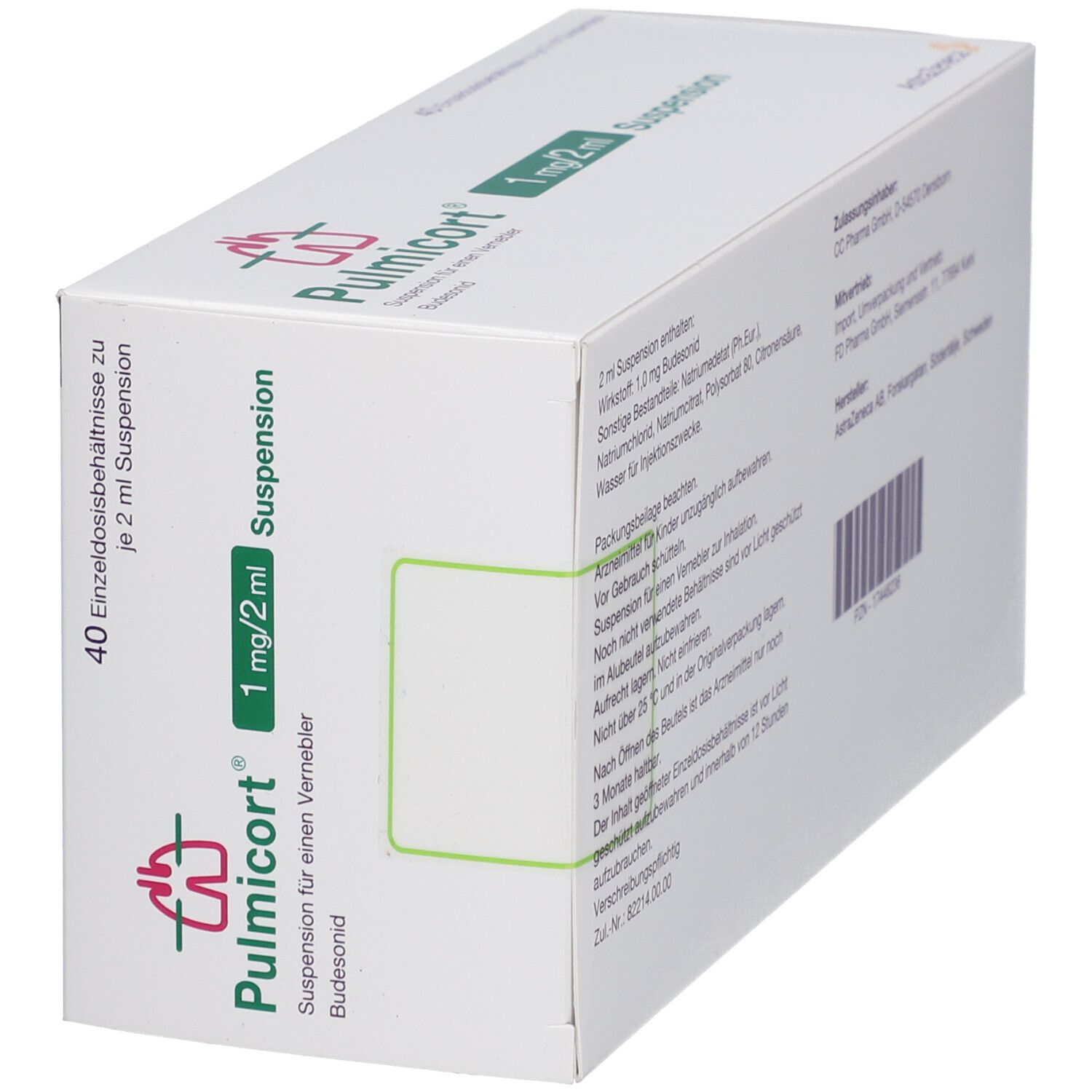
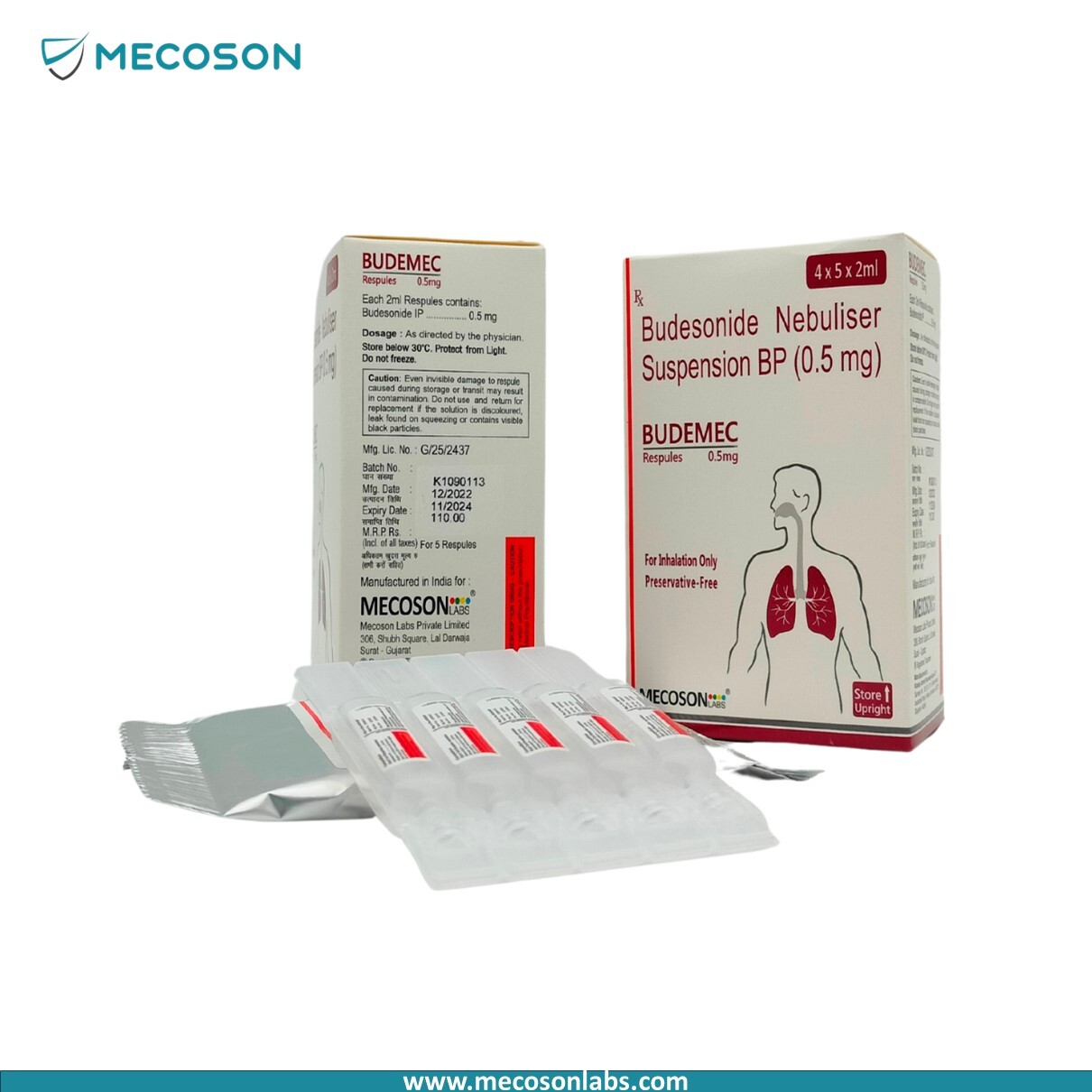
Budesonide inhalation suspension is a localized corticosteroid used primarily for the long-term maintenance treatment and prophylaxis of asthma. When a healthcare provider prescribes a 1 mg dose, it is typically administered using two 0.5 mg/2 mL ampules (totaling 4 mL) or a single 1 mg/2 mL ampule via a jet nebulizer. This dosage is designed to reduce airway inflammation and prevent symptoms such as wheezing and shortness of breath.
Understanding Budesonide Inhalation Suspension
Budesonide belongs to a class of medications known as glucocorticoids or inhaled corticosteroids (ICS). Unlike systemic steroids taken orally, budesonide inhalation suspension is delivered directly to the lungs through a nebulizer. This targeted delivery allows for high local concentrations of the medication in the respiratory tract while minimizing systemic exposure and the side effects often associated with oral prednisone or dexamethasone.
As of 2026, budesonide remains a cornerstone in pediatric asthma management, particularly for children aged 12 months to 8 years who cannot effectively use metered-dose inhalers (MDIs) or dry powder inhalers (DPIs). The "suspension" format is critical; because budesonide does not dissolve easily in water, it consists of microscopic particles suspended in a saline-based liquid. This requires specific nebulization techniques to ensure the medication reaches the smaller bronchioles of the lungs.
The Role of the 1 mg Dosage
In the hierarchy of asthma treatment, a 1 mg total dose is considered a higher-tier maintenance dose for pediatric patients or a standard dose for adults with moderate to severe persistent asthma. While many patients start on 0.25 mg or 0.5 mg once daily, the 1 mg dose is often utilized when lower doses fail to achieve "well-controlled" status according to the Global Initiative for Asthma (GINA) 2026 guidelines.
Mechanism of Action: How it Works in the Airways
Budesonide works by diffusing across cell membranes and binding to high-affinity cytoplasmic glucocorticoid receptors. This binding triggers a cascade of molecular events that result in the suppression of inflammatory genes and the activation of anti-inflammatory genes.
Anti-inflammatory Effects
The primary benefit of budesonide is its ability to inhibit multiple cell types involved in asthma, including:
- Eosinophils: Reducing the recruitment and survival of these white blood cells that drive allergic inflammation.
- Mast Cells: Decreasing the release of histamine and other mediators.
- Cytokines: Blocking the production of Interleukin-4 and Interleukin-5, which are central to the asthmatic inflammatory response.
Vascular and Mucosal Benefits
Beyond cellular inhibition, budesonide reduces airway hyper-responsiveness. It decreases capillary permeability, which helps reduce mucosal edema (swelling of the airway lining). Over time, consistent use of a 1 mg dose helps "remodel" the airway response, making the lungs less reactive to triggers like pollen, cold air, or pet dander.
Dosing and Administration: Achieving the 1 mg Target
The most common concentration found in pharmacies is the 0.5 mg/2 mL vial. To achieve a 1 mg dose, the clinician will often direct the patient to combine two of these ampules. Alternatively, a dedicated 1 mg/2 mL ampule may be prescribed if available and covered by insurance.
Step-by-Step Nebulization Guide
- Preparation: Wash hands thoroughly. Check the expiration date on the aluminum foil envelope and the individual plastic ampules.
- Mixing: Gently shake the ampule in a circular motion to ensure the suspension is well-mixed.
- Loading: Twist off the top of the 0.5 mg/2 mL ampule and squeeze the contents into the nebulizer cup. If the dose is 1 mg, repeat this with a second ampule.
- Connection: Connect the nebulizer cup to the compressor using the oxygen tubing. Attach the mouthpiece or face mask.
- Treatment: Sit upright and turn on the compressor. Breathe calmly and deeply through the mouth until the mist stops (usually 5 to 15 minutes).
- Post-Treatment: This is the most critical step—rinse the mouth with water and spit it out. If using a face mask, wash the face to prevent skin irritation or localized steroid absorption.
Equipment Requirements
Budesonide suspension must be used with a jet nebulizer connected to an air compressor. It is not recommended for use with ultrasonic nebulizers, as the ultrasonic waves may not effectively aerosolize the suspension particles, leading to inconsistent dosing.
Clinical Indications and 2026 Guidelines
The primary indication for budesonide inhalation suspension is the maintenance treatment of asthma. It is not a rescue medication. It will not stop an acute asthma attack once it has started. For acute symptoms, a short-acting beta-agonist (SABA) like albuterol must be used.
Pediatric Maintenance
For children 1 to 8 years of age, the 1 mg dose is typically reserved for:
- Patients previously maintained on oral corticosteroids.
- Patients whose asthma is not controlled on a 0.5 mg daily dose of ICS.
- Total daily doses may be split (0.5 mg in the morning and 0.5 mg in the evening) to maintain steady-state levels in the lungs.
Adult Usage
While adults often use MDIs or DPIs for convenience, nebulized budesonide is frequently prescribed for adults during periods of respiratory infection or for those with physical or cognitive limitations that make inhaler coordination difficult.
Comparative Dosage and Efficacy
Understanding how the 1 mg dose fits into the broader spectrum of budesonide products helps in evaluating its necessity.
| Feature | 0.25 mg / 2 mL | 0.5 mg / 2 mL | 1 mg / 2 mL (or 2x 0.5 mg) |
|---|---|---|---|
| Typical User | Pediatric (Initial dose) | Pediatric (Maintenance) | Adult/Severe Pediatric |
| Severity Tier | Mild Persistent | Moderate Persistent | Severe Persistent |
| Total Liquid Volume | 2 mL | 2 mL | 2 mL to 4 mL |
| Systemic Absorption | Minimal | Low | Low-Moderate |
| 2026 Cost (Est. Generic) | $1.50 - $3.00/dose | $2.00 - $4.50/dose | $4.00 - $8.00/dose |
Research published in the National Institutes of Health (NIH) library indicates that while there is a dose-response relationship, the "ceiling effect" for inhaled corticosteroids means that doubling a dose from 0.5 mg to 1 mg does not necessarily double the benefit, but it significantly increases the anti-inflammatory coverage for high-risk patients.
Potential Side Effects and Safety Monitoring
Because budesonide is a steroid, even in inhaled form, there are potential side effects that patients and caregivers should monitor.
Local Side Effects
The most common side effect is oral candidiasis (thrush). This is a fungal infection in the mouth characterized by white patches. It occurs when steroid residue remains in the oral cavity, suppressing local immunity. This is why rinsing the mouth after every treatment is mandatory. Other local effects include:
- Dysphonia (hoarseness).
- Sore throat or cough.
- Dry mouth.
Systemic Side Effects
While much rarer than with oral steroids, high doses like 1 mg daily can lead to systemic absorption. In pediatric patients, 2026 clinical standards require regular monitoring of growth velocity. While most studies show that children eventually reach their predicted adult height, a temporary slowing of growth may occur in the first year of high-dose ICS therapy.
Other systemic considerations include:
- Adrenal Suppression: Monitored via cortisol levels if the patient is switching from oral to inhaled steroids.
- Bone Density: Long-term high-dose use in adults may require bone density monitoring.
- Ocular Effects: Increased risk of cataracts or glaucoma with prolonged high-dose use.
Drug Interactions and Contraindications
Budesonide is metabolized by the liver enzyme CYP3A4. Consequently, certain medications can increase the levels of budesonide in the blood, potentially increasing side effects.
Notable Interactions
- Ketoconazole and Itraconazole: These antifungal medications can significantly increase systemic budesonide exposure.
- Ritonavir and Atazanavir: Certain HIV medications are potent CYP3A4 inhibitors.
- Clarithromycin: A common antibiotic that may interact with steroid metabolism.
Contraindications
Budesonide suspension is contraindicated in:
- Status Asthmaticus: It should not be used as the primary treatment for intense, acute episodes where rapid bronchodilation is required.
- Hypersensitivity: Patients with a known allergy to budesonide or any of the ingredients in the suspension (such as edetate disodium or sodium chloride).
Cost, Insurance, and Access in 2026
In 2026, the market for budesonide inhalation suspension includes the brand-name Pulmicort Respules and several stabilized generic versions.
Coverage and Tiers
Most insurance plans categorize generic budesonide 0.5 mg/2 mL ampules as Tier 1 or Tier 2 medications. However, the 1 mg strength or the requirement for 60 ampules per month (to reach a 1 mg daily dose) may require Prior Authorization (PA).
Storage and Handling
- Light Sensitivity: The ampules must be kept in their foil envelopes. Once the envelope is opened, the ampules are usually only stable for 2 weeks.
- Temperature: Store at room temperature (68°F to 77°F). Do not freeze or expose to excessive heat.
- Shelf Life: Unopened foil envelopes are typically stable until the expiration date printed by the manufacturer.
Common Mistakes and Troubleshooting
To ensure the 1 mg dose is effective, avoid these common errors:
- Mixing with Other Meds: While doctors sometimes allow mixing albuterol and budesonide in the same nebulizer cup, this should only be done if specifically directed. Some combinations can cause the budesonide to "fall out" of suspension.
- Incomplete Dosing: Patients often stop the nebulizer when the visible mist slows down. However, the "sputtering" phase at the end of the treatment often contains a significant portion of the medication.
- Using the Wrong Nebulizer: As mentioned, ultrasonic or mesh nebulizers may not be validated for use with this specific suspension. Always use the compressor-driven jet nebulizer provided or recommended by the pharmacy.
Frequently Asked Questions
Can I use 1 mg of budesonide for a sudden asthma attack?
No. Budesonide is a controller medication. It takes 2 to 8 days of consistent use to begin showing significant improvement in airway inflammation, and up to 4 to 6 weeks to reach maximum effectiveness. For sudden attacks, use a rescue inhaler like albuterol.
Why is my dose 0.5 mg/2 mL but the doctor told me to take 1 mg?
This is a standard dosing practice. Because 0.5 mg/2 mL is the most widely produced concentration, achieving a 1 mg dose simply requires using two ampules in one sitting. Ensure you pour both into the nebulizer cup before starting the treatment.
Is the 1 mg dose safe for toddlers?
A 1 mg dose is within the FDA-approved dosing range for pediatric patients (12 months to 8 years), especially those who have not responded to lower doses. However, the physician will usually attempt to "step down" the dose once the asthma is stabilized to the lowest effective amount.
Do I need to brush my teeth after the 1 mg dose?
While rinsing the mouth and spitting is the minimum requirement, brushing your teeth or gargling provides extra protection against thrush, especially at the higher 1 mg dosage level.
What should I do if I miss a dose?
If you miss a dose, take it as soon as you remember. If it is almost time for your next 1 mg dose, skip the missed dose and resume your regular schedule. Do not double the dose to 2 mg.
Final Recommendation
For patients prescribed 1 mg budesonide inhalation suspension, consistency is the most important factor for success. Ensure you are using a high-quality jet nebulizer, doubling your 0.5 mg/2 mL ampules if necessary to meet the prescribed amount, and always rinsing your mouth post-treatment. If symptoms do not improve after two weeks of consistent 1 mg therapy, or if you notice signs of oral thrush, contact your healthcare provider for a clinical review of your asthma management plan.