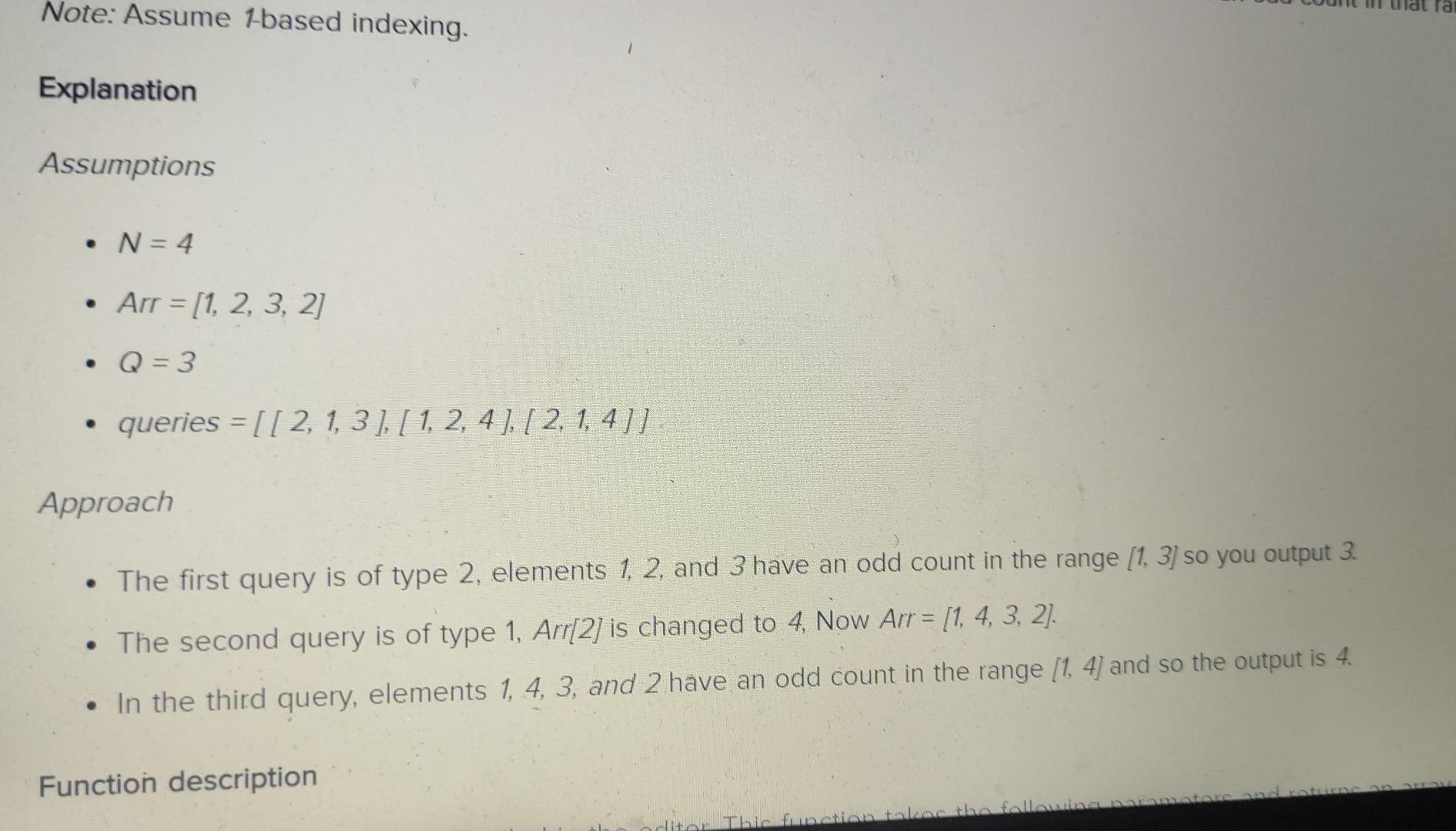
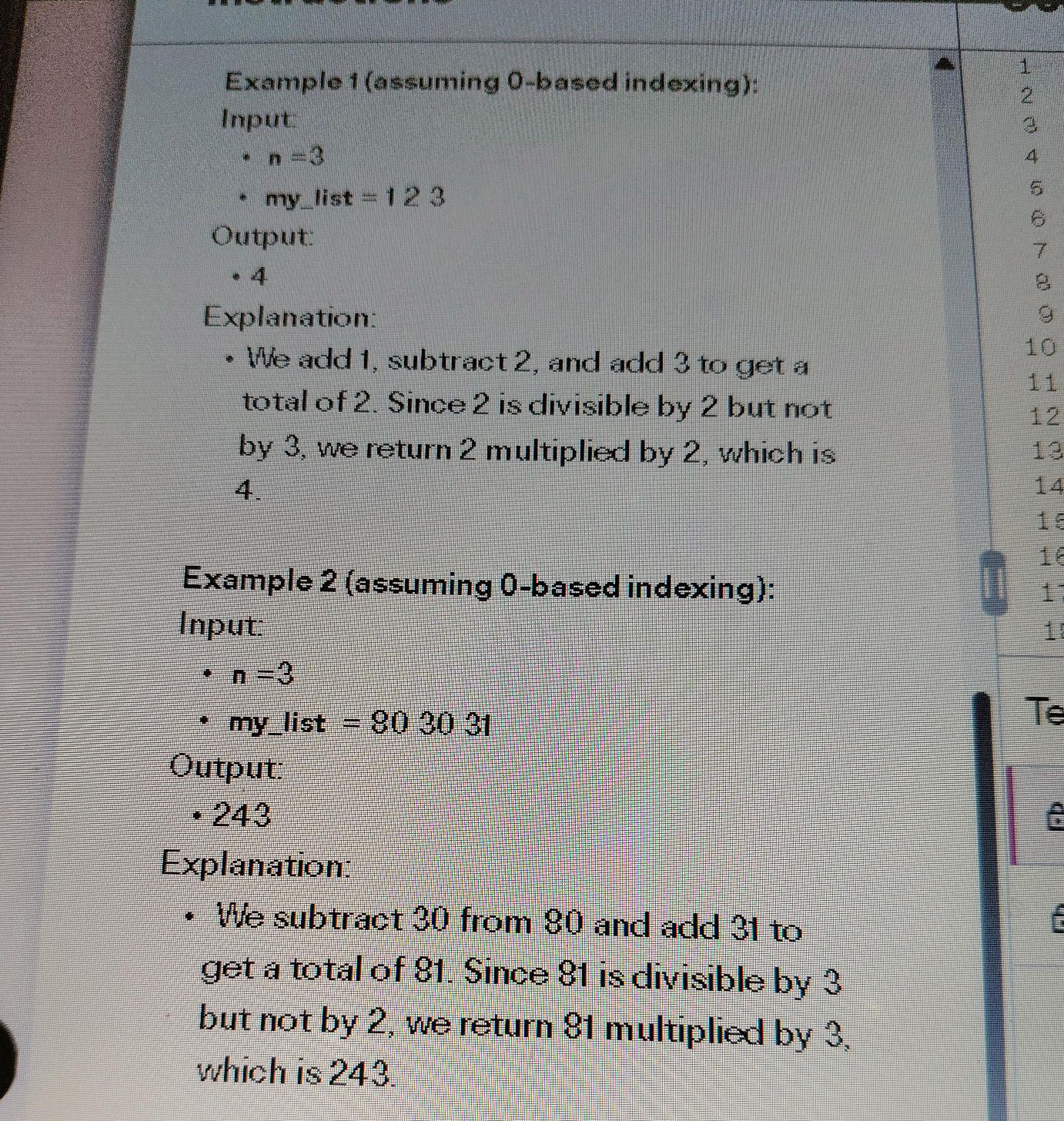
1-based indexing is a convention in computer programming and mathematics where the first element of a sequence, such as an array, list, or vector, is assigned the index 1. While many general-purpose languages use 0-based indexing, 1-based indexing remains the standard in mathematical, statistical, and technical computing environments to align with natural human counting and matrix notation.
The Fundamental Concept of 1-Based Indexing
To understand 1-based indexing, one must first distinguish between ordinal numbers and offsets. In human language, when we refer to the "first" item in a queue, we naturally associate it with the number one. This is ordinal counting. 1-based indexing embraces this intuition, treating the index as a direct pointer to the item’s position in a sequence.
In a 1-based system, if you have a list of ten items, the first item is at index 1 and the last item is at index 10. This creates a literal mapping between the size of the collection and the index of the final element. For practitioners in fields like linear algebra or statistics, this mirrors the way matrices are described in textbooks—where an element $a_{i,j}$ refers to the $i$-th row and $j$-th column, starting from 1.
The primary goal of 1-based indexing is to reduce the cognitive load for users who are transitioning from mathematical theory to computational implementation. By maintaining a 1:1 relationship between the "n-th" element and the index "n," the system avoids the mental subtraction required in 0-based systems, where the "n-th" element is found at index "n-1."
Human-Centric vs. Hardware-Centric Logic
The debate between 1-based and 0-based indexing is often a conflict between human usability and machine efficiency. In the early days of computing, 0-based indexing became dominant because it directly represented the memory offset. If an array starts at a specific memory address, the first element is located at that address plus zero units of memory. This "index as offset" logic made 0-based indexing the preferred choice for low-level languages like C and assembly.
However, 1-based indexing prioritizes the human developer's conceptual model. In environments designed for high-level data analysis, the underlying memory address is usually abstracted away. The user is not concerned with where a value sits in physical RAM; they are concerned with its position in a statistical model or a geometric transformation. Consequently, languages like MATLAB, R, and Julia utilize 1-based indexing to serve researchers and engineers who work primarily with mathematical abstractions rather than hardware architecture.
Historical Evolution of Array Indexing
The history of 1-based indexing is rooted in the earliest high-level programming languages. Fortran (Formula Translation), released in the 1950s, was designed specifically for scientific and engineering calculations. It adopted 1-based indexing to match the existing conventions of mathematical notation. Because Fortran dominated the scientific landscape for decades, its 1-based convention influenced subsequent specialized languages.
COBOL, another early giant designed for business applications, also utilized 1-based indexing. For business logic, such as identifying the "first" month of the year or the "first" employee in a list, 1-based logic was seen as more robust and less prone to "off-by-one" errors during manual data entry and reporting.
As the industry shifted toward systems programming in the 1970s and 80s, C popularized 0-based indexing. However, the 1-based tradition survived and thrived in niche domains. By the early 2000s, with the rise of data science as a distinct field, 1-based indexing saw a resurgence in popularity through the widespread adoption of R and MATLAB, which prioritized statistical accuracy and matrix manipulation over system-level pointer arithmetic.
Major Programming Languages Utilizing 1-Based Indexing
While 0-based indexing is more common in general-purpose software development (Python, Java, C++), several influential languages maintain the 1-based standard. Understanding these is crucial for anyone working in data science, scientific research, or specialized scripting.
MATLAB and the Mathematical Standard
MATLAB (Matrix Laboratory) is perhaps the most prominent proponent of 1-based indexing. Its entire architecture is built around the concept of the matrix. In linear algebra, the standard notation for the first element of a vector is $v_1$. By using 1-based indexing, MATLAB allows engineers to translate formulas directly from a chalkboard to a script without translation errors. In 2026, MATLAB remains a staple in aerospace, automotive, and signal processing industries for this very reason.
R and Statistical Computing
R, the language of choice for many statisticians and bioinformaticians, is strictly 1-based. When a researcher selects the first column of a data frame in R, they use df[, 1]. This consistency is vital in fields where data tables are massive and index-related errors could lead to catastrophic misinterpretations of scientific results. R's ecosystem, including the Tidyverse, maintains this convention to ensure that even non-programmers can interact with data intuitively.
Julia: The Modern Scientific Contender
Julia was designed to solve the "two-language problem"—the need to prototype in a slow, high-level language like Python and then rewrite in a fast, low-level language like C++. Julia opted for 1-based indexing to appeal to the scientific community. While Julia offers the performance of C, it keeps the 1-based arrays that mathematicians prefer. Notably, Julia provides packages that allow for 0-based indexing for specific hardware-optimized tasks, but the core language remains 1-based.
Lua: The Scripting Outlier
Lua is a unique case. It is a lightweight, high-performance scripting language frequently used in game development (such as within Roblox) and embedded systems. Despite being a general-purpose tool, Lua uses 1-based indexing for its primary data structure, the "table." This choice was made to make the language more accessible to non-programmers and hobbyists, though it frequently surprises developers coming from a C or Python background.
Comparing Indexing Conventions: A Technical Breakdown
To choose the right tool or understand why a specific language behaves the way it does, it is helpful to compare the two systems side-by-side.
| Feature | 1-Based Indexing | 0-Based Indexing |
|---|---|---|
| First Element Index | 1 | 0 |
| Last Element Index | Equal to length ($n$) | Length minus one ($n-1$) |
| Core Philosophy | Ordinal counting (1st, 2nd, 3rd) | Offset from start (0 away, 1 away) |
| Mathematical Context | Aligns with Matrix notation ($a_{i,j}$) | Aligns with Polynomial notation ($x^0, x^1$) |
| Standard Languages | MATLAB, R, Julia, Lua, SAS, Fortran | Python, C, C++, Java, JavaScript, Go |
| Memory Mapping | Requires subtraction (index - 1) |
Direct mapping (base + index) |
| Sub-sequences | Typically uses inclusive ranges [start, end] |
Typically uses half-open intervals [start, end) |
The Mathematical Implications: Slicing and Ranges
One of the most significant technical differences between 1-based and 0-based indexing appears when defining ranges or "slices" of data.
In 1-based indexing, ranges are almost always inclusive. If you want to access elements from the 3rd to the 7th, you use the range [3, 7]. The number of elements in this range is calculated as:
Length = (End - Start) + 1
Example: (7 - 3) + 1 = 5 elements.
In 0-based indexing, ranges often use the "half-open interval" convention, denoted as [start, end). To get the same five elements, you would start at index 2 and end at index 7 (where 7 is excluded). The number of elements is calculated as:
Length = End - Start
Example: 7 - 2 = 5 elements.
While the 0-based calculation is mathematically "cleaner" (no need for the +1), the 1-based approach is often more readable for those defining fixed-width segments in data reports or physical measurements. In 2026, many modern libraries provide abstraction layers to handle these calculations, but the underlying logic remains a frequent source of "off-by-one" logic errors during development.
Performance Considerations and Memory Mapping
Historically, 1-based indexing was criticized for a minor performance overhead. At the machine level, computer memory is indexed starting from 0. To access the i-th element in a 1-based array, the computer must perform an internal subtraction:
Address = Base_Address + (Index - 1) * Element_Size
In contrast, a 0-based system removes that - 1 step. In the 1970s and 80s, when every CPU cycle was precious, this extra subtraction was a legitimate concern. However, in the context of 2026 hardware, this performance delta is functionally non-existent. Modern compilers and Just-In-Time (JIT) optimizers can frequently optimize away this subtraction or handle it within the CPU's addressing modes at zero cost. For languages like R or MATLAB, the time spent on the indexing calculation is dwarfed by the complexity of the statistical operations being performed.
Common Pitfalls and Off-By-One Errors
The most common issue developers face with 1-based indexing is the "Off-By-One" error, particularly when switching between languages.
- Iterating through Loops: In a 1-based language, a loop usually runs from
1toN. In a 0-based language, it runs from0toN-1. A developer moving from Python to Julia might accidentally write a loop starting at 0, resulting in a "Bounds Error" because index 0 does not exist in Julia. - Length and Indices: In 1-based indexing, the length of the array is the same as the index of the last element. In 0-based indexing, trying to access
array[length]will cause a crash, as the indices only go up tolength - 1. - Modular Arithmetic: 0-based indexing is significantly easier for modular arithmetic (e.g., circular buffers).
Index % Lengthin a 0-based system returns a valid index between0andLength-1. In a 1-based system, the result of the modulo must be adjusted to avoid returning 0 when a 1 is expected.
Choosing the Right Convention for Your Project
Selecting between 1-based and 0-based indexing is rarely a choice a developer makes for a single project; rather, it is a choice of the language most suitable for the task.
- Choose 1-based environments (R, MATLAB, Julia) if your primary work involves heavy mathematical modeling, linear algebra, or statistical analysis. The alignment with textbook notation reduces the likelihood of conceptual errors when implementing complex formulas.
- Choose 0-based environments (Python, C++, Java) for general software engineering, web development, or systems programming. These languages offer better integration with low-level APIs and a larger ecosystem of general-purpose libraries.
For organizations working in 2026, the most important strategy is consistency. If a data science team uses R and the production engineering team uses Python, a robust data interchange format (like Parquet or Arrow) and clear documentation on indexing conventions are essential to prevent errors during the "hand-off" from research to production.
Frequently Asked Questions
Is 1-based indexing "wrong" or "obsolete"?
No, it is neither wrong nor obsolete. It is a specific convention optimized for different goals. While 0-based indexing is more common in general-purpose software, 1-based indexing is the industry standard for specialized fields like matrix laboratory work (MATLAB) and high-level statistical modeling (R).
Why do some people prefer 0-based indexing over 1-based?
The preference for 0-based indexing usually stems from its mathematical elegance in pointer arithmetic and modular arithmetic. E.W. Dijkstra, a famous computer scientist, argued that 0-based indexing is superior for representing sequences of natural numbers and calculating the lengths of sub-sequences.
Can I change a language's indexing behavior?
Generally, no. A language’s indexing convention is a core part of its compiler and runtime logic. While some languages like Julia or Perl allow for custom array types with different start indices, doing so is highly discouraged as it breaks compatibility with standard libraries and confuses other developers.
Which convention is easier for beginners?
1-based indexing is typically easier for absolute beginners because it matches the way we count objects in the physical world. However, most computer science curricula teach 0-based indexing early on, so students quickly adapt to the "offset" mental model.
Does 1-based indexing affect the speed of my code?
In modern computing, the speed difference is negligible. Any overhead from the internal subtraction needed to convert a 1-based index to a memory offset is handled by the hardware's addressing mode or the compiler's optimization pass.
Final Recommendation
When working with 1-based indexing, the most effective approach is to embrace the ordinal mindset. Do not try to mentally convert 1-based indices into 0-based offsets while you code. Instead, treat the index as a direct representation of the item's position. If you are a student or a developer transitioning between languages, create a "cheat sheet" for range slicing and loop boundaries to mitigate off-by-one errors. For those in scientific fields, 1-based indexing remains a powerful tool for maintaining the link between mathematical theory and executable code.