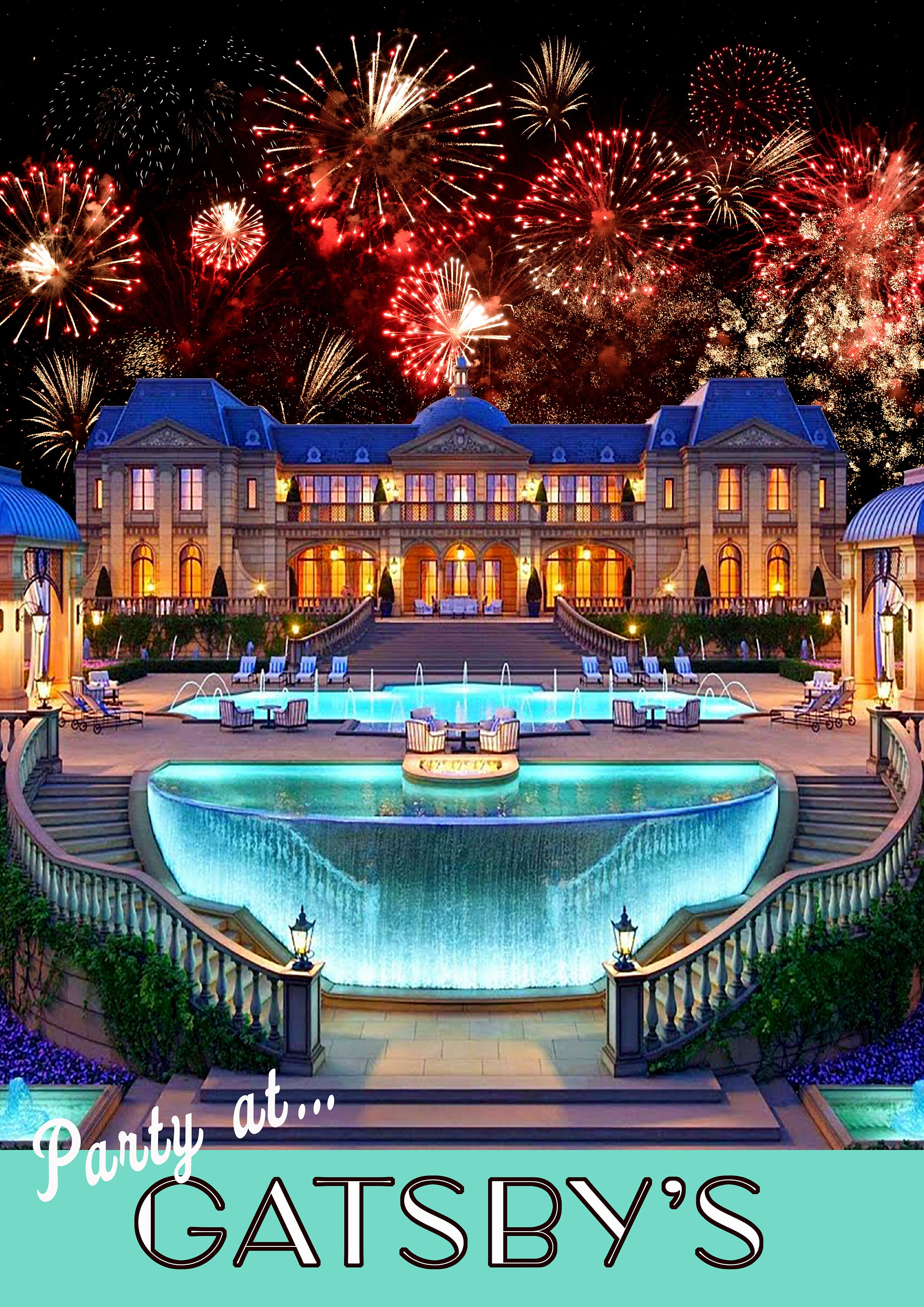
Jay Gatsby’s mansion in The Great Gatsby is a sprawling, flamboyant estate located in West Egg, Long Island, modeled after a French Hôtel de Ville. More than a residence, the house serves as a theatrical stage for Gatsby’s lavish parties and a symbolic monument to his pursuit of Daisy Buchanan and the American Dream.
The Architectural Vision: Imitation and Ostentation
In F. Scott Fitzgerald’s 1925 masterpiece, the residence of Jay Gatsby is described as a "colossal affair" that serves as a physical manifestation of the protagonist's "Platonic conception of himself." Situated in the fictional village of West Egg, the house is a stark contrast to the "old money" estates of East Egg. As of 2026, literary scholars and historians continue to point to Gatsby’s house as the ultimate symbol of the "nouveau riche" (new money) aesthetic of the 1920s.
The house is specifically described as a factual imitation of a Hôtel de Ville in Normandy. A Hôtel de Ville is a French town hall, typically a grand municipal building. By choosing this style, Gatsby—or rather Fitzgerald—highlights the inherent absurdity of the structure. It is a public-facing, institutional style of architecture used for a private dwelling. This choice underscores Gatsby's lack of "inherited" taste; he buys what he believes looks expensive and established, rather than what is traditionally residential for the American aristocracy.
The mansion features a "tower on one side, spanking new under a thin beard of raw ivy." The mention of "raw ivy" is a crucial detail. In the 1920s, old money estates were covered in thick, ancient vines that took decades to grow. Gatsby’s attempt to bypass time by planting "raw" ivy shows his desperation to appear as though his wealth has deep roots, even though it is entirely fresh and, as we later learn, built on fragile foundations.
Real-Life Inspirations: Beacon Towers and Oheka Castle
While West Egg is a fictionalized version of Kings Point on Long Island, the house itself was inspired by several real-life Gold Coast mansions. The two most prominent candidates for the "real" Gatsby house are Beacon Towers and Oheka Castle.
Beacon Towers
Located in Sands Point, Beacon Towers was built for Alva Vanderbilt Belmont and completed in 1918. Its striking white facade and whimsical, almost castle-like turrets mirrored the "spanking new" and "colossal" nature of Gatsby’s home. Unfortunately, the building was demolished in 1945, but historical photographs show a structure that looked more like a set for a fairy tale than a home, much like Gatsby's own residence.
Oheka Castle
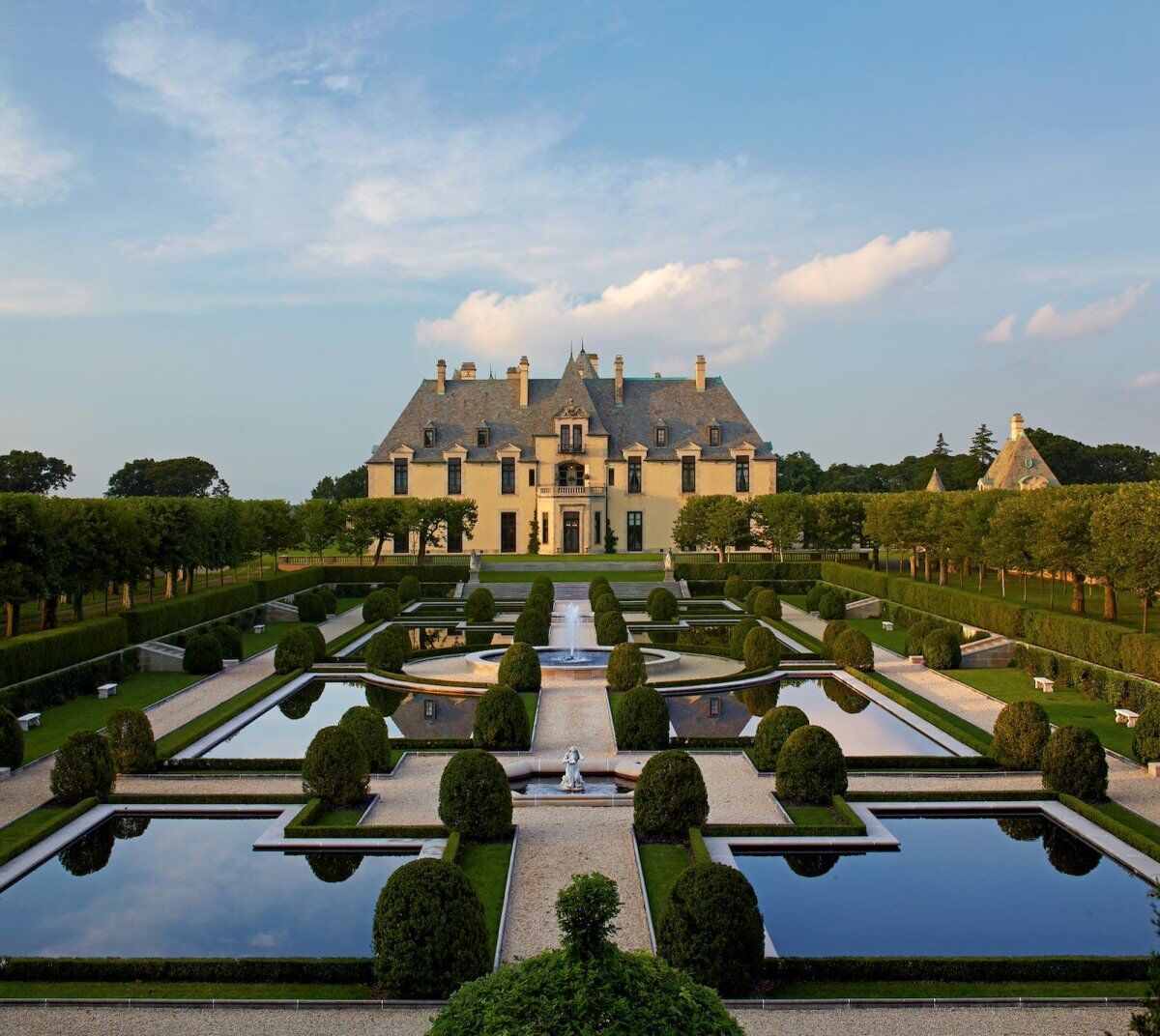
Oheka Castle, located in Huntington, Long Island, remains one of the largest private residences in the United States. Built for financier Otto Kahn in 1919, its French chateau style and sprawling gardens are frequently cited as the visual blueprint for the parties described in the novel. In 2026, Oheka Castle stands as a premier hotel and event space, allowing modern readers to experience a physical approximation of the grand scale Fitzgerald described.
A Tour of the Interiors: From Spectacle to Solitude
The interior of Gatsby’s house is a labyrinth of historical styles that clash and compete for attention. Nick Carraway, the narrator, describes a series of rooms that suggest a museum rather than a home.
- The Great Hall and Salons: The house contains "Marie Antoinette music-rooms and Restoration salons." These references to various French eras (the 18th-century monarchy and the 19th-century return of the Bourbons) signify a chaotic attempt to buy "history." To Gatsby, culture is a commodity that can be purchased in bulk.
- The Library: Known for the "Owl-Eyed Man" who discovers the books are real but "uncut." In the 1920s, bibliophiles would cut the pages of a book to read them. The fact that Gatsby’s books are real but unread signifies that he has the "substance" of wealth but lacks the genuine intellectual or social background to use it.
- The Adam Study: A room designed in the neoclassical style of the Adam brothers. This was a popular choice for high-society homes in the early 20th century, representing order and refined taste.
- Gatsby’s Bedroom: This is perhaps the most revealing room in the house. While the rest of the mansion is garish and over-decorated, Gatsby’s own room is "the simplest room of all," except for a gold toilet set. This simplicity suggests that Gatsby does not actually enjoy luxury; he only uses it as a tool to attract Daisy.
The Exterior and Grounds: The Geography of Desire
The exterior of the house is designed to facilitate the legendary parties that define the first half of the novel. The grounds include more than forty acres of lawn and garden, a marble swimming pool, and a private dock.
The marble swimming pool is a recurring motif. It represents the height of luxury, yet Gatsby rarely uses it. It is only at the end of the summer—and the end of the novel—that he finally decides to go for a swim, a moment that coincides with his death. The pool, intended for leisure and social status, ultimately becomes the site of his murder.
The private dock is the most significant geographical feature. From his dock, Gatsby can see a "single green light" at the end of Daisy’s dock across the bay in East Egg. The house was purchased specifically because of its location; it allows Gatsby to "look at" his goal from a distance. The house is a lighthouse of sorts, signaling his presence to the woman he lost five years prior.
Comparing the Estates: West Egg vs. East Egg
To understand the significance of Gatsby’s house, one must compare it to the Buchanans' home in East Egg. The differences between these two properties illustrate the central conflict of the novel: the divide between those who earned their money (and how they earned it) and those who were born into it.
| Feature | Jay Gatsby’s Mansion (West Egg) | The Buchanan Estate (East Egg) |
|---|---|---|
| Architectural Style | Imitation French Hôtel de Ville; eclectic and theatrical. | Georgian Colonial; traditional and understated. |
| Symbolic Intent | A performance designed to impress others. | A fortress designed to exclude others. |
| Nature of Wealth | "New Money" (Nouveau Riche); flamboyant and loud. | "Old Money" (Aristocracy); quiet and established. |
| Key Interior Detail | Library with real but "uncut" books (the facade of knowledge). | French windows and drifting curtains (the airiness of privilege). |
| Landscaping | Forty acres of "raw" ivy and manicured spectacle. | A sunken Italian garden and roses (organic and effortless). |
| Atmosphere | Energetic, chaotic, and filled with strangers. | Stagnant, bored, and intensely private. |
The Symbolic Function of the House
Fitzgerald uses the house as a character in its own right. Its evolution throughout the novel mirrors Gatsby’s rise and fall.
The House as a Stage
During the height of the summer, the house is an "elaborate roadhouse." It is filled with music, illegal alcohol (during Prohibition), and people who do not even know the host. The house functions as a machine for social climbing. Gatsby himself remains a phantom in his own home, often watching the festivities from a distance. He is the director of a play that he is not actually starring in.
The House as a Veil
The mansion is a "huge incoherent failure" because it attempts to hide Gatsby’s true identity as James Gatz, a poor boy from North Dakota. The grander the house, the more it highlights the void where Gatsby’s true history should be. When Daisy finally visits the house, Gatsby re-evaluates every object based on her reaction. The house only has value if she validates it.
The House as a Ghost
After the parties end and the tragedy of Myrtle Wilson’s death occurs, the house changes. Nick describes it as having "an inexplicable amount of dust" and feeling "exhausted." The "colossal" mansion becomes a tomb. Once the "holy grail" (Daisy) is proven unattainable, the house loses its magical quality and reverts to being a cold, empty pile of stone.
Maintenance and Logistics of a 1920s Estate
Maintaining a house of this scale in the 1920s required a massive labor force, which Fitzgerald describes in detail. This adds a layer of realism to the romanticized setting.
- The Staff: Gatsby employs a "corps of caterers" and "eight servants, including an extra gardener," who spend all Monday repairing the damage from the weekend’s festivities.
- The Technology: The kitchen featured "citrus-squeezing machines" that could extract the juice of two hundred oranges in half an hour if a thumb pushed a button. For 1925, this was cutting-edge technology, further emphasizing Gatsby’s reliance on modern "new" things.
- The Logistics: Every Friday, five crates of oranges and lemons arrived from a fruiterer in New York. The sheer volume of consumption required to keep the "Gatsby machine" running was immense, highlighting the waste and excess of the era.
Frequently Asked Questions
Was Gatsby’s house based on a real building?
Yes, primarily Beacon Towers and Oheka Castle on Long Island. While West Egg is fictional, these estates provided the architectural and cultural context for the "Gold Coast" lifestyle Fitzgerald depicted. Beacon Towers, with its white turrets, is particularly close to the "spanking new" description in the text.
Why is Gatsby’s house described as a "Hôtel de Ville"?
The term refers to a French town hall. Fitzgerald used this description to emphasize that the house was ostentatious and lacked the cozy, lived-in feel of a traditional home. It was a public monument built for a private man, highlighting Gatsby’s misunderstanding of how the upper class actually lives.
What does the "uncut" library signify?
In the 1920s, books were often sold with the edges of the pages still joined. A reader would have to use a knife to "cut" the pages to read the book. The fact that Gatsby’s books are real (not just wooden blocks) but uncut means he has the wealth to buy the appearance of a library, but he has never actually read the volumes. It represents his "fake it till you make it" persona.
How does the house change after Daisy visits?
Once Daisy visits and Gatsby realizes that the house alone cannot bridge the gap between their social classes, the mansion begins to lose its luster. He fires his servants to prevent gossip and stops hosting parties. The house transitions from a vibrant, light-filled palace to a dark, dusty, and lonely structure, mirroring Gatsby’s internal disillusionment.
What happened to Gatsby’s house at the end of the book?
After Gatsby’s death, the house is left empty and falls into disrepair. Nick observes a boy scrawling an obscene word on the steps. It stands as a "huge incoherent failure," a monument to a man who tried to recreate the past but was ultimately defeated by it. In the context of the novel's themes, the house’s abandonment signifies the death of the American Dream it was built to represent.
Practical Recommendations for Readers and Students
When analyzing or visiting locations related to The Great Gatsby in 2026, consider the following actions to deepen your understanding of the setting:
- Visit Oheka Castle: For those in the New York area, visiting Oheka Castle provides the best physical sense of the scale and garden layouts described in the novel.
- Compare Architectural Textures: Pay attention to the descriptions of "stone" versus "wood." The Buchanans’ house is often associated with sunlight and air, while Gatsby’s is associated with heavy stone, marble, and "raw" ivy—elements that feel forced rather than natural.
- Read the "Part III" Descriptions Closely: The most evocative descriptions of the house occur in Chapter 3 (the parties) and Chapter 9 (the aftermath). Comparing these two chapters provides a perfect study of how setting reflects character arc.