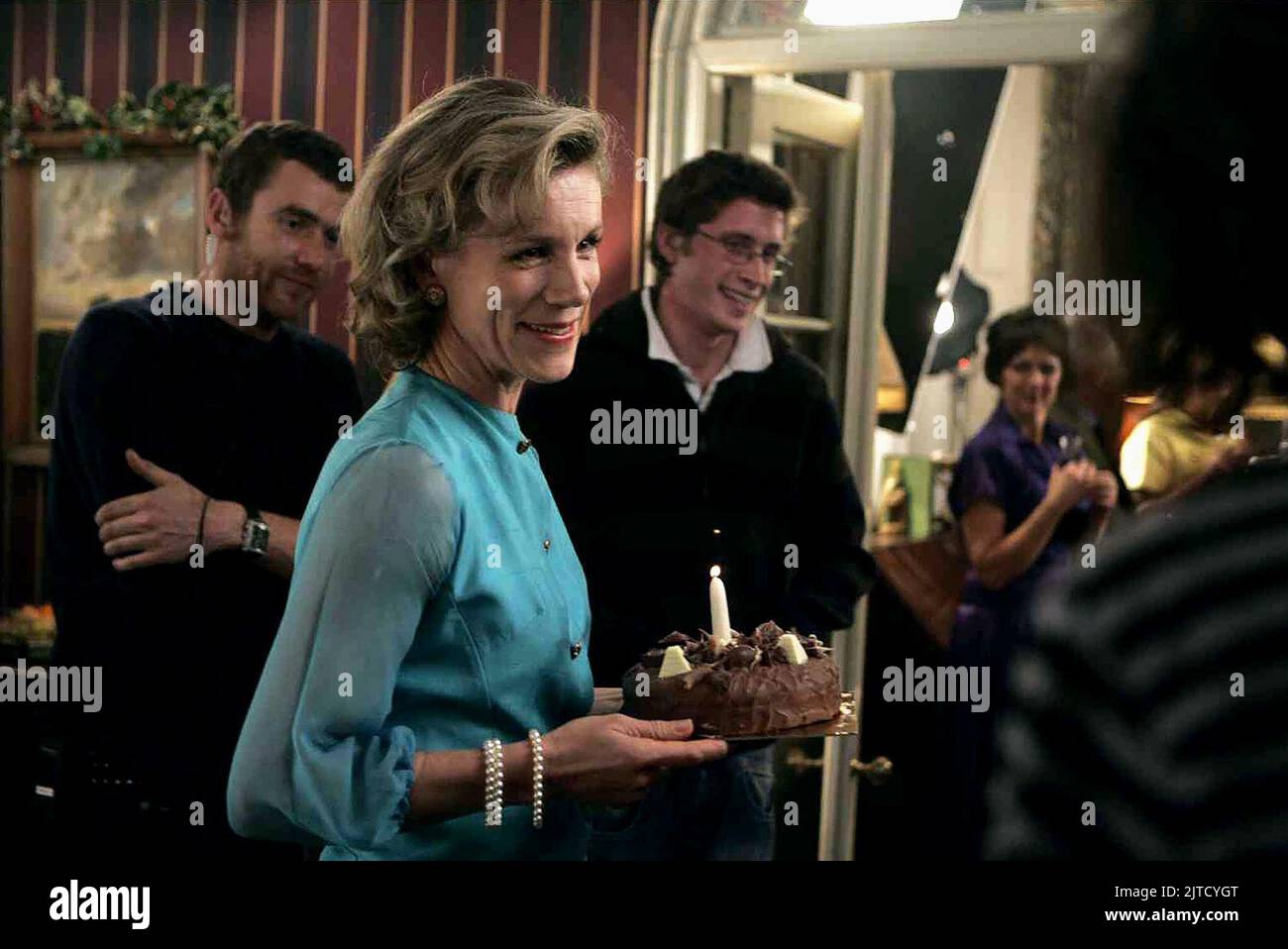
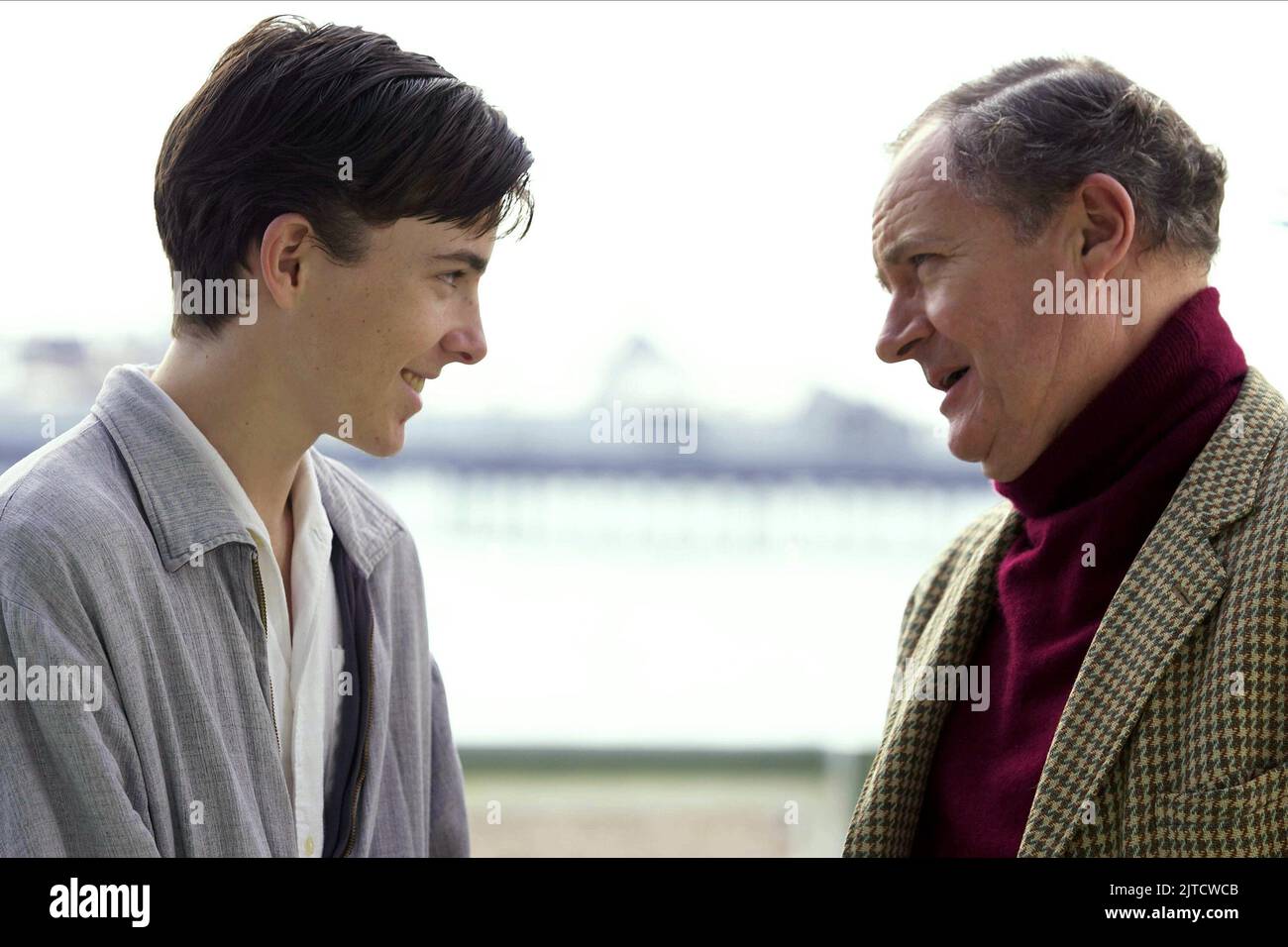
And When Did You Last See Your Father? is a 2007 British drama film directed by Anand Tucker, adapted by David Nicholls from Blake Morrison’s acclaimed 1993 memoir, and starring Colin Firth and Jim Broadbent as a complex father and son navigating terminal illness, unresolved resentment, and emotional reconciliation.
Introduction to the Film and Its Premise
The cinematic landscape is replete with explorations of generational friction, yet few films tackle the bittersweet, friction-heavy bond between fathers and sons with the unflinching intimacy of And When Did You Last See Your Father?. Released in 2007, the film operates as a dual character study and an adaptation of Blake Morrison's 1993 autobiographical book of the same name. Directed by Anand Tucker—known for his keen eye for character psychology—and scripted by novelist and screenwriter David Nicholls, the picture charts the final months of Arthur Morrison as he battles terminal cancer, forcing his adult son, Blake, to confront a lifetime of complicated affection, emotional tyranny, and unspoken expectations.
Rather than offering a sanitized or overly sentimental Hollywood portrait of death and dying, the film deliberately leans into the irritation and authenticity of family dynamics. Arthur Morrison (played by Jim Broadbent) is a larger-than-life character: charismatic, endlessly boastful, tactless, and profoundly demanding. Blake (played by Colin Firth) is an introspective writer who has spent decades feeling eclipsed, criticized, and emotionally stunted by his father's overpowering personality. As Arthur’s health deteriorates, Blake is thrust back into the orbit of his childhood home in Yorkshire, where he must reconcile the man who terrified and belittled him with the man who is now slipping away.
Examining And When Did You Last See Your Father? requires looking beyond its plot synopsis to dissect its structural choices, the nuances of its performances, its reception among critics, and its status within the broader tradition of British biographical drama.
Production Context and Literary Adaptation
Understanding the film's artistic merits begins with its translation from page to screen. Blake Morrison’s original 1993 memoir was widely praised for its unflinching honesty. Morrison did not paint his father as a saint in the twilight of his life; instead, he detailed Arthur’s casual cruelty, his rampant womanizing, his tendency to hijack conversations, and his relentless drive to turn every family milestone into a performance centered on himself.
Adapting such a deeply internal, non-linear text into a 95-minute narrative feature presented significant hurdles. Screenwriter David Nicholls restructured the memoir by framing the story through a dual-timeline structure. The narrative fluidly shifts between the present day—where an adult Blake assists his mother Kim (played by Juliet Stevenson) in caring for a dying Arthur—and flashbacks to Blake’s childhood and adolescence (with young Blake played by Matthew Beard).
| Production Element | Detail / Personnel |
|---|---|
| Director | Anand Tucker |
| Screenwriter | David Nicholls (based on the memoir by Blake Morrison) |
| Principal Cast | Colin Firth, Jim Broadbent, Juliet Stevenson, Gina McKee, Laura Fraser |
| Cinematography | Howard Atherton |
| Original Release Date | October 5, 2007 (United Kingdom) |
| Runtime | 95 minutes |
This structural choice allows the audience to witness the genesis of Blake's adult neuroses. We see young Blake forced to participate in his father’s eccentric medical experiments, endure public humiliations disguised as "jokes," and navigate a household where Arthur’s oxygen of choice was absolute attention. Nicholls’ script maintains the book's sardonic wit, ensuring the film never devolves into pure misery porn. The dialogue captures the distinct cadence of middle-class English familial repression—where deep affection is masked by barbed banter and cups of tea.
Core Character Dynamics: Firth and Broadbent
The primary engine of the film is the combustible, emotionally intricate chemistry between its two lead actors. Colin Firth and Jim Broadbent turn in performances that anchor every frame, elevating the material above standard melodramatic tropes.
Arthur Morrison: The Narcissistic Patriarch
Jim Broadbent approaches Arthur with a fearless refusal to court immediate sympathy. Arthur is a country doctor who treats his profession as a stage. He enters rooms like a gale-force wind, complimenting strangers while subtly undermining his own family. Broadbent captures the intoxicating magnetism that made Arthur popular in his community, while simultaneously exposing the exhausting toll that charisma takes on those closest to him. When Arthur faces his terminal diagnosis, Broadbent avoids weeping vulnerability; instead, Arthur remains defiant, irritable, and obsessed with maintaining control over his narrative until the very end.
Blake Morrison: The Burden of Inheritance
Colin Firth portrays Blake as a man encased in emotional armor. As a writer and poet, Blake has built a career out of observing and translating human behavior, yet he remains perpetually tongue-tied in the presence of his father. Firth excels at playing quiet desperation and repressed resentment. Through subtle micro-expressions—a tightening jaw, a forced polite smile, a moment of hesitation before speaking—Firth communicates a lifetime of feeling inadequate. Blake’s internal conflict stems from the terrifying realization that as he tries to distance himself from his father, he notices his own mannerisms mirroring Arthur's flaws.
Critical Debate and Reception
Upon its release in late 2007, And When Did You Last See Your Father? received generally positive notices from film critics, though the critical debate surrounding the movie highlighted distinct divisions over its tone and emotional payoff.
Praise for Authenticity and Performances
Major outlets and reviewers frequently lauded the film for its emotional realism. Critics highlighted that the movie avoided the trap of tidy cinematic closure. In real life, death rarely resolves decades of familial baggage with a neat final conversation, and reviewers noted that the film honors this uncomfortable truth. Blake and Arthur do not share a cinematic, tear-soaked epiphany where all wounds are magically healed. Instead, they reach a pragmatic, quiet truce.
Furthermore, the performances of Firth and Broadbent drew widespread acclaim. Reviewers in publications like The Guardian and Empire noted that both actors brought layers of complexity to roles that could easily have slipped into caricature. Broadbent’s ability to make Arthur simultaneously detestable and deeply human was frequently cited as a career highlight.
Criticisms of Melodrama and Pacing
Conversely, some dissenting voices in the critical community argued that the film occasionally stumbled into familiar British television-drama territory. A segment of reviewers felt that the narrative structure—relying heavily on alternating flashbacks—disrupted the emotional momentum of the present-day scenes.
Other critics pointed out that Blake’s interiority as a writer was difficult to fully visualize on screen, occasionally leaving his character motivations feeling slightly muted compared to Arthur’s roaring theatricality. A few reviews suggested that the film’s middle section lagged, treading water as it cycled through variations of Arthur’s stubbornness and Blake’s passive endurance.
Comparative Analysis: Memoir vs. Film Adaptation
For audiences familiar with Blake Morrison’s source text, viewing the film invites a natural comparison between literary introspection and cinematic pacing.
| Feature | Blake Morrison's Memoir (1993) | Anand Tucker's Film Adaptation (2007) |
|---|---|---|
| Narrative Flow | Highly non-linear, associative, essayistic, and deeply reflective. | Structured chronologically with framing devices and balanced flashbacks. |
| Focus on Author | Provides extensive background on Blake's internal guilt, marital struggles, and career. | Centers more tightly on the father-son friction and the immediate dying process. |
| Portrayal of Arthur | Unsparingly critical of Arthur's emotional abuse, infidelities, and ego. | Slightly softened by Jim Broadbent’s inherent warmth and charismatic delivery. |
| Resolution | Ambiguous, focusing on the lingering, unresolved nature of grief. | Balanced between closure and ongoing generational echo. |
While the book allows Morrison space to dissect his own failings as a husband and father—including his own infidelities and complicated romantic life—the film streamlines these subplots to keep the spotlight firmly fixed on the patriarchal struggle. This adaptation choice makes the cinematic version more focused, though purists of the book occasionally noted the absence of broader contextual layers regarding Blake’s adult life.
Frequently Asked Questions
Is And When Did You Last See Your Father? based on a true story?
Yes. The film is adapted from the 1993 autobiographical memoir of the same name by British writer and poet Blake Morrison. It recounts his actual experiences caring for his terminally ill father, Dr. Arthur Morrison, and reflects on their complex relationship.
How does the film handle the subject of death and terminal illness?
The film deliberately avoids melodrama and sentimentality. It portrays the reality of a dying parent with humor, frustration, and exhaustion, emphasizing that terminal illness does not magically erase lifelong personality flaws or complicated family tensions.
What is the significance of the film's title?
The title originates from a famous 1889 painting by William Frederick Yeames (And When Did You Last See Your Father?), which depicts a Cromwellian interrogation of a royalist family. In the context of the film and memoir, it serves as both a literal question about memory and a metaphorical inquiry into when Blake truly understood who his father was.
Are there notable supporting performances in the film?
Yes. Juliet Stevenson delivers a grounded, quietly devastating performance as Kim Morrison, the mother caught in the crossfire of her husband's dominance and her son's resentment. Gina McKee and Laura Fraser also provide strong supporting turns as the women in Blake's adult and younger life.
Where can viewers stream or watch the film?
Availability varies depending on regional licensing agreements, digital storefronts (such as Amazon Prime Video or Apple TV), and local streaming catalogs. Viewers should check their region’s major digital rental platforms for current access.
Conclusion and Final Recommendation
And When Did You Last See Your Father? stands as a masterclass in restrained character drama. It refuses to offer easy answers or comforting platitudes about family love, choosing instead to examine the messy, frustrating, and ultimately profound reality of parent-child bonds. For viewers seeking a deeply acted, emotionally resonant exploration of memory, forgiveness, and the long shadow cast by demanding parents, Anand Tucker’s film remains a rewarding and poignant watch. Approach it not as a tearjerker, but as a sharply observed psychological portrait of two men striving to understand one another before time runs out.