Arlene "A.J." Delgado filed a landmark pregnancy discrimination lawsuit in December 2019 against the Trump 2016 presidential campaign, alleging she was stripped of her duties and sidelined after disclosing her pregnancy. The case, Delgado v. Donald J. Trump for President, Inc., highlights critical issues regarding Title VII protections and retaliation within political organizations.
The lawsuit filed by A.J. Delgado remains one of the most high-profile examples of employment litigation stemming from the 2016 political cycle. Delgado, a Harvard-educated attorney and former senior advisor to the Donald J. Trump for President campaign, alleges that her career trajectory was intentionally derailed by campaign leadership once they learned she was expecting a child with then-senior staffer Jason Miller.
As of 2026, the case serves as a vital case study for legal professionals specializing in employment law, specifically regarding the intersection of the Pregnancy Discrimination Act (PDA) and the unique, high-pressure environment of national political campaigns.
Origins of the Litigation: The 2016 Campaign Context
To understand the 2019 filing, one must examine the events of late 2016. A.J. Delgado was a prominent surrogate and advisor for the Trump campaign, frequently appearing on national news networks to defend the candidate's platform. Following the November election, Delgado was expected to transition into a significant role within the administration or the inaugural committee.
In mid-November 2016, Delgado informed campaign leadership—including high-ranking officials like Reince Priebus and Sean Spicer—that she was pregnant. The father was Jason Miller, who had recently been named White House Communications Director for the incoming administration. Shortly after this disclosure, Delgado alleges that her access to campaign communications was revoked, she was excluded from transition meetings, and her "senior advisor" responsibilities were effectively terminated.
The Career Sidelining Allegations
Delgado’s complaint asserts that before the pregnancy disclosure, she was a rising star within the organization. The lawsuit details how, almost immediately following the news, she stopped receiving emails, was no longer invited to participate in strategy sessions, and was told that she could not be seen in public or on television due to her "situation." This "situation," she argues, was a direct reference to her pregnancy and the optics of the out-of-wedlock child with a married colleague.
Core Legal Claims and the Pregnancy Discrimination Act
The lawsuit, filed in the U.S. District Court for the Southern District of New York (SDNY), rests on three primary pillars of employment law. Understanding these is essential for grasping the technical depth of the litigation.
1. Pregnancy Discrimination
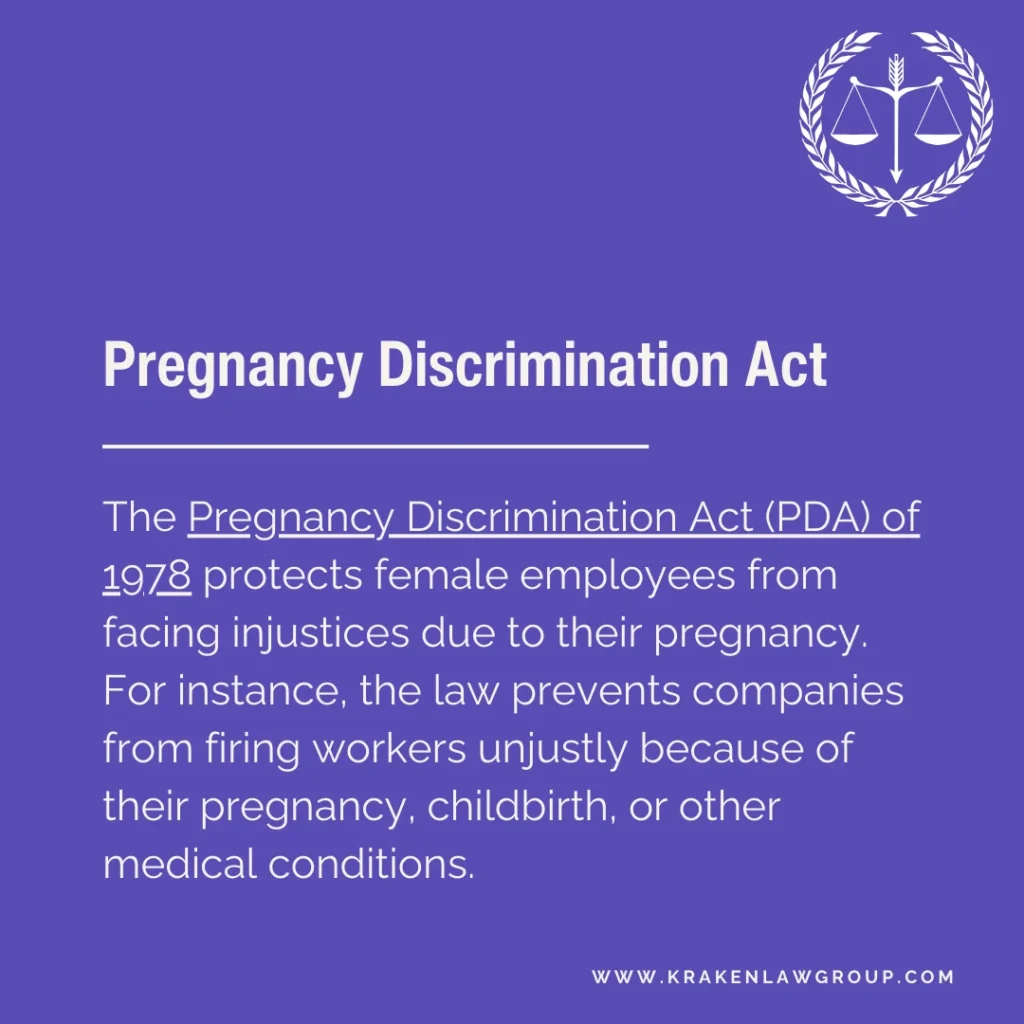
Under the Pregnancy Discrimination Act (PDA), which is an amendment to Title VII of the Civil Rights Act of 1964, it is illegal for an employer to discriminate against an employee because of pregnancy, childbirth, or related medical conditions. Delgado argues that the campaign’s decision to remove her from the "transition team" and deny her a White House role was motivated specifically by her pregnancy status.
2. Hostile Work Environment
Delgado alleges that the environment following her disclosure became hostile. This included disparaging remarks from colleagues and a systemic effort to isolate her from her professional peers. In legal terms, a hostile work environment exists when the conduct is severe or pervasive enough to create a work environment that a reasonable person would consider intimidating or abusive.
3. Retaliation
A significant portion of the 2019 lawsuit focuses on retaliation. Delgado claims that when she complained about her treatment or attempted to assert her rights, the campaign intensified its efforts to exclude her. Retaliation claims are often easier to prove than the initial discrimination claim because they only require the plaintiff to show that a "materially adverse action" was taken because they engaged in a "protected activity" (such as reporting discrimination).
The Role of Jason Miller and Campaign Leadership
The lawsuit names several high-profile defendants, including the campaign organization itself and specific individuals such as Jason Miller, Steve Bannon, and Reince Priebus.
Jason Miller’s involvement is central to the narrative. While Miller initially accepted a White House role, he withdrew shortly after the news of the affair and pregnancy became public. Delgado’s suit alleges that while Miller was eventually "welcomed back" into the fold as a consultant and surrogate, she was permanently blacklisted. This disparity in treatment—where the father remained professionally viable while the pregnant mother was excluded—is a cornerstone of her argument regarding gender-based discrimination.
Defense Arguments and Procedural Hurdles
The Trump campaign and the individual defendants have consistently denied the allegations. Their primary defense strategies have included:
- Performance-Based Justification: Claiming that any changes in Delgado’s role were based on performance or the natural conclusion of the campaign cycle rather than her pregnancy.
- The "At-Will" Nature of Political Work: Arguing that campaign roles are inherently temporary and that no one is guaranteed a White House position.
- Jurisdictional and Procedural Challenges: The defense filed multiple motions to dismiss, arguing that the court lacked jurisdiction or that Delgado failed to state a claim upon which relief could be granted.
The Battle Over Non-Disclosure Agreements (NDAs)
One of the most technically significant aspects of the Delgado lawsuit was its impact on the use of Non-Disclosure Agreements (NDAs) in political settings. The Trump campaign famously required all staff to sign broad NDAs that prohibited disparaging the candidate or the organization.
Delgado’s legal team argued that these NDAs were used as a weapon to prevent her from speaking out about the discrimination she faced. This led to a secondary legal battle regarding the enforceability of such agreements. In related cases, courts have increasingly found that broad NDAs used by political campaigns cannot be used to silence employees reporting illegal workplace conduct, such as discrimination or harassment.
| Key Event | Date | Description |
|---|---|---|
| Pregnancy Disclosure | Nov 2016 | Delgado informs campaign leadership of her pregnancy. |
| Sidelining Begins | Dec 2016 | Access to transition emails and meetings is revoked. |
| Lawsuit Filed | Dec 2019 | Formal complaint filed in the SDNY court. |
| Motion to Dismiss Denied | 2020/2021 | Judge allows the core claims of the case to proceed to discovery. |
| Discovery Phase | 2022–2024 | Extensive exchange of documents and depositions of senior officials. |
| Current Status | 2026 | The case remains a precedent for campaign employment standards. |
Discovery and Evidence: The "Smoking Gun" Search
The discovery phase of the A.J. Delgado lawsuit was particularly protracted. Discovery is the pre-trial phase where each party can obtain evidence from the other through requests for documents, interrogatories, and depositions.
Delgado’s team sought internal emails, text messages, and Slack communications from the 2016-2017 transition period. The goal was to find direct evidence (often called "smoking gun" evidence) that leadership explicitly discussed her pregnancy as a reason for her exclusion. Even without direct evidence, they relied on circumstantial evidence, such as the timing of her exclusion following her announcement, to build a case of "pretext"—the idea that any non-discriminatory reason given by the campaign was actually a lie to cover up discrimination.
Broader Impact on Political Employment Law
The Delgado case is not just about one individual; it has had a profound impact on how political campaigns manage their human resources. Historically, campaigns operated as "wild west" environments with little regard for standard HR practices. The 2019 lawsuit forced a shift toward greater professionalization.
Changes in Campaign HR Practices
Since the filing, major political committees (both DNC and RNC) have implemented more rigorous Title VII training. The lessons learned from Delgado’s allegations include:
- Formalized Onboarding/Offboarding: Ensuring that role changes are documented with legitimate, non-discriminatory reasons.
- Maternity and Paternity Policies: Campaigns are now more likely to have written policies regarding parental leave, even for temporary staff.
- The Narrowing of NDAs: Legal counsel for campaigns now typically advises against overly broad NDAs that could be interpreted as blocking reports of illegal activity.
Legal Precedent for Political Staffers
Before this case, many believed that the fast-paced, "cause-driven" nature of a campaign exempted them from certain labor laws. The progression of Delgado’s suit through the federal court system reaffirmed that campaign workers are entitled to the same federal protections as any other corporate employee.
Comparison with Other Political Discrimination Cases
The Delgado lawsuit is often compared to other high-profile cases involving political figures. For example, Jessica Denson’s lawsuit against the same campaign focused heavily on the invalidation of NDAs. However, Delgado’s case is unique because it combines the NDA controversy with the specific, protected class of pregnancy.
Unlike cases that focus solely on sexual harassment, the Delgado case examines the "aftermath" of a consensual relationship within a power hierarchy and how the resulting pregnancy triggered a professional "death sentence" for the woman while the man remained in good standing. This "double standard" argument is a recurring theme in contemporary gender discrimination litigation.
FAQ: Understanding the A.J. Delgado Case
1. What was the primary goal of A.J. Delgado's lawsuit?
The primary goal was to seek damages for lost wages, emotional distress, and damage to professional reputation. Delgado sought to prove that her career in political consulting and government was unlawfully terminated due to her pregnancy, violating Title VII of the Civil Rights Act and the Pregnancy Discrimination Act.
2. Is A.J. Delgado still involved in politics?
Since the filing of the lawsuit, Delgado has largely transitioned away from active campaign advisor roles, though she remains a vocal commentator on legal and political issues. Her career trajectory is a central point of the lawsuit, as she argues the "blacklisting" she experienced prevented her from continuing her work at the highest levels of government.
3. What is the Pregnancy Discrimination Act (PDA)?
The PDA is a federal law that prohibits employers from discriminating against employees on the basis of pregnancy. It requires that pregnant employees be treated the same as other employees who are similar in their ability or inability to work. In the Delgado case, the key question was whether she was treated differently than non-pregnant advisors with similar qualifications.
4. How did the Trump campaign respond to the specific allegations of retaliation?
The campaign’s legal team argued that Delgado was never a permanent employee and that her role naturally expired at the end of the campaign. They contended that there was no "retaliation" because she was never entitled to a post-campaign position, regardless of her pregnancy or her complaints.
5. Has the case been settled?
As of 2026, the litigation has been a marathon of procedural motions and discovery disputes. While many employment cases end in confidential settlements, the public nature of the Delgado case and the high-profile defendants have led to a more prolonged and visible legal battle than is typical for Title VII claims.
6. Who is Jason Miller in relation to this case?
Jason Miller was a senior communications advisor to the Trump campaign. He is the father of Delgado’s child. The lawsuit highlights the discrepancy in how the campaign treated Miller (who remained a key advisor for years) versus Delgado (who was excluded), using this as evidence of gender discrimination.
Next Actions for Legal Observers and HR Professionals
The A.J. Delgado 2019 pregnancy discrimination lawsuit serves as a critical reminder of the reach of federal employment laws. For those following the case or managing similar organizational structures, several actions are recommended:
- Review Title VII Compliance: Ensure that all staff, including temporary and contract workers in political or non-profit environments, are aware of their rights under the Pregnancy Discrimination Act.
- Audit NDA Language: Legal teams should review confidentiality agreements to ensure they do not inadvertently or explicitly prohibit the reporting of discrimination or harassment to the EEOC or other regulatory bodies.
- Document Personnel Changes: In high-turnover environments like campaigns, clear documentation of performance-related decisions is the only effective defense against claims of pretextual discrimination.
- Monitor SDNY Rulings: Continue to follow the Southern District of New York's specific rulings on this case, as they provide the "roadmap" for how courts view the intersection of political loyalty and federal labor protections.
Disclaimer: This article is for informational purposes only and does not constitute legal advice. Employment law is subject to jurisdictional variations and evolving judicial interpretations.