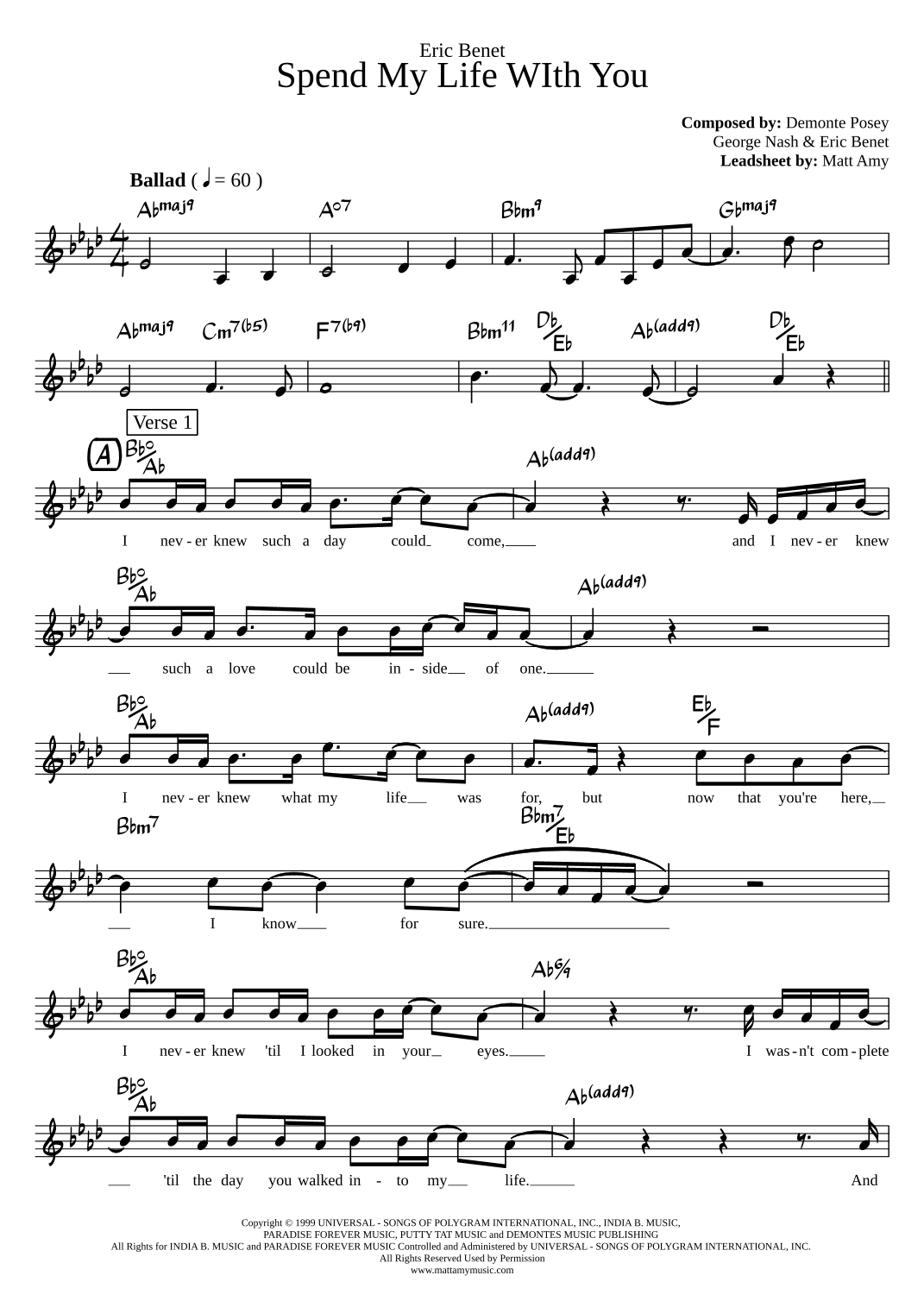
Released on June 22, 1999, A Day in the Life is the second studio album by American R&B singer-songwriter Eric Benét. It stands as a cornerstone of the neo-soul movement, featuring the Billboard #1 R&B hit "Spend My Life with You" and solidifying Benét’s reputation for sophisticated, jazz-inflected soul music.
The Genesis of a Neo-Soul Landmark
By the late 1990s, the R&B landscape was undergoing a significant transformation. The "neo-soul" subgenre, characterized by a return to live instrumentation and 1970s-style songwriting, was reaching its commercial and critical zenith. Eric Benét, who had debuted in 1996 with the critically acclaimed True to Myself, found himself at the heart of this movement. While his debut was heavily steeped in the gritty, analog sounds of the 1970s, his sophomore effort, A Day in the Life, sought to bridge the gap between classic soul sensibilities and a more polished, contemporary R&B production.
The development of A Day in the Life was marked by a desire for musical maturity. Benét worked closely with producer Demonté Posey to craft a sound that felt more expansive and cinematic than his previous work. The album was recorded during a period when listeners were hungry for "grown and sexy" music—songs that dealt with the complexities of adult relationships, spirituality, and self-reflection without relying on the hyper-processed aesthetics of late-90s pop-R&B.
The title itself, A Day in the Life, suggests a narrative arc. While not a concept album in the strictest sense, the record functions as a journey through the emotional spectrum of a single day, ranging from the upbeat optimism of morning to the sultry, reflective moods of midnight. This thematic cohesion helped the album resonate with a demographic that valued artistry and authenticity over fleeting radio trends.
Production and Musicality
One of the defining features of A Day in the Life is its lush, organic production. In an era dominated by the synthesized beats of Timbaland and The Neptunes, Benét opted for a more traditional approach. The album features prominent use of live bass, percussion, and horn sections, giving the music a warmth that has allowed it to age exceptionally well.
Benét’s vocal performance is equally noteworthy. His range is expansive, moving effortlessly from a rich baritone to a crystalline falsetto. This versatility allowed him to navigate various styles throughout the album, from the funk-driven cover of Toto's "Georgy Porgy" to the delicate acoustic balladry of the closing tracks. The vocal arrangements are dense and sophisticated, often featuring layers of Benét’s own harmonies, which became a signature of his recording style.
The inclusion of high-profile collaborators also bolstered the album’s technical depth. Faith Evans lent her powerhouse vocals to the lead single, while Tamia partnered with Benét for what would become his biggest commercial success. These collaborations were not merely marketing ploys; they were integrated into the musical fabric of the album, providing necessary contrast to Benét’s smooth, laid-back delivery.
Key Tracks and Narrative Depth
To understand the enduring appeal of A Day in the Life, one must examine the specific compositions that define its tracklist. The album is structured to provide a balanced listening experience, alternating between uptempo grooves and intimate slow jams.
"Spend My Life with You" (feat. Tamia)
This track is arguably the centerpiece of the album and a definitive moment in 1990s R&B. Written by Eric Benét and Demonté Posey, the song is a masterclass in the "wedding song" genre. The chemistry between Benét and Tamia is palpable, with their voices weaving together in a way that feels both effortless and emotionally resonant. The song reached #1 on the Billboard Hot R&B/Hip-Hop Songs chart and earned a Grammy nomination for Best R&B Performance by a Duo or Group with Vocals. Its legacy persists in 2026 as a standard for romantic soul.
"Georgy Porgy" (feat. Faith Evans)
A reimagining of the 1978 Toto classic, this cover highlights Benét’s ability to pay homage to the past while modernizing the sound. Featuring a prominent appearance by Faith Evans, the track leans into a mid-tempo funk groove that differs significantly from the original’s rock-soul fusion. It served as a perfect introduction to the album, showcasing Benét’s rhythmic sensibilities and his ability to hold his own alongside one of R&B’s most formidable vocalists.
"When You Think of Me"
This track captures the essence of the neo-soul aesthetic. It is a mid-tempo, guitar-driven song that focuses on the lingering thoughts of a past lover. The production is spacious, allowing Benét’s vocals to take center stage. It exemplifies the "vibe" that many neo-soul artists were chasing at the time: music that is as much about the space between the notes as it is about the notes themselves.
"Lately"
As the album nears its conclusion, "Lately" provides a moment of introspection. It is a soulful ballad that utilizes traditional R&B tropes—sweeping melodies and heartfelt lyrics—but executes them with a level of sincerity that prevents the song from feeling cliché.
Technical Specifications and Tracklist
For collectors and audiophiles, the technical layout of the album provides insight into its pacing and production hierarchy. The album was released via Warner Bros. Records and remains a staple of their R&B catalog.
| Track # | Title | Lead Artist(s) | Duration | Notable Credits |
|---|---|---|---|---|
| 1 | That's Just My Way | Eric Benét | 4:55 | Produced by Eric Benét & Demonté Posey |
| 2 | Georgy Porgy | Eric Benét feat. Faith Evans | 4:40 | Cover of Toto (1978) |
| 3 | Spend My Life with You | Eric Benét feat. Tamia | 4:35 | #1 Billboard R&B Single |
| 4 | Something Real | Eric Benét | 4:30 | Features Me'Shell Ndegéocello |
| 5 | Loving Your Best Friend | Eric Benét | 4:19 | Acoustic-leaning soul |
| 6 | When You Think of Me | Eric Benét | 5:43 | Lead songwriting by Benét |
| 7 | Lamentation | Eric Benét | 0:54 | Instrumental interlude |
| 8 | Dust in the Wind | Eric Benét | 4:29 | Cover of Kansas (1977) |
| 9 | Why You Follow Me | Eric Benét | 5:23 | Funk/Rock fusion |
| 10 | Come as You Are | Eric Benét | 5:10 | Soulful invitation |
| 11 | Love the Hurt Away | Eric Benét | 4:12 | Deep-cut ballad |
| 12 | Ghetto Girl | Eric Benét | 4:12 | Social commentary / R&B |
| 13 | Love of My Own | Eric Benét | 5:42 | Closing masterstroke |
Critical Reception and Industry Impact
Upon its release, A Day in the Life was met with widespread critical acclaim. Critics praised Benét for his restraint and his commitment to "real" music in an increasingly digitized industry. Publications like Rolling Stone and The Village Voice noted that the album managed to be commercially viable without sacrificing its artistic integrity.
Financially, the album was a significant success for Warner Bros. It was certified Gold by the RIAA, largely driven by the massive success of "Spend My Life with You." However, its impact extended beyond mere sales figures. The album helped define the "second wave" of neo-soul. While the first wave (led by D'Angelo and Maxwell) was often experimental and raw, the second wave, which included artists like Benét and Musiq Soulchild, brought a level of melodic accessibility that allowed the genre to dominate mainstream urban radio.
In the context of 2026, music historians view A Day in the Life as the bridge between the analog soul of the 70s and the sophisticated R&B of the early 2000s. It proved that there was a massive market for music that didn't rely on trends, setting the stage for Benét’s subsequent albums, such as Hurricane and Love & Life.
Comparative Analysis: Benét vs. Contemporaries
To fully appreciate A Day in the Life, it is helpful to compare it to other landmark R&B releases of the same era.
- D'Angelo’s Brown Sugar vs. Benét: While D'Angelo leaned heavily into a smokey, hip-hop-influenced aesthetic, Benét’s work on A Day in the Life is cleaner and more aligned with the tradition of crooners like Donny Hathaway and Stevie Wonder.
- Maxwell’s Embrya vs. Benét: Maxwell’s sophomore effort was highly experimental and somewhat polarizing. In contrast, Benét delivered a more grounded, structured R&B experience that was easier for the average listener to digest while remaining technically complex.
- Musiq Soulchild’s Aijuswanaseing: Released shortly after, Musiq’s debut followed the blueprint Benét helped establish—blending live instrumentation with relatable, everyday narratives about love and life.
Troubleshooting Common Misconceptions
Despite its clarity, some listeners frequently confuse certain aspects of this album or Eric Benét’s discography.
- Genre Labeling: While often called "Neo-Soul," Benét himself has frequently described his music simply as "Soul." He views the "Neo" tag as a marketing term for a style of music that has always existed.
- Authorship: Many assume "Spend My Life with You" was written specifically for a film or a wedding. In reality, it was a deeply personal composition intended for the album that happened to strike a universal chord.
- The Toto Cover: There is occasional confusion regarding "Georgy Porgy." Newer listeners sometimes mistake Benét’s version for the original, not realizing it is a faithful but funky tribute to the rock band Toto.
Practical Guidance for New Listeners
For those discovering A Day in the Life in 2026, the best way to experience the album is through a high-fidelity audio setup. Because the production relies so heavily on live strings and bass, low-quality streaming can "flatten" the sound, causing the listener to miss the nuances of the arrangement.
If you are looking to build an R&B collection, this album is a mandatory inclusion. It serves as a textbook example of how to balance commercial appeal with musicianship. When listening, pay close attention to the transitions between the tracks; the album is paced like a live performance, intended to be heard from start to finish.
Frequently Asked Questions
What is the most famous song on Eric Benét's A Day in the Life? The most famous song is undoubtedly "Spend My Life with You," a duet with Tamia. It reached the top of the Billboard R&B charts and became a multi-generational wedding anthem. Its success is a testament to the song's timeless melody and the vocal chemistry between the two artists.
Did A Day in the Life win any awards? While the album itself did not win a Grammy, the single "Spend My Life with You" was nominated for Best R&B Performance by a Duo or Group with Vocals at the 42nd Annual Grammy Awards. The album was also a major contender at the Soul Train Music Awards.
How does this album differ from Eric Benét's debut, True to Myself? True to Myself was a very raw, 70s-influenced record with a grittier sound. A Day in the Life is more polished and sophisticated. It features more intricate arrangements and high-profile collaborations, marking Benét's transition into a major R&B star.
Who produced the album A Day in the Life? The album was primarily produced by Eric Benét and Demonté Posey. This duo was responsible for the cohesive, organic sound that defines the record. Their partnership ensured that the album maintained a consistent sonic identity despite the variety of musical styles explored.
Is A Day in the Life available on vinyl? Yes, the album has seen various vinyl pressings since its 1999 debut, including anniversary reissues. Collectors often seek out the original pressings for their warm, analog sound, which complements the album's live instrumentation.
Recommendation for Further Action
If you have already explored A Day in the Life, your next step should be to listen to the live recordings of these tracks. Eric Benét is known for his incredible live performances, where he often extends the arrangements of songs like "When You Think of Me" and "Georgy Porgy" with jazz improvisations. Additionally, exploring the discographies of the guest artists—specifically Tamia’s self-titled debut and Faith Evans’ Keep the Faith—will provide a broader context for the R&B landscape of the late 1990s.