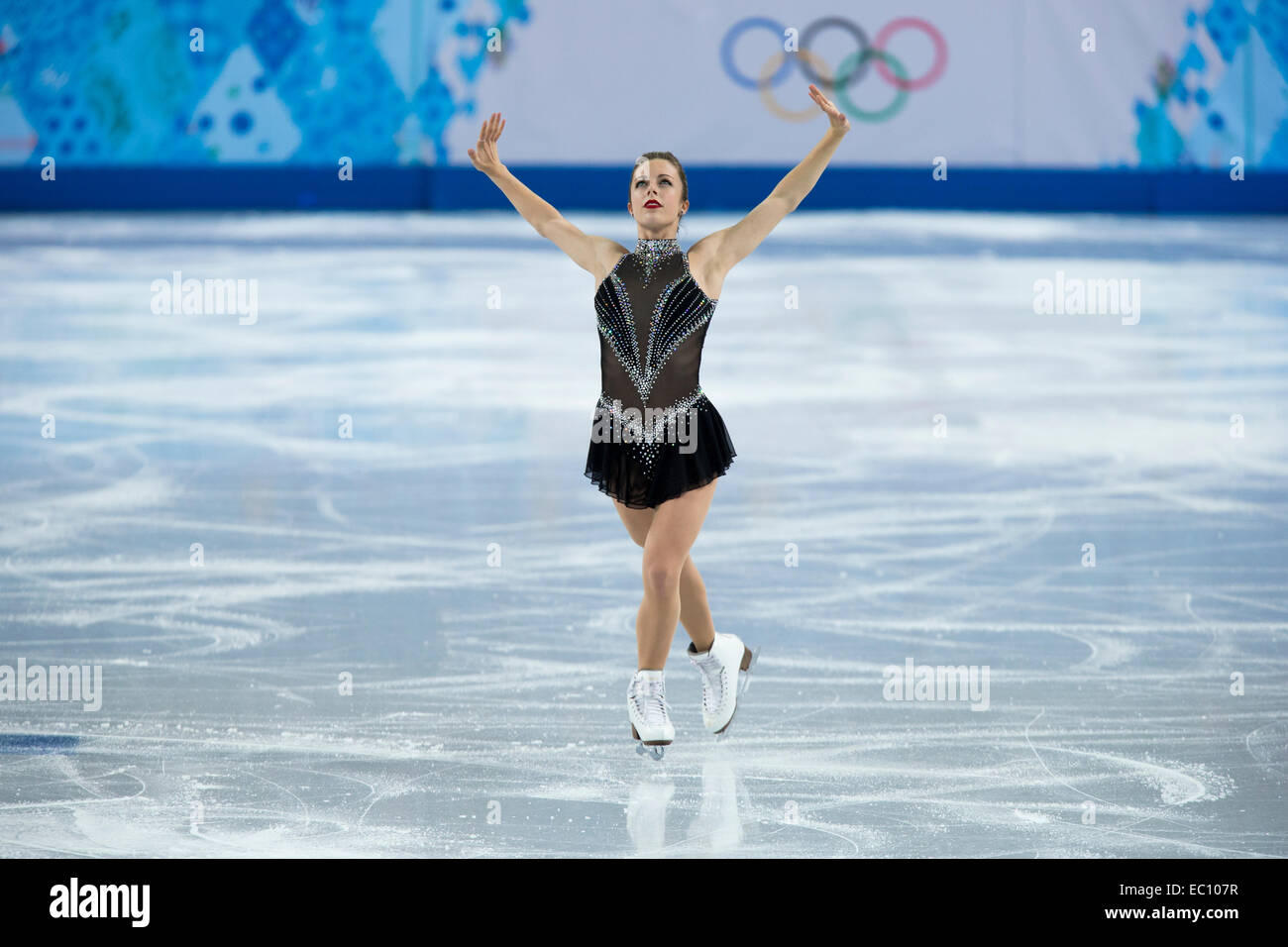
Ashley Wagner represented the United States at the 2014 Sochi Winter Olympics, earning a bronze medal in the inaugural team event and finishing seventh in the ladies' individual competition. Her Olympic journey remains a significant chapter in figure skating history due to her resilient performances, a high-profile selection controversy, and her candid personality.
The trajectory of Ashley Wagner’s Olympic career is a study in perseverance. For a decade, she was a fixture of American figure skating, bridging the gap between the era of Michelle Kwan and the modern technical revolution. While her competitive career concluded after the 2018 season, her impact on the sport continues to resonate in 2026 through her work in broadcasting and athlete advocacy. Understanding her Olympic experience requires looking beyond the raw scores to the cultural and systemic shifts she navigated during her time on the world stage.
The Road to Sochi: A Decade of Determination
Ashley Wagner’s path to the Olympics was not a straight line. Unlike many skating prodigies who reach the Olympic podium in their teens, Wagner was a "late bloomer" by the sport's standards. She narrowly missed the 2010 Vancouver Olympic team, finishing third at the U.S. Championships when only two spots were available. This disappointment became the catalyst for her move to California to train with veteran coach John Nicks and later Rafael Arutunian.
Between 2012 and 2014, Wagner established herself as the premier American female skater. She won consecutive U.S. National titles in 2012 and 2013 and became the first American woman since Michelle Kwan to win back-to-back titles. During this period, she also earned a silver medal at the Grand Prix Final and placed as high as fourth at the World Championships. By the time the 2014 Olympic season arrived, Wagner was the face of U.S. women’s figure skating, known for her sophisticated artistry and competitive "warrior" mentality.
The 2014 U.S. Championships Selection Controversy
The most debated moment of Wagner’s Olympic career occurred not in Sochi, but in Boston at the 2014 U.S. Figure Skating Championships. As the defending two-time champion, Wagner was the heavy favorite to win and secure one of the three Olympic spots. However, she had a disastrous free skate, falling twice and finishing fourth overall.
Mirai Nagasu, the 2010 Olympian, finished third, seemingly securing her place on the team. However, U.S. Figure Skating’s selection criteria are not strictly based on the results of a single competition; they consider a skater’s "body of work" over the previous year. Because Wagner had been consistently successful on the international circuit while Nagasu had struggled, the selection committee chose Wagner for the third Olympic spot over Nagasu.
This decision sparked a national debate about fairness versus potential. Wagner faced intense scrutiny and social media backlash before even arriving in Russia. She spent the weeks leading up to the Olympics reworking her programs and dealing with the immense pressure of proving she belonged on the team.
The Sochi 2014 Team Event: Securing Olympic Bronze
The 2014 Sochi Games marked the debut of the Figure Skating Team Event, a new format where nations competed for a collective medal based on the performances of their men, women, pairs, and ice dancers. This event took place before the individual competitions, providing Wagner with her first taste of Olympic ice.
Wagner was selected to skate the short program for the U.S. women. Skating to "Shine On You Crazy Diamond" by Pink Floyd, she delivered a solid performance that helped keep the United States in medal contention. Although her technical score was lower than she anticipated due to some under-rotated jumps, her presentation and maturity were vital to the team's dynamic.
The United States eventually secured the Bronze Medal, trailing behind Russia (Gold) and Canada (Silver). This achievement made Wagner an Olympic medalist, a milestone that validated her years of training and the committee's controversial decision to include her on the roster.
Individual Competition: The "Meme" Heard 'Round the World
The individual ladies' event in Sochi was one of the most high-pressure environments in the history of the sport. Wagner entered the competition as a veteran among a field of younger, technically explosive skaters like Yulia Lipnitskaya and eventual gold medalist Adelina Sotnikova.
The Short Program and the Viral Reaction
During the team event portion of the Olympics, a specific moment catapulted Wagner into mainstream pop culture. After finishing her short program, she looked at the scoreboard and saw a 63.10—a score she clearly felt was too low. Her unfiltered expression of disbelief and disappointment was captured on camera and instantly became a viral meme.
While the "Wagner Face" was humorous to the public, it reflected a deeper frustration with the ISU Judging System. Wagner was often a victim of strict technical panel calls regarding her jump take-offs and rotations, which frequently suppressed her scores despite her high levels of artistry and performance quality.
The Free Skate: Romeo and Juliet
In the individual free skate, Wagner performed to Prokofiev's "Romeo and Juliet." She chose to return to this program late in the season, feeling more comfortable with its choreography than her previous "Samson and Delilah" routine. Despite the immense pressure, she delivered two clean programs in the individual event, though she lacked the high-difficulty triple-triple jump combinations of the top finishers.
Wagner finished 7th overall. While she did not reach the individual podium, she earned respect for her consistency and for skating with a level of performance depth that many of her younger competitors had yet to develop.
Technical Analysis: The Wagner Style
Ashley Wagner was often described as a "performer’s skater." In an era where the sport was shifting toward extreme technical difficulty (and eventually, the quad revolution), Wagner excelled in the Program Components Score (PCS).
| Performance Element | Wagner's Approach | Impact on Scoring |
|---|---|---|
| Musicality | Deep connection to rhythmic nuances and character. | Consistently high marks in Composition and Interpretation. |
| Jump Technique | Known for a powerful Triple Flip-Triple Toe combination. | Often struggled with "edge calls" on her Triple Lutz. |
| Spin Quality | Level 4 spins with high speed and difficult variations. | Reliable source of technical points in both programs. |
| Step Sequences | Highly expressive and utilized the entire ice surface. | Always achieved high levels (Level 3 or 4) from technical panels. |
| Competitive Persona | Focused, intense, and communicative with the judges. | Earned the nickname "The Girl with the Iron Will." |
Wagner’s technical limitations were primarily related to the "flutz"—a common error where a skater takes off for a Lutz jump on the wrong blade edge. Because the judging system in 2014 was increasingly penalizing these errors, Wagner had to rely on her presentation and clean execution of other elements to remain competitive with the world's elite.
The 2018 PyeongChang Pursuit and Retirement
Following her success in Sochi, Wagner did not retire. Instead, she entered the most successful phase of her career. In 2016, she won the silver medal at the World Championships in Boston, breaking a decade-long medal drought for American women at the event. This victory cemented her status as a legitimate contender for the 2018 Olympic cycle.
However, the 2017-2018 season proved difficult. The emergence of younger skaters with higher technical ceilings, such as Bradie Tennell, made the U.S. field more competitive. At the 2018 U.S. Championships, Wagner finished 4th. This time, there was no "body of work" override; she was named as the first alternate for the PyeongChang Olympics but did not compete.
Shortly after the 2018 season, Wagner transitioned away from competitive skating. Her departure marked the end of an era for the "classic" style of American women's skating, characterized by longevity and theatricality.
Legacy and Impact as of 2026
As we look at the figure skating landscape in 2026, Ashley Wagner’s legacy has shifted from her on-ice results to her off-ice influence. She has become one of the most prominent voices in the sport, known for several key contributions:
- Broadcasting and Analysis: Wagner is a lead analyst for major skating competitions. Her "no-nonsense" approach to explaining the judging system has helped educate fans on why certain skaters score higher than others, bringing transparency to a notoriously opaque sport.
- Athlete Safety Advocacy: Wagner was one of the first high-profile skaters to speak out about the need for better protections against abuse within the U.S. Figure Skating system. Her bravery in sharing her own experiences helped catalyze changes in SafeSport protocols.
- Mental Health Awareness: By being open about the pressures of the Olympic selection process and the toll of elite competition, she has helped normalize mental health discussions for the next generation of Team USA athletes.
- Artistic Influence: Many current skaters cite Wagner’s "Black Swan" and "Moulin Rouge" programs as inspirations for how to balance technical requirements with genuine storytelling.
Common Questions About Ashley Wagner at the Olympics
How many Olympic medals does Ashley Wagner have?
Ashley Wagner has one Olympic medal: a Bronze in the Figure Skating Team Event from the 2014 Sochi Winter Olympics. While she performed well in the individual event, she did not place in the top three for that specific segment.
Why was Ashley Wagner selected for the 2014 Olympics over Mirai Nagasu?
The U.S. Figure Skating Association (USFSA) selection committee used a multi-factor criteria. Although Nagasu finished 3rd and Wagner 4th at the 2014 Nationals, Wagner had significantly stronger international results throughout the 2013-2014 season, including a medal at the Grand Prix Final. The committee determined that Wagner had a higher probability of scoring well in the Olympic environment.
What was the music for Ashley Wagner's 2014 Olympic programs?
For the 2014 Olympics, Wagner skated her short program to "Shine On You Crazy Diamond" by Pink Floyd. Her free skate was set to the "Romeo and Juliet" soundtrack by Sergei Prokofiev. She had originally planned to skate to "Samson and Delilah" but switched back to "Romeo and Juliet" just weeks before the games for better comfort and consistency.
Did Ashley Wagner compete in the 2018 Olympics?
No, Ashley Wagner did not compete in the 2018 PyeongChang Olympics. She finished 4th at the 2018 U.S. Championships and was named as an alternate. The three spots for the ladies' team went to Bradie Tennell, Mirai Nagasu, and Karen Chen.
What is Ashley Wagner’s highest rank in an Olympic individual event?
Her highest rank in an individual Olympic event is 7th place, which she achieved at the 2014 Sochi Games. She earned a total score of 193.20 across both the short and long programs.
Summary of Next Steps for Fans and Researchers
For those interested in the technical evolution of the sport since Wagner's era, researching the ISU Judging System (IJS) updates between 2014 and 2026 provides excellent context on how scoring has changed. Additionally, viewing Wagner's 2016 World Championship silver medal performance offers a glimpse of her at her absolute technical and artistic peak. Her continued work with athlete advocacy groups remains a vital resource for understanding the current state of athlete welfare in Olympic sports.