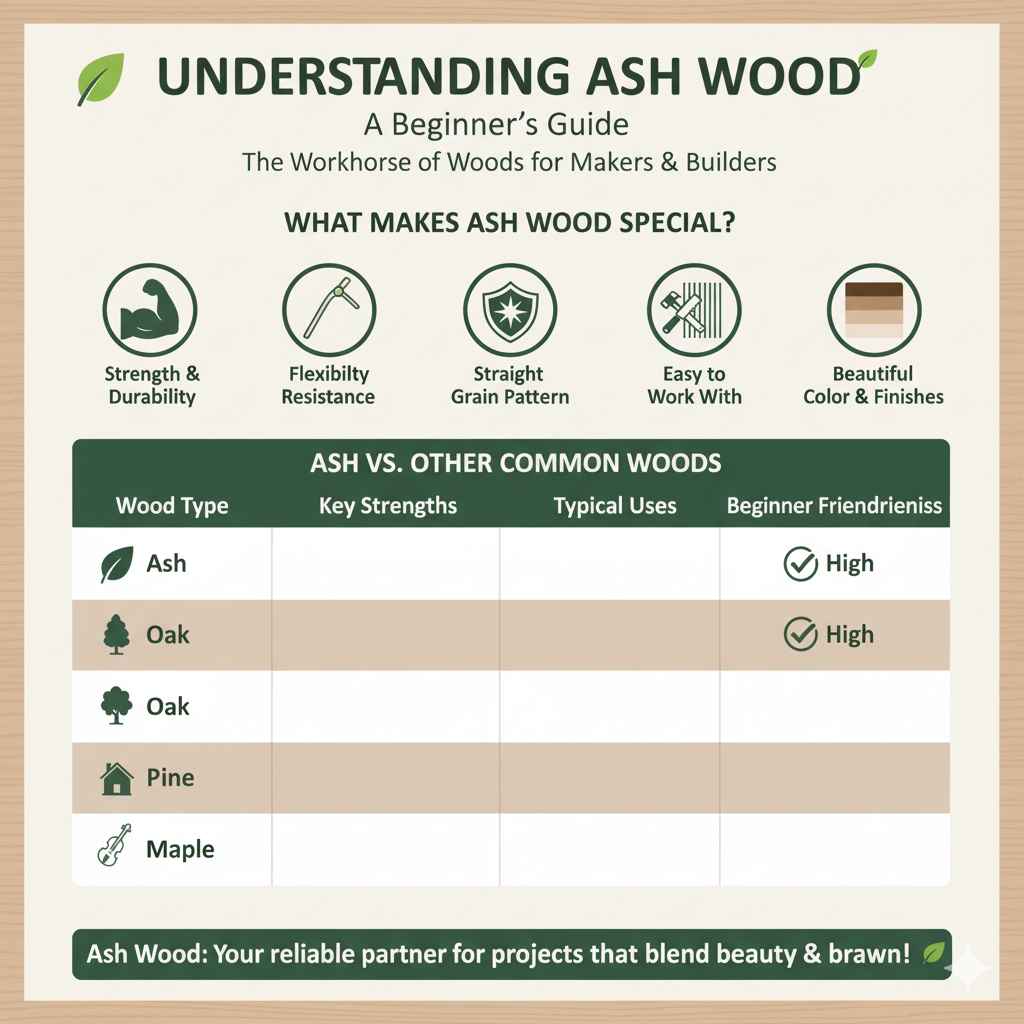
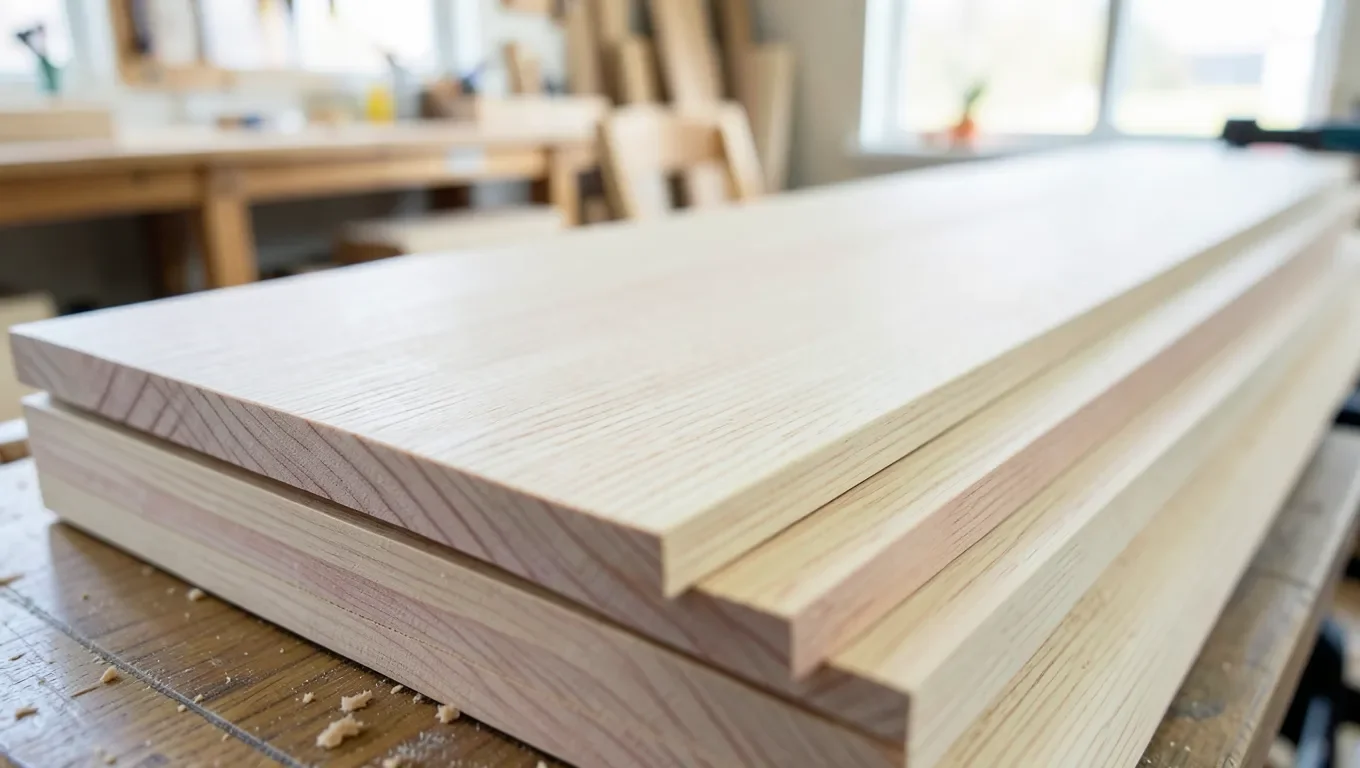
Ash wood is renowned for its exceptional balance of high strength, shock resistance, and flexibility, making it a premier material for tool handles, furniture, and sports equipment like baseball bats. Scientifically belonging to the genus Fraxinus within the olive family (Oleaceae), ash lumber exhibits a pale, creamy white to light brown color profile with a straight, pronounced grain pattern and a coarse yet even texture.
Botanical Classification and Core Varieties
Before examining the physical and mechanical properties of ash wood, it is essential to understand the biological source of the lumber. North America and Europe host several commercially significant species of ash trees, each contributing variations to the harvested timber.
North American Commercial Species
The most prominent North American species is White Ash (Fraxinus americana), which is prized for its superior strength and resilience. Green Ash (Fraxinus pennsylvanica) is another vital commercial species, slightly heavier and denser than White Ash, though often grouped together commercially as "commercial white ash." Black Ash (Fraxinus nigra) grows primarily in wetland environments, yielding softer, lighter wood traditionally utilized for basketry and interior millwork rather than high-load applications.
European Ash (Fraxinus excelsior)
In Europe and parts of Western Asia, European Ash dominates forestry and woodworking markets. While closely related to its American counterparts, European Ash often features a wider heartwood color variation, sometimes displaying a dark brown or olive-streaked heartwood known commonly as "olive ash." Despite these regional differences, the fundamental working characteristics and mechanical profile remain remarkably consistent across the genus.
Physical and Mechanical Properties
The utility of ash wood in demanding applications stems directly from its structural properties. Engineers and woodworkers evaluate lumber using standardized metrics such as the Janka hardness test, modulus of rupture, and crushing strength.
Hardness and Density
White Ash has a Janka hardness rating of approximately 1,320 lbf (pound-force), placing it slightly harder than Red Oak (1,290 lbf) and significantly harder than Black Cherry (950 lbf) or Walnut (1,010 lbf). This density—averaging around 42 pounds per cubic foot (670 kg/m³) at 12% moisture content—gives the wood structural rigidity without making it excessively heavy.
Bending Strength and Shock Resistance
The defining characteristic of ash wood is its remarkable elasticity and resistance to shock. The long wood fibers can absorb heavy impacts and bend without snapping. This trait is quantified by high ratings in both static bending (modulus of rupture) and crushing strength. When subjected to sudden force, ash flexes and distributes the energy along its grain rather than fracturing catastrophically.
| Property | Typical Value (White Ash) | Comparison to Red Oak |
|---|---|---|
| Janka Hardness | 1,320 lbf (5,870 N) | Slightly higher |
| Average Dry Weight | 42 lbs/ft³ (670 kg/m³) | Comparable |
| Modulus of Rupture (Bending) | 15,000 psi (103.4 MPa) | Comparable to higher |
| Elasticity (Stiffness) | 1.74 million psi (12.0 GPa) | Higher stiffness |
| Workability | Good with hand/machine tools | Easier to steam bend |
Aesthetics, Grain, and Texture
While engineered primarily for performance, ash wood possesses a distinct and appealing appearance that makes it popular for exposed architectural millwork and fine furniture.
Color and Grain Pattern
The sapwood of ash is wide and ranges from nearly white to light cream or pale yellowish-brown. The heartwood is slightly darker, featuring light brown to grayish-brown tones. The grain is almost always straight and open, resembling oak or chestnut. Because of this structural similarity, ash is frequently stained to mimic oak in furniture production.
Texture and Finishing
Ash has a coarse, open-grained texture with distinct growth rings. When finished with a clear coat, the ring-porous structure creates a striking, tactile surface. The wood takes stains, dyes, and clear finishes exceptionally well. Because it lacks natural resistance to rot, exterior applications require appropriate exterior finishes or pressure treatments, though it is primarily specified for interior use.
Woodworking and Machining Characteristics
For artisans and industrial manufacturers, the behavior of lumber during processing dictates its commercial viability. Ash is widely regarded as one of the most cooperative domestic hardwoods.
Machining Performance
Ash cuts, planes, and shapes cleanly with both hand and power tools. Because of its hardness, sharp carbide tooling is recommended to prevent tear-out, particularly when planing against the grain. It turns exceptionally well on a lathe, holding fine details without crumbling.
Fastening and Gluing
Pre-boring is generally recommended when nailing or screwing near the edges of ash boards to prevent splitting, owing to its high density. The wood holds mechanical fasteners securely. Furthermore, ash glues reliably with standard woodworking adhesives (such as PVA, epoxy, and polyurethane), making it a stable choice for laminated components.
Steam Bending
One of the historical and modern triumphs of ash wood is its response to steam bending. When subjected to steam, lignin softens, allowing woodworkers to bend solid ash into tight, permanent curves without structural failure. This technique is utilized in Windsor chair making, boatbuilding, and athletic equipment manufacturing.
Common Applications Across Industries
The unique amalgamation of weight, strength, and flexibility dictates where ash wood is deployed.
- Athletic Equipment: Traditionally used for baseball bats, ice hockey sticks, and oars due to its shock-absorbing capacity.
- Tool Handles: Shovel handles, hammer shafts, pickaxes, and sledgehammers rely on ash to withstand repetitive impact stress without splintering dangerously.
- Furniture and Cabinetry: Dining tables, chairs, stools, and contemporary cabinetry benefit from ash's clean grain and durability.
- Flooring: Used in residential and light commercial flooring where moderate indentation resistance and bright aesthetics are desired.
- Interior Architectural Millwork: Moldings, baseboards, stair treads, and handrails.
Advantages and Limitations
Understanding the constraints of ash wood ensures proper material selection and prevents premature structural failure.
Advantages
- Exceptional strength-to-weight ratio.
- Superior impact resistance and flexibility under load.
- Excellent steam-bending capabilities.
- Readily accepts stains and finishes to achieve various design aesthetics.
- Plentiful growth rates in managed North American and European forests.
Limitations
- Low Natural Durability: Ash has no natural resistance to decay, fungi, or wood-boring insects. It is rated as non-durable to perishable regarding ground contact.
- Vulnerability to Invasive Pests: Populations of ash trees have faced severe ecological pressure from the Emerald Ash Borer (Agrilus planipennis), an invasive beetle that has drastically altered North American timber supplies and increased market price volatility.
- Tendency to Split: Requires pilot holes for nailing or screwing to avoid cracking dense boards.
Frequently Asked Questions
Is ash wood stronger than oak?
Ash and red oak exhibit very similar strength profiles. While ash often matches or slightly exceeds red oak in shock resistance and bending elasticity, red oak holds a slight edge in absolute density and hardness depending on the specific species comparison. Both are classified as heavy, hard domestic hardwoods.
Can ash wood be used outdoors?
Ash should generally be avoided for exterior ground contact or unsealed outdoor exposure. Because it lacks natural rot-resistant extractives (unlike teak, cedar, or white oak), it decays rapidly when exposed to moisture and weathering. If used outdoors, it requires rigorous, ongoing maintenance with high-grade exterior sealants.
Why is ash wood commonly used for baseball bats?
Ash is traditionally favored for baseball bats because of its unique grain structure. When an ash bat impacts a baseball, the wood flexes rather than shatters, and it features a forgiving "sweet spot." Additionally, woodworkers can split ash along its natural grain lines to produce straight-grained, high-performance billets.
How does the Emerald Ash Borer affect ash lumber availability?
The Emerald Ash Borer is an invasive beetle native to Asia that has destroyed tens of millions of ash trees across North America. While this has caused widespread ecological mortality, standing dead or harvested salvage timber has temporarily flooded certain markets with affordable ash lumber. However, long-term commercial supply chains face significant restructuring as foresters manage the pest.
Does ash wood darken over time?
Unlike cherry or walnut, which experience dramatic color shifts upon UV exposure, ash wood is relatively color-stable. Finished ash retains its pale, creamy blonde appearance for years, though prolonged direct sunlight can cause a very gradual amber warming of clear-coated surfaces.
Practical Recommendation
When selecting lumber for a project requiring high impact resistance, structural flexibility, or clean, light-toned aesthetics, ash wood remains an exceptional choice. Ensure that your supplier provides kiln-dried stock properly graded for furniture or structural use, and always utilize sharp tooling and pre-drilled pilot holes to achieve professional results. For any project involving outdoor exposure, substitute ash with a naturally durable species or verify that heavy-duty marine-grade finishes are systematically applied.