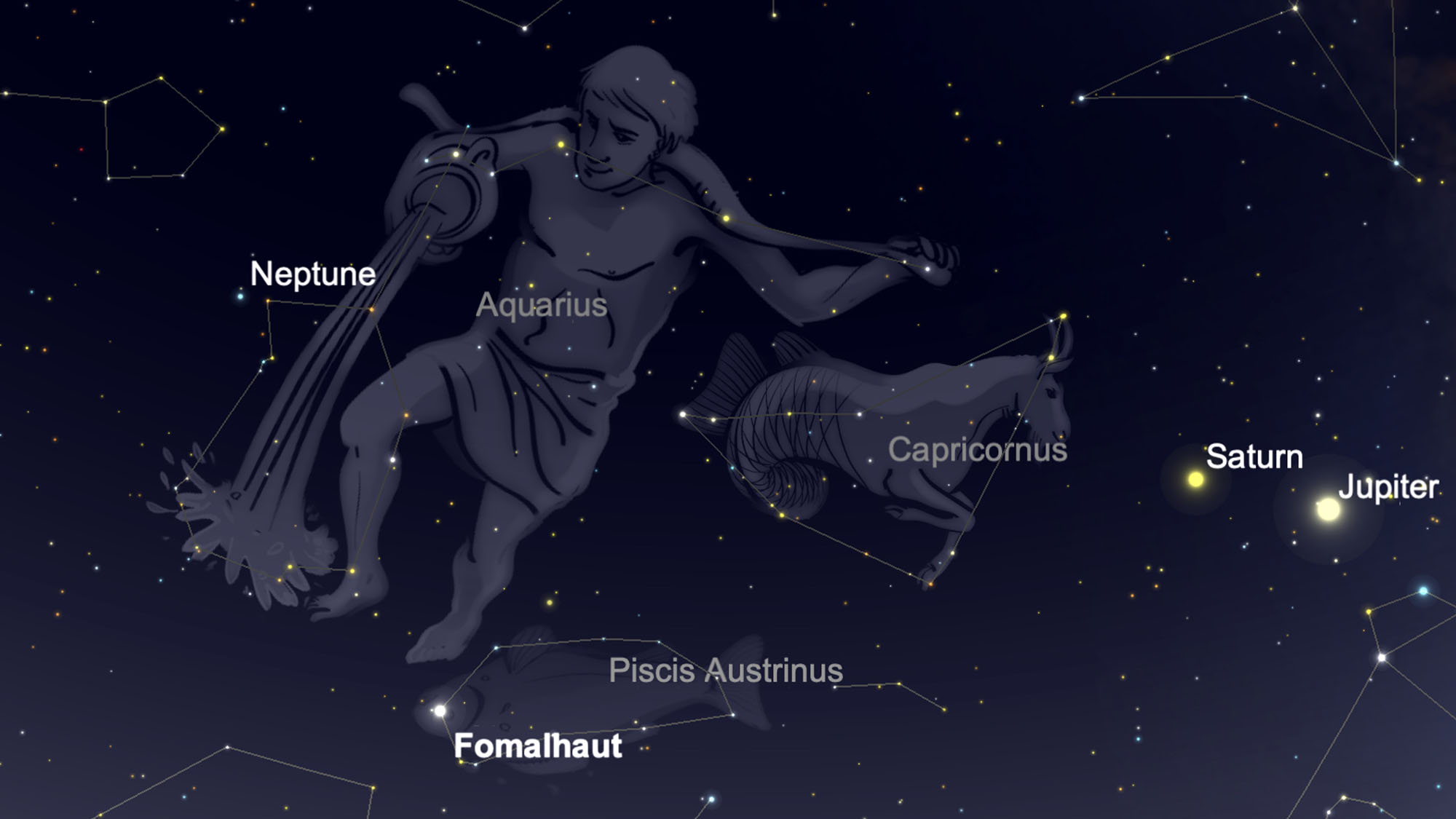
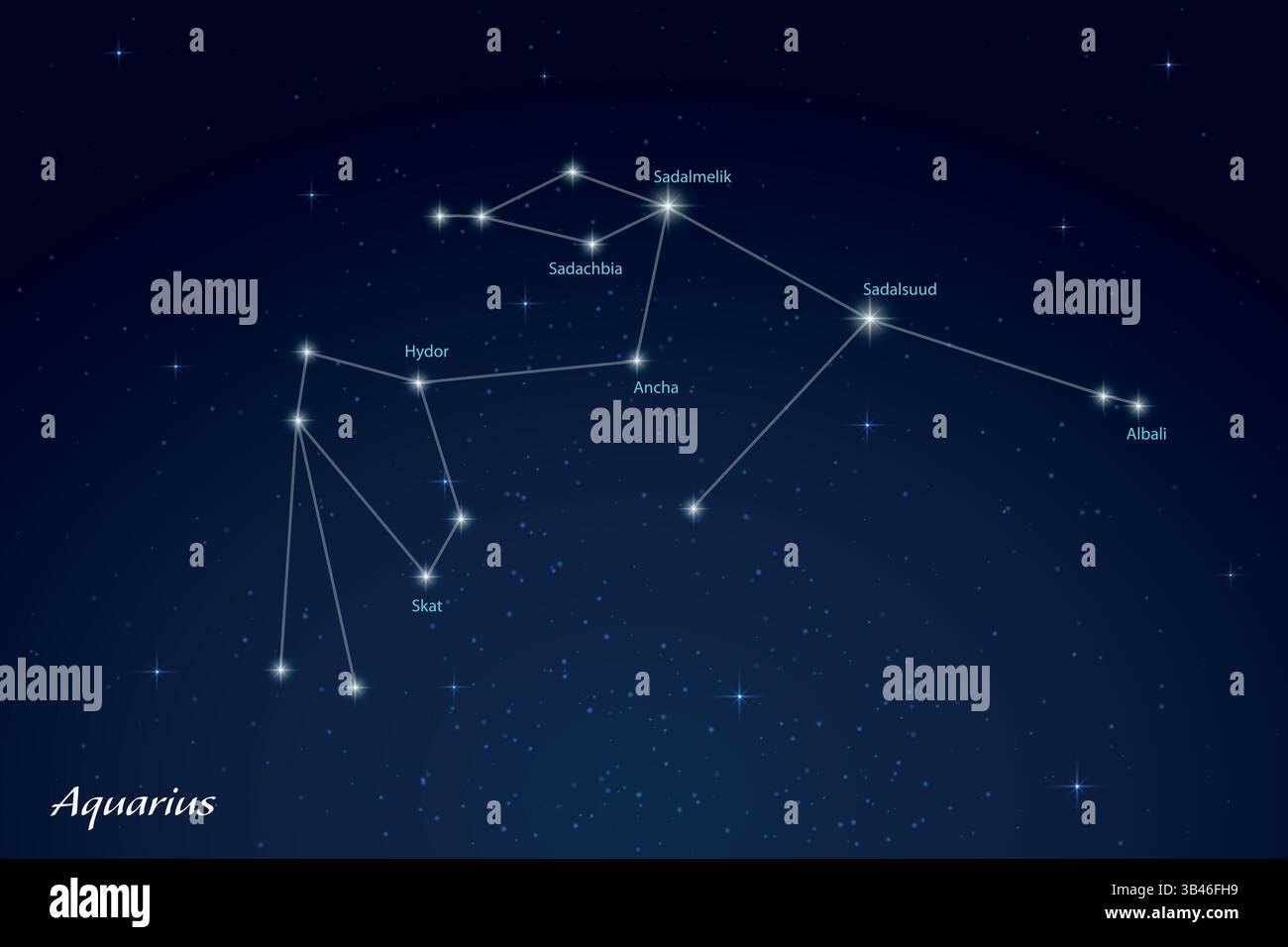
The Aquarius constellation, known as the "Water Bearer," is a large, sprawling zodiacal constellation best observed during the late summer and early autumn months in the Northern Hemisphere. Spanning approximately 980 square degrees, it is identifiable by its characteristic "Y" shaped asterism—the Water Jar—which serves as the primary visual anchor for amateur astronomers seeking to map this faint section of the celestial sphere.
Understanding the Celestial Position of Aquarius
Aquarius is situated in the southern celestial hemisphere, nestled between the constellations of Capricornus to the west and Pisces to the east. As an equatorial constellation, it is visible from most locations on Earth, although its appearance changes significantly based on the observer's latitude. In the Northern Hemisphere, Aquarius reaches its highest point in the sky around midnight in late August and early September. By late October and November, it is best viewed during the early evening hours.
Because Aquarius consists primarily of relatively dim stars—most ranging between the third and fourth magnitude—it does not possess the immediate visual prominence of constellations like Orion or Ursa Major. Finding it requires a dark, clear sky away from light pollution. For observers in the Northern Hemisphere, it appears relatively low on the southern horizon. In the Southern Hemisphere, it appears higher in the sky, often directly overhead near the zenith, making it a much more conspicuous feature of the night sky for those in mid-to-high southern latitudes.
Key Components and Visual Identification
The "Water Bearer" is traditionally depicted as a figure pouring a stream of water from a jar into the mouth of the Southern Fish, represented by the bright star Fomalhaut in the constellation Piscis Austrinus. While the figure of the human bearer is abstract and difficult to resolve, the "Water Jar" asterism is a recognizable pattern of four stars (Gamma, Pi, Eta, and Zeta Aquarii) that form a distinct small "Y" shape.
Primary Stars and Their Characteristics
Understanding the brightness and distance of these stars helps in navigating the constellation. The following table highlights the notable stars within Aquarius that serve as beacons for identification:
| Star Name | Bayer Designation | Magnitude (Apparent) | Distance (Light Years) |
|---|---|---|---|
| Sadalsuud | Beta Aquarii | 2.87 | ~540 |
| Sadalmelik | Alpha Aquarii | 2.95 | ~520 |
| Skat | Delta Aquarii | 3.27 | ~160 |
| Sadachbia | Gamma Aquarii | 3.86 | ~160 |
| Ancha | Theta Aquarii | 4.17 | ~190 |
Note: Magnitudes are approximate and based on standard astronomical observations. Lower numbers indicate brighter objects.
Sadalmelik and Sadalsuud are the two most prominent stars in the constellation, both classified as yellow supergiants. Despite their perceived brightness, they are incredibly distant, emphasizing the vast scale of this celestial region.
Prerequisites for Successful Observation
To observe the Aquarius constellation effectively in 2026, you must account for atmospheric conditions, light pollution, and the lunar cycle.
- Light Pollution Mitigation: Aquarius lacks high-magnitude stars, meaning city lights will easily wash it out. You must travel to a location with a Bortle scale rating of 4 or lower if possible.
- Timing: Use a star chart or a real-time astronomical application to track the constellation’s transit. It will rise in the east, reach its meridian in the south, and set in the west.
- Equipment: While the constellation is visible to the naked eye under dark skies, a pair of 10x50 binoculars can help resolve the "Water Jar" asterism more clearly, especially if there is slight haze.
- Lunar Awareness: Avoid observing during a full moon. The glare from the moon significantly degrades the visibility of fainter constellations like Aquarius. Aim for the "New Moon" phase or the nights surrounding it.
Significant Deep-Sky Objects Within Aquarius
While the constellation itself is defined by its stars, its true value for telescope users lies in its deep-sky objects. Because Aquarius sits away from the dense, light-obscuring dust of the Milky Way’s galactic plane, it offers an "extra-galactic window" that reveals distant objects.
The Helix Nebula (NGC 7293)
Often called the "Eye of God," the Helix Nebula is a planetary nebula located in the constellation of Aquarius. It is one of the closest and brightest planetary nebulae to Earth. It requires a telescope to be seen clearly; in a modest amateur telescope, it appears as a faint, ghostly gray ring. It is the result of a dying star shedding its outer layers.
Messier 2 (M2)
M2 is one of the largest and most spectacular globular clusters in the sky. It contains over 150,000 stars and is located about 37,000 light-years from Earth. It appears as a hazy, circular glow in binoculars, but a 6-inch or larger telescope will begin to resolve the individual stars at the cluster’s edges.
Messier 72 (M72) and Messier 73 (M73)
These are smaller, fainter deep-sky objects. M72 is a globular cluster, while M73 is an open cluster (or an asterism of four stars). They are excellent targets for intermediate amateur astronomers who wish to test their ability to identify low-contrast objects in the sky.
Navigating the Seasonal Shift
As the Earth orbits the Sun throughout 2026, our view of the night sky shifts. Because Aquarius is a zodiac constellation, it is located along the ecliptic—the apparent path of the Sun across the sky. Consequently, the Sun moves through the region of the sky occupied by Aquarius in February and March.
During these months, Aquarius is behind the Sun from our perspective and is effectively "lost" in the glare of daylight. Therefore, no matter your location on Earth, you cannot view the constellation during the early months of the year. This annual cycle is a crucial factor for planning observational sessions. When scheduling your stargazing trips, ensure you are aiming for the window between July and November for the best possible visibility.
Common Mistakes for Beginners
New observers often struggle with the scale of the constellation. Because it covers a massive area of the sky, people frequently look for a tight, compact shape rather than a wide-reaching grouping of faint stars.
- Looking for "The Water": Beginners often look for a literal stream of stars. While the stars represent water, they are scattered and faint. Focus instead on finding the "Y" shape of the Water Jar first.
- Wrong Season: Attempting to view the constellation in the spring will lead to frustration, as it is only visible during the daylight hours for much of the Northern Hemisphere.
- Over-reliance on Go-To Mounts: Relying entirely on digital telescope controllers can inhibit your ability to learn the sky. Practicing "star hopping"—using a known star like Fomalhaut to navigate to the Water Jar—is a fundamental skill that will improve your astronomical proficiency.
Frequently Asked Questions
Is Aquarius the largest constellation in the sky?
No, Aquarius is the 10th largest constellation by area. While it is expansive, it is significantly smaller than the largest, Hydra, which spans over 1,300 square degrees.
Why is Aquarius considered part of the Zodiac?
It is part of the zodiac because the Sun passes through it annually as seen from Earth. In astrology, the sun enters the sign of Aquarius in late January, though astronomically, the Sun is only in the actual constellation of Aquarius from mid-February to mid-March.
Can I see the planets in Aquarius?
Because Aquarius lies on the ecliptic, the path of the planets, it is a common host for planetary alignments. During 2026, check an almanac to see if Saturn, Jupiter, or Mars are transiting through the region, as this can dramatically change the look of the constellation.
How do I find the Aquarius constellation if I live in a city?
It is extremely difficult to see Aquarius from a light-polluted city. The stars are generally too faint to overcome urban skyglow. You will need to travel to a rural location or a recognized "Dark Sky Park" to appreciate the constellation’s true form.
Are there any meteor showers associated with Aquarius?
Yes, the Eta Aquariids occur annually in early May, peaking around May 5th. They are associated with the debris left behind by Halley’s Comet. While the radiant point is within Aquarius, the constellation itself may be difficult to see at that time of year due to its proximity to the Sun.
Next Steps for Astronomers
If you have successfully identified the Water Jar and wish to deepen your engagement with the Aquarius constellation, start by documenting your observations. Keep a journal of the deep-sky objects you locate, noting the atmospheric conditions, the type of optics used, and the level of detail visible.
For those looking to move beyond simple identification, consider investing in a high-quality star atlas or an astronomical planning guide for 2026. These resources provide precise coordinates and current data that will allow you to track transient phenomena, such as planetary conjunctions or asteroid transits, that frequently occur within the borders of this historic constellation. As you become more familiar with the faint star patterns of Aquarius, you will develop the specialized visual acuity required to appreciate more complex and subtle regions of the night sky.