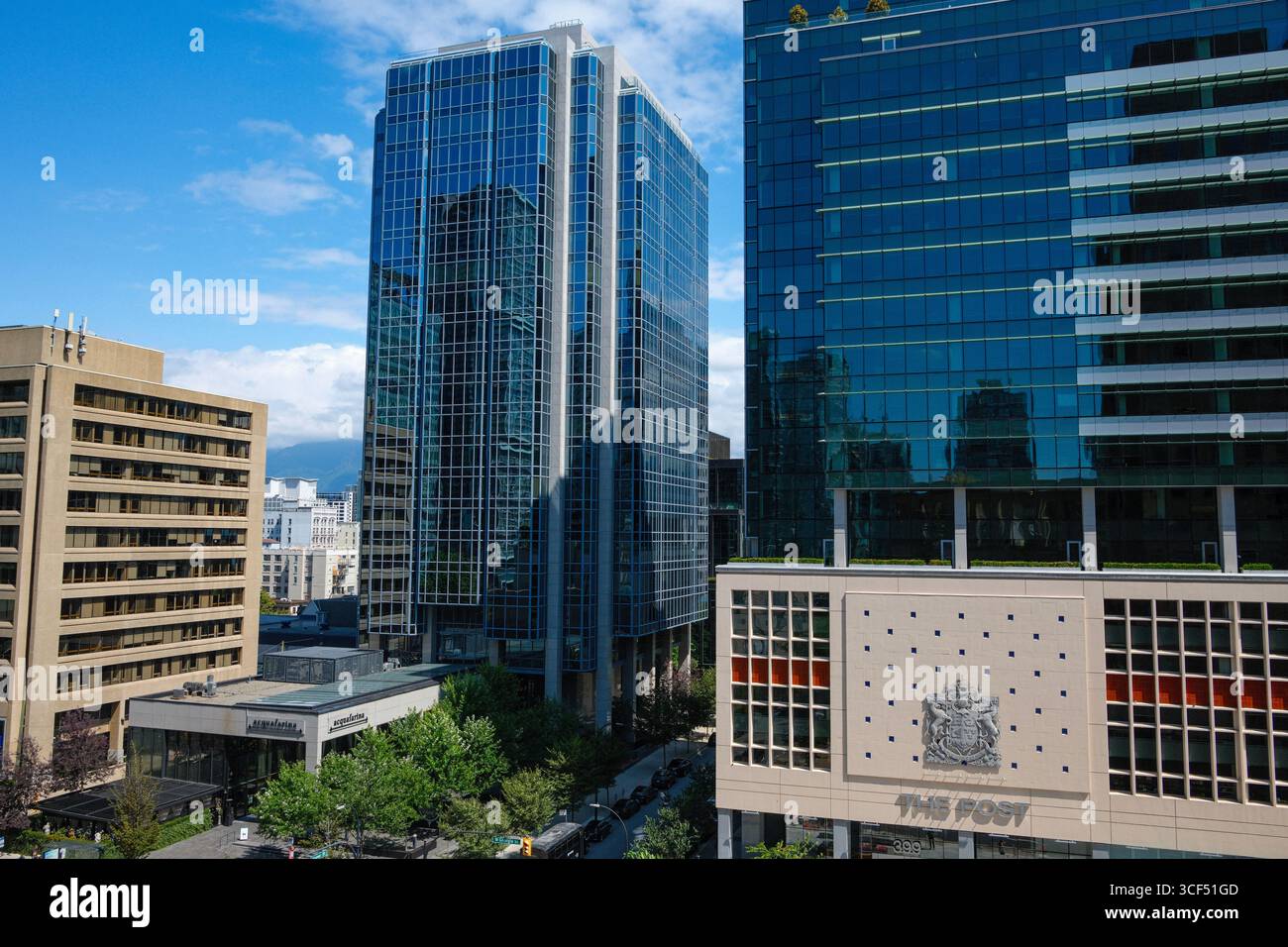
Amazon operates a sophisticated network of corporate offices across the United States, anchored by two primary headquarters: Seattle, Washington (HQ1), and Arlington, Virginia (HQ2). This corporate footprint is further extended by over 25 regional "Tech Hubs" located in major metropolitan areas, housing specialized teams in cloud computing, artificial intelligence, and global operations.
As of 2026, Amazon’s physical presence in the United States has evolved from a single-city focus into a distributed "hub-and-spoke" model. While the company is famous for its massive fulfillment center network, its corporate offices—where software engineering, marketing, legal, and executive functions reside—are distinct environments designed for high-density collaboration. Navigating this network requires understanding the difference between a global headquarters, a specialized tech hub, and a satellite regional office.
The Dual Headquarters Model: HQ1 and HQ2
For decades, Amazon was synonymous with Seattle. However, the decision to establish a second headquarters (HQ2) fundamentally changed the company’s geographic strategy. This "dual-HQ" approach allows Amazon to tap into two distinct talent pools on opposite coasts while providing redundancy for its executive functions.
Seattle, Washington (HQ1)
The Seattle campus remains the spiritual and administrative heart of the company. Unlike many tech giants that build isolated suburban campuses, Amazon’s Seattle presence is integrated directly into the urban fabric of the South Lake Union and Denny Triangle neighborhoods.
- Scale and Scope: The campus comprises more than 40 buildings, totaling millions of square feet. Key structures include the "Day 1" tower and the "Spheres."
- The Spheres: Perhaps the most iconic office structure in the world, the Spheres are three glass-domed conservatories that house over 40,000 plants from 30 countries. They serve as a unique workspace designed to foster creativity through biophilic design—the concept that connecting with nature improves cognitive function.
- Economic Impact: Amazon is the largest private employer in Seattle, and its presence has driven significant infrastructure development, including the Seattle Streetcar and numerous public parks.
Arlington, Virginia (HQ2)
Located in the "National Landing" area (encompassing parts of Crystal City and Pentagon City), HQ2 was established to give Amazon a massive foothold near the nation’s capital. By 2026, this site has become a mature ecosystem of its own.
- Metropolitan Park: The first phase of HQ2, known as Met Park, consists of two 22-story towers. These buildings are notable for their sustainable design, utilizing carbon-injected concrete and running on 100% renewable energy.
- PenPlace and The Helix: The second phase of development features "The Helix," an architectural landmark characterized by a spiraling outdoor hiking path with native plants. This phase focuses on creating a "forest-like" environment for employees, mirroring the biophilic success of the Seattle Spheres.
- Strategic Advantage: HQ2 positions Amazon’s cloud division (AWS) and its policy teams near federal regulators and the massive technical talent pool of the Northern Virginia "Data Center Alley."
The American Tech Hub Strategy
Beyond the two headquarters, Amazon utilizes "Tech Hubs." These are not merely satellite branches; they are significant corporate centers where entire product lines or technical divisions are headquartered. Amazon typically selects these locations based on proximity to top-tier research universities and existing industry clusters.
The Northeast Corridor: NYC and Boston
The Northeast serves as a critical pillar for Amazon’s advertising and robotics divisions.
- New York City, NY: Amazon has a massive presence in Manhattan, particularly in the Hudson Yards district and the renovated former Lord & Taylor building on Fifth Avenue. These offices primarily house Amazon Advertising, Amazon Fashion, and consumer retail teams.
- Boston/Cambridge, MA: This hub is the epicenter of Amazon’s robotics and AI research. With proximity to MIT and Harvard, the Boston offices focus on the "Amazon Robotics" division, which designs the automated systems used in fulfillment centers globally.
The Central and Southern Hubs: Austin, Nashville, and Chicago
Amazon has aggressively expanded into the "Silicon Hills" of Texas and the growing tech corridors of the South.
- Austin, TX: Located primarily in the Domain area, the Austin hub is a major center for Amazon’s retail business and software development. The city’s culture and tech-friendly environment make it a primary destination for West Coast transfers.
- Nashville, TN: Nashville serves as the "Operations Center of Excellence." This office is dedicated to the logistics and supply chain side of the business, focusing on how packages move from sellers to customers worldwide.
- Chicago, IL: The Chicago hub focuses on transportation and advertising tech. Its location in the Midwest provides a strategic link between the coastal headquarters.
The West Coast: Silicon Valley and Southern California
While Seattle is the primary West Coast anchor, Amazon maintains a massive presence in California to compete directly for talent with Google, Meta, and Apple.
- Bay Area (Palo Alto, Sunnyvale, San Francisco): These offices are often focused on "high-moonshot" projects. Lab126, the secretive hardware division responsible for Kindle and Echo devices, is headquartered in Sunnyvale.
- Los Angeles/Santa Monica, CA: This hub is the home of Amazon Studios and Prime Video. By 2026, the historic Culver Studios has become the primary base for Amazon’s entertainment ambitions, integrating production and corporate operations.
- San Diego, CA: A growing hub focused on game development and software engineering, particularly for the Amazon Games division.
Comparison of Major Amazon Corporate Hubs
The following table outlines the primary functions and distinguishing features of Amazon’s largest US office clusters as they stand in 2026.
| Location | Primary Focus Area | Key Landmark/Building | Approximate Employee Capacity |
|---|---|---|---|
| Seattle, WA | Global Corporate HQ, AWS, Retail | The Spheres / Day 1 | 55,000+ |
| Arlington, VA | HQ2, Public Policy, AWS | The Helix / Met Park | 25,000+ |
| New York, NY | Advertising, Consumer Retail | 424 Fifth Avenue | 10,000+ |
| Austin, TX | Software Engineering, Retail | The Domain Towers | 5,000+ |
| Boston, MA | Robotics, Alexa, AI Research | Seaport Square | 5,000+ |
| Sunnyvale, CA | Hardware (Lab126), Devices | Moffett Towers | 4,000+ |
| Nashville, TN | Logistics, Supply Chain Ops | Nashville Yards | 5,000+ |
| Culver City, CA | Entertainment, Prime Video | The Culver Studios | 3,000+ |
Specialized Offices and Subsidiary Locations
Not every Amazon office is branded as a "Tech Hub." Several locations exist to support specific subsidiaries or highly specialized technical projects.
AWS (Amazon Web Services) Herndon
While AWS is managed out of the major HQs, a significant concentration of AWS technical infrastructure and engineering staff is located in Herndon, Virginia. This location is part of the larger Northern Virginia tech corridor, which handles a vast majority of global internet traffic.
Project Kuiper in Redmond, WA
Located just outside of Seattle, the Redmond facility is dedicated to Project Kuiper, Amazon’s satellite internet initiative. This office includes advanced manufacturing and testing facilities for satellite prototypes, making it more of a "high-tech lab" than a traditional corporate office.
Whole Foods Market (Austin, TX)
Since its acquisition, Whole Foods has maintained its own headquarters in downtown Austin. While integrated into the broader Amazon ecosystem, this office retains its own unique culture and focus on grocery retail and organic standards.
Zappos (Las Vegas, NV)
The Zappos headquarters in the former Las Vegas City Hall remains a distinct part of the Amazon office portfolio. It is well-known for its unique, "holocratic" management history and remains a significant employer in the Nevada tech scene.
The Office Environment and Design Philosophy
Amazon’s offices are designed with a specific philosophy known as "Day 1." This mindset suggests that the company is always at the beginning of its journey, requiring an environment that discourages complacency.
- Sustainable Infrastructure: Amazon has committed to the Climate Pledge, and its 2026 offices reflect this. Many buildings utilize "district energy" systems that recycle heat from data centers to warm office spaces.
- Collaborative Layouts: Eschewing traditional corner offices, Amazon uses an open-floor plan with numerous "huddle rooms" and "phone booths" for private calls. This is intended to facilitate the "two-pizza team" structure—a rule that no team should be so large that two pizzas couldn't feed them.
- Dog-Friendly Culture: Most Amazon offices in the US are famously dog-friendly. In Seattle alone, thousands of dogs are registered to "work" at the campus, and many buildings include rooftop dog parks.
Managing the Remote and Hybrid Shift
By 2026, Amazon’s office usage has stabilized after the shifts seen in the early 2020s. The company largely utilizes a hybrid model but maintains a strong "office-centric" culture for its corporate roles.
- Return to Office (RTO) Policies: Amazon generally requires corporate employees to be in the office at least three days a week. This policy is based on the leadership's belief that innovation happens more effectively when employees can collaborate in person.
- Flexible Workspaces: To accommodate hybrid schedules, many offices have transitioned to "hot-desking" or "hotelization," where employees book a desk for the days they are on-site rather than having a permanent assigned cubicle.
- Regional Mobility: One of the perks of Amazon's vast office network is the ability for employees to transfer between hubs. A developer in Seattle might move to the San Diego hub to be closer to the gaming division without needing to leave the company.
Frequently Asked Questions
Can the general public visit Amazon offices?
While the offices themselves are secure and require employee badges, certain areas are open to the public. In Seattle, the "Understory" is a public exhibit located at the base of the Spheres. Additionally, Amazon offers guided headquarters tours in Seattle and Arlington (HQ2) that can be booked via their official website.
Is an Amazon "Fulfillment Center" considered an office?
No. Fulfillment centers (FCs) are massive industrial warehouses where goods are stored and shipped. While there are management offices inside these buildings, they are classified as operations facilities, not corporate offices. This article focuses on the corporate hubs where software, marketing, and executive teams work.
Which US city has the most Amazon employees?
Seattle remains the city with the highest concentration of Amazon corporate employees. However, the National Landing area in Northern Virginia (HQ2) is the fastest-growing region in the company's portfolio and is projected to eventually match Seattle’s corporate scale.
How do I find the address of a specific Amazon office for a job interview?
If you are invited for an interview, Amazon’s recruiting portal will provide the specific building name and address. Because Amazon often occupies multiple buildings in a single city (like New York or Seattle), there is rarely one "main" address. Candidates should always check their specific invitation for the building code (e.g., SEA21 or IAD28).
Are there Amazon offices in every US state?
No. While Amazon has a physical presence (like a delivery station or warehouse) in almost every state, corporate offices are concentrated in about 20 states. The majority of corporate roles are located in Washington, Virginia, California, New York, Texas, Massachusetts, and Tennessee.
Next Steps for Visiting or Applying
If you are looking to visit an Amazon campus, check the Amazon HQ Tours page for current availability in Seattle and Arlington. For those looking to work at one of these locations, the Amazon.jobs portal allows you to filter openings by specific "Tech Hubs." When applying, consider which regional hub aligns with your specialty—such as Boston for Robotics, Culver City for Entertainment, or Northern Virginia for Cloud Infrastructure.