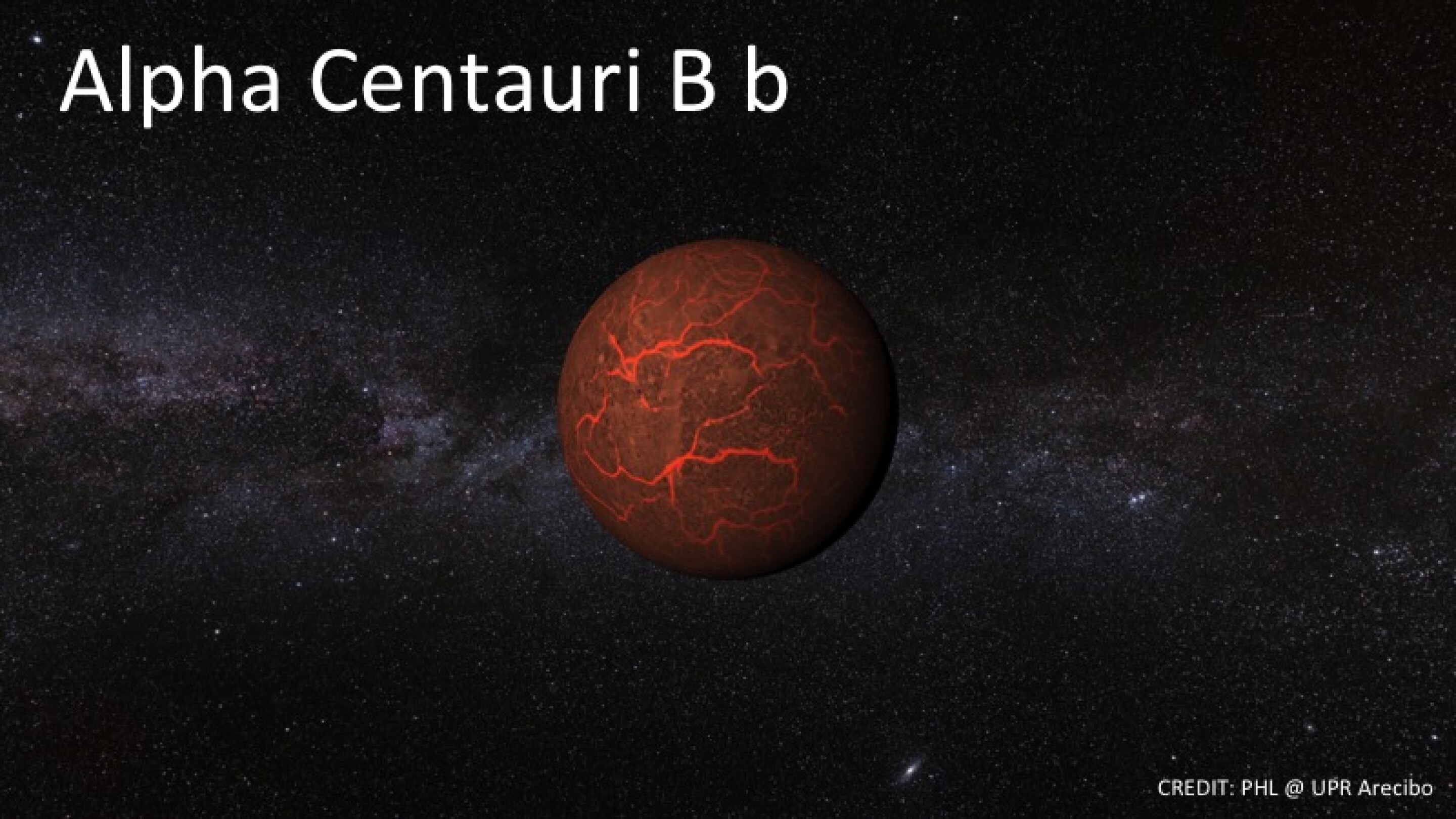
Alpha Centauri Bb was announced in 2012 as an Earth-mass exoplanet candidate orbiting Alpha Centauri B every 3.24 days. Subsequent astronomical analyses in 2015 demonstrated that the detection signal was a false positive created by stellar activity and observation timing artifacts. Alpha Centauri Bb does not exist, but its story reshaped how astronomers search for nearby exoplanets.
The Discovery Announcement and Proposed Characteristics of Alpha Centauri Bb
In October 2012, a team of researchers led by Xavier Dumusque published a landmark paper announcing the discovery of an exoplanet orbiting Alpha Centauri B, a K-type main-sequence star located just 4.37 light-years from Earth. The planet, named Alpha Centauri Bb, was detected using the High Accuracy Radial velocity Planet Searcher (HARPS) spectrograph mounted on the European Southern Observatory’s 3.6-meter telescope at La Silla Observatory in Chile.
At the time of the announcement, Alpha Centauri Bb was celebrated as the closest known exoplanet to Earth and the lightest exoplanet ever detected around a Sun-like star.
- Mass (minimum): ~1.13 Earth masses
- Orbital Period: 3.236 days
- Semi-major Axis: ~0.04 AU (approx. 6 million km)
- Host Star: Alpha Centauri B (K1V spectral class)
- System Distance: ~4.37 light-years (1.34 parsecs)
Because of its extreme proximity to its host star—just 4% of the distance between Earth and the Sun—the theoretical environment of Alpha Centauri Bb was inhospitable:
- Extreme Thermal Conditions: The calculated equilibrium temperature on the planet's surface exceeded 1,200 °C (1,500 Kelvin). This temperature is hot enough to melt silicates and metals, turning the surface into a global ocean of molten lava.
- Tidal Locking: Given the short orbital distance of 0.04 AU, gravitational interactions would have tidally locked the planet within a few million years. The sub-stellar point would face perpetual bombardment by stellar radiation, while the nightside would remain in permanent darkness.
- Stellar Irradiation: Alpha Centauri B exposed the candidate planet to high flux levels of X-rays and extreme ultraviolet (EUV) radiation, making the survival of a primary or secondary atmosphere virtually impossible over gigayear timescales.
Despite these harsh conditions, the reported presence of an Earth-mass body in our nearest star system generated immense interest across planetary science, astrobiology, and interstellar spaceflight concepts.
How Alpha Centauri Bb Was Debunked: Stellar Noise and Sampling Ghosts
The radial velocity (RV) method relies on detecting the subtle Doppler shift in a star's spectral lines caused by the gravitational tug of an orbiting planet. Because Alpha Centauri Bb was modeled to have a minimum mass close to Earth's, the velocity variation induced on Alpha Centauri B was extraordinarily small: a semi-amplitude of just 0.51 meters per second (roughly 1.8 km/h).
Detecting a signal below 1 meter per second pushes the limits of modern optical spectrographs. At this level of sensitivity, intrinsic stellar phenomena often mimic or mask planetary signals.
Total Radial Velocity Signal = Stellar Motion + Orbital Wobble + Magnetic Spot Noise + Observation Sampling
The Role of Stellar Activity
K-type stars like Alpha Centauri B possess active magnetic fields that produce starspots, faculae, and convective suppression across their surfaces. As the star rotates (with a period of approximately 36 to 40 days), these surface features distort the shape of spectral absorption lines. This distortion creates a false Doppler shift that can easily be mistaken for a small planet.
The 2015 Analysis by Rajpaul et al.
In late 2015, an independent research team led by Vinesh Rajpaul at the University of Oxford published a comprehensive re-analysis of the HARPS data in the Monthly Notices of the Royal Astronomical Society. The team demonstrated that the 3.24-day signal attributed to Alpha Centauri Bb was an artificial artifact—a "ghost signal"—generated by three intersecting factors:
- Stellar Magnetic Rotation: Periodic line-profile variations caused by rotating starspots on Alpha Centauri B.
- Long-term Magnetic Cycles: Multi-year variations in stellar activity that altered line bisectors.
- Observation Windowing: The discrete, non-continuous calendar spacing of ground-based observations (day/night cycles, seasonal telescope allocation, and weather interruptions).
When Rajpaul and his colleagues applied synthetic dataset simulations containing only stellar noise and historical sampling dates—without any planet present—the mathematical analysis generated the exact 3.24-day signal that had been identified as Alpha Centauri Bb.
Subsequent studies confirmed these findings. As a result, the astronomical community reached a clear consensus: Alpha Centauri Bb is a false positive and does not exist.
Theoretical Planetary Possibilities: What If an Inner Planet Existed?
Although Alpha Centauri Bb was proven to be a mathematical artifact, studying its hypothetical physical profile provides valuable insight into the geology and dynamics of close-in rocky exoplanets (often called "lava worlds" or "ultra-short-period planets").
- [ Alpha Centauri B ]
- 0.04 AU Zone
- Atmospheric Loss
- Thermal escape of volatile gases
- Water vapor dissociated by EUV
- Stripped down to bare iron-rock core
- Mantle & Surface
- Global magma ocean facing star
- Rock vapor atmosphere (silicate)
- Crustal convection on nightside
- Atmospheric Loss
- 0.04 AU Zone
Surface Geochemistry and Magma Oceans
At 0.04 AU, solar irradiance is more than 300 times greater than what Earth receives. Under such extreme flux, solid rock sublimates or melts. Geochemical models for rocky bodies at this distance predict:
- Silicate Vapor Atmospheres: Rather than nitrogen, carbon dioxide, or water vapor, any remaining atmosphere would consist primarily of vaporized rock species, including silicon monoxide (SiO), sodium (Na), iron (Fe), and magnesium (Mg).
- Magma Currents: Thermal differentials between the permanent day-side (exceeding 1,500 K) and the night-side (which might drop to several hundred Kelvin depending on atmospheric circulation) would drive wide-scale flows of molten basaltic material across the surface.
- Geophysical Stripping: Over billions of years, lighter elements like hydrogen, helium, and water vapor escape into space due to hydrodynamic escape, leaving behind a dense, stripped core composed mainly of iron and heavy silicates.
Exoplanet Potential in the Alpha Centauri System
The demise of Alpha Centauri Bb does not mean the Alpha Centauri system is devoid of planets. The system consists of three stars: Alpha Centauri A (Rigil Kentaurus, a G2V star similar to the Sun), Alpha Centauri B (a K1V orange dwarf), and Alpha Centauri C (Proxima Centauri, an M5.5V red dwarf).
- Alpha Centauri AB Binary Pair (Separation: 11.2 AU to 35.6 AU, Orbital Period: ~79.9 Years)
- Alpha Centauri A (G2V)
- Habitable Zone: ~1.2 - 2.1 AU
- Stable Orbits: Up to ~2.5 AU
- Candidate C7 (Under Study)
- Alpha Centauri B (K1V)
- Habitable Zone: ~0.7 - 1.2 AU
- Stable Orbits: Up to ~2.5 AU
- Bb Disproven; Mass limits < 1 M_Earth at < 0.1 AU
- Alpha Centauri A (G2V)
- Proxima Centauri (Alpha Centauri C) (Distanced ~13,000 AU from AB Pair)
- Proxima b (Confirmed, ~1.17 M_Earth, Habitable Zone)
- Proxima c (Candidate/Confirmed, Super-Earth, ~7 AU)
- Proxima d (Confirmed, ~0.26 M_Earth, Inner Orbit)
Dynamical Stability in the AB Binary System
Alpha Centauri A and B orbit each other in an eccentric 79.9-year ellipse, coming as close as 11.2 AU (roughly the distance from the Sun to Saturn) and stretching as far as 35.6 AU (beyond Neptune).
Orbital mechanics simulations demonstrate that stable planetary orbits can exist around either star up to a distance of approximately 2.0 to 2.5 AU from each individual star. Beyond this threshold, gravitational perturbations from the companion star destabilize planetary orbits over long timescales, ejecting planets from the system or driving them into their host stars.
The Habitable Zones of A and B
- Alpha Centauri A: The circumstellar habitable zone (where liquid water could exist on a planet's surface given appropriate atmospheric pressure) lies between 1.2 AU and 2.1 AU. This falls well within the ~2.5 AU dynamical stability limit.
- Alpha Centauri B: The habitable zone lies closer, between 0.7 AU and 1.2 AU, which is also stable against gravitational disruption from Alpha Centauri A.
Current radial velocity and direct imaging surveys have set strict upper bounds on planetary masses in these systems. While terrestrial planets (Earth-sized or smaller) can easily hide below the current noise floors of spectrographs, gas giants above Saturn's mass have been largely ruled out within the inner 2 AU of both A and B.
Confirmed Planets around Proxima Centauri
While Alpha Centauri A and B have no confirmed planets to date, Proxima Centauri (Alpha Centauri C) harbors a multi-planet system verified by instruments including HARPS and ESPRESSO:
- Proxima Centauri b: Discovered in 2016, this planet has a minimum mass of 1.17 Earth masses and orbits inside Proxima's habitable zone every 11.2 days.
- Proxima Centauri c: A candidate candidate/confirmed super-Earth or mini-Neptune orbiting at ~1.5 AU with a period of over 5 years.
- Proxima Centauri d: Discovered in 2022, a sub-Earth mass planet (~0.26 Earth masses) orbiting very close to the star every 5.1 days.
Technical Comparison of Alpha Centauri Exoplanet Candidates and Signals
The table below summarizes the physical, observational, and verification parameters of reported planets and signal candidates within the triple-star system.
| Target Star | Object / Signal | Status | Minimum Mass ($M_{\oplus}$) | Orbital Period (Days) | Semi-Major Axis (AU) | Detection Method |
|---|---|---|---|---|---|---|
| Alpha Centauri B | Bb | Disproven (False Positive) | ~1.13 | 3.24 | 0.04 | Radial Velocity |
| Alpha Centauri B | Bc | Unconfirmed Candidate | ~0.90 | ~20.4 | 0.14 | Transit Candidate |
| Alpha Centauri A | C7 / Candidate | Candidate | ~20–50 | ~300–500 | 1.1–2.0 | Direct Imaging (VLT NEAR) |
| Proxima Centauri | Proxima b | Confirmed | 1.17 | 11.18 | 0.0485 | Radial Velocity |
| Proxima Centauri | Proxima c | Candidate / Confirmed | ~7.0 | 1928 | 1.48 | Radial Velocity / Astrometry |
| Proxima Centauri | Proxima d | Confirmed | 0.26 | 5.12 | 0.029 | Radial Velocity |
Modern Astronomical Techniques for Filtering False Positives
The resolution of the Alpha Centauri Bb controversy served as a catalyst for major advancements in exoplanetary data analysis. Detecting sub-meter-per-second signals requires isolating true center-of-mass motion from complex stellar background noise.
- Raw Doppler Shift Data
- Linear Regression & Periodogram Analysis
- Gaussian Process (GP) Regression Modeling
- Stellar Rotation Period (Spot Modulations)
- Active Region Lifetime Decay
- Convective Blueshift Adjustments
- Cross-Correlation Masking (FFI & Bisector Span Analysis)
- Isolated Planetary Signal (Validation Gate)
1. Gaussian Process Regression
Astronomers now routinely use Gaussian Process (GP) regression to model stellar activity simultaneously with planetary orbits. By treating stellar noise as a stochastic process with characteristic timescales (such as starspot decay and stellar rotation period), GP models can fit and subtract activity-induced radial velocity variations without mistaking them for orbital signals.
2. Spectral Line Bisector and Activity Indicators
To verify a radial velocity detection, researchers analyze the shape of spectral lines.
- Bisector Inverse Slope (BIS): Measures asymmetry in spectral absorption lines. If the BIS varies in phase with the radial velocity period, the signal is driven by starspots or magnetic activity, not a planet.
- Chromospheric Indicators: Variations in lines like Calcium II H & K ($S_{\text{HK}}$ index) and Hydrogen-alpha ($\text{H}\alpha$) track solar activity cycles. Correlating these indices with velocity shifts helps identify stellar cycles that mimic long-period exoplanets.
3. High-Precision Spectrographs
Newer instruments built after the HARPS era—such as ESPRESSO on ESO's Very Large Telescope (VLT) and NEID on the WIYN 3.5m Telescope—achieve radial velocity precisions below 30 centimeters per second ($0.3 \text{ m/s}$). They also feature enhanced thermal stability and broader optical-to-near-infrared wavelength coverage to better differentiate between chromatic stellar activity and wavelength-independent gravitational Doppler shifts.
Future Exploration Missions and Next-Generation Telescopes
Finding Earth-mass planets in the habitable zones of Alpha Centauri A and B remains a high priority for observational astronomy. Because these stars are bright and close to Earth, they provide ideal targets for direct imaging and precision space astrometry.
Observation Strategy Thresholds:
| Instrument / Mission | Target Mechanism | Detection Limit |
|---|---|---|
| 1. Ground-based ELTs (39m ELT) | Extreme Adaptive Optics Direct Imaging (Infrared) | Habitable Zone Terrestrial Planets around Alpha Centauri A/B |
| 2. Space Astrometry (TOLIMAN) | Sub-microarcsecond Precision Stellar Motion Tracking | Earth-mass planets in habitable zones of A and B |
| 3. Direct Imaging (HWO) | Space Coronagraphy / Starshade (Reflected Light) | Atmospheric Spectroscopy for Biosignatures |
Ground-Based Extremely Large Telescopes (ELTs)
The European Southern Observatory’s Extremely Large Telescope (ELT), featuring a 39-meter primary mirror, is designed to separate the light of a planet from its host star in the Alpha Centauri system. Combined with advanced coronagraphs and extreme adaptive optics (such as the ANDES and PCS instruments), the ELT will be able to directly image rocky planets within the habitable zones of Alpha Centauri A and B.
Dedicated Space Concepts: The TOLIMAN Mission
The TOLIMAN space telescope (Telescope for Orbit Locus Interactive Measurements Astronomy) is a low-cost, purpose-built space mission dedicated specifically to monitoring Alpha Centauri A and B.
Instead of measuring Doppler shifts, TOLIMAN uses space-based astrometry. It measures the minute gravitational tugs a planet exerts on a star's position in the sky relative to neighboring reference stars. With a targeted precision in the sub-microarcsecond regime, TOLIMAN aims to detect or definitively rule out any Earth-mass planets in the habitable zones of Alpha Centauri A and B.
The Habitable Worlds Observatory (HWO)
NASA's planned Habitable Worlds Observatory (HWO)—a concept prioritized by the Astrophysics Decadal Survey—targets direct optical imaging of Earth-sized exoplanets around Sun-like stars. Equipped with a high-contrast coronagraph or working in tandem with a starshade, HWO could capture reflected light from planets orbiting Alpha Centauri A and B, allowing scientists to evaluate their atmospheres for water vapor, oxygen, ozone, and methane.
Interstellar Probes: Breakthrough Starshot
Alpha Centauri remains the primary destination for proposed interstellar exploration. The Breakthrough Starshot initiative aims to develop light-sail probes accelerated by high-powered ground-based laser arrays to 20% of the speed of light ($0.2c$).
Such probes could traverse the 4.37 light-years to the Alpha Centauri system in approximately 20 years, transmitting close-up imagery and magnetic field measurements back to Earth. Verifying which stars in the system host stable rocky planets is essential for selecting probe trajectories.
Practical Recommendations for Astronomy Researchers and Enthusiasts
To stay informed about candidate exoplanets and verification status in the Alpha Centauri system, consider these practical monitoring approaches:
- Cross-Reference Scientific Catalogs: Avoid relying solely on initial media announcements regarding exoplanet discoveries. Check confirmed entries via the NASA Exoplanet Archive or the Extrasolar Planets Encyclopaedia.
- Monitor Peer-Reviewed Data Analysis: Track radial velocity published datasets from high-resolution spectrographs (ESPRESSO, HARPS-N, MAROON-X) via repositories like ADS (NASA Astrophysics Data System) or arXiv (astro-ph.EP).
- Differentiate Signal Statuses: Ensure clarity between candidates (unconfirmed signals that require follow-up observation), confirmed planets (signals verified by multiple independent instruments or methods), and false positives (disproven signals like Alpha Centauri Bb).
Frequently Asked Questions
Did Alpha Centauri Bb ever exist?
No. Alpha Centauri Bb was an observational artifact. Re-analysis of the HARPS spectrograph data in 2015 demonstrated that the 3.24-day signal was caused by a combination of starspot activity on Alpha Centauri B and the discrete timing (window function) of the observations.
Are there any confirmed exoplanets around Alpha Centauri A or B?
As of current observations, there are no confirmed exoplanets orbiting either Alpha Centauri A or Alpha Centauri B. Strict observational limits have ruled out gas giants in inner orbits, though small Earth-sized planets could still exist below current detection thresholds.
What exoplanets ARE confirmed in the Alpha Centauri system?
Confirmed planets exist around Proxima Centauri (Alpha Centauri C), a red dwarf star bound to the Alpha Centauri AB pair. These include Proxima Centauri b (an Earth-mass planet in the habitable zone) and Proxima Centauri d (a lightweight planet orbiting close to the star).
Could a planet in Alpha Centauri B's habitable zone support life?
Theoretical models indicate that stable orbits exist within Alpha Centauri B's habitable zone (0.7 to 1.2 AU). A planet orbiting at this distance would receive appropriate stellar radiation for liquid surface water, provided it retained an atmosphere and magnetic field despite past activity from its host star and gravitational influences from Alpha Centauri A.
Why is detecting Earth-mass planets around Alpha Centauri A and B so difficult?
Alpha Centauri A and B are bright, active stars. Their magnetic fields generate starspots and convective variations that obscure the subtle Doppler shifts caused by Earth-mass planets (~0.1 m/s signal). Additionally, their brightness can saturate sensitive space detectors, requiring specialized optics and instruments.
How will astronomers finally confirm if planets exist around Alpha Centauri A and B?
Next-generation space astrometry missions (such as TOLIMAN), extreme adaptive optics on ground-based ELTs, and high-contrast imaging space concepts (like NASA's Habitable Worlds Observatory) are designed to provide the sub-microarcsecond precision and direct light suppression required to detect or image Earth-sized planets in the system.