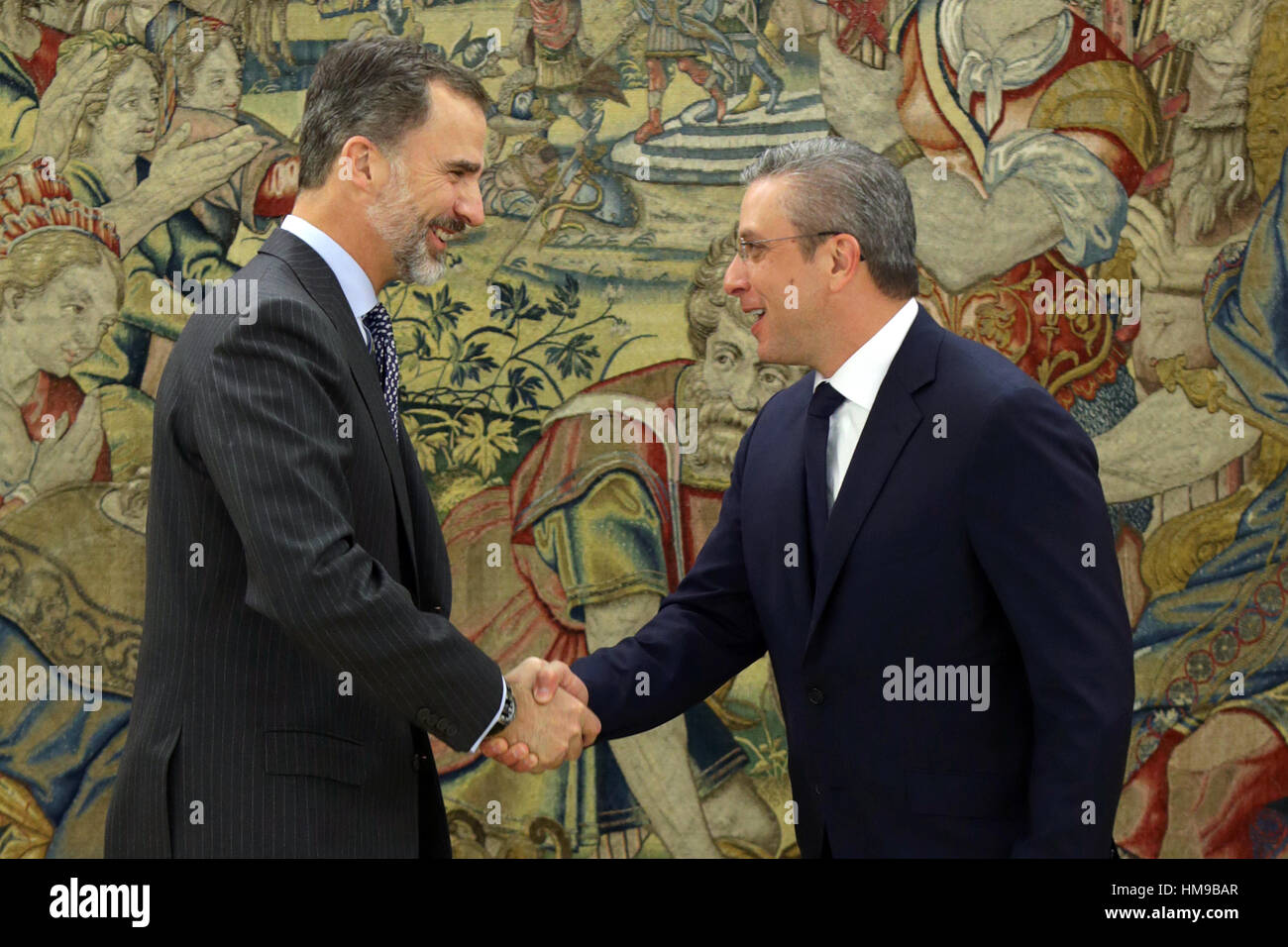
Alejandro García Padilla’s legal legacy is defined by his aggressive pursuit of fiscal sovereignty, his refusal to defend socially conservative laws, and his role in the constitutional redefinition of Puerto Rico’s status. As the 11th Governor and a seasoned attorney, his tenure forced a definitive legal confrontation between the Commonwealth's autonomy and federal authority.
Alejandro García Padilla (AGP) served as the Governor of Puerto Rico from 2013 to 2017, a period marked by the most significant fiscal crisis in the island’s history. However, to view his impact solely through a political or economic lens is to miss the profound legal shifts he initiated. From the drafting of the "Ley de Quiebra Criolla" to his landmark judicial appointments and his administration’s stance on civil rights, García Padilla’s actions fundamentally altered the legal landscape of the Commonwealth. As of 2026, his legal theories and the judicial outcomes of his term continue to serve as the bedrock for discussions regarding Puerto Rico’s unique position within the United States legal framework.
The Battle for Fiscal Sovereignty: The Recovery Act
The most significant component of García Padilla’s legal legacy is his attempt to carve out a local mechanism for debt restructuring. Faced with a mounting $72 billion debt and the exclusion of Puerto Rico from Chapter 9 of the U.S. Bankruptcy Code, his administration took a bold legal gamble.
The Puerto Rico Public Corporation Debt Enforcement and Recovery Act
In June 2014, García Padilla signed the "Ley de Quiebra Criolla" (Recovery Act). This legislation was a sophisticated legal attempt to provide a structured framework for the island's public corporations—such as the Electric Power Authority (PREPA)—to reorganize their debts. The legal theory was that, in the absence of federal bankruptcy protection, the Commonwealth possessed the inherent police power to create its own insolvency procedures to protect the public interest.
The drafting of this law was a direct challenge to the "preemption" doctrine. His legal team argued that because Congress had specifically excluded Puerto Rico from Chapter 9, there was a "legal vacuum" that the Commonwealth could fill. This was not merely a financial strategy; it was a constitutional assertion of the Estado Libre Asociado’s (ELA) power.
The Supreme Court Response
The legacy of this act is inextricably tied to the U.S. Supreme Court case Commonwealth of Puerto Rico v. Franklin California Tax-Free Trust. In 2016, the Court ruled 5-2 that the federal Bankruptcy Code did indeed preempt the local law, even though Puerto Rico was denied the benefits of the federal code.
While the case was a defeat for the García Padilla administration, its legal legacy was the clarification of Puerto Rico’s limited legislative power. This judicial failure served as the catalyst for the U.S. Congress to pass the Puerto Rico Oversight, Management, and Economic Stability Act (PROMESA). García Padilla’s legal "failure" actually forced a federal solution, forever changing the relationship between the island and the federal government.
Redefining the Constitutional Status: Sanchez Valle
During the García Padilla administration, another landmark legal battle reached the U.S. Supreme Court that would redefine the legal understanding of the Commonwealth's sovereignty: Puerto Rico v. Sanchez Valle.
The case centered on the "double jeopardy" clause—specifically, whether Puerto Rico and the United States were separate "sovereigns" for the purposes of criminal prosecution. The García Padilla administration argued vigorously that the 1952 Constitution of Puerto Rico had created a new, sovereign legal entity, and therefore, both the Commonwealth and the Federal Government could prosecute an individual for the same act without violating the Double Jeopardy Clause.
The 2016 ruling was a watershed moment. The Supreme Court held that the "ultimate source" of Puerto Rico’s prosecutorial power was the U.S. Congress, not the people of Puerto Rico. This ruling effectively dismantled the "compact theory" that many proponents of the ELA, including García Padilla’s party, had relied upon for decades.
Key legal implications of Sanchez Valle:
- Source of Power: Clarified that the Commonwealth's authority is delegated by Congress under the Territorial Clause.
- Legal Identity: Forced a legal reckoning within the Popular Democratic Party (PPD) regarding the nature of autonomy.
- Judicial Precedent: Established a rigid hierarchy that influenced subsequent litigation regarding the Fiscal Oversight Board.
Civil Rights and the Executive Power
Beyond fiscal and constitutional matters, García Padilla’s legal legacy includes a transformative approach to civil rights, often using executive orders to bypass a divided or conservative legislature.
Refusal to Defend the Marriage Ban
In a move that mirrored the Obama administration’s stance on the Defense of Marriage Act (DOMA), García Padilla’s Secretary of Justice, César Miranda, announced in 2015 that the Commonwealth would no longer defend the constitutionality of Puerto Rico’s law defining marriage as between a man and a woman.
This was a major shift in the island’s legal posture. By conceding that the ban was unconstitutional in the wake of the Obergefell v. Hodges decision, the administration accelerated the legal recognition of same-sex marriage in the First Circuit. This decision demonstrated García Padilla’s belief that the executive branch had a legal duty to uphold fundamental rights, even when doing so contradicted existing statutes.
Decriminalization and Medical Marijuana
García Padilla also utilized executive authority to address the legal status of marijuana. In 2015, he signed an executive order directing the Department of Justice to deprioritize the prosecution of individuals carrying small amounts of marijuana, effectively decriminalizing possession through prosecutorial discretion.
Furthermore, he signed an executive order to authorize and regulate medical marijuana. This move was legally complex, as it required navigating the Controlled Substances Act and creating a regulatory framework for a substance that remained illegal at the federal level. This "legacy by decree" set the stage for the subsequent legislative framework (Act 42-2017) that exists today.
Judicial Appointments and the Supreme Court of Puerto Rico
A governor’s most lasting legal impact often comes through their appointments to the bench. García Padilla’s influence on the Puerto Rico Supreme Court was profound, particularly through his appointment of Maite Oronoz Rodríguez.
Oronoz Rodríguez was appointed as an Associate Justice in 2014 and later as Chief Justice in 2016. Her appointment was historic on several fronts:
- First Openly LGBTQ+ Chief Justice: Her appointment broke significant social and legal barriers in Puerto Rico’s judicial history.
- Generational Shift: As the youngest person ever to lead the Court, her appointment signaled a long-term shift toward a more modern, progressive judicial philosophy.
- Judicial Diversity: García Padilla prioritized a bench that reflected a wider range of legal backgrounds and social perspectives.
His appointments to the lower courts—the Court of First Instance and the Court of Appeals—also focused on increasing the number of women and younger jurists in the judiciary, creating a "García Padilla cohort" of judges who continue to preside in 2026.
Comparison of Legal Milestones under García Padilla
| Legal Event | Subject Matter | Primary Outcome | Long-term Impact |
|---|---|---|---|
| Ley 67-2014 (Recovery Act) | Fiscal Insolvency | Struck down by U.S. Supreme Court | Directly led to the creation of PROMESA. |
| Sanchez Valle Case | Double Jeopardy / Status | US Supreme Court ruled PR lacks "ultimate sovereignty" | Redefined the legal definition of the ELA status. |
| Administrative Order on Marriage | LGBTQ+ Rights | Commonwealth stopped defending marriage ban | Expedited marriage equality in Puerto Rico. |
| Medical Marijuana Order | Public Health / Criminal Law | Authorized medical use via executive action | Created the blueprint for current cannabis laws. |
| Appointment of Maite Oronoz | Judiciary | First LGBTQ+ and youngest Chief Justice | Established a progressive era for the PR Supreme Court. |
Post-Gubernatorial Legal Influence and 2026 Context
After leaving the Fortaleza in 2017, García Padilla returned to private practice and academia. As of 2026, his role as a Professor of Law at the Interamerican University of Puerto Rico has allowed him to shape the next generation of legal minds. He frequently serves as a commentator on constitutional matters, often defending the legal framework of the ELA while advocating for its evolution within the boundaries of the Sanchez Valle and Franklin Trust rulings.
His legal legacy is currently viewed as a "bridge" between the traditional view of the Commonwealth and the modern reality of federal oversight. While many of his legal initiatives were rebuffed by the federal courts, they are credited with exposing the legal limitations of the current status, thereby forcing the "status question" out of political rhetoric and into the cold reality of judicial doctrine.
The "García Padilla Doctrine" of Necessity
In 2026, legal scholars often refer to the "doctrine of necessity" that underpinned much of his work. This is the idea that the Puerto Rico government has a legal obligation to act—even in legally gray areas—when the life, health, and welfare of its citizens are at risk due to external economic or political forces. This theory continues to be cited in litigation involving the Fiscal Oversight Board and the Commonwealth's essential services.
Common Questions Regarding the Legal Legacy
How did García Padilla’s legal actions lead to PROMESA?
García Padilla’s administration passed the "Ley de Quiebra Criolla" to manage debt. When the U.S. Supreme Court ruled that Puerto Rico could not create its own bankruptcy laws but remained excluded from federal Chapter 9, it created a "legal no-man’s-land." This forced Congress to intervene because there was no other legal pathway to resolve the debt crisis, resulting in the PROMESA legislation of 2016.
What was his impact on the Puerto Rico Supreme Court?
He is credited with modernizing the court through the appointment of Chief Justice Maite Oronoz Rodríguez. His judicial appointments shifted the court’s focus toward contemporary interpretations of civil rights and emphasized judicial transparency and the use of technology in the courtroom.
Did García Padilla change the legal definition of Puerto Rico's status?
While he personally supported the Estado Libre Asociado (ELA), the legal cases litigated during his term (Sanchez Valle and Franklin Trust) resulted in the U.S. Supreme Court narrowing the legal definition of ELA. These cases officially established that, from a federal judicial perspective, Puerto Rico is a territory subject to the plenary powers of Congress, a major departure from previous legal assumptions of "compact-based" sovereignty.
How did he use executive orders to shape law?
García Padilla used executive orders as a tool for social reform when the legislature was unwilling to act. Most notably, he used them to decriminalize possession of small amounts of marijuana and to establish the medical marijuana industry. These orders were later codified into law by subsequent administrations, proving their long-term legal effectiveness.
What is his current role in the legal community in 2026?
As of 2026, he remains a prominent attorney and legal scholar. He is often consulted on complex constitutional issues involving the relationship between the U.S. and its territories. He also remains an active member of the Puerto Rico Bar Association (Colegio de Abogados y Abogadas de Puerto Rico), contributing to their analysis of federal-state relations.
Final Recommendations for Legal Researchers
For those studying the legal history of Puerto Rico in the early 21st century, Alejandro García Padilla’s term provides a masterclass in the limits of territorial law. Researchers should focus on the briefs filed by his Department of Justice in the 2014-2016 period, as these documents contain the most sophisticated legal arguments for the autonomy of the Commonwealth ever presented to the U.S. Supreme Court.
To fully understand his legacy, one must look beyond the legislative "wins" and "losses" and instead examine the judicial precedents his administration forced into existence. These precedents—though often restrictive—cleared away the legal ambiguities of the mid-20th century and set the stage for the modern legal challenges Puerto Rico faces in 2026.