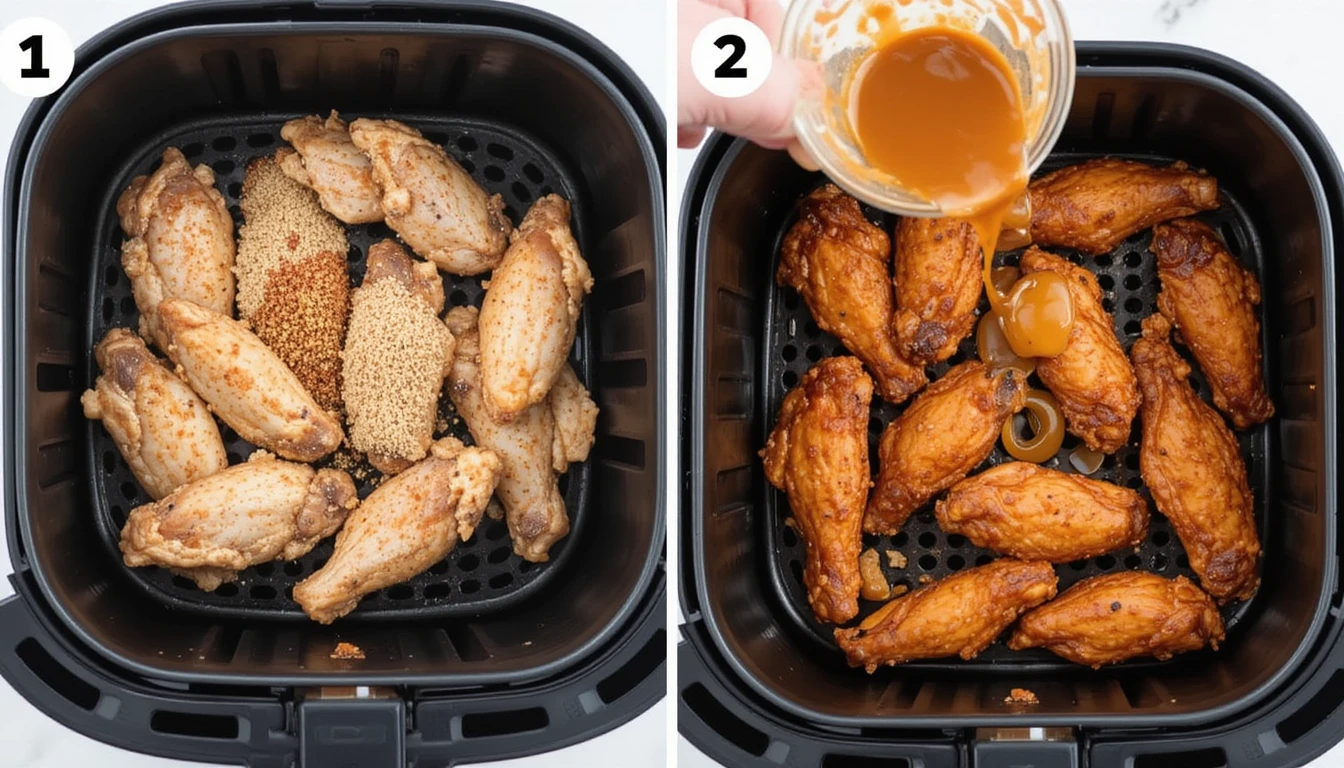
Achieving restaurant-quality, extra-crispy chicken wings in an air fryer requires a secret weapon: baking powder. By coating dry wings in a mixture of baking powder and salt before air frying at a dual-temperature setting, you trigger a chemical reaction that breaks down the skin's proteins, resulting in a blistered, crunchy texture that mimics deep-frying without the excess oil.
The Culinary Science of Baking Powder and Chicken Skin
To understand why baking powder is the gold standard for air fryer wings in 2026, one must look at the biochemistry of poultry skin. Chicken skin is composed largely of collagen and fat. When heat is applied, the fat renders out, but the collagen must be broken down and dehydrated effectively to become "crispy" rather than "rubbery."
Baking powder is a leavening agent containing sodium bicarbonate (an alkaline) and an acid (usually cream of tartar). When applied to the surface of the chicken, it raises the pH level of the skin. This alkaline environment is significant for two reasons. First, it breaks down the peptide bonds in the skin's proteins more efficiently. Second, it accelerates the Maillard reaction, the chemical process responsible for the browning and complex flavor development of cooked food.
As the wings heat up in the air fryer, the baking powder reacts with the natural moisture in the chicken to create tiny carbon dioxide bubbles. These bubbles create a microscopic, textured surface area. Once the air fryer’s high-velocity fans circulate heat around these "blisters," the moisture evaporates rapidly, leaving behind a brittle, crunchable crust that stays crispy even after being tossed in heavy sauces like Buffalo or BBQ.
The Importance of Aluminum-Free Baking Powder
A critical technical detail often overlooked is the type of baking powder used. For the best results, always select aluminum-free baking powder. Traditional baking powders containing sodium aluminum sulfate can impart a bitter, metallic aftertaste when used in the quantities required for coating meat. Because the air frying process concentrates flavors as moisture evaporates, any off-flavors from the leavening agent will be magnified. Using an aluminum-free variety ensures the natural savory notes of the chicken and spices remain the focal point.
Essential Prerequisites and Equipment
Before beginning the cooking process, ensure your kitchen is equipped with the necessary tools and ingredients. By 2026, air fryer technology has advanced significantly, with many models featuring "Steam-Crisp" or "Dual-Zone" capabilities, but the fundamental physics of air frying remain the same.
The Hardware
- High-Velocity Air Fryer: Whether you use a basket-style or a toaster-oven style, the key is airflow. Ensure the heating element is clean to prevent smoking.
- Digital Instant-Read Thermometer: Accuracy is paramount. Chicken wings are safest at 165°F (74°C), but for wings with baking powder, a higher internal temperature of 185°F to 195°F is actually preferred. This higher temperature allows the connective tissues to fully break down, making the meat "fall-off-the-bone" tender while the skin stays crisp.
- Wire Cooling Rack: Resting wings directly on a plate causes steam to build up underneath, instantly ruining the crispy skin you worked hard to achieve.
The Ingredients
- Chicken Wings: Fresh is always superior to frozen. If using frozen wings, they must be fully thawed and, more importantly, completely dried.
- Baking Powder (Aluminum-Free): The ratio should be approximately 1 tablespoon of baking powder per 1 pound of chicken.
- Kosher Salt: The coarse grains help in the mechanical abrasion of the skin surface.
- High-Heat Oil Spray: While the baking powder does the heavy lifting, a light spritz of avocado or grapeseed oil helps conduct heat more evenly.
Step-by-Step Preparation: The Foundation of Crunch
The success of air fryer wings with baking powder is decided before the air fryer is even turned on. Follow these steps to ensure the chemical reaction occurs optimally.
1. The Dehydration Phase
Moisture is the enemy of crispiness. Even "dry" wings from the supermarket are often packed in a saline solution. Remove the wings from the packaging and pat them thoroughly with paper towels. For the most dedicated home chefs, place the wings on a wire rack in the refrigerator, uncovered, for 2 to 4 hours (or even overnight). This cold-air circulation "air-dries" the skin, creating a pellicle that responds beautifully to the baking powder treatment.
2. The Coating Process
In a large mixing bowl, combine your baking powder, salt, and any dry spices (such as garlic powder, smoked paprika, or black pepper). Do not add sugar-based rubs at this stage, as the high heat required for crisping will burn the sugar before the skin is ready.
Toss the bone-dry wings in the bowl until they are lightly and evenly coated. You are looking for a thin, dusty film, not a thick batter. If the coating looks pasty, the wings were too wet.
3. Arrangement and Airflow
Crowding the basket is the most common mistake in air frying. If the wings are touching, the air cannot circulate, and the "blistering" effect of the baking powder will be neutralized by trapped steam. Arrange the wings in a single layer with at least half an inch of space between each piece.
Cooking Methodology: The Dual-Temperature Strategy
While many recipes suggest a single temperature, a dual-stage cooking method yields the best results for wings treated with baking powder.
Stage 1: The Render (360°F / 182°C for 15 minutes): At this moderate temperature, the fat begins to render (melt) and the baking powder starts reacting with the surface moisture. This stage prepares the skin by thinning it out and starting the protein breakdown without burning the exterior. Flip the wings halfway through this stage.
Stage 2: The Crisp (400°F / 205°C for 5-10 minutes): Increase the heat to the maximum setting. This high heat triggers the final dehydration of the skin and completes the Maillard reaction. Watch closely during these final minutes; the wings will transition from golden brown to deep mahogany quickly.
| Feature | Deep Frying | Standard Air Frying | Baking Powder Air Frying |
|---|---|---|---|
| Texture | Crunchy, oily | Firm, sometimes chewy | Blistered, ultra-crisp, light |
| Fat Content | High (absorbed oil) | Low | Lowest (rendered fat) |
| Prep Time | Minimal | Minimal | Requires thorough drying |
| Clean-up | Difficult (oil disposal) | Easy | Easy |
| Consistency | Highly consistent | Variable | Consistently professional |
Troubleshooting and Pro-Tips
Even with the right ingredients, small variables can affect the outcome. Here is how to handle common issues:
- Metallic Taste: This is almost always caused by using baking powder that contains aluminum. Check the label of your leavening agent. If it says "sodium aluminum sulfate," it will likely taste bitter on chicken.
- White Powdery Residue: If you see white spots on your finished wings, it means the baking powder didn't have enough moisture/oil to react with. A light spray of oil before the final "Crisp" stage (Stage 2) will resolve this.
- Wings Sticking to the Grate: To prevent this, ensure your air fryer is preheated. Placing cold wings on a cold grate causes the proteins to bond with the metal. Preheating creates an immediate sear that prevents sticking.
- Soggy Wings After Saucing: The moisture in Buffalo sauce or BBQ glaze will eventually soften any crust. The "two-minute rule" applies here: only sauce the wings you are about to eat immediately. If serving a crowd, serve the sauce on the side to maintain the integrity of the baking powder crust.
Safety and Internal Temperatures
According to USDA Food Safety guidelines, poultry must reach an internal temperature of 165°F to be safe for consumption. However, for wings, the texture improves significantly if you aim for 185°F to 190°F. The high collagen content in the wings needs more time and heat to convert into gelatin, which provides the juicy mouthfeel that balances the crispy skin.
Frequently Asked Questions
Can I use baking soda instead of baking powder?
No, baking soda (pure sodium bicarbonate) is significantly more alkaline than baking powder and lacks the acidic component. Using baking soda alone will result in an unpleasant, soapy taste and will not create the same blistered texture. Baking powder is the balanced chemical required for this specific reaction.
How do I make frozen wings crispy with this method?
You must thaw the wings completely first. Thawing them in the refrigerator overnight is best. Once thawed, follow the drying instructions meticulously. If you attempt to use baking powder on frozen wings, the ice crystals will melt during cooking, turning the powder into a gummy paste rather than a crispy crust.
Is the baking powder method healthier than traditional frying?
Yes. Deep-frying adds significant calories via oil absorption. The baking powder method relies on the chicken's own natural fats. By raising the pH of the skin, the fat renders out more efficiently, often resulting in a lower fat content in the final product compared to wings cooked without the powder.
Can I use this method in a regular oven?
Yes, but it requires a convection setting to mimic the air fryer’s airflow. If using a standard oven, place the wings on a wire rack over a baking sheet to ensure heat reaches the bottom of the wings. You may need to increase the cooking time by 10-15 minutes as ovens generally have lower air velocity than air fryers.
Does the baking powder affect the flavor of the sauce?
When using aluminum-free baking powder at the correct ratio, it is flavor-neutral. It simply provides the texture. Once the wings are tossed in sauce, the flavor profile is dominated by your choice of seasonings and glazes, with no interference from the leavening agent.
Final Recommendation
For the best possible experience, treat the drying process as the most important step in the recipe. While the air fryer and baking powder are the tools that create the crunch, they cannot perform their chemical magic if moisture is present on the surface of the meat. In 2026, as we continue to refine home-cooking techniques, the marriage of chemistry (baking powder) and technology (air frying) remains the most effective way to enjoy restaurant-quality appetizers at home.
Next time you prepare wings, try a dry-brine of salt and baking powder for at least four hours in the fridge before cooking; the difference in the final "snap" of the skin is significant and measurable.