AI marketing companies leverage machine learning, predictive analytics, and automated decision-making to optimize customer acquisition and retention, ensuring that every dollar of ad spend is directed toward high-intent audiences. By processing massive datasets that would be impossible for human teams to analyze in real-time, these agencies transition marketing from a reactive, broad-reach strategy to a proactive, precision-based operation.
The Mechanism of AI-Driven Marketing Growth
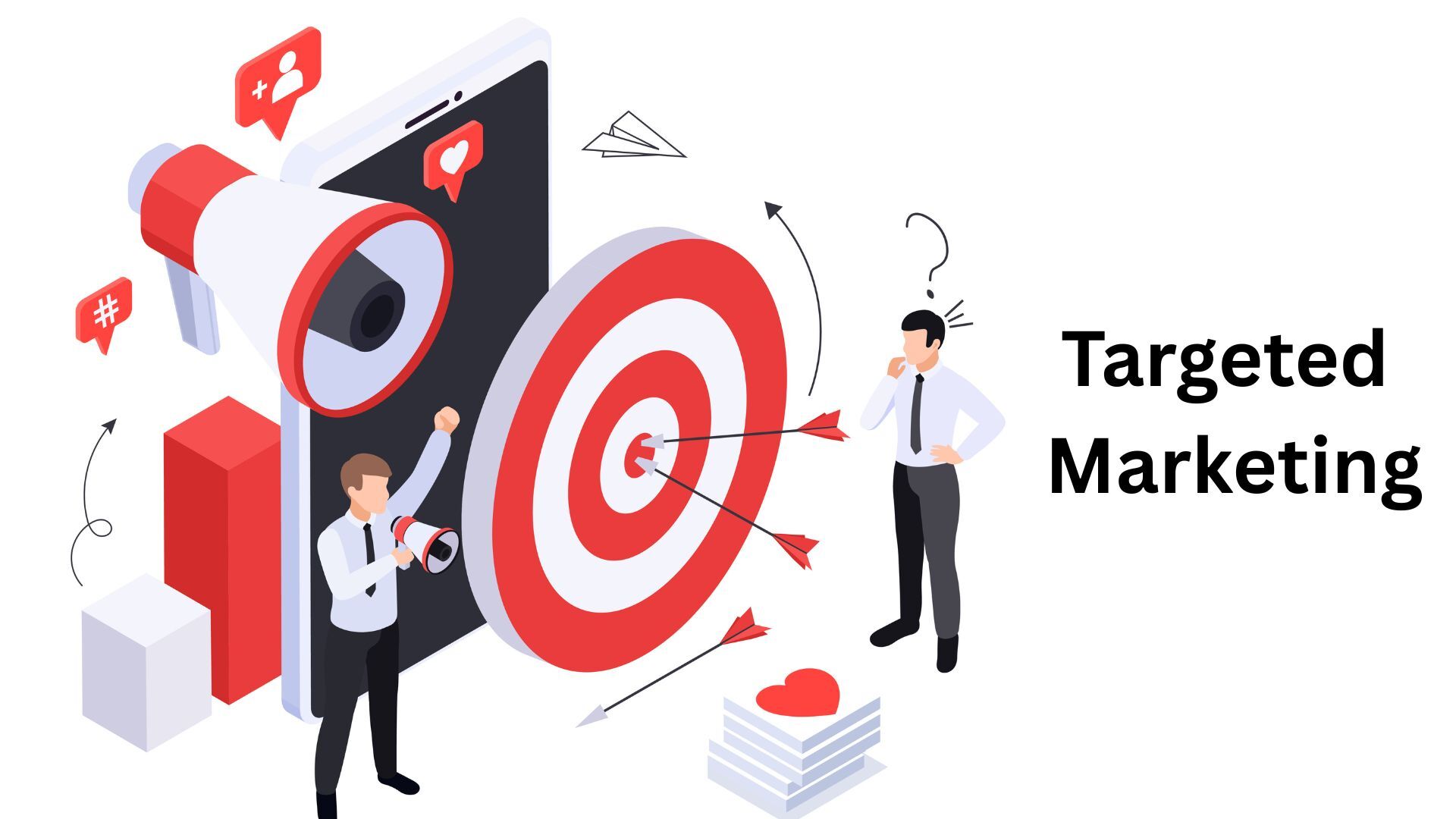
The core value proposition of an AI marketing agency lies in its ability to solve the primary inefficiency in traditional advertising: waste. In manual marketing, budget is often allocated based on general demographics or historical performance patterns that do not account for immediate behavioral shifts. AI companies reverse this by employing algorithmic targeting.
These companies operate by integrating proprietary or enterprise-grade software stacks that connect to a client’s CRM (Customer Relationship Management) system and ad platforms. Once connected, the AI analyzes user behavior—such as dwell time, click-through history, and conversion propensity—to score individual leads in real-time. This scoring allows the agency to dynamically adjust bid strategies, ensuring that advertising inventory is purchased only when a user exhibits a high probability of conversion.
Beyond bidding, AI marketing companies utilize predictive modeling to forecast future revenue. By analyzing patterns in historical data, they identify which channels, creative assets, and messaging styles are most likely to yield growth for a specific demographic. This is not merely optimization; it is a fundamental shift toward automated strategic planning.
Identifying the Right AI Marketing Partner
When evaluating AI marketing companies, the distinction between a traditional digital agency and an AI-native firm is critical. A traditional agency may use AI tools, but an AI-native company builds its service delivery around the data pipeline itself.
Key Evaluation Criteria
- Data Infrastructure Expertise: Does the agency have the technical capability to integrate with your existing data stack? If they cannot properly ingest and clean your historical data, the AI models they build will be ineffective.
- Algorithm Transparency: While many firms use proprietary "black box" models, you should insist on clarity regarding what variables are being tracked and how decisions are weighted.
- Cross-Platform Attribution: The agency must demonstrate how they attribute growth across disparate channels. If they cannot track a user journey from an organic search click to a paid social conversion, their targeting will be siloed.
- Agility and Testing: Does the agency employ automated A/B testing frameworks? High-performing AI agencies use "Champion-Challenger" models where an AI continuously tests new ad creatives against the current winner to prevent creative fatigue.
Comparison of Marketing Strategies
| Strategy Type | Human-Led Execution | AI-Enabled Execution |
|---|---|---|
| Audience Targeting | Broad segments/Demographics | Predictive behavioral clustering |
| Bid Management | Daily manual adjustments | Real-time automated bidding |
| Creative Iteration | Periodic A/B testing | Continuous, high-volume automated testing |
| Data Processing | Sample-based analysis | Full-dataset ingestion |
| Conversion Focus | Historical trends | Real-time intent signals |
The Technical Requirements for Implementation
Transitioning to an AI-driven marketing model is not a "plug-and-play" experience. It requires a significant investment in data hygiene and infrastructure before an AI marketing company can effectively deliver results.
1. Data Consolidation Before an agency can begin, your company must have a unified data repository. If your sales data, email engagement metrics, and web traffic are stored in disconnected silos, the AI cannot "see" the complete customer journey. Implementing a Customer Data Platform (CDP) is often a prerequisite for engagement with top-tier AI firms in 2026.
2. API Connectivity The agency will require API (Application Programming Interface) access to your primary ad accounts and CRM. This allows their algorithms to push bid adjustments and pull performance data without manual human intervention.
3. Privacy Compliance and Ethics With the tightening of data privacy regulations globally, AI marketing companies must demonstrate rigorous adherence to GDPR, CCPA, and evolving browser-based privacy standards. Verify that the agency utilizes "zero-party" and "first-party" data collection methods rather than relying solely on third-party cookies, which have become increasingly unreliable in 2026.
Avoiding Common Implementation Pitfalls
One common mistake businesses make is expecting "lights-out" automation—where the agency sets up a system and then ignores it. Even the most advanced AI requires human supervision to prevent "model drift," a phenomenon where an algorithm becomes less accurate over time as market conditions or consumer behaviors evolve.
Another error is failing to align the AI’s goals with the business's bottom-line metrics. If an AI is optimized purely for "clicks" or "traffic," it will deliver growth in those vanity metrics while potentially failing to generate qualified leads or revenue. Ensure the agency sets the AI's objective function to "Return on Ad Spend" (ROAS) or "Customer Lifetime Value" (CLV).
Troubleshooting Poor AI Performance
If your marketing growth stalls despite using an AI firm, the issue is rarely the AI itself; it is usually the quality of the "feed."
- Garbage In, Garbage Out: If your CRM data is incomplete or filled with duplicate entries, the AI will learn from bad data and optimize for the wrong audience. Clean your database as a first step in troubleshooting.
- Insufficient Data Volume: AI models need volume to learn. If you are a small business with very low traffic, the AI will not have enough samples to perform statistically significant learning. In these cases, a simpler, rules-based marketing approach is often more effective than an complex AI model.
- Creative Misalignment: AI is excellent at distribution, but it cannot create the core brand narrative. If your creative assets do not resonate with the audience, no amount of AI-driven optimization will drive growth. Ensure the agency is testing a diverse range of creative concepts rather than just changing ad copy headers.
Frequently Asked Questions
Does AI marketing eliminate the need for a creative team? No. While AI can generate ad variations and optimize placement, human creativity is essential for defining the brand voice, emotional narrative, and high-level strategy. AI handles the distribution and optimization; humans handle the strategy and creative vision.
How long does it take for AI to begin delivering growth? Most AI models require a "learning phase" ranging from 30 to 90 days. During this period, the algorithm collects data and tests variables. You should expect performance to stabilize and growth to accelerate significantly after this initial ingestion period.
Is AI marketing only for large enterprises? While large enterprises often have the budget for custom-built AI infrastructure, many AI marketing companies in 2026 offer modular solutions for mid-market businesses. The barrier to entry is not budget size, but data quality and the readiness of your digital infrastructure.
What is the role of the human account manager in this relationship? The human manager acts as the bridge between business strategy and machine output. They supervise the AI to ensure it stays within budgetary bounds, interpret complex data sets for stakeholders, and adjust the overarching business goals that the AI is programmed to pursue.
Can AI marketing guarantee a specific ROI? No legitimate agency will guarantee a specific ROI. AI marketing increases the probability of higher conversion rates and lower costs, but it cannot override market volatility, product-market fit issues, or competitive shifts in the landscape.
Next Steps for Businesses
To begin your journey with an AI marketing partner, start by auditing your existing data readiness. Request a "Data Maturity Assessment" from prospective agencies to determine if you are ready to feed their models. If you lack the necessary data structure, prioritize building a unified CRM and web-tracking infrastructure before hiring an agency. Once your data is clean and actionable, issue a request for proposal that specifically asks how their AI handles cross-channel attribution and model training, and prioritize partners who emphasize business outcomes over technical jargon.