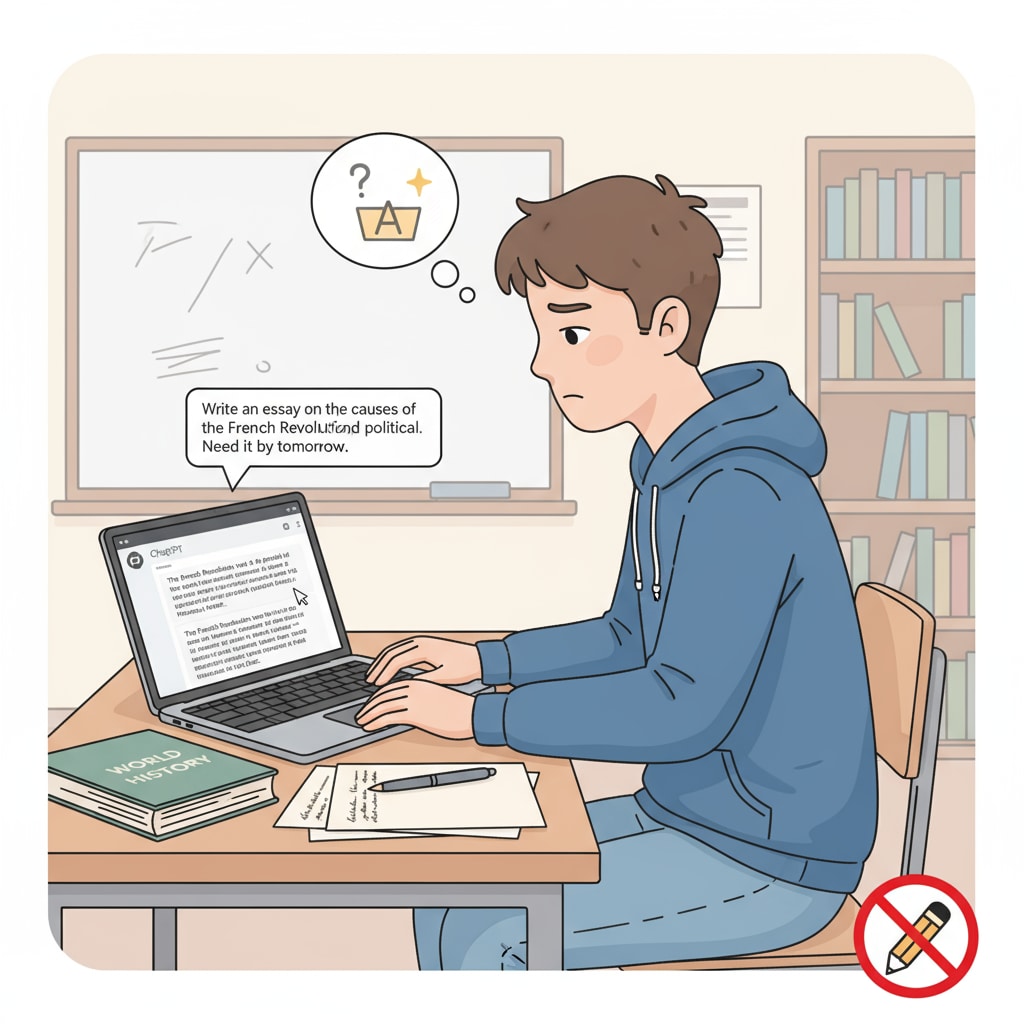
Academic cheating in the digital age has evolved from traditional plagiarism and hidden cheat sheets into a sophisticated landscape driven by generative artificial intelligence, contract cheating networks, and advanced remote-proctoring evasion tools. Modern dishonesty exploits technological connectivity, making integrity violations harder to detect and forcing educational institutions to completely rethink assessment design and security frameworks.
The Evolution of Academic Dishonesty: From Plagiarism to Algorithmic Assistance
The transition from physical cheating methods to digital malpractice has fundamentally altered the educational landscape. Historically, academic dishonesty was largely localized, involving copying answers from a peer during an in-exam setting or lifting paragraphs from a physical library book without proper citation.
As personal computers and internet access became ubiquitous in the late 20th and early 21st centuries, cheating shifted toward digital text reuse. Students began utilizing "copy-paste" methodologies, sourcing essays from online repositories, or purchasing pre-written papers from essay mills.
Today, the digital age has introduced algorithmic assistance through large language models (LLMs), automated code generators, and real-time remote communication channels. Generative artificial intelligence allows students to produce essays, solve complex mathematical proofs, and write functional computer code within seconds.
Unlike traditional plagiarism, which leaves a clear paper trail back to an existing published source, AI-generated content is often entirely novel, synthesized token by token. This shift complicates traditional detection mechanisms, as the resulting text may not match any database of previously written works.
Furthermore, the ubiquity of smartphones, smartwatches, and covert Bluetooth earpieces has miniaturized physical crib notes. Students can access vast networks of information or communicate with external helpers during high-stakes remote and in-person assessments. The velocity, scale, and stealth of modern digital cheating require educators to move beyond reactive policing and toward proactive instructional design.
Prominent Types of Digital Cheating Methods
Understanding the mechanics of academic dishonesty requires examining the specific tools and platforms utilized by modern offenders. The digital ecosystem supports a diverse economy of cheating services and technical workarounds.
Generative Artificial Intelligence and Automated Homework Solvers
Large language models and specialized computational engines can ingest complex exam prompts and generate nuanced, high-level academic responses. Students frequently use these tools to bypass critical thinking assignments, write reflective essays, or generate answers for online quizzes. Similarly, step-by-step math and science solvers can calculate solutions to complex homework problems instantly, stripping away the learning process.
Contract Cheating and Freelance Marketplaces
Contract cheating involves a third party completing academic work on behalf of a student, usually for financial compensation. Online platforms connect students with global freelancers willing to write dissertations, complete online courses, or take timed examinations remotely. These operations often market themselves as "tutoring" or "study assistance" services, blurring the lines between legitimate academic support and ghostwriting.
Remote Proctoring Evasion Techniques
As remote and hybrid learning environments expanded, institutions adopted digital proctoring software to monitor student behavior via webcams and browser locks. In response, technical workarounds have proliferated. Students utilize virtual machines, dual-monitor setups hidden from camera views, browser extensions that bypass lockdown software, and physical hardware modifications like video feed loops to deceive proctoring algorithms.
| Cheating Method | Primary Technology Used | Detection Difficulty | Typical Institutional Countermeasure |
|---|---|---|---|
| AI-Generated Text | Large Language Models (LLMs) | High | Oral defenses, authentic assessment design, AI-resistant prompts |
| Contract Cheating | Freelance marketplaces, messaging apps | Very High | Style analysis, writing progression tracking, in-class writing |
| Virtual Proctor Evasion | Virtual machines, hardware switches, screen mirrors | Medium-High | Enhanced room scans, secure browser policies, live human proctoring |
| Collab. Exam Forums | Encrypted chat apps, shared documents | Medium | Randomized question banks, strict time limits |
The Mechanics and Limitations of Detection Technologies
Educational institutions deploy various technological countermeasures to identify and deter digital cheating, though each tool faces distinct operational and technical limitations.
Plagiarism and Text-Matching Software
Traditional text-matching tools compare student submissions against vast repositories of academic journals, web pages, and previously submitted student papers. While effective against direct copy-pasting, these systems struggle to identify paraphrased text, translated content, or AI-generated output that lacks a direct historical match.
AI Content Detectors
AI detectors analyze linguistic patterns, examining metrics like "perplexity" (how predictable a word choice is) and "burstiness" (variation in sentence length and structure) to estimate the likelihood that text was generated by a machine. However, these detectors are not infallible. Studies and institutional experiences indicate that AI detectors frequently yield false positives—incorrectly flagging authentic student writing, particularly for non-native English speakers whose writing styles may align more closely with predictable algorithmic patterns. Consequently, many universities advise against using AI detectors as definitive proof of academic misconduct.
Remote Proctoring Software and Privacy Concerns
Proctoring platforms utilize facial recognition, gaze tracking, and automated behavior analysis to flag suspicious movements during online exams. While these systems deter casual cheating, they raise significant privacy and equity concerns. Algorithms can struggle to accurately track individuals with diverse physical appearances, and mandatory room scans expose personal living spaces, raising legal questions regarding student privacy rights.
Institutional Strategies for Prevention and Mitigation
Relying solely on punitive measures and surveillance software has proven insufficient. Modern academic integrity frameworks emphasize proactive mitigation strategies that reduce the motivation and opportunity to cheat.
- Authentic and Contextualized Assessments: Shifting away from standardized, easily searchable multiple-choice questions toward localized case studies, experiential reflections, and assignments tied to current local events.
- Process-Oriented Writing: Requiring students to submit outlines, annotated bibliographies, rough drafts, and revision histories via platforms like Google Docs or GitHub, establishing a verifiable provenance for student work.
- Oral Defenses and Viva Voce: Conducting brief, one-on-one follow-up discussions where students explain their submitted work, demonstrating genuine comprehension of the material.
- Transparent AI Policies: Establishing clear, syllabus-level guidelines detailing when and how generative tools may be utilized as collaborative aids versus when their use constitutes a violation.
Frequently Asked Questions
Can AI detectors definitively prove a student used ChatGPT to write an essay?
No. AI detection tools provide a probabilistic estimate rather than definitive proof. Because they rely on linguistic patterns, they can misidentify human writing as machine-generated, making them unreliable as the sole basis for academic disciplinary action.
What is contract cheating and why is it difficult to track?
Contract cheating occurs when a student pays an individual or service to complete coursework or exams. It is difficult to track because transactions happen on encrypted messaging apps or overseas websites, and the resulting work is custom-written, evading standard plagiarism detection databases.
How are universities adapting their testing methods to combat digital cheating?
Many institutions are moving away from unsupervised online multiple-choice exams. Instead, they are implementing in-class assessments, open-book exams that require critical analysis rather than rote memorization, and multi-stage project submissions that track a student's developmental process.
Are remote proctoring tools legally compliant with student privacy laws?
Compliance varies by jurisdiction. In regions with strict data privacy regulations, such as the European Union under the General Data Protection Regulation (GDPR), mandatory automated proctoring faces significant legal hurdles regarding biometric data collection and student consent.
What role do honor codes play in preventing digital dishonesty?
Honor codes foster a campus culture of shared responsibility and ethical accountability. Research indicates that when students actively sign honor pledges and understand the ethical dimensions of their education, instances of cheating decrease, provided the institutional environment also supports fair and engaging assessment practices.
Next Actions for Educators and Institutions
Addressing academic cheating in the digital age requires a balanced approach that combines clear policy enforcement with pedagogic redesign. Educators should audit their current assessment structures, replacing vulnerable take-home examinations with authentic, process-driven tasks. Administrators must establish transparent, equitable policies regarding emerging technologies while investing in faculty development to foster digital literacy across all academic departments.