To maintain an auto loan with American Airlines Credit Union (AACU) in 2026, borrowers are contractually required to carry "full coverage" insurance, which specifically includes comprehensive and collision protection. This insurance must list American Airlines Credit Union as the loss payee or lienholder and typically carries a maximum deductible limit, often set at $1,000, to ensure the collateral is adequately protected throughout the life of the loan.
Navigating the transition from vehicle selection to loan closing requires a clear understanding of what a lender expects from your insurance policy. When you finance a vehicle through American Airlines Credit Union, the vehicle serves as the collateral for the debt. Because the credit union has a financial stake in the asset, they impose specific mandates that go beyond the basic liability requirements set by state law. Failing to meet these requirements can lead to additional costs, including the implementation of force-placed insurance, which is significantly more expensive than standard private policies.
The Core Components of AACU Insurance Requirements
When you sign a promissory note for an AACU auto loan, you agree to protect the credit union's interest in the vehicle. In the world of auto financing, "full coverage" is a colloquial term that encompasses several distinct types of insurance. For AACU, the primary focus is on physical damage coverage.
Comprehensive and Collision Coverage
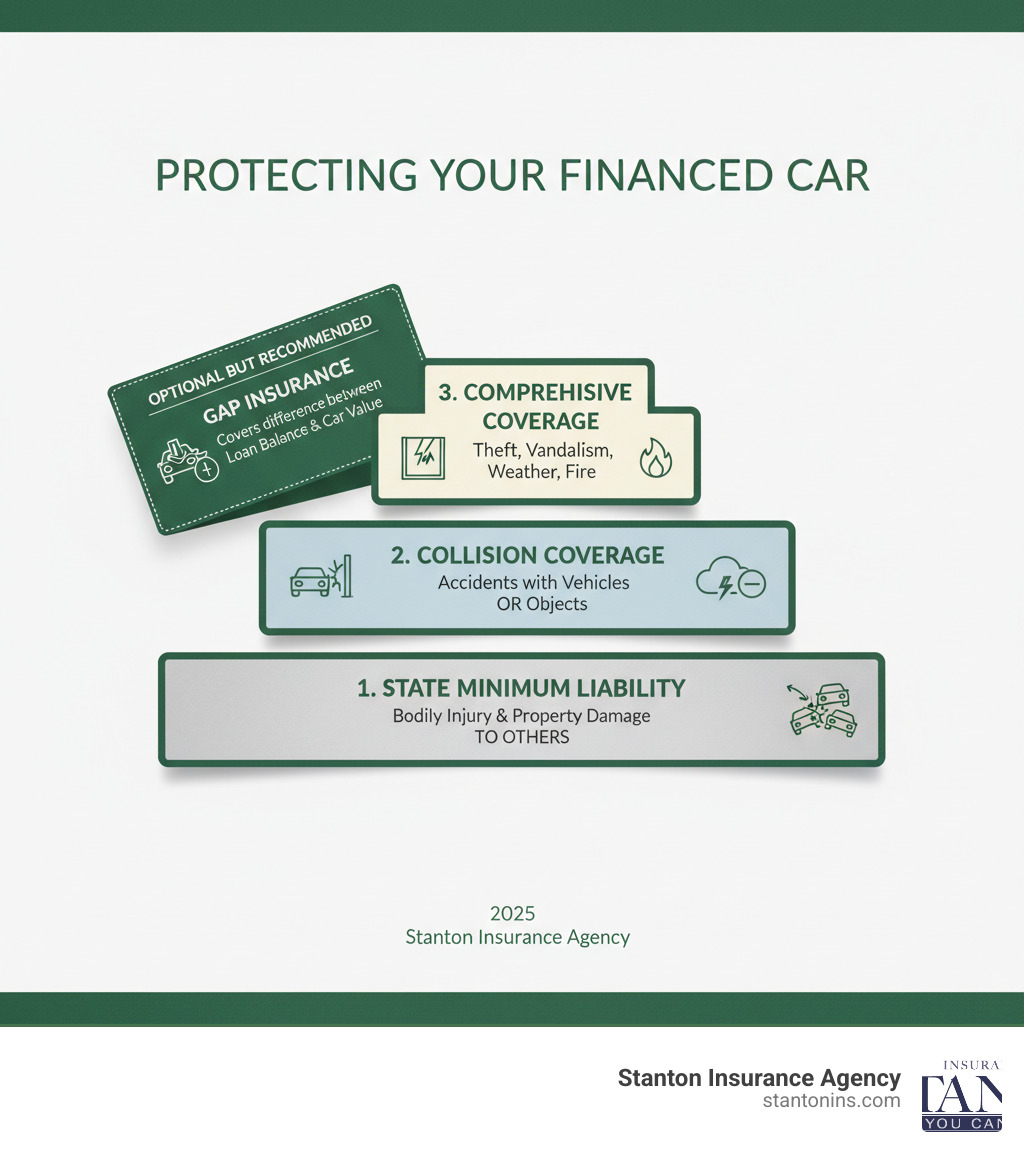
The most critical requirement is the inclusion of both comprehensive and collision coverage. While state laws generally only mandate liability insurance (which pays for damage you cause to others), AACU requires coverage that protects the vehicle itself regardless of who is at fault.
- Collision Insurance: This covers damage to your vehicle resulting from an accident with another vehicle or a stationary object. Since the vehicle is the security for the loan, AACU requires that funds be available to repair or replace it if it is damaged in a crash.
- Comprehensive Insurance: This covers "acts of God" or non-collision events, such as theft, vandalism, fire, or damage from falling objects (like hail or tree limbs). Without this, a stolen vehicle would leave the borrower with a loan balance but no asset, creating a high risk for the credit union.
Maximum Deductible Limits
A deductible is the amount you pay out of pocket before your insurance coverage kicks in. AACU establishes a maximum deductible limit to ensure that the borrower can reasonably afford to initiate repairs. In 2026, the standard maximum deductible for AACU auto loans is generally $1,000.
If a borrower selects a $2,500 deductible to lower their monthly insurance premium, they are technically in breach of the loan agreement. In the event of a $3,000 accident, a borrower with a $2,500 deductible might struggle to come up with the cash for repairs, leaving the vehicle damaged and the credit union’s collateral devalued. By capping the deductible at $1,000 (or sometimes $500 depending on the specific loan tier), AACU ensures the vehicle is more likely to be restored to its pre-accident condition.
Required Lienholder Information
For your insurance policy to be valid in the eyes of the credit union, AACU must be officially listed as the Lienholder or Loss Payee. This ensures that in the event of a total loss or a significant claim, the insurance company issues the check to both you and the credit union, or directly to the repair shop and the credit union.
When setting up your policy, you must provide your insurance agent with the following specific entity details:
American Airlines Credit Union PO Box 6138 Fort Worth, TX 76161-2138
Note: Some departments may use MD 2100 as a mail drop, but the PO Box listed above is the standard destination for insurance notifications. Always verify the specific address provided in your loan closing documents, as different regional processing centers may occasionally be utilized.
Why the Loss Payee Clause Matters
The loss payee clause is a legal safeguard. It grants the credit union the right to receive insurance proceeds to the extent of its interest in the vehicle. If your car is totaled, the insurance company will first pay off the remaining balance of your AACU loan. Any remaining funds from the settlement are then issued to you. Without this clause, the credit union has no guarantee that insurance payouts will be used to satisfy the debt or repair the collateral.
Proof of Insurance: Submission and Verification
Providing proof of insurance (POI) is not a one-time event at the dealership; it is a continuous requirement for the duration of the loan. AACU utilizes automated systems to track the insurance status of all vehicles in its portfolio.
Initial Verification at Loan Funding
Before AACU releases funds to a dealership or a private seller, you must provide a "Binder" or a "Declarations Page" from your insurance provider. This document must show:
- Effective dates of the policy (must be current).
- The Vehicle Identification Number (VIN) matching the loan.
- Comprehensive and collision coverage with acceptable deductibles.
- American Airlines Credit Union listed as the lienholder.
Ongoing Compliance and Renewals
Insurance companies generally notify lienholders when a policy is renewed, canceled, or modified. However, manual updates are sometimes necessary, especially if you switch insurance carriers. If AACU receives a notice of cancellation and does not receive a new policy from another carrier, they will trigger a notification process.
Borrowers can often upload their proof of insurance through dedicated portals or by mailing a copy of the new Declarations Page to the credit union's insurance processing center. In 2026, most members find it most efficient to use the digital upload tools provided in the AACU mobile app or online banking portal.
Understanding Collateral Protection Insurance (CPI)
One of the most expensive mistakes a borrower can make is allowing their private insurance to lapse. When AACU does not have a record of valid insurance, they may implement Collateral Protection Insurance (CPI), also known as force-placed insurance.
The Cost and Limitations of CPI
CPI is not a substitute for standard auto insurance. It is significantly more expensive—often costing three to five times more than a private policy. Furthermore, CPI only protects the credit union's interest in the vehicle. It generally does not provide:
- Liability coverage for damage you cause to others.
- Medical payments for your injuries.
- Protection for your personal belongings inside the car.
The premium for CPI is typically added to your monthly auto loan payment, which can cause a dramatic and unexpected increase in your financial obligations. If you provide proof of valid private insurance that was in effect during the "lapsed" period, AACU will usually refund the CPI premiums for those overlapping months, but the administrative hassle can be significant.
Supplemental Coverage: GAP and Debt Protection
While not strictly "insurance requirements" in the sense of mandatory mandates for loan approval, AACU strongly recommends and offers supplemental protections that interact with your primary insurance.
Guaranteed Asset Protection (GAP)
Standard auto insurance pays the Actual Cash Value (ACV) of the vehicle at the time of a loss. Because vehicles depreciate rapidly, it is common for a borrower to owe more on their loan than the car is actually worth—a situation known as being "underwater" or having "negative equity."
If your vehicle is totaled, and your primary insurance payout is $20,000 but your AACU loan balance is $23,000, you are personally responsible for the $3,000 "gap." GAP insurance covers this difference, ensuring the loan is paid in full. AACU offers GAP coverage that can be rolled into the loan at the time of financing, providing peace of mind for those with low down payments or long loan terms.
Debt Protection
AACU also offers voluntary debt protection plans. These are not insurance for the vehicle, but rather protection for the loan itself. These plans can cancel or suspend your loan payments in the event of involuntary unemployment, disability, or death. While these do not satisfy the "full coverage" requirement for the vehicle, they are part of a comprehensive financial strategy for managing an auto loan.
Comparison of Insurance Coverage Types
The following table clarifies the differences between what the state requires, what AACU requires, and what is optional.
| Coverage Type | Required by State Law? | Required by AACU? | What it Protects |
|---|---|---|---|
| Liability (BI/PD) | Yes | Yes (implicitly) | Damage/injuries you cause to others. |
| Collision | No | Yes | Damage to your car from an accident. |
| Comprehensive | No | Yes | Theft, fire, hail, and vandalism. |
| Uninsured Motorist | Varies by State | No (but recommended) | You, if hit by someone without insurance. |
| GAP Coverage | No | No (Optional) | The "gap" between ACV and loan balance. |
| Deductibles | N/A | Max $1,000 | The out-of-pocket cost for repairs. |
Common Mistakes to Avoid
- Lowering Coverage Too Early: Borrowers often assume that once a car reaches a certain age, they can drop collision and comprehensive. However, as long as there is an outstanding balance with AACU, these coverages must remain active, regardless of the vehicle's age or value.
- Incorrect Lienholder Address: If the insurance company sends the notification to the wrong address, AACU may not record the coverage, leading to a false CPI placement.
- Naming the Wrong Entity: Ensure the policy lists "American Airlines Credit Union" and not just "American Airlines." These are separate entities.
- Assuming the Dealer Handled It: While dealers often help set up the initial policy, the ultimate responsibility for ensuring the credit union receives the Declarations Page lies with the borrower.
Steps to Take if You Change Insurance Providers
If you decide to switch insurance companies in 2026 to find a better rate, follow these steps to ensure you remain in compliance with your AACU loan:
- Verify the New Policy: Ensure the new policy has a deductible of $1,000 or less and includes both comprehensive and collision.
- Add AACU as Lienholder: Give the new agent the correct AACU mailing address and loss payee information.
- Obtain the Declarations Page: Do not rely on the insurance ID card; it does not contain enough information for the credit union.
- Submit Proof Immediately: Upload the document via the AACU website or the designated insurance verification portal.
- Confirm Receipt: Monitor your AACU messages or statements to ensure the new insurance was successfully logged into their system.
Frequently Asked Questions
What happens if I move to a different state?
If you move, you must update your insurance policy to reflect your new garaging address. Because insurance laws and rates vary by state, your premium will likely change. You must ensure that the new policy still meets AACU's requirements and that the credit union is still listed as the lienholder on the updated state policy.
Can I have a $2,000 deductible if I have the cash in savings?
Generally, no. AACU sets a hard limit on deductibles (typically $1,000) to standardize risk across their entire loan portfolio. Even if you can prove you have the funds to cover a higher deductible, the loan agreement typically mandates the lower limit to ensure the collateral is protected according to the credit union's risk management policies.
Does AACU require insurance on a boat or RV loan?
Yes. Similar to auto loans, any recreational vehicle financed through AACU requires comprehensive and collision coverage. The deductibles and specific "Loss Payable" clauses remain the same, though the specific policy type will be specialized for marine or RV use.
Will AACU notify me before they force-place insurance?
Yes. AACU typically sends multiple notices via mail or electronic communication if they detect a lapse in coverage. These notices provide a grace period during which you can provide proof of insurance before the expensive CPI premium is added to your loan.
Is GAP insurance mandatory for AACU loans?
No, GAP insurance is optional. However, it is highly recommended if you are financing more than 80% of the vehicle's value, as standard insurance only pays the current market value of the car, which may be less than what you owe.
Final Recommendation
To ensure a smooth experience with your American Airlines Credit Union auto loan, always prioritize insurance compliance. Before signing your loan documents, confirm with your insurance agent that your policy includes comprehensive and collision coverage with a deductible not exceeding $1,000. Immediately upon any policy change or renewal, proactively provide the updated Declarations Page to AACU to avoid the high costs of force-placed insurance. By maintaining the required coverage, you protect both your financial standing and your vehicle investment.