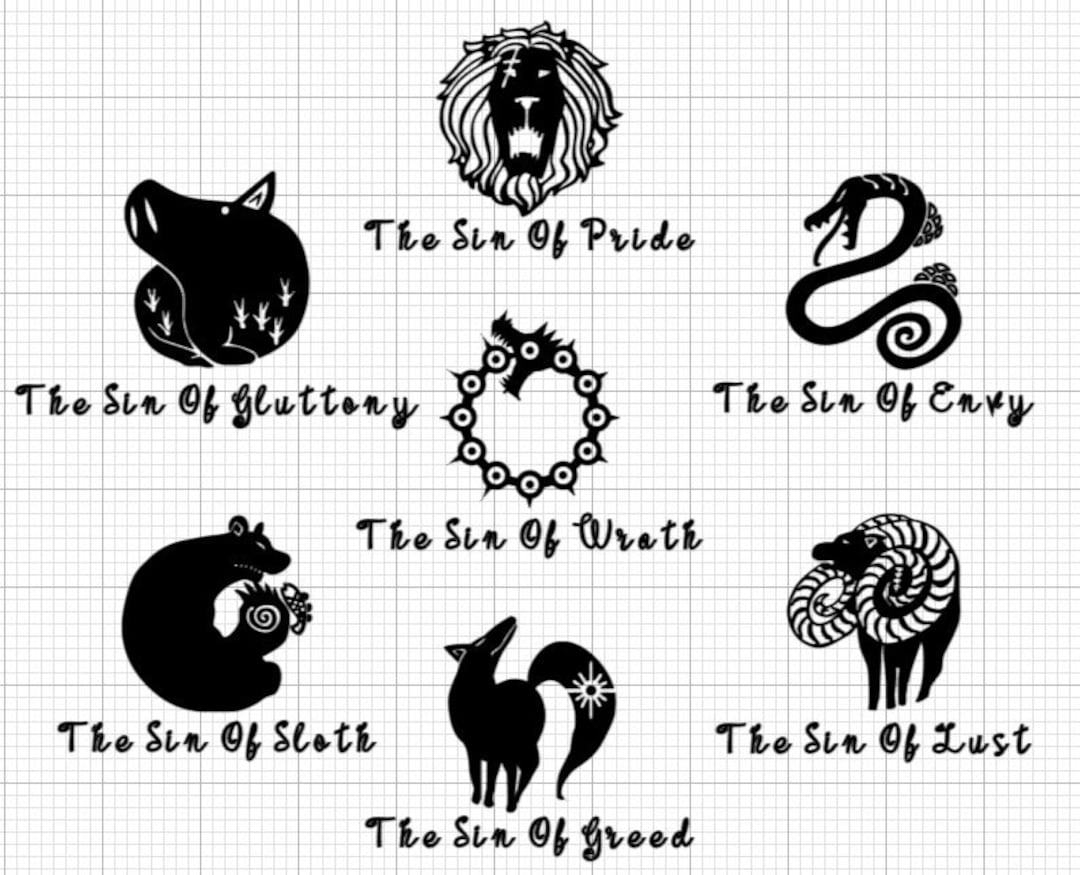
The seven symbols for the seven deadly sins are traditionally represented by specific animals, demons, and colors used to illustrate moral failings. These include the Peacock (Pride), the Toad (Greed), the Goat (Lust), the Snake (Envy), the Pig (Gluttony), the Bear (Wrath), and the Donkey (Sloth).
The concept of the "Seven Deadly Sins," also known as the capital vices or cardinal sins, has been a cornerstone of Western ethical and theological thought for over fifteen centuries. While the Bible mentions various lists of sins, the formalized grouping we recognize today—Pride, Greed, Lust, Envy, Gluttony, Wrath, and Sloth—was solidified by Pope Gregory I in the late 6th century. To make these abstract spiritual concepts accessible to a largely illiterate medieval population, the Church and various theologians developed a complex system of iconography.
As of 2026, these symbols remain the primary framework for analyzing moral failure in Western literature, art history, and psychological archetypes. Understanding these symbols requires exploring the animals, the assigned demons, and the specific colors that have come to define each vice.
The Evolution of the Seven Deadly Sins
Before examining the symbols themselves, it is essential to understand the origin of the list. The grouping began with the "eight evil thoughts" described by the 4th-century monk Evagrius Ponticus. These were: gluttony, lust, avarice, sadness, anger, acedia (spiritual apathy), vainglory, and pride.
In 590 AD, Pope Gregory I revised the list to the seven we recognize today. He combined "vainglory" into "pride," "acedia" into "sadness" (later becoming sloth), and added "envy." This reclassification was not merely academic; it was intended to categorize the root causes of all other sins. By the 13th century, Saint Thomas Aquinas further refined these definitions in his Summa Theologica, reinforcing the idea that these seven vices are the "heads" from which all other immoralities flow.
1. Pride (Superbia)
Pride is traditionally regarded as the "root of all evil" and the most serious of the seven sins. It represents an excessive belief in one's own abilities that interferes with the individual's recognition of the grace of God.
- Animal Symbol: The Peacock. The peacock is the most common symbol for pride due to its habit of "strutting" and displaying its iridescent tail feathers. In medieval iconography, the peacock’s vanity in its appearance was seen as a direct parallel to the human soul’s preoccupation with worldly status and self-importance.
- Demon: Lucifer. As the fallen angel who sought to be equal to God, Lucifer is the ultimate personification of pride.
- Color: Violet/Purple. Historically associated with royalty and high status, violet represents the ego’s desire for power and recognition.
- The Virtue: Humility (Humilitas).
Pride is the sin of self-exaltation. In Dante Alighieri’s Divine Comedy, those guilty of pride are forced to carry massive stones on their backs, bowing their heads low to the ground to unlearn their haughtiness and practice the physical posture of humility.
2. Greed (Avaritia)
Greed, or avarice, is the desire for material wealth or gain, ignoring the spiritual realm and the needs of others. It is characterized by a "disordered love" of riches.
- Animal Symbol: The Toad. The toad is often depicted in medieval art as a symbol of greed because it was believed to live off the earth (dirt) and consume more than it needed. Some traditions also use the Fox to represent the cunning and predatory nature of the avaricious.
- Demon: Mammon. The term "Mammon" comes from the New Testament, where it is used to describe wealth or profit. By the Middle Ages, it was personified as the demon of cupidity.
- Color: Yellow. While yellow can symbolize sunshine, in the context of the deadly sins, it represents the color of gold and the jaundiced look of someone consumed by the desire for more.
- The Virtue: Charity (Caritas).
Greed is distinct from gluttony because it focuses on the accumulation of assets rather than the consumption of them. The punishment often associated with greed involves being boiled in oil, a metaphor for the agonizing "heat" of unquenchable desire.
3. Lust (Luxuria)
Lust is an intense or unbridled longing, usually of a sexual nature, but it can also manifest as an intense desire for money, fame, or power. However, in the traditional "Seven Sins" framework, it focuses on the surrender of reason to physical appetite.
- Animal Symbol: The Goat. The goat has been a symbol of potent sexuality and lack of restraint since antiquity (linked to the Greek god Pan). Its reputation for "lecherous" behavior made it the natural choice for lust. Occasionally, the Scorpion is used to represent the "sting" or the poisonous aftermath of lustful actions.
- Demon: Asmodeus. In the Book of Tobit and various occult traditions, Asmodeus is the demon responsible for twisting human desire and breaking apart marriages.
- Color: Blue (historically) or Red. While red is modernly associated with passion, blue was often used in medieval stained glass to represent the cold, detached nature of purely physical lust.
- The Virtue: Chastity (Castitas).
Lust is frequently categorized as the least serious of the deadly sins because it involves an abuse of a natural human drive, whereas sins like pride or envy involve a more deliberate perversion of the spirit.
4. Envy (Invidia)
Envy is characterized by a resentful longing for someone else's possessions, qualities, or luck. Unlike greed, which wants what another has, envy often wants the other person to not have it.
- Animal Symbol: The Snake. The snake is the quintessential symbol of envy. This stems from the Garden of Eden, where the serpent envied the relationship between God and humanity. The snake is often depicted as biting its own tail or slithering in the grass, representing the hidden, "venomous" nature of an envious heart.
- Demon: Leviathan. Leviathan, a massive sea monster mentioned in the Old Testament, was identified by Peter Binsfeld in 1589 as the demon of envy, possibly because its massive scale represents the way envy can swallow a person whole.
- Color: Green. The phrase "green with envy" survives into 2026 for a reason. Green historically symbolized the bile that was once thought to cause an envious temperament.
- The Virtue: Kindness (Gratia).
In the Purgatorio, the envious have their eyes sewn shut with wire. This is because envy begins with the eyes (the Latin invidere means "to look upon closely" or "maliciously"). By removing their sight, they are forced to stop comparing themselves to others.
5. Gluttony (Gula)
Gluttony is the overindulgence and overconsumption of anything to the point of waste. While usually applied to food and drink, it refers to any instance where the pleasure of consumption overrides spiritual and physical health.
- Animal Symbol: The Pig (or Sow). The pig is the universal symbol for gluttony due to its perceived lack of discrimination in what it eats and its tendency to consume until full. The Fly is also occasionally used to represent the "swarm" of appetites and the decomposition associated with excess.
- Demon: Beelzebub. Known as the "Lord of the Flies," Beelzebub is the demon traditionally associated with gluttony.
- Color: Orange. Orange represents the heat of the hearth and the glutton's preoccupation with the sensory experience of eating.
- The Virtue: Temperance (Temperantia).
Theologians like Thomas Aquinas noted that gluttony has five forms: eating too soon, eating too expensively, eating too much, eating too eagerly, and eating too daintily. It is a sin of the "flesh" that clouds the mind.
6. Wrath (Ira)
Wrath is defined as uncontrolled feelings of anger, rage, and even hatred. It often manifests as a desire for vengeance that exceeds the bounds of justice.
- Animal Symbol: The Bear. The bear is used to symbolize wrath because of its perceived volatility and the sheer physical destruction it can cause when provoked. The Wolf is also a common substitute, representing the predatory, relentless nature of a grudge.
- Demon: Satan. In the Binsfeld classification, Satan represents the destructive, chaotic power of uncontrolled rage.
- Color: Red. Red is the color of blood and the "flushing" of the face that occurs during a fit of anger.
- The Virtue: Patience (Patientia).
Wrath is unique among the sins because it can sometimes be "righteous." However, "Deadly Wrath" is that which is self-serving and destructive to the soul of the angry person. In Dante's Inferno, the wrathful are forced to fight each other in the muddy waters of the River Styx.
7. Sloth (Acedia)
Sloth is often misunderstood as mere laziness. In its original context (acedia), it refers to a spiritual apathy or "spiritual dryness"—a failure to do what one should do because of the effort involved.
- Animal Symbol: The Donkey. The donkey (or ass) is the symbol for sloth due to its stubbornness and perceived refusal to move even when spurred. The Snail is also used to represent the extreme slowness of the slothful soul.
- Demon: Belphegor. Belphegor is the demon who seduces people by suggesting ingenious inventions that will make them rich without work, thus fostering idleness.
- Color: Light Blue or Grey. These colors represent the "fog" of apathy and the lack of spiritual "fire" or vitality.
- The Virtue: Diligence (Industria).
Sloth is a sin of omission. It is not necessarily the presence of bad behavior, but the absence of good behavior. It is the "noonday devil" that makes the soul weary of spiritual growth.
Comparative Summary of Symbols
The following table provides a quick reference for the symbols, demons, and virtues associated with each of the seven deadly sins as they have been recognized through 2026.
| Sin (Latin) | Animal Symbol | Demon (Binsfeld) | Color | Counter-Virtue |
|---|---|---|---|---|
| Pride (Superbia) | Peacock / Lion | Lucifer | Violet | Humility |
| Greed (Avaritia) | Toad / Fox | Mammon | Yellow | Charity |
| Lust (Luxuria) | Goat / Scorpion | Asmodeus | Blue / Red | Chastity |
| Envy (Invidia) | Snake / Dog | Leviathan | Green | Kindness |
| Gluttony (Gula) | Pig / Fly | Beelzebub | Orange | Temperance |
| Wrath (Ira) | Bear / Wolf | Satan | Red | Patience |
| Sloth (Acedia) | Donkey / Snail | Belphegor | Light Blue | Diligence |
Historical and Cultural Context in 2026
By 2026, the study of these symbols has transitioned from purely religious instruction to a broader cultural analysis. Modern psychology often maps these "sins" to maladaptive behaviors. For example, Pride is analyzed through the lens of narcissism, while Greed is studied within the context of consumerism and resource hoarding.
In art history, the "Garden of Earthly Delights" by Hieronymus Bosch remains a seminal work for visualizing these symbols. Bosch used surreal imagery—much of it featuring the animals mentioned above—to warn viewers of the consequences of the cardinal vices. Similarly, Dante’s Divine Comedy continues to provide the most vivid "geographic" representation of how these sins are punished and purged.
Frequently Asked Questions
What is the difference between a "deadly" sin and a "venial" sin?
A deadly (or mortal) sin is a grave matter committed with full knowledge and deliberate consent. It is called "deadly" because it is believed to "kill" the sanctifying grace within the soul. A venial sin is a lesser offense that does not definitively turn the soul away from God but weakens the individual's moral character.
Why are animals used as symbols for these sins?
In the medieval period, the "Bestiary" was a popular genre of literature that assigned moral lessons to the behavior of animals. Using animals allowed the Church to illustrate complex psychological and spiritual states through the natural world, which was familiar to everyone, regardless of their education level.
Who is Peter Binsfeld, and why is he relevant to these symbols?
Peter Binsfeld was a German bishop and theologian who, in 1589, published a list that paired each of the seven deadly sins with a specific demon. This classification became the standard for demonology and further solidified the iconographic associations we use today.
Can the symbols for these sins change over time?
Yes. Iconography is fluid. For example, while the peacock is the most common symbol for pride, some cultures use the lion to represent the "arrogance" of power. Similarly, the color for Lust has shifted from blue in the medieval era to red in modern pop culture.
Are these sins mentioned in the Bible?
The specific list of "Seven Deadly Sins" is not found in a single verse in the Bible. However, the Bible contains several lists of vices (such as in Galatians 5:19-21 and Proverbs 6:16-19). The formalized "Seven" is a result of centuries of theological synthesis and church tradition.
Recommendation for Further Study
If you are interested in the visual history of these symbols, it is recommended to view the works of Pieter Bruegel the Elder and Hieronymus Bosch. Their detailed engravings and paintings from the 15th and 16th centuries provide the most comprehensive visual encyclopedia of how the seven deadly sins were perceived and symbolized during the height of their theological influence. For a modern literary interpretation, examining the character archetypes in contemporary psychological thrillers often reveals that these seven categories remain the foundational framework for exploring human conflict and moral failure.