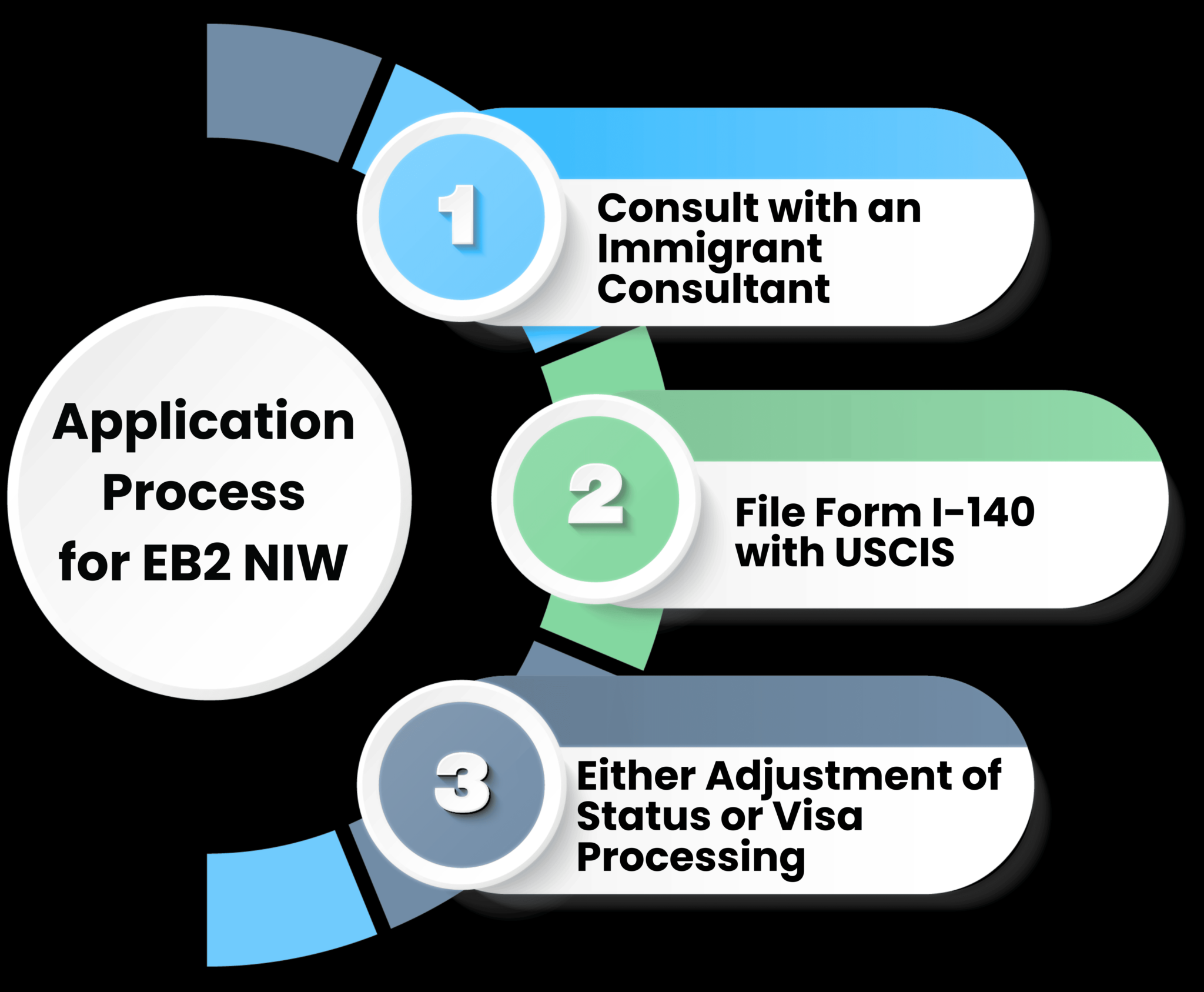
The five essentials of the EB-1 and EB-2 visas encompass selecting the correct subcategory, satisfying rigorous evidentiary criteria, navigating the Department of Labor’s PERM labor certification process or qualifying for a waiver, tracking priority dates on the Visa Bulletin, and strategically executing Form I-140 and Form I-485 filings.
Understanding Employment-Based First and Second Preference Visas
The United States employment-based immigration system allocates permanent resident visas (green cards) across specific preference categories under the Immigration and Nationality Act (INA). Among these, the Employment-Based First Preference (EB-1) and Employment-Based Second Preference (EB-2) categories represent the primary pathways for highly skilled professionals, researchers, executives, and individuals with advanced degrees or extraordinary abilities.
Understanding the structural differences, regulatory burdens, and strategic mechanics of the EB-1 and EB-2 paths is essential for prospective immigrant applicants, sponsoring employers, and legal practitioners. While EB-1 petitions cater to top-tier individuals in sciences, arts, education, business, or athletics, EB-2 petitions accommodate professionals holding advanced degrees or individuals showcasing exceptional ability. Both categories provide a pathway to lawful permanent resident status, but their eligibility requirements, application steps, processing timelines, and priority date backlogs vary significantly.
Disclaimer: Immigration laws and agency guidance change frequently. The following analysis reflects standard statutory requirements and U.S. Citizenship and Immigration Services (USCIS) policy guidelines applicable as of 2026. Applicants should consult a licensed immigration attorney for advice regarding specific legal matters.
Essential 1: Identifying Eligibility and Choosing the Right Preference Subcategory
The foundational step in pursuing permanent residency through employment is matching an applicant's professional credentials with the precise legal definitions established by statutory law. Misclassifying an application can result in delayed filings, unnecessary expense, or denial.
- Determine Qualification Strategy (EB-1 vs. EB-2)
- EB-1 Category
- EB-1A: Extraordinary Ability (Self-Petition)
- EB-1B: Outstanding Professors/Researchers
- EB-1C: Multinational Executives/Managers
- EB-2 Category
- EB-2 Advanced Degree
- EB-2 Exceptional Ability
- EB-2 National Interest Waiver
- EB-1 Category
EB-1 Subcategories Detailed
The EB-1 category does not require a U.S. Department of Labor labor certification, making it an attractive option for qualified applicants:
- EB-1A (Extraordinary Ability): Reserved for individuals who can demonstrate extraordinary ability in the sciences, arts, education, business, or athletics through sustained national or international acclaim. A major advantage of EB-1A is that it allows self-petitioning—no U.S. employer or job offer is required.
- EB-1B (Outstanding Professors and Researchers): Designed for foreign scholars recognized internationally for academic achievements in a specific academic field. Applicants must have at least three years of teaching or research experience and possess a job offer for a tenure-track teaching position or permanent research role at a U.S. university or qualifying private employer.
- EB-1C (Multinational Executives and Managers): Geared toward corporate transfers. The applicant must have been employed outside the U.S. for at least one year within the preceding three years by a firm, corporation, or other legal entity that is the parent, branch, affiliate, or subsidiary of the prospective U.S. employer. The foreign and U.S. positions must be managerial or executive in nature.
EB-2 Subcategories Detailed
The EB-2 category targets professionals whose work requires significant academic training or proven exceptional skill:
- EB-2 Advanced Degree: Requires either an earned U.S. advanced degree (Master’s, Doctorate, or foreign equivalent) or a U.S. Bachelor’s degree (or foreign equivalent) followed by at least five years of progressive, post-baccalaureate work experience in the specialty field.
- EB-2 Exceptional Ability: Designed for individuals in the sciences, arts, or business who possess a degree of expertise significantly above that ordinarily encountered.
- EB-2 National Interest Waiver (NIW): Allows individuals who meet the Advanced Degree or Exceptional Ability standards to request that the job offer and PERM labor certification requirement be waived because their proposed endeavor has substantial merit and national importance for the United States.
Essential 2: Satisfying Regulatory Evidentiary Standards
Securing approval for an EB-1 or EB-2 visa requires gathering document-based evidence that addresses specific regulatory standards. USCIS adjudicators evaluate petitions using defined criteria and multi-step analytic frameworks.
Evidentiary Requirements for EB-1 Petitions
For EB-1A Extraordinary Ability, an applicant must supply evidence of a major, internationally recognized award (such as a Nobel Prize or Olympic Medal) or meet at least three out of ten regulatory criteria established under 8 CFR 204.5(h)(3):
- Receipt of lesser nationally or internationally recognized prizes or awards for excellence.
- Membership in associations in the field that require outstanding achievements of their members.
- Published material about the alien in professional or major trade publications or major media.
- Participation, individually or on a panel, as a judge of the work of others in the field.
- Original scientific, scholarly, artistic, athletic, or business-related contributions of major significance.
- Authorship of scholarly articles in professional or major trade publications or major media.
- Display of the alien's work at artistic exhibitions or showcases.
- Performance in a leading or critical role for organizations or establishments that have a distinguished reputation.
- High salary or significantly high remuneration relative to others in the field.
- Commercial successes in the performing arts.
Adjudication follows the two-part test set forth in Kazarian v. USCIS (9th Cir. 2010). First, the officer determines whether the petitioner objectively meets the threshold count of three criteria. Second, the officer conducts a "final merits determination" to decide whether the submitted evidence demonstrates that the applicant possesses extraordinary ability and a level of expertise placing them at the top of their field.
For EB-1B, the petitioner must satisfy at least two out of six regulatory criteria under 8 CFR 204.5(i)(3), including evidence of original scientific or scholarly research contributions or peer-reviewed publication of books or articles in scholarly journals.
Evidentiary Requirements for EB-2 Petitions
To qualify under EB-2 Exceptional Ability, the applicant must fulfill at least three out of six criteria under 8 CFR 204.5(k)(3):
- Official academic records showing a degree, diploma, or certificate from an institution relating to the area of exceptional ability.
- Letters documenting at least ten years of full-time experience in the occupation.
- A license to practice or certification for a particular profession.
- Evidence of commanding a salary or remuneration demonstrating exceptional ability.
- Membership in professional associations.
- Recognition for achievements and significant contributions to the industry or field by peers, government entities, or business organizations.
The EB-2 National Interest Waiver (NIW) Standard
For an EB-2 NIW applicant, meeting the basic EB-2 degree or exceptional ability requirements is only the starting point. The applicant must also satisfy the three-prong legal standard established in the precedent decision Matter of Dhanasar (26 I&N Dec. 884, Admin. Appeals Office 2016):
- Substantial Merit and National Importance: The foreign national’s proposed endeavor must have clear merit in areas like business, entrepreneurship, science, technology, culture, health, or education. National importance focuses on the prospective impact of the endeavor rather than its localized benefit.
- Well-Positioned to Advance the Endeavor: USCIS evaluates the applicant’s education, skills, track record, record of progress, detailed business plan or research proposal, and institutional or commercial backing.
- Balancing Test: On balance, the United States must benefit from waiving the standard job offer and PERM labor certification requirements. The applicant must show that their contributions are sufficiently valuable to warrant bypassing the traditional foreign labor market protection mechanisms.
Essential 3: Navigating PERM Labor Certification vs. Exemption Waivers
Except for EB-1 subcategories and the EB-2 NIW, all employment-based immigration paths under EB-2 require a foreign labor certification processed through the U.S. Department of Labor (DOL). Understanding this requirement helps set expectations for project timelines and employer commitments.
- Path Selection Process
- Standard EB-2 Path (Requires PERM)
- Prevailing Wage
- Recruitment Phase
- Form ETA-9089 Filing
- Exemption Path (EB-1 or EB-2 NIW)
- Bypasses DOL PERM
- Direct I-140 Filing
- Saves 12-24 Months
- Standard EB-2 Path (Requires PERM)
The Standard PERM Process
The Program for Electronic Review Management (PERM) process protects U.S. workers and the domestic labor market. The employer sponsoring the candidate must complete these steps:
- Prevailing Wage Determination (PWD): The employer submits Form ETA-9141 to the DOL National Prevailing Wage Center to obtain an official prevailing wage rate for the specific role and geographic location.
- Mandatory Recruitment Campaign: The employer must test the domestic labor market by placing mandatory job advertisements (newspaper ads, state workforce agency postings, internal notices, and additional professional recruitment avenues).
- Audit and Assessment: The employer reviews all U.S. applicants who respond to the postings. If qualified, available, and willing U.S. workers apply, the PERM process cannot move forward for that foreign worker.
- Form ETA-9089 Submission: If no qualified U.S. worker is found, the employer files Form ETA-9089 with the Department of Labor certifying that employing the foreign national will not adversely affect the wages and working conditions of U.S. workers similarly employed.
Exemption via EB-1 or EB-2 NIW
Bypassing the PERM process offers clear strategic advantages. A standard PERM workflow can add 12 to 24 months to an immigration project due to prevailing wage processing queues and mandatory recruitment timelines.
- EB-1 Category Exemption: All EB-1 subcategories (A, B, and C) are completely exempt from the PERM labor certification requirement by statute.
- EB-2 NIW Exemption: An approved National Interest Waiver allows the foreign national to skip both the prevailing wage determination and recruitment steps, saving time and relieving the employer of advertising obligations.
Essential 4: Managing Priority Dates, the Visa Bulletin, and Retrogression
Selecting a qualified category is only part of the process; applicants must also track green card availability. Congress sets annual caps on immigrant visas distributed by preference category and country of chargeability (typically an applicant's country of birth).
Key Priority Date Terminology
- Priority Date: The date that establishes an applicant's place in the immigrant visa queue. For PERM-based filings, the priority date is the day the DOL accepts Form ETA-9089 for processing. For PERM-exempt filings (EB-1A, EB-1B, EB-1C, and EB-2 NIW), the priority date is established on the date USCIS receives the Form I-140 petition.
- Visa Bulletin: Published monthly by the U.S. Department of State (DOS), this bulletin tracks visa availability across two primary tables:
- Final Action Dates Table: Indicates when a visa number is available for actual issuance or final green card approval.
- Dates for Filing Table: Indicates when an applicant located in the U.S. may submit their Form I-485 adjustment of status application ahead of actual visa availability, provided USCIS designates that table for the month.
Managing Retrogression and Chargeability
Visa demand regularly exceeds supply for high-volume birth countries, leading to retrogression—a situation where priority dates move backward or become unavailable.
- Establish Priority Date (PERM Filing Date OR I-140 Receipt Date)
- Monitor Monthly DOS Visa Bulletin
- Date IS Current: Proceed to Form I-485 / Consular Processing
- Date IS Retrogressed: Await Priority Date Advancement; Maintain Non-immigrant Status
When managing visa queues, applicants should consider two important legal mechanisms:
- Cross-Chargeability: If an applicant was born in a country with significant retrogression (such as India or China), but their spouse was born in a country with a faster-moving timeline, the applicant can cross-charge to the spouse’s birth country to shorten their wait time.
- Portability and Retention: Under the American Competitiveness in the Twenty-First Century Act (AC21), an individual with an approved Form I-140 can retain their established priority date when switching employers or petitioning under a different employment-based category later on.
Essential 5: Executing Petition Steps (Form I-140 and Form I-485)
The physical application pathway requires completing specific immigration forms and paying required government fees. The process involves two primary legal submissions: establishing immigrant eligibility through Form I-140, followed by converting status to permanent residency through Form I-485 or consular processing.
- Stage 1: Form I-140 Immigrant Petition for Alien Workers (Filed with USCIS; establishes underlying employment eligibility)
- Stage 2: Form I-485 Application to Register Permanent Residence (Filed when priority date is current; completes Green Card approval)
Stage 1: Form I-140 (Immigrant Petition for Alien Workers)
Filed directly with USCIS, Form I-140 asks the government to classify the foreign national under the requested EB-1 or EB-2 preference category. Key considerations at this stage include:
- Ability to Pay: For employer-sponsored filings (EB-1B, EB-1C, and standard EB-2), the petitioning U.S. employer must demonstrate an ongoing financial ability to pay the offered wage from the priority date onward, established using annual reports, audited financial statements, or federal income tax returns.
- Premium Processing: Petitioners can request expedited processing by filing Form I-907. Payers of the Premium Processing fee receive an adjudication action (approval, denial, or a Request for Evidence) within 15 to 45 calendar days, depending on the visa subcategory.
Stage 2: Form I-485 (Adjustment of Status) or Consular Processing
Once Form I-140 is approved and the priority date becomes current under the Visa Bulletin, the applicant can move forward with permanent residence approval:
- Adjustment of Status (Form I-485): Used when the applicant is physically present in the United States under a valid nonimmigrant status (such as H-1B, L-1, or O-1). Applicants may simultaneously file Form I-765 for Employment Authorization (EAD) and Form I-131 for Advance Parole (travel permission).
- Concurrent Filing: If the applicant's priority date is current at the time of filing Form I-140, the applicant may file Form I-140 and Form I-485 together, streamlining overall processing.
- Consular Processing: If the applicant resides outside the United States, the approved petition transfers to the State Department's National Visa Center (NVC) for processing through an international U.S. Embassy or Consulate.
Side-by-Side Category Comparison
The table below outlines the core requirements, sponsorship rules, and operational parameters across EB-1 and EB-2 subcategories:
| Metric / Requirement | EB-1A (Extraordinary Ability) | EB-1B (Professors / Researchers) | EB-1C (Multinational Executives) | EB-2 (Advanced Degree / Exceptional) | EB-2 NIW (National Interest Waiver) |
|---|---|---|---|---|---|
| Employer Sponsor Required? | No | Yes | Yes | Yes | No |
| Self-Petition Allowed? | Yes | No | No | No | Yes |
| DOL PERM Required? | Exempt | Exempt | Exempt | Required | Exempt |
| Job Offer Required? | No | Yes | Yes | Yes | No |
| Evidentiary Threshold | Top percentage of field; Sustained acclaim | International recognition; 3 yrs experience | 1 yr foreign manager/exec service | Advanced Degree or 3/6 Exceptional criteria | Meets Dhanasar 3-prong national impact test |
| Premium Processing? | Yes (15 days) | Yes (15 days) | Yes (45 days) | Yes (15 days) | Yes (45 days) |
| Primary Risk Area | Kazarian final merits evaluation | Tenure-track qualification; Research impact | Corporate qualifying relationship | PERM labor market denial | Insufficient proof of national scope |
Common Pitfalls and Strategic Tips
- Conflating Local Importance with National Importance in NIW Petitions: A common reason for EB-2 NIW denials is confusing local impact with national importance. Adjudicators evaluate whether the endeavor's impact stretches beyond a single employer or local region. For example, opening a single medical clinic in a town serves a local need, but developing a scalable telemedicine framework that addresses health worker shortages in rural areas across the country demonstrates national importance.
- Failing the Second Step of the Kazarian Framework for EB-1A: Meeting three out of ten objective criteria on paper does not guarantee approval. Petitioners often focus so much on checking three boxes that they overlook the final merits evaluation. The evidence must show sustained national or international acclaim and prove that the applicant is one of a small percentage at the top of their field.
- Miscalculating the EB-2 Advanced Degree Equivalency: To use a Bachelor's degree plus five years of experience as an advanced degree equivalent, all five years of post-baccalaureate experience must be progressive and accrued after earning the Bachelor’s degree. Any experience gained before completing the degree cannot be counted toward this requirement.
- Neglecting Maintenance of Nonimmigrant Status: Filing Form I-140 does not extend or grant lawful nonimmigrant status on its own. Foreign nationals residing in the United States must maintain their underlying nonimmigrant status (such as H-1B, O-1, or TN) until their Form I-485 is submitted and an Employment Authorization Document (EAD) or green card is issued.
Practical Checklist for Applicants
To move forward efficiently, consider following this step-by-step checklist:
- Audit Your Qualifications: Compare your CV and professional achievements against the statutory criteria for EB-1A, EB-1B, EB-2, and EB-2 NIW.
- Evaluate Employer Willingness: Confirm whether your employer will support a PERM labor certification or serve as the petitioner for EB-1B, EB-1C, or standard EB-2 filings.
- Collect Supporting Documentation: Gather copies of academic degrees, foreign credential evaluations, peer-reviewed articles, citation indices, media mentions, conference presentations, and reference letters.
- Monitor the Visa Bulletin: Review current priority date trends published by the U.S. Department of State to anticipate filing windows and potential delays.
- Consult an Experienced Immigration Attorney: Schedule a case evaluation to choose the petition pathway that best aligns with your timeline, qualifications, and career goals.
Frequently Asked Questions
Can I apply for an EB-1 and an EB-2 visa simultaneously?
Yes. USCIS allows foreign nationals to submit multiple immigrant petitions at the same time if they meet the criteria for each category. For example, an applicant can file an EB-2 NIW petition while also filing an EB-1A petition. Filing both can increase your options if one category experiences retrogression or processing delays.
What is the primary advantage of the EB-2 National Interest Waiver (NIW)?
The primary benefit of an EB-2 NIW is that it waives the traditional employer sponsorship and DOL PERM labor certification requirements. This allows foreign nationals to self-petition, saving months of administrative processing and giving them the freedom to change employers without losing their underlying visa application.
Do I need a job offer to apply under the EB-1A visa category?
No. The EB-1A Extraordinary Ability category does not require a U.S. job offer or a U.S. employer sponsor. Qualified applicants can self-petition using Form I-140, provided they show they intend to continue working in their field of extraordinary ability in the United States.
How does Premium Processing work for EB-1 and EB-2 petitions?
Premium Processing is an optional service offered by USCIS for certain filings upon payment of an additional fee and submission of Form I-907. Under current guidelines, USCIS guarantees an adjudication action (approval, denial, or a Request for Evidence) within 15 calendar days for EB-1A, EB-1B, and standard EB-2 petitions, and within 45 calendar days for EB-1C and EB-2 NIW petitions.
What happens if my EB-1 or EB-2 I-140 petition is denied?
If USCIS denies Form I-140, the petitioner can file a motion to reopen or reconsider, or submit an appeal to the Administrative Appeals Office (AAO) using Form I-290B. Alternatively, because an I-140 denial does not prevent future filings, the applicant can submit a new petition with stronger supporting evidence or apply under a different preference category.