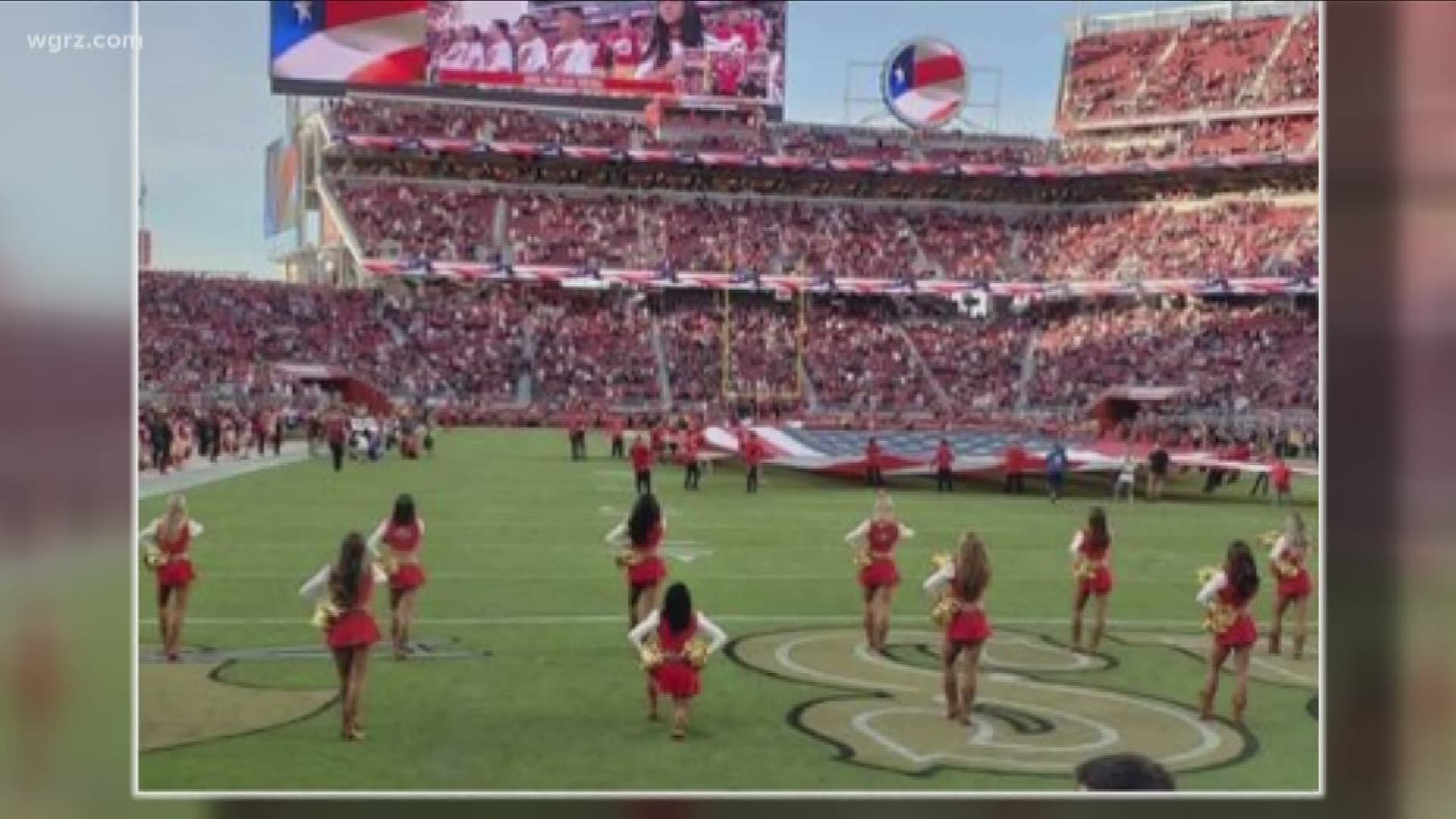
The San Francisco 49ers' relationship with the pre-game national anthem has occasionally become a focal point of national conversation, driven by player protests, stadium operational choices, and broader cultural discussions around patriotism, athletic platforms, and free speech in professional sports.
The national anthem ceremony before National Football League (NFL) games is designed to be a moment of collective unity, patriotism, and traditional pageantry. However, for the San Francisco 49ers organization, this customary pre-game ritual has periodically intersected with high-profile socio-political movements and organizational decisions, drawing intense media scrutiny. Examining these instances requires looking at the historical context, the immediate reactions from fans and league officials, and the long-term impact on the franchise.
Understanding these events involves analyzing how sports platforms interact with national discourse, the mechanics of player demonstrations, and the operational protocols governing pre-game ceremonies. Below is an exhaustive review of three distinct periods or events involving the San Francisco 49ers and the national anthem that generated substantial public debate.
1. Colin Kaepernick’s Kneeling Protest (2016)
The most prominent and historically significant controversy surrounding the San Francisco 49ers and the national anthem occurred during the 2016 NFL preseason, initiated by quarterback Colin Kaepernick.
Background and Initiation
During the 2016 NFL preseason, observers noticed that Colin Kaepernick was sitting on the bench during the playing of "The Star-Spangled Banner." By the third preseason game, on August 26, 2016, Kaepernick transitioned from sitting to kneeling during the anthem, a modification he made after consulting with former Green Beret and NFL player Nate Boyer to show respect to military members while maintaining his form of protest.
Kaepernick’s stated motivation was to draw attention to systemic racial inequality, police brutality, and social injustice in the United States. In post-game interviews, he articulated that he could not show pride in a flag for a country that oppressed Black people and people of color.
Immediate Reaction and Franchise Response
The reaction was immediate and polarized. The San Francisco 49ers released a formal statement acknowledging the player's right to participate or not participate in the tradition:
"The national anthem is and always will be a special part of the pre-game ceremony. It is an opportunity to honor our country and reflect on the great liberties we are afforded as its citizens. In respecting such American principles as freedom of religion and freedom of expression, we recognize the right of an individual to choose and participate, or not participate, in our celebration of the national anthem."
NFL headquarters released a similar statement noting that players are encouraged, but not mandated, to stand during the anthem. However, as the season progressed and other players across the league joined Kaepernick by kneeling, raising fists, or staying in the locker room, the debate escalated into a national political flashpoint.
Cultural and Operational Fallout
The protest ignited a fierce nationwide debate encompassing sports journalism, political commentary, and fan engagement. Supporters praised Kaepernick for utilizing his platform to address civil rights issues, drawing comparisons to historic athlete-activists like Muhammad Ali and Tommie Smith. Critics, including various politicians, veterans' groups, and fans, argued that the protest was disrespectful to the military, the flag, and the country as a whole.
For the 49ers franchise, the ongoing media attention created a complex operational environment for the coaching staff, front office, and security teams. Kaepernick opted out of his contract after the 2016 season and did not sign with another NFL team, leading to a long-standing legal grievance and continuous debate regarding collusion and the intersection of athletic employment and political speech.
2. The 2017 Sideline Demonstrations and Vice President Pence’s Walkout
The ripple effects of the 2016 protests extended into the 2017 NFL season, manifesting in a widespread wave of demonstrations across the league that directly involved the San Francisco 49ers during an October game against the Indianapolis Colts.
Context of the 2017 Season
By the autumn of 2017, player protests had expanded significantly, fueled in part by public rhetoric from political figures criticizing the NFL and protesting players. Under the leadership of head coach Kyle Shanahan and team captains, the 49ers organization sought to navigate the delicate balance between supporting players' constitutional rights and managing external pressures.
The Indianapolis Colts Game and the Pence Walkout
On October 8, 2017, the San Francisco 49ers played an away game against the Indianapolis Colts at Lucas Oil Stadium. During the rendition of the national anthem, a large contingent of 49ers players knelt on the sideline, while others stood with locked arms.
Among the attendees was then-Vice President Mike Pence, who had traveled to Indianapolis to attend the game, which also served as a retirement ceremony for legendary Colts quarterback Peyton Manning. Citing the players' kneeling demonstrations, Vice President Pence departed the stadium immediately following the anthem. He released a statement explaining his decision:
"I left today's game because President Trump and I will not dignify any event that disrespects our soldiers, our Flag, or our National Anthem."
Broader Implications and League Policy Discussions
The high-profile exit by the Vice President thrust the 49ers back into the center of a national political debate. President Donald Trump weighed in via social media, praising the walkout and renewing calls for the NFL to institute mandatory standing rules.
The incident prompted emergency owners' meetings later that year, where league leadership and franchise owners attempted to draft policies balancing player expression with broadcast and sponsorship concerns. While the NFL ultimately deliberated on rules requiring players on the sideline to stand or remain in the locker room, the 49ers continued to emphasize internal communication, community outreach initiatives, and player-led foundations aimed at bridging community-police relations, seeking constructive outlets for the activism sparked by the anthem debates.
3. Operational and Logistical Anthem Debates: Selection of Performers and Ceremonial Protocols
Beyond player-led protests, the San Francisco 49ers have occasionally faced localized debate regarding the logistical execution of the national anthem ceremony itself, including the selection of performers, specialized choral arrangements, and pre-game broadcast decisions.
Stadium Entertainment and Public Reception
As modern NFL franchises manage massive stadium operations at Levi's Stadium in Santa Clara, California, every element of the pre-game script undergoes intense scrutiny from local and national fanbases. While player protests dominated headlines in 2016 and 2017, subsequent years have seen minor public debates center around artistic interpretations of "The Star-Spangled Banner" during high-profile games, such as Thanksgiving matchups, Monday Night Football appearances, and playoff contests.
NFL broadcast partners routinely choose whether to televise the national anthem live. During periods of heightened sensitivity following the 2016–2017 controversies, networks faced continuous audience feedback regarding whether cameras should focus on the sidelines during the anthem, or pan away to avoid capturing potential demonstrations. The 49ers' media relations team and stadium entertainment directors had to coordinate closely with league broadcasting partners to manage the visual presentation of these ceremonies.
Summary Comparison of Anthem Controversies
To better understand the distinct nature of these events, the table below outlines the timeline, primary catalyst, and core nature of the debate for each instance involving the 49ers.
| Event / Period | Primary Catalyst | Core Nature of Debate | Organizational / League Outcome |
|---|---|---|---|
| 2016 Preseason | Colin Kaepernick sitting/kneeling | Racial injustice, police brutality, freedom of speech vs. patriotism | Player opt-out, widespread national movement, league policy discussions |
| 2017 Colts Game | Large-scale sideline kneeling | Presidential/Vice-Presidential involvement, sideline etiquette | Emergency owners' meetings, community engagement initiatives |
| Operational Choices | Broadcast framing and performer selection | Entertainment choices, media coverage of sidelines | Ongoing coordination with broadcasters and stadium operations |
Frequently Asked Questions
Did all San Francisco 49ers players kneel during the national anthem?
No. While a significant group of players participated in kneeling demonstrations during the 2016 and 2017 seasons, other players chose to stand, some stood with linked arms alongside kneeling teammates, and others remained inside the locker room during the ceremony. The organization maintained a policy supporting individual player choices within the framework of team unity.
What was the official NFL policy change regarding the national anthem following these debates?
In May 2018, NFL owners approved a policy requiring all personnel on the sideline to stand for the national anthem, while allowing players who did not wish to stand to remain in the locker room without penalty. However, this policy was met with pushback from the NFL Players Association (NFLPA), leading to a subsequent freeze on enforcement while the league and players worked on collaborative social justice initiatives.
How did the San Francisco 49ers organization address the underlying social issues raised by the anthem debates?
In addition to issuing statements supporting freedom of expression, the 49ers ownership, players, and front office established a player-led charitable foundation and dedicated funding toward criminal justice reform, community-police relations, and educational equity initiatives in the San Francisco Bay Area.
Are NFL players required by contract to participate in the national anthem ceremony?
NFL standard player contracts and league rulebooks outline general codes of conduct for pre-game activities. Historically, while standing for the anthem has been strongly encouraged and expected as part of standard pre-game protocol, explicit mandatory enforcement has frequently been subject to negotiation between the league and the NFLPA regarding constitutional and labor rights.
Practical Guidance and Next Steps for Followers of Sports History
For researchers, sports historians, and fans examining the intersection of athletics and sociopolitical movements, analyzing these events requires relying on primary source documentation, verified league statements, and reputable journalistic reporting.
- Consult Official Archives: Review official statements released by the San Francisco 49ers front office, the NFL league office, and the NFLPA to understand the official positions of all stakeholders.
- Examine Media Context: Look at contemporary sports journalism from 2016 and 2017 to capture the immediate public reaction and evolving narrative surrounding athlete activism.
- Monitor Ongoing Policy Shifts: Keep track of how professional sports leagues continue to adapt their pre-game ceremonies, balancing traditional pageantry with modern standards of free expression.