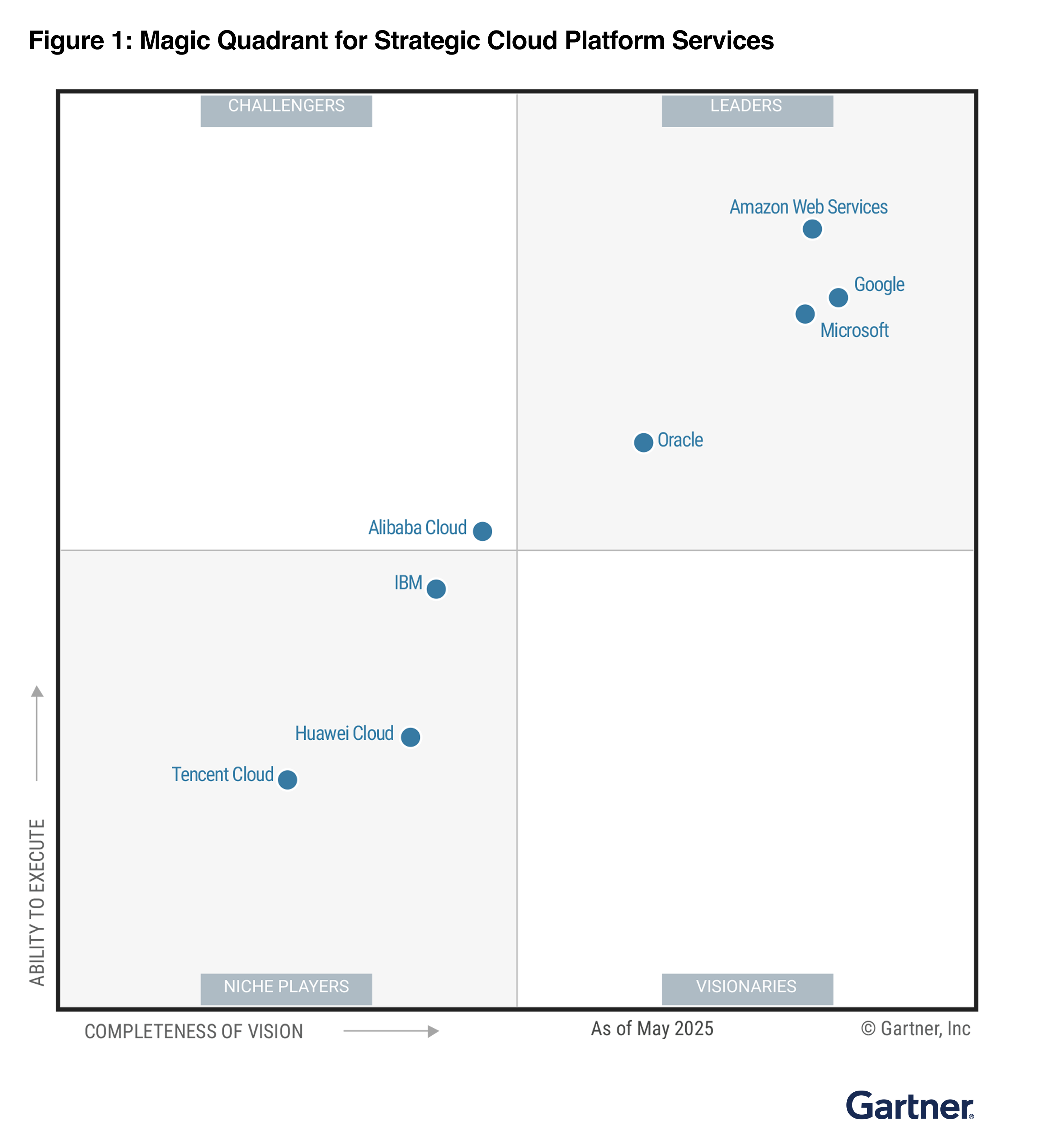
The Gartner Magic Quadrant for Unified Communications as a Service (UCaaS) highlights key industry leaders driving modern cloud communications. Vendors like Microsoft, RingCentral, Zoom, Cisco, and 8x8 continue to dominate the Leaders quadrant. The market focus has shifted toward deep generative AI integration, seamless CCaaS convergence, advanced analytics, and global voice reliability.
Unified Communications as a Service (UCaaS) has evolved from an enterprise option into the primary backbone for organizational communication, team collaboration, and modern business productivity. As organizations streamline operational workflows and support distributed workforces, evaluating cloud communications providers requires analyzing core telephony performance, generative AI capabilities, contact center convergence, and long-term architectural scalability.
The evaluation criteria established by research firm Gartner assess vendors across two primary dimensions: Ability to Execute and Completeness of Vision. Organizations evaluating UCaaS technology rely on this annual framework to benchmark software providers, de-risk procurement decisions, and align enterprise IT roadmaps with long-term technology trajectories.
Understanding the Gartner UCaaS Magic Quadrant Evaluation Framework
Gartner categorizes evaluated vendors into four distinct quadrants: Leaders, Challengers, Visionaries, and Niche Players. Understanding these placements requires examining the core methodology used to evaluate cloud communications providers.
- Visionaries
- Leaders
- Niche Players
- Challengers
Ability to Execute
This dimension measures a vendor's operational stability, financial health, product quality, sales channel efficiency, and customer satisfaction metrics. Key factors analyzed include:
- Product or Service: Soundness of the underlying IP telephony infrastructure, session border controller (SBC) architecture, video network resiliency, and native mobile client stability.
- Overall Viability: Corporate revenue growth, enterprise market share retention, cash reserves, and reinvestment in research and development.
- Customer Experience: Metrics derived from peer evaluations, service level agreement (SLA) performance, post-deployment customer success management, and support ticket response efficiency.
- Market Responsiveness and Track Record: The capacity to adapt to changing workforce dynamics, unexpected regulatory mandates, and shifting user interaction patterns.
Completeness of Vision
This dimension assesses whether a vendor understands the future direction of the enterprise software market and possesses a viable plan for continuous technological innovation. Key factors analyzed include:
- Market Understanding: How effectively a provider anticipates enterprise pain points, such as complex multi-national PSTN (Public Switched Telephone Network) regulation and unified compliance monitoring.
- Offering (Product) Strategy: The alignment of product development roadmaps with strategic industry developments, particularly generative artificial intelligence, contextual collaboration, and continuous automation.
- Innovation: Industry leadership in introducing novel capabilities, such as advanced noise suppression algorithms, real-time language translation, and intelligent meeting summarize workflows.
- Geographic Strategy: Expansion into developing global regions, localized carrier relationships, regional data center footprints, and compliance with strict localized data sovereign requirements (such as GDPR in Europe).
Market Leaders in the Cloud Communications Evaluation
Vendors classified in the Leaders quadrant consistently demonstrate robust financial performance, vast global deployment bases, comprehensive feature matrices, and continuous technological expansion.
Microsoft (Microsoft Teams Phone)
Microsoft maintains a commanding presence in the enterprise communication ecosystem through its deep integration with the broader Microsoft 365 productivity suite. Microsoft Teams Phone serves as the PSTN voice engine for hundreds of millions of active enterprise collaboration users.
- Core Strengths: Deep integration with Entra ID (formerly Azure Active Directory), native document co-authoring, and broad admin portal standardization. Microsoft Copilot acts as a central AI engine across voice calls, video meetings, and asynchronous team messaging, generating dynamic task lists and meeting summaries.
- Voice Integration Flexibility: Organizations can select from multiple PSTN deployment models, including Microsoft Calling Plans, Operator Connect (direct service provider peering), and Direct Routing (utilizing third-party session border controllers).
- Key Considerations: Complex enterprise licensing structures (such as E3/E5 bundles alongside PSTN calling add-ons) require active software asset management. Advanced contact center and complex attendant console functionalities often necessitate specialized third-party integrations.
RingCentral (RingEX)
RingCentral remains a dedicated cloud communications benchmark, praised for its reliable architecture, extensive carrier interconnects, and global presence.
- Core Strengths: RingCentral’s flagship platform, RingEX, offers high uptime guarantees (99.999% SLA) coupled with global PBX capabilities across more than 45 countries. Its RingSense AI engine automatically transcribes conversations, captures key action items, and offers conversational analytics for revenue generation teams.
- Ecosystem Maturity: Possesses an extensive pre-built application ecosystem with hundreds of out-of-the-box integrations for platforms like Salesforce, ServiceNow, Hubspot, and Google Workspace.
- UCaaS and CCaaS Synergy: Offers unified provisioning alongside RingCentral Contact Center (powered by NICE) and its native RingCentral RingCX solution, making it appealing to enterprises standardizing on a single platform partner.
Zoom (Zoom Workplace)
Zoom has expanded from its origin as a video-first platform into a comprehensive enterprise collaboration platform named Zoom Workplace, anchored by the rapid adoption of Zoom Phone.
- Core Strengths: Exceptional user interface adoption rates, low latency video algorithms, and rapid deployment velocity. Zoom Phone has shown significant enterprise migration growth, benefiting from flexible Bring Your Own Carrier (BYOC) infrastructure models and native hardware ecosystem partnerships.
- AI Integration: Zoom AI Companion is included at no additional license cost for paid accounts, providing real-time meeting summarization, message drafting, and action item extraction without imposing expensive per-user monthly add-on fees.
- Platform Evolution: Zoom Contact Center and Zoom Virtual Agent provide native customer experience capabilities that closely mirror the central video and voice application interface.
Cisco (Webex Suite)
Cisco leverages decades of enterprise networking and IP telephony heritage through its modern Webex Suite, providing enterprise security, custom hardware integration, and intelligent meeting space capabilities.
- Core Strengths: Hardware-software synergy. Cisco manufactures its own line of enterprise desk phones, room kits, and modern collaboration boards, providing a tightly controlled device management framework via Webex Control Hub.
- Security and Compliance: Recognized for advanced end-to-end encryption standards, strict data residency controls, and detailed administrative policy governance, making it a frequent choice for defense, public sector, and heavily regulated financial institutions.
- AI Advancements: Webex AI Assistant delivers real-time speech enhancement, dynamic background noise removal, automatic translations, and video bandwidth optimization algorithms designed for challenging network connections.
8x8 (8x8 XCaaS)
8x8 differentiates itself by offering an entirely unified, single-codebase platform that seamlessly blends unified communications with native contact center functionality through 8x8 eXperience Communications as a Service (XCaaS).
- Core Strengths: Single platform architecture sharing unified administration, shared user directories, unified reporting, and cross-platform analytics. This unified approach eliminates data silos between back-office employees and front-line customer service agents.
- Global Footprint: Strong international PSTN coverage with full carrier-grade voice support in dozens of countries, reducing dependence on third-party regional gateways.
- Value Proposition: Highly competitive Total Cost of Ownership (TCO) for mid-market and enterprise organizations seeking bundled voice, video, team chat, and omnichannel contact center capabilities within a single operational vendor contract.
Key Challengers, Visionaries, and Niche Players
While Market Leaders command significant overall market share, providers in the remaining three quadrants fulfill specialized deployment requirements, niche industry needs, or hyper-focused regional architectures.
- Visionaries:
- Dialpad
- Leaders:
- Microsoft
- RingCentral
- Zoom
- Cisco
- 8x8
- Niche Players:
- GoTo
- Comcast Business
- Regional Specialists
- Challengers:
- Regional Telcos
- Carriers with native UC SaaS
Visionaries: AI-Native Innovators
Vendors categorized as Visionaries, such as Dialpad, demonstrate hyper-focused technological innovation despite possessing a smaller overall enterprise market share than established Leaders.
- Dialpad: Built around an AI-first framework (Dialpad Ai), offering real-time sentiment analysis, live agent coaching, instantaneous call transcription, and automated supervisor alerts directly within the core voice workflow. Dialpad’s voice intelligence architecture acts as an engine that actively assists enterprise conversations as they happen, rather than processing analytics post-call.
Challengers and Niche Players: Focused Industry Execution
- GoTo (GoTo Connect): Tailored primarily toward small-to-medium enterprises (SMEs) seeking simplified cloud PBX management, integrated IT remote access management, and straightforward per-user pricing structures without unnecessary corporate complexity.
- Comcast Business & Regional Telecommunication Carriers: These entities focus on carrier-grade network connectivity, bundled local infrastructure, and regional customer support models. They appeal to organizations prioritizing a single billing relationship for enterprise broad-band access, managed voice gateways, and core business communications.
Key Trends Driving the UCaaS Market Landscape
Evaluating vendors in the cloud communications market requires evaluating how platforms address macro trends in software development, AI automation, and network topology.
- Modern UCaaS Ecosystem
- AI Automation
- Real-time Summaries
- Sentiment Analysis
- Generative Drafts
- Platform Integration
- Native CCaaS Convergence
- Open API & SDK Ecosystem
- CRM & ERP Synchronizations
- Enterprise Infrastructure & Voice
- Session Border Controllers (SBC) / Direct Routing / BYOC
- Multi-Region Data Sovereignty & Encryption Standards
- AI Automation
1. Generative AI as a Core Feature Rather Than an Add-On
Generative AI features have progressed from experimental add-ons to essential software capabilities. Enterprise platforms now use large language models (LLMs) and natural language processing (NLP) to convert unstructured voice and video conversations into actionable business intelligence:
- Automated Meeting Artifacts: Transcription services now automatically extract action items, generate chronological meeting chapters, and tag participants assigned to key tasks.
- Real-time Sentiment & Coaching: AI algorithms evaluate speaker cadence, tone, and active user sentiment, offering dynamic guidance during internal strategy calls or external sales presentations.
- Asynchronous Communication Summaries: Long team chat channels and extended message threads are automatically summarized, helping employees catch up quickly without reading hundreds of manual posts.
2. Convergence of UCaaS and CCaaS (XCaaS)
The historic operational divide between enterprise employee communications (UCaaS) and customer service contact centers (CCaaS) continues to diminish. Modern organizations reject software environments where contact center agents operate in isolation from subject matter experts in back-office business units.
- Unified Directory Resolution: Contact center agents can instantly view the presence status of internal domain experts (e.g., engineering, billing, legal) and transfer live customer calls without leaving their core desktop interface.
- Single-Pane Administration: Unified cloud management tools lower administrative burdens, simplify regulatory compliance auditing, and streamline identity management.
3. PSTN Flexibility: Operator Connect, Direct Routing, and BYOC
Enterprise organizations rarely migrate their entire voice topology to a single off-the-shelf carrier model overnight. Maintaining flexibility in Public Switched Telephone Network connectivity is critical for multi-national operations:
- Bring Your Own Carrier (BYOC): Enables organizations to retain their legacy telecommunication service agreements, competitive regional per-minute rates, and existing trunking infrastructures while linking hardware directly into cloud platforms like Microsoft Teams, Zoom, or Webex via certified Session Border Controllers (SBCs).
- Operator Connect & Managed Peering: Simplifies backend carrier management by allowing IT administrators to assign PSTN phone numbers directly inside the software vendor's admin dashboard using pre-peered tier-one telecom partner networks.
4. Zero Trust Security and Data Sovereignty
As enterprise cloud communications handle sensitive financial data, medical information, and strategic IP, data security requirements are stricter than ever:
- End-to-End Encryption (E2EE): Required for high-security video conferences and multi-party voice sessions.
- Data Residency Isolation: Multinational enterprises require local data center hosting options to guarantee that call recordings, transcriptions, and personal data remain strictly within designated geopolitical boundaries (e.g., EU data residency directives).
Detailed Vendor Comparison Matrix
The following table presents a clear comparative analysis of top vendors highlighted within the evaluation framework:
| Vendor | Primary Core Strength | Generative AI Framework | CCaaS Integration Strategy | Recommended Target Deployment |
|---|---|---|---|---|
| Microsoft | Native integration with M365 suite and enterprise identity systems | Microsoft Copilot across Teams ecosystem | Third-party integrations via Certified Contact Center program | Enterprises heavily invested in Microsoft 365 infrastructure seeking integrated voice |
| RingCentral | 99.999% voice uptime reliability and global carrier reach | RingSense conversational intelligence | RingCentral RingCX (native) and RingCentral Contact Center (powered by NICE) | Mid-market and large global enterprises requiring high-reliability voice and versatile ecosystem app integrations |
| Zoom | Exceptional user adoption, low-latency video, flexible BYOC models | Zoom AI Companion (included at no additional software license charge) | Zoom Contact Center (native cloud product) | Organizations seeking high user satisfaction, cost-effective platform AI, and flexible PSTN routing |
| Cisco | Hardware-software synergy, enterprise-grade security controls | Webex AI Assistant | Webex Contact Center (native portfolio suite) | Regulated industries, public sector, and enterprises with extensive physical office rooms and desk phone fleets |
| 8x8 | Single-codebase architecture combining UCaaS and CCaaS | Integrated XCaaS speech and interaction analytics | Native, single-codebase 8x8 Contact Center | Organizations seeking a single integrated vendor agreement for back-office employees and customer support agents |
| Dialpad | AI-native framework with real-time call coaching and analytics | Dialpad Ai (native real-time engine) | Dialpad Contact Center | Organizations seeking voice intelligence, immediate transcribing, and real-time operational agent support |
Strategic Buyer’s Guide: How Enterprise IT Leaders Should Evaluate UCaaS Vendors
Selecting a enterprise communications platform requires evaluating technical, financial, and organizational requirements.
- Assess Existing Ecosystem & Active Directories
- Map Voice Architecture & Telecom Connectivity
- Calculate Total Cost of Ownership (TCO)
- Audit Regulatory Compliance & Data Residency
- Execute Pilot Proof-of-Concept (PoC) Testing
Step 1: Audit Existing Ecosystem and Directory Services
Examine your current desktop software, identity providers, and email infrastructure. If your organization relies heavily on Microsoft Entra ID, Microsoft Exchange, and SharePoint, deploying Microsoft Teams Phone offers natural user administrative synergies. Conversely, if your environment uses Google Workspace alongside Salesforce CRM, platforms like RingCentral, Zoom, or Dialpad offer native out-of-the-box integrations that may streamline daily workflows.
Step 2: Map Voice Architecture and Carrier Interconnects
Catalog all existing PSTN circuits, analog endpoints (such as elevator phones, door buzzers, and warehouse overhead paging systems), and legacy SIP trunks across your physical offices:
- Determine whether your organization can transition entirely to vendor-provided native calling plans.
- Evaluate whether maintaining existing telecommunications contracts via Direct Routing or BYOC delivers significant cost savings or fulfills localized regulatory compliance requirements in specific operating regions.
Step 3: Evaluate Total Cost of Ownership (TCO) Beyond the Base User License
A common mistake in IT procurement is evaluating platforms solely on the advertised monthly per-user base license fee. Always factor in:
- Add-on AI Licensing: Calculate the cost of per-user AI add-ons (such as Microsoft Copilot) across your enterprise user base versus vendors offering built-in AI functionality (such as Zoom AI Companion).
- E-911 and Regulatory Fees: Confirm geographic emergency service compliance software costs and localized telecom access surcharges.
- Hardware Lifecycle Management: Factor in the hardware cost of replacing non-compatible SIP desk phones, upgrading video room systems, or purchasing specialized enterprise headsets.
Step 4: Validate Data Residency and Regulatory Compliance
Ensure prospective cloud platforms meet your industry's specific legal and regulatory guidelines:
- Verify HIPAA compliance mechanisms if operating within healthcare.
- Confirm FINRA, MiFID II, and call recording audit capabilities for financial services.
- Review geopolitical data center locations to comply with localized data residency mandates.
Step 5: Execute a Structured Proof-of-Concept (PoC)
Never commit to a global enterprise rollout based solely on vendor sales demos. Conduct a 30-to-60-day pilot involving diverse organizational personas:
- Executive Leadership & Mobile Workers: Test seamless call handoffs between mobile cellular networks and desktop Wi-Fi.
- Administrative Assistants: Test complex call handling, multi-line delegation, speed dialing, and dynamic call transfers.
- Field Engineers & Operations: Assess mobile app responsiveness under restricted or high-latency cellular network conditions.
Frequently Asked Questions
What is the Gartner Magic Quadrant for UCaaS?
The Gartner Magic Quadrant for UCaaS is an annual market research report published by Gartner Inc. It evaluates global providers of Unified Communications as a Service across quantitative and qualitative operational benchmarks. Vendors are categorized into four distinct quadrants—Leaders, Visionaries, Challengers, and Niche Players—based on their overall Ability to Execute and Completeness of Vision.
Why is the convergence of UCaaS and CCaaS becoming critical for enterprise organizations?
Historically, unified communications (internal staff voice, chat, video) and contact center operations (external customer support) were purchased and managed as separate software silos. Converging UCaaS and CCaaS into a unified platform (often referred to as XCaaS) enables customer support agents to seamlessly contact internal back-office experts in real time, lowers software subscription overhead, unifies administrative user directories, and provides cross-departmental analytics across the entire organization.
How does generative AI impact vendor positioning in the cloud communications market?
Generative AI has evolved into a primary product differentiator. Vendors are evaluated on how effectively their platforms integrate real-time meeting transcriptions, automated action item summaries, natural language search, sentiment analysis, and dynamic agent coaching into everyday communication workflows. Platforms offering built-in, low-cost AI features hold a significant value advantage over solutions relying on high monthly per-user add-on fees.
Is choosing a Leader in the Magic Quadrant always the optimal decision for every organization?
Not necessarily. While vendors in the Leaders quadrant demonstrate overall market viability, robust product matrices, and advanced feature sets, Visionaries or Niche Players may offer specialized capabilities tailored to specific business requirements. For example, a company seeking native real-time AI conversation coaching might select a Visionary like Dialpad, while an SME seeking simple PBX capabilities and IT remote desktop management might favor a Niche Player like GoTo.
What is BYOC and why is it important for enterprise UCaaS migrations?
Bring Your Own Carrier (BYOC) is a telecom deployment model that allows enterprises to connect their existing telecommunication carriers and legacy PSTN trunking infrastructure directly into a cloud UCaaS platform via certified Session Border Controllers (SBCs). This flexibility allows organizations to retain long-term carrier pricing agreements, maintain localized geographic number coverage, and avoid expensive contract termination fees during multi-phase enterprise cloud migrations.
Actionable Next Steps for Enterprise IT Decision Makers
To maximize the strategic value of your next enterprise communications migration, consider these immediate practical steps:
- Audit Current Utilization Rates: Review active phone numbers, video meeting room licenses, and legacy PBX hardware utilization across all corporate locations to establish an accurate deployment baseline.
- Standardize Requirements Across Stakeholders: Convene cross-functional discussions between IT infrastructure management, contact center operations, procurement, and corporate legal teams to outline mandatory technical requirements.
- Request Comprehensive Demos & Sandbox Access: Engage top-tier candidate vendors (such as Microsoft, RingCentral, Zoom, Cisco, and 8x8) to set up non-production sandbox environments to test real-world administrative management interfaces.
- Negotiate Multi-Year Pricing Protections: Include ceiling protection clauses on user licensing renewals, add-on AI feature packages, and global PSTN call routing fees to ensure long-term cost predictability.