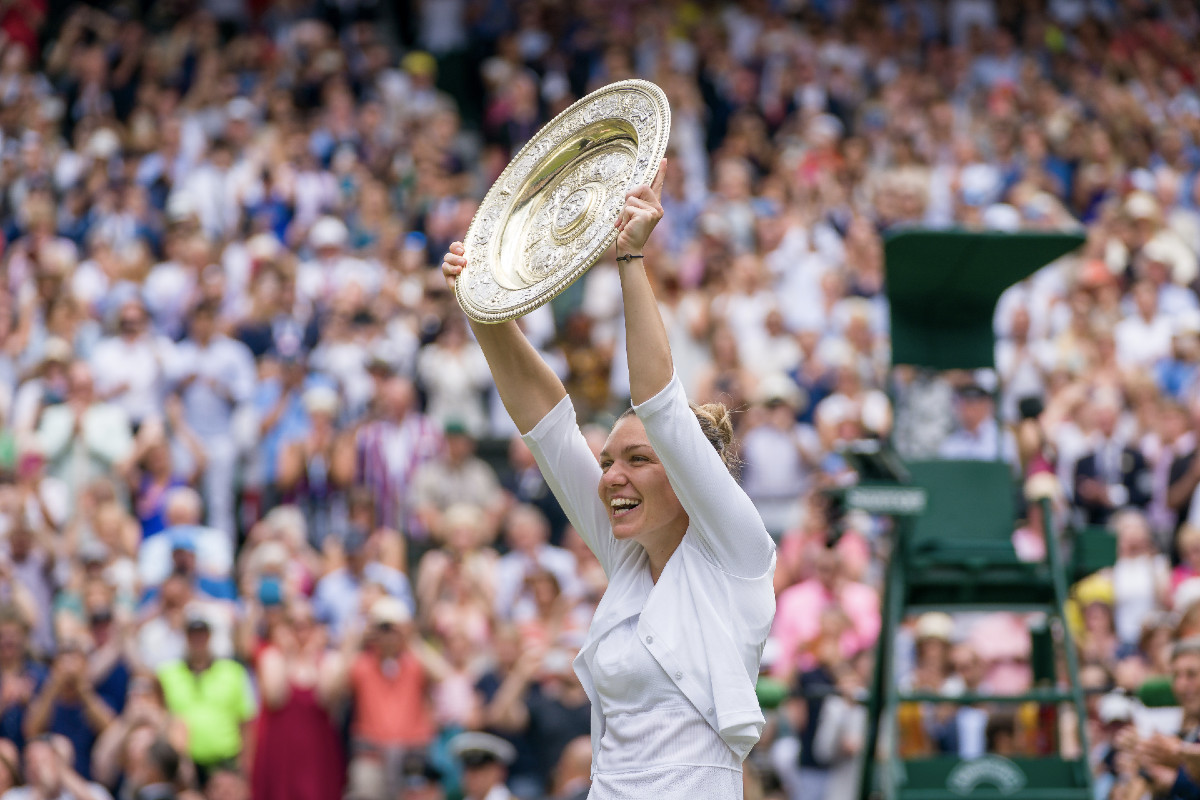
The 2019 Wimbledon Ladies' Singles final between Simona Halep and Serena Williams stands as one of the most clinical performances in Grand Slam history. On July 13, 2019, Simona Halep defeated the seven-time champion Serena Williams in straight sets, 6–2, 6–2, securing her first Wimbledon title in a match that lasted only 56 minutes.
The Context of the 2019 Final
To understand the gravity of this match, one must look at the trajectory of both players leading up to the final on Centre Court. Serena Williams entered the match seeking her 24th Grand Slam title, which would have tied Margaret Court’s all-time record. Williams had dominated her path to the final, exhibiting power and serve reliability that made her the heavy favorite.
Simona Halep, on the other hand, had endured a challenging road. Having previously reached the world number one ranking and winning the 2018 French Open, she arrived at the All England Club with a tactical mindset that prioritized movement and defensive resilience over sheer power. The 2019 tournament was played under hot, dry conditions, which favored the cleaner, lower-bouncing shots that Halep utilized throughout the fortnight.
Pre-Match Preparation and Tactical Considerations
The narrative surrounding the match was heavily focused on the contrast in playing styles. Williams relied on her serve—the most potent weapon in women’s tennis—and her ability to dictate play from the baseline. Halep, conversely, arrived with a game plan designed to neutralize pace. Her camp recognized that to beat Williams, she could not simply play aggressive tennis; she had to be the "wall" that would frustrate Williams into making unforced errors.
The atmosphere on Centre Court was electric. The crowd was largely behind Williams, who looked to cement her place as the greatest of all time, but there was a quiet, steady anticipation for the underdog, Halep. For Halep, the task was not just physical but psychological; she had to overcome the pressure of a Grand Slam final against one of the sport's icons.
Match Timeline: The First Set
The match began with Halep serving first, immediately setting the tone for a high-intensity encounter.
- 1st Game: Halep held serve comfortably. It was clear from the first rally that she was moving better than she had at any point in the tournament, retrieving balls that seemed destined for winners.
- 2nd Game: Halep broke Williams’ serve immediately. The break was secured through a series of tactical exchanges where Halep’s foot speed forced Williams to strike one extra ball, leading to a crucial unforced error from the American.
- 3rd Game: Halep consolidated the break. She served with high precision, keeping the ball low and wide, preventing Williams from stepping into the court.
- 4th-6th Games: The players traded holds, with Williams struggling to find a rhythm. Her serve, usually a source of free points, was being returned with remarkable depth by the Romanian.
- 7th Game: A pivotal moment occurred when Halep broke Williams again. Williams looked increasingly rattled by the unrelenting pace of the rallies.
- 8th Game: Halep served for the set. She displayed poise, closing out the set 6–2 in just 26 minutes. Her error count was almost non-existent, a testament to her tactical discipline.
Match Timeline: The Second Set
The second set mirrored the intensity of the first, with Williams attempting to adjust her strategy by attacking the net more frequently.
- 1st-2nd Games: Williams held serve, hoping to find momentum. However, Halep matched her with an equally clinical hold.
- 3rd Game: Halep secured an early break in the second set. The pressure was visibly mounting on Williams, whose frustration was beginning to show in her body language.
- 4th Game: Halep held serve, moving to a 3–1 lead. The crowd realized they were witnessing a historic masterclass in consistency.
- 5th Game: Another break for Halep. At this stage, Williams was struggling to hit through the court; every time she attempted a winner, the ball was either returned or the target was missed by mere centimeters.
- 6th Game: Williams attempted a final push, creating a small window of opportunity, but Halep’s composure remained intact. She held to love.
- 7th Game: Serving to stay in the match, Williams faced immense pressure. Halep reached championship point and, with a final, precision-placed forehand that forced a final error, she claimed the victory.
Statistical Breakdown of the Match
The statistical divergence between the two players illustrates how Halep achieved such a one-sided result.
| Metric | Simona Halep | Serena Williams |
|---|---|---|
| First Serve Percentage | 78% | 68% |
| Unforced Errors | 3 | 26 |
| Winners | 13 | 17 |
| Break Points Won | 4 of 5 | 0 of 1 |
| Total Points Won | 55 | 39 |
The Aftermath and Significance
The 56-minute duration of the match was striking. It remains one of the shortest Wimbledon finals in the modern era. The post-match reactions highlighted the sportsmanship between the two athletes. Williams praised Halep’s "incredible" movement, while Halep expressed shock at her own performance, stating it was the best match of her life.
For Simona Halep, this win was transformative. She proved that the tactical, defensive-counterpuncher style could still conquer the power-hitting era of the late 2010s. For Williams, the loss was a difficult hurdle in her pursuit of the 24th Slam, underscoring the parity and unpredictability of top-tier women’s tennis.
Key Factors in Halep’s Performance
The primary driver of Halep’s success was her ability to mitigate the Williams serve. By standing slightly deeper and focusing on placement rather than power, she ensured that the second shot in every rally was always on her terms.
Furthermore, Halep’s court coverage was exemplary. On the fast grass of Wimbledon, lateral movement is vital. Halep anticipated Williams’ direction changes with uncanny accuracy. This forced Williams to feel that she needed to go for "tighter" lines—targets closer to the baseline or sideline—which directly contributed to her high number of unforced errors.
Frequently Asked Questions
How long did the 2019 Wimbledon final last?
The match lasted exactly 56 minutes. This efficiency was largely due to Simona Halep’s incredibly low error rate and her ability to neutralize Serena Williams’ service game early in both sets.
What was the final score of the 2019 match?
Simona Halep defeated Serena Williams 6–2, 6–2. It was a straight-sets victory that surprised many tennis analysts who had favored Williams leading into the final.
Why was this victory significant for Simona Halep?
This was Halep's first Wimbledon title. It confirmed her status as one of the most versatile players on tour, proving she could win on both clay (having won the French Open in 2018) and the faster grass courts of the All England Club.
Did Serena Williams play injured?
There was no official report of a significant injury limiting Williams during the 2019 final. Her performance was largely attributed to the immense pressure of the occasion and the tactical brilliance displayed by her opponent on that specific day.
What made the 2019 final different from previous meetings?
While Williams had historically dominated their head-to-head record, Halep entered this match with a refined tactical approach. She prioritized high-percentage tennis and defensive solidity, which effectively countered Williams' power game better than in their previous encounters.
Recommendation for Further Research
For those interested in the technical aspects of this match, reviewing the full match broadcast—specifically focusing on the placement of Halep's returns—is highly recommended. Observations of the "second ball" in rallies provide a masterclass in how to manage a power-based opponent. For broader historical context, the official Wimbledon archive provides detailed match stats and post-match press conference transcripts that shed light on the psychological state of both competitors during the 2019 tournament.