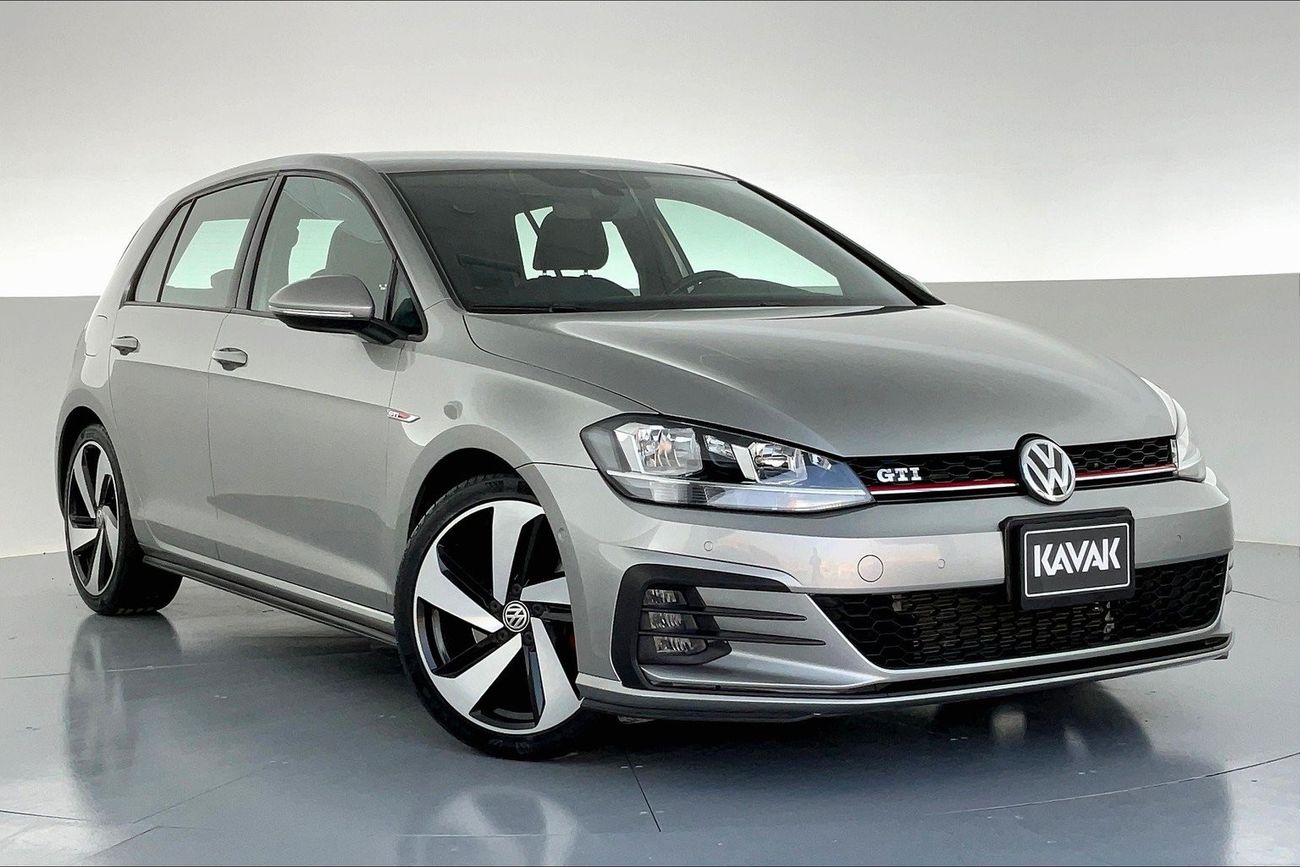
The 2019 Volkswagen Golf GTI delivers a 0-60 mph acceleration time ranging from approximately 5.8 to 6.2 seconds, depending on the transmission type and trim level. This performance profile solidified the 2019 model’s reputation as a balanced, everyday hot hatch, blending the punchy output of its EA888 engine with refined chassis dynamics suited for both daily commuting and spirited driving.
Contextualizing the 2019 GTI Performance Benchmark
The 2019 model year for the Volkswagen Golf GTI represents a notable point in the "Mk7.5" generation cycle. During this production year, Volkswagen increased the standard output of the 2.0-liter turbocharged four-cylinder engine to 228 horsepower, a notable bump from previous iterations. This power upgrade applied across all trim levels—S, Rabbit Edition, SE, and Autobahn—provided a consistent baseline for acceleration capabilities.
When discussing 0-60 mph times, it is essential to recognize that these figures are influenced by a variety of factors beyond raw horsepower. Transmission selection, tire compound, launch technique, and environmental conditions play a significant role in how quickly the vehicle transitions from a standing start to highway speeds. For the 2019 GTI, the choice between the standard six-speed manual transmission and the optional seven-speed DSG (Direct-Shift Gearbox) dual-clutch automatic transmission is the primary differentiator in verified acceleration tests.
Transmission Differences and Launch Dynamics
The performance gap between the manual and DSG-equipped variants is often debated, but in real-world conditions, the transmission technology dictates how the engine's power is delivered to the pavement.
The 7-Speed DSG Advantage
The dual-clutch transmission is widely regarded as the superior choice for raw acceleration. Because the DSG can execute lightning-fast gear changes without a traditional torque converter—and because it utilizes launch control software—it consistently achieves faster 0-60 mph times. The transmission maintains boost pressure between shifts, ensuring that the turbocharger remains in its optimal efficiency and power range. Drivers using the launch control feature can expect to hit the 60 mph mark consistently at the lower end of the 5.8-second spectrum.
The 6-Speed Manual Experience
The six-speed manual transmission provides a more tactile, driver-focused experience but often yields 0-60 mph times that are roughly 0.3 to 0.4 seconds slower than the DSG. The disparity arises from the time lost during gear changes and the difficulty of perfectly modulating the clutch and throttle to prevent wheel spin in first gear. While the manual transmission may not be the fastest on paper, many enthusiasts prioritize the engagement of the third pedal over the marginal gains in acceleration time.
Technical Specifications Affecting Performance
The 2019 GTI’s performance is supported by a robust mechanical foundation. The EA888 Gen 3 engine is a highly capable platform, and its integration with the front-wheel-drive architecture requires sophisticated electronic management to put power down effectively.
- Engine Displacement: 2.0-liter TSI turbocharged inline-four.
- Horsepower: 228 hp at 4,700–6,200 rpm.
- Torque: 258 lb-ft at 1,500–4,500 rpm.
- Drivetrain: Front-wheel drive with VAQ (electronically controlled limited-slip differential) on higher trims.
The inclusion of the VAQ limited-slip differential in the SE and Autobahn trims—and the Rabbit Edition—is a critical performance feature. By managing torque distribution across the front axle, the system reduces inside-wheel spin during acceleration out of corners and improves traction during straight-line launches. Without this differential, the GTI is more susceptible to "torque steer" and traction loss, which can negatively impact launch times on less-than-perfect road surfaces.
Comparative Performance Analysis
To understand where the 2019 GTI stands, it is helpful to look at how these metrics compare to different drivetrain configurations.
| Trim/Configuration | Transmission | Estimated 0-60 mph | Key Factor |
|---|---|---|---|
| Standard GTI (Base) | 6-Speed Manual | 6.1 – 6.2s | Driver skill dependent |
| Standard GTI (Base) | 7-Speed DSG | 5.8 – 5.9s | Launch control optimization |
| Performance Pack Equipt | 6-Speed Manual | 6.0 – 6.1s | Mechanical LSD assistance |
| Performance Pack Equipt | 7-Speed DSG | 5.7 – 5.8s | Combined LSD and DSG tech |
Note: Estimates are based on professional automotive testing data and representative of standard conditions. Actual results may vary based on tire wear, fuel quality (91+ octane recommended), and elevation.
Variables Influencing Acceleration
Achieving manufacturer-quoted or tested 0-60 mph times requires consistent conditions. Many owners attempting to verify these numbers find that environmental and mechanical variables can lead to discrepancies.
Tire Selection The factory-equipped tires, often all-seasons, are designed for longevity and versatility. Switching to high-performance summer tires significantly increases grip, allowing the car to translate more of its 258 lb-ft of torque into forward motion rather than wheel spin. If you are comparing your GTI's performance to professional road tests, ensure you are accounting for the type of rubber on the wheels.
Fuel Quality The 228 horsepower figure for the 2019 GTI is rated using premium fuel. Filling the vehicle with lower-octane gasoline can cause the engine control unit (ECU) to pull ignition timing to prevent engine knock, resulting in a measurable decrease in power output and, consequently, slower acceleration times.
Weight and Curb Weight Distribution The 2019 GTI is relatively light for a modern compact, but features like the sunroof, leather upholstery, and upgraded audio systems found in higher trims add weight. While the difference is marginal, the base S trim is theoretically the lightest in the lineup, which can provide a slight edge in acceleration performance over the more heavily optioned Autobahn trim.
Common Questions Regarding GTI Performance
Does a 2019 GTI with a DSG transmission require special maintenance to keep its acceleration performance? Yes. The DSG requires a fluid and filter change every 40,000 miles. Neglecting this maintenance can lead to "clutch slip" or sluggish shifting, which will directly degrade the vehicle's ability to perform consistent, fast launches.
Can I use launch control on the 6-speed manual 2019 GTI? No. Launch control is a feature exclusive to the DSG dual-clutch transmission. In a manual GTI, you must modulate the throttle and clutch manually. Practicing "feathering" the clutch rather than dumping it is the most effective way to improve your 0-60 times without damaging the drivetrain.
How does the 2019 GTI’s 0-60 time compare to the Golf R? The Golf R is significantly faster, typically clocking 0-60 mph in the 4.5 to 4.7-second range. The primary difference is the all-wheel-drive (4Motion) system, which allows the Golf R to apply its higher power output to all four wheels without the traction limitations inherent to the front-wheel-drive GTI.
Are these 0-60 times affected by the "Rabbit Edition" trim? The Rabbit Edition was essentially an appearance and equipment package that included the Performance Pack (limited-slip differential and bigger brakes). Because it carries the same engine and transmission options as other trims, its 0-60 performance is identical to an SE or Autobahn trim equipped with the same transmission.
What is the impact of elevation on 2019 GTI performance? Turbocharged engines like the EA888 are affected by altitude, but less so than naturally aspirated engines. At high altitudes, the air is thinner, and the turbo must spin faster to reach target boost pressure. While the ECU compensates, you may notice a slight drop in acceleration compared to sea-level performance.
Practical Advice for Owners
If you are looking to maximize your 2019 GTI’s performance, the most effective first step is ensuring the engine is breathing correctly and running on high-quality fuel. Using high-quality 93-octane gasoline is non-negotiable if you want the engine to produce its full rated power. Additionally, monitor your tire pressures; the factory recommended pressures are designed for comfort and fuel economy, but slightly lower pressures (within safe limits) can sometimes improve straight-line traction.
If you find that your vehicle is consistently underperforming, check for stored error codes using an OBD-II scanner. Modern engine management systems are highly sensitive, and a minor sensor issue—such as a failing diverter valve or a clogged air filter—can bleed off boost pressure, causing the car to feel sluggish.
Ultimately, the 2019 GTI was designed for a balance of daily utility and track-day capability. While the 0-60 mph metric is a popular way to measure "sportiness," the GTI's true performance character lies in its mid-range pull—the ability to accelerate from 30 to 50 mph or 50 to 70 mph—where the turbocharged torque curve shines brightest. When evaluating your specific vehicle, consider it a holistic system where transmission choice and tires are just as important as the horsepower under the hood.