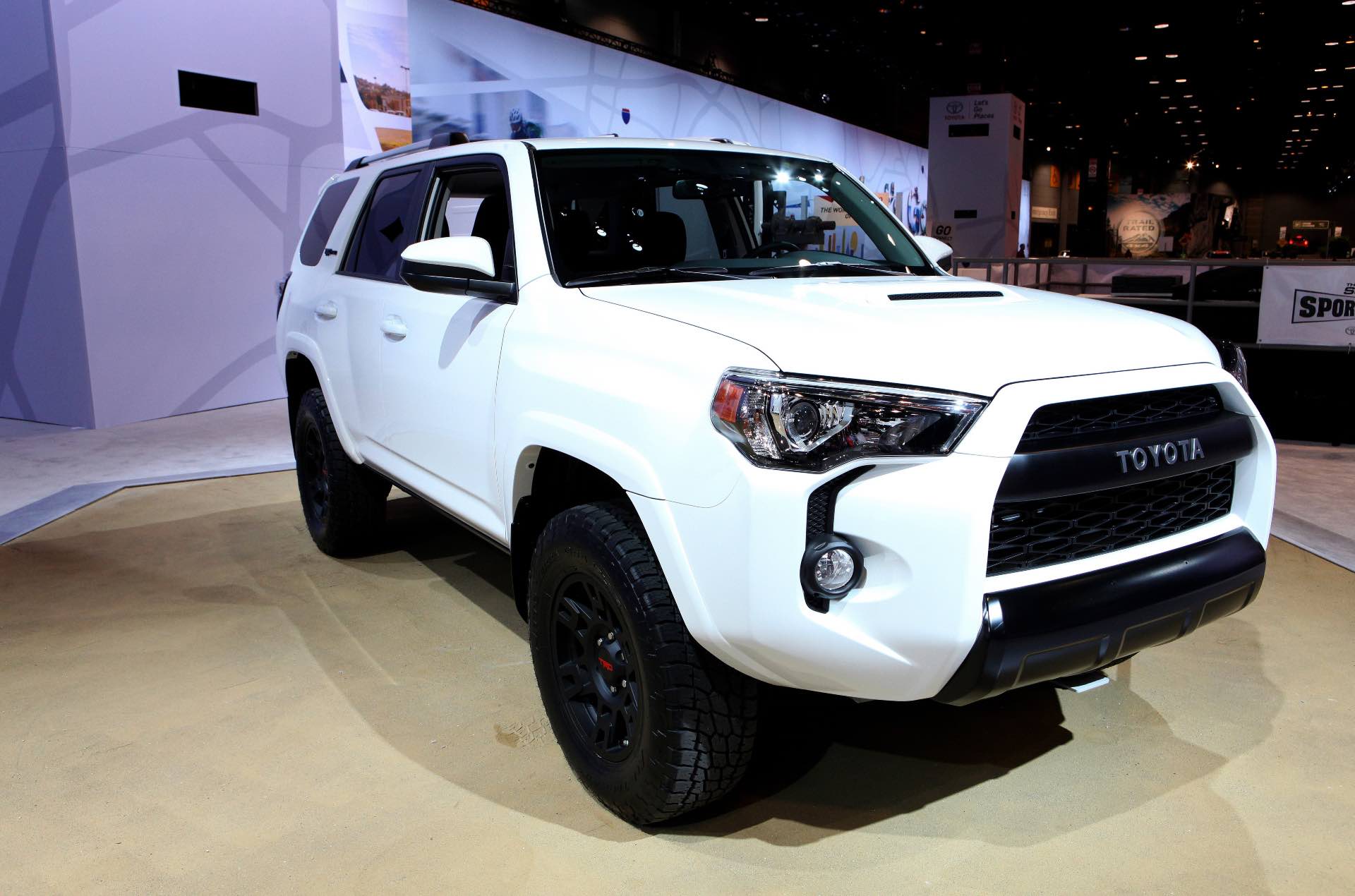
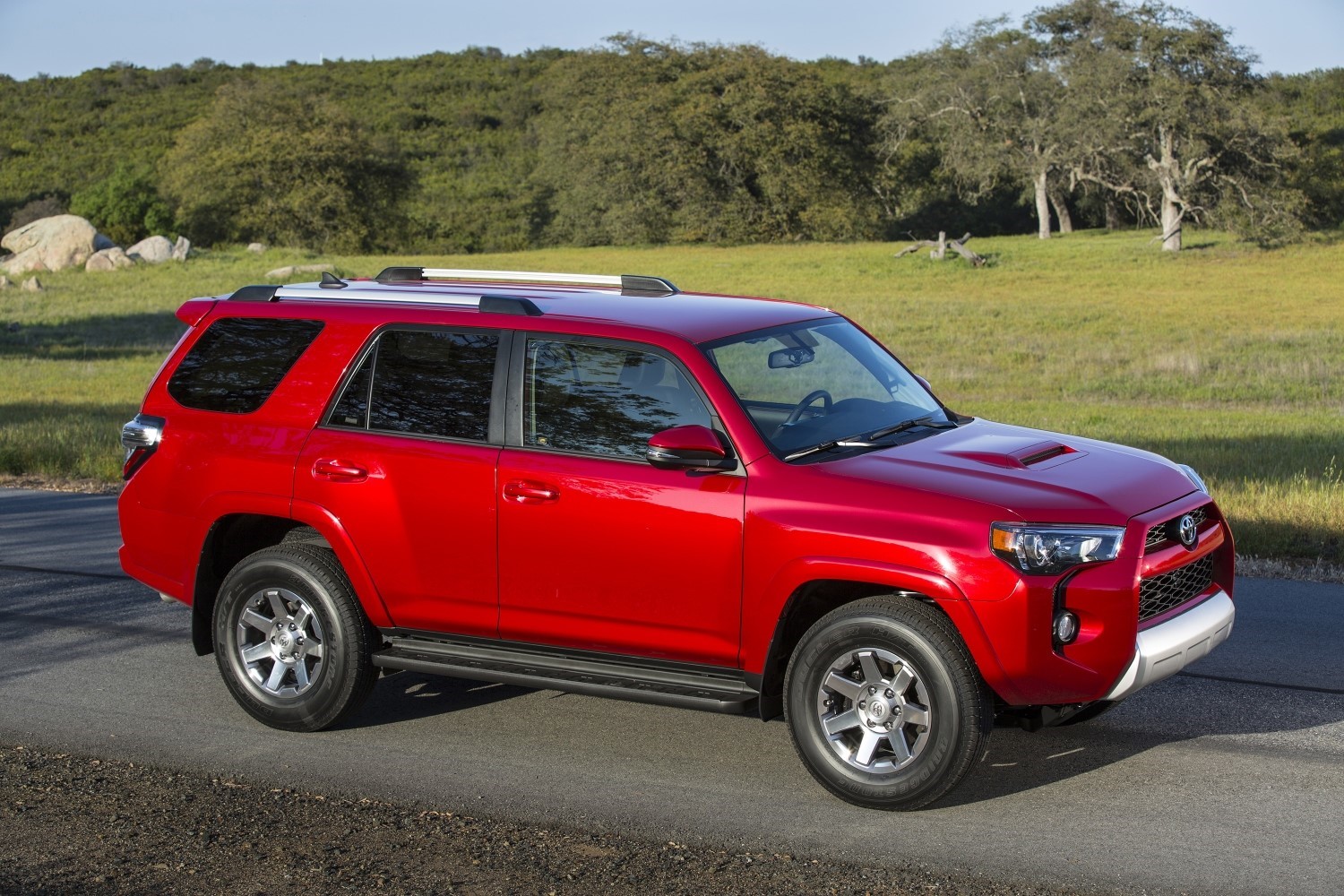
The 2017 Toyota 4Runner is equipped with a 4.0-liter V6 engine that produces 270 horsepower at 5,600 rpm and 278 lb-ft of torque at 4,400 rpm. This power is delivered through a five-speed automatic transmission, providing a reliable, though traditional, driving experience tailored for off-road durability rather than high-speed highway acceleration.
The 2017 Toyota 4Runner remains a cornerstone of the mid-size SUV market, specifically for those who prioritize ruggedness and mechanical longevity over cutting-edge fuel efficiency or rapid acceleration. As we look at this vehicle from the perspective of 2026, its technical specifications represent the pinnacle of Toyota's "over-engineered" philosophy. While modern SUVs have transitioned toward smaller turbocharged engines, the 2017 4Runner’s naturally aspirated 1GR-FE engine continues to be a benchmark for reliability in the secondary market.
The 4.0L V6 Powerplant: Heart of the 2017 4Runner
The core of the 2017 4Runner’s performance is the 1GR-FE engine. This 4.0-liter, 24-valve DOHC V6 features Dual Independent Variable Valve Timing with intelligence (VVT-i). The Dual VVT-i system is critical because it adjusts the timing on both the intake and exhaust camshafts. This allows the engine to optimize its power output based on the load, which is why the vehicle manages to provide a respectable 278 lb-ft of torque despite its aging architecture.
In terms of construction, the 1GR-FE utilizes an aluminum alloy block and cylinder heads, which helps manage weight—a necessary consideration given the heavy body-on-frame construction of the vehicle. The bore and stroke measure 94.0 mm and 95.0 mm, respectively, creating a nearly "square" engine geometry. This design is intentionally chosen to balance high-end horsepower with the low-end torque required for crawling over rocks or navigating deep mud.
From a technical standpoint, the 270 horsepower figure is achieved at 5,600 rpm. For daily drivers, this means the 4Runner requires the driver to push the engine into the higher rev range to access its full potential. However, the torque peak arrives earlier at 4,400 rpm, which provides the necessary "grunt" for merging onto highways or initiating a climb.
Horsepower in Context: Real-World Performance
When discussing the 2017 4Runner's horsepower, it is essential to consider the vehicle's curb weight. Depending on the trim level—ranging from the SR5 to the heavily armored TRD Pro—the 4Runner weighs between 4,400 and 4,805 pounds. This results in a power-to-weight ratio that favors utility over speed.
In real-world testing, the 2017 4Runner typically clocks a 0-60 mph time in the mid-7-second range (approximately 7.5 to 7.8 seconds). While these numbers were considered adequate in 2017, by 2026 standards, they are modest. However, the 4Runner was never designed to win drag races. The engineering focus was on sustained power delivery under harsh conditions. The cooling systems, oil capacity, and internal components are designed to maintain that 270 horsepower even when the ambient temperature exceeds 100 degrees Fahrenheit or when the vehicle is tilted at extreme angles during off-road excursions.
High-Altitude Performance
Naturally aspirated engines like the 4.0L V6 in the 2017 4Runner lose approximately 3% of their horsepower for every 1,000 feet of elevation gain. For owners in mountainous regions, this means that at an elevation of 5,000 feet, the effective horsepower drops from 270 hp to roughly 230 hp. This is a significant factor for buyers who intend to use the 4Runner for overlanding in high-altitude environments, where the lack of a turbocharger makes the engine work considerably harder.
Torque and Towing Capabilities
While horsepower sells cars, torque moves them. The 2017 4Runner's 278 lb-ft of torque is the more significant figure for the SUV's target audience. This torque is managed through a standard 5-speed Electronically Controlled automatic Transmission with intelligence (ECT-i).
The 2017 4Runner is rated for a maximum towing capacity of 5,000 pounds across all trim levels. To support this, Toyota included an integrated towing hitch receiver and a wiring harness with 4- and 7-point connectors as standard equipment. The 270 horsepower is sufficient to maintain highway speeds while towing a small boat or a utility trailer, but the five-speed transmission often has to downshift to fourth or even third gear to maintain momentum on inclines.
It is worth noting that the "S" mode on the shifter allows for manual gear selection, which is highly recommended when towing or descending steep grades to utilize engine braking and prevent overheating the brake system.
Transmission and Drivetrain Influence on Power Delivery
The transmission is the often-criticized "weak link" in the 2017 4Runner's performance specs, but it was a deliberate choice by Toyota. In an era where 8-speed and 10-speed transmissions were becoming common, Toyota stuck with the 5-speed AC60F automatic.
The reason for this is twofold:
- Durability: Fewer gears and a simpler design mean fewer points of failure. The 5-speed is known to withstand significant abuse in off-road environments without overheating or hunting for gears excessively.
- Predictability: When crawling over obstacles, the driver needs a predictable throttle response. The 5-speed provides a consistent power delivery that is easy to modulate.
The drivetrain also dictates how that 270 horsepower reaches the ground. The 2017 4Runner was available in three configurations:
- Rear-Wheel Drive (RWD): Available on SR5 and Limited trims, featuring an Automatic Limited-Slip Differential (Auto LSD).
- Part-time 4WD: Available on SR5, TRD Off-Road, and TRD Pro. This system uses a manual or electronic transfer case to lock the front and rear axles together.
- Full-time 4WD: Exclusive to the Limited trim, this system uses a Torsen limited-slip center differential with a locking feature, allowing for 4WD usage on dry pavement.
The 4WD systems slightly increase the mechanical drag on the engine, which can marginally affect the perceived horsepower when engaged, but the trade-off in traction is essential for the vehicle’s intended use.
2017 4Runner Trim Levels and Weight Variations
While the engine remains the same across all 2017 models, the trim level can impact how the horsepower feels due to variations in weight and aerodynamic drag.
| Trim Level | Drivetrain | Curb Weight (lbs) | Ground Clearance | Key Performance Feature |
|---|---|---|---|---|
| SR5 | RWD / Part-time 4WD | 4,400 - 4,675 | 9.0" - 9.6" | Standard Utility |
| TRD Off-Road | Part-time 4WD | 4,750 | 9.6" | Kinetic Dynamic Suspension (KDSS) |
| TRD Pro | Part-time 4WD | 4,750 | 9.6" | TRD-tuned Fox Shocks & Springs |
| Limited | RWD / Full-time 4WD | 4,525 - 4,805 | 9.0" - 9.6" | X-REAS Sport Enhancement Suspension |
The TRD Pro and TRD Off-Road models often feel slightly different in their power delivery due to their specialized suspensions and tires. The TRD Pro, for instance, uses Nitto Terra Grappler all-terrain tires, which have higher rolling resistance than the highway-terrain tires found on the SR5 or Limited. This can make the TRD Pro feel slightly slower off the line despite having the same 270 horsepower.
Modifying Horsepower: Aftermarket Performance Upgrades
Because the 2017 4Runner's power output is relatively modest for a 4,500-lb vehicle, many owners look toward the aftermarket. By 2026, the market for 5th-generation 4Runner modifications is mature, offering several verified pathways to increase performance.
Forced Induction
The most substantial way to increase the 2017 4Runner's horsepower is through a supercharger. Since Toyota's factory TRD supercharger program was discontinued for this specific engine generation years ago, companies like Magnuson have filled the gap. A bolt-on supercharger can increase output to approximately 340–350 horsepower and nearly 330 lb-ft of torque. This modification addresses the 4Runner's main weakness—highway passing power—but requires the use of premium fuel (91+ octane) and can place additional strain on the 5-speed transmission.
Intake and Exhaust
Common "Stage 1" modifications include high-flow cold air intakes and cat-back exhaust systems. While manufacturers often claim gains of 10-15 horsepower, real-world dyno testing usually shows more modest gains of 3-5 hp. The primary benefit of these mods is an improved throttle response and a more aggressive engine note, rather than a transformative increase in speed.
Re-gearing
While not a direct increase in engine horsepower, changing the differential gears (e.g., from the stock 3.73 to 4.56 or 4.88) is a popular modification for those who install larger 33-inch or 35-inch tires. Re-gearing allows the engine to stay in its "power band" more effectively, making the 270 hp feel much more accessible and reducing the constant downshifting on highway hills.
Comparing the 2017 4Runner to Competitors
In 2017, the 4Runner faced competition from the Jeep Grand Cherokee and the Ford Explorer. Looking back from 2026, we can see how the 4Runner's 270 hp compared to its contemporaries.
The 2017 Jeep Grand Cherokee offered a 3.6L Pentastar V6 with 295 hp or a 5.7L Hemi V8 with 360 hp. On paper, the Jeep was faster and more efficient due to its 8-speed transmission. However, the 4Runner's 1GR-FE engine has historically shown significantly higher reliability ratings at the 200,000-mile mark compared to the more complex Pentastar or Hemi setups.
The 2017 Ford Explorer utilized a 3.5L V6 (290 hp) or a 3.5L EcoBoost V6 (365 hp). While the Explorer offered superior on-road performance and horsepower, its unibody construction limited its off-road capability compared to the 4Runner's rugged ladder frame.
Fuel Economy and Efficiency
The trade-off for the 4Runner's reliable 270 horsepower is poor fuel efficiency. According to the EPA, the 2017 4Runner 4WD achieves 17 mpg city, 20 mpg highway, and 18 mpg combined.
The engine uses regular 87-octane gasoline, which helps keep operating costs lower than vehicles requiring premium fuel. The fuel tank capacity is 23 gallons, providing a theoretical highway range of about 460 miles, though real-world overlanding with gear and roof racks often drops this range to under 350 miles.
Maintenance for Longevity
To ensure the 2017 4Runner continues to deliver its full 270 horsepower into the late 2020s, specific maintenance is required. The 1GR-FE is a "non-interference" engine, meaning a timing chain failure (which is rare) is less likely to result in catastrophic valve damage.
Key maintenance items for performance:
- Spark Plugs: These should be replaced every 60,000 miles to maintain optimal combustion.
- Air Filter: Off-roaders should check the air filter frequently, as a clogged filter will significantly choke the naturally aspirated V6.
- Mass Air Flow (MAF) Sensor: Cleaning the MAF sensor every 30,000 miles can help maintain accurate air-fuel ratios and smooth idling.
- Driveline Fluids: Changing the oil in the front/rear differentials and transfer case every 30,000 to 60,000 miles ensures that the engine's power isn't wasted fighting friction in the drivetrain.
FAQ: 2017 4Runner Performance
Does the 2017 4Runner require premium gas to reach 270 hp?
No, the 2017 4Runner is designed to achieve its rated 270 horsepower using standard 87-octane regular unleaded gasoline. Using premium fuel will not result in a measurable increase in horsepower or torque, as the engine's ECU is tuned for the lower octane rating.
Why does the 2017 4Runner feel slow compared to other SUVs?
The perceived "slowness" is due to three factors: the high curb weight (over 4,500 lbs), the wide gear spacing of the 5-speed transmission, and the naturally aspirated engine design that requires high RPMs to reach peak power. Modern SUVs often use turbochargers to provide peak torque at very low RPMs, whereas the 4Runner requires the driver to be more aggressive with the throttle.
Can I increase the 2017 4Runner’s towing capacity beyond 5,000 lbs?
No. While you can add aftermarket parts to help the vehicle handle the weight better (such as air springs or better brakes), the 5,000-lb towing limit is a structural and cooling-based rating set by Toyota. Exceeding this limit can be dangerous and may damage the frame or transmission.
Is the TRD Pro faster than the SR5?
Technically, no. All 2017 4Runner trims use the exact same engine and transmission. In fact, due to the heavier skid plates and all-terrain tires, a TRD Pro may be slightly slower in a 0-60 mph sprint than a lighter, 2WD SR5 model.
How many miles will the 2017 4Runner engine last?
With proper maintenance, the 1GR-FE 4.0L V6 is widely considered a 300,000-mile engine. Its relatively low power-per-liter (270 hp from 4.0 liters) means the internal components are not under extreme stress, contributing to its legendary longevity.
Final Recommendation for Buyers and Owners
If you are looking at the 2017 Toyota 4Runner in 2026, understand that you are buying a vehicle for its mechanical integrity, not its raw speed. The 270 horsepower is ample for off-roading, camping, and daily commuting, provided you are comfortable with a more deliberate pace of travel.
For those who find the power lacking, the best "bang-for-your-buck" modification is not an intake or exhaust, but rather re-gearing the differentials, especially if you plan to add larger tires. This modification restores the engine’s mechanical advantage and makes the existing 270 horsepower feel much more responsive in daily traffic. If your budget allows and you need a significant boost for highway passing, a supercharger remains the only way to fundamentally change the performance profile of this classic SUV.