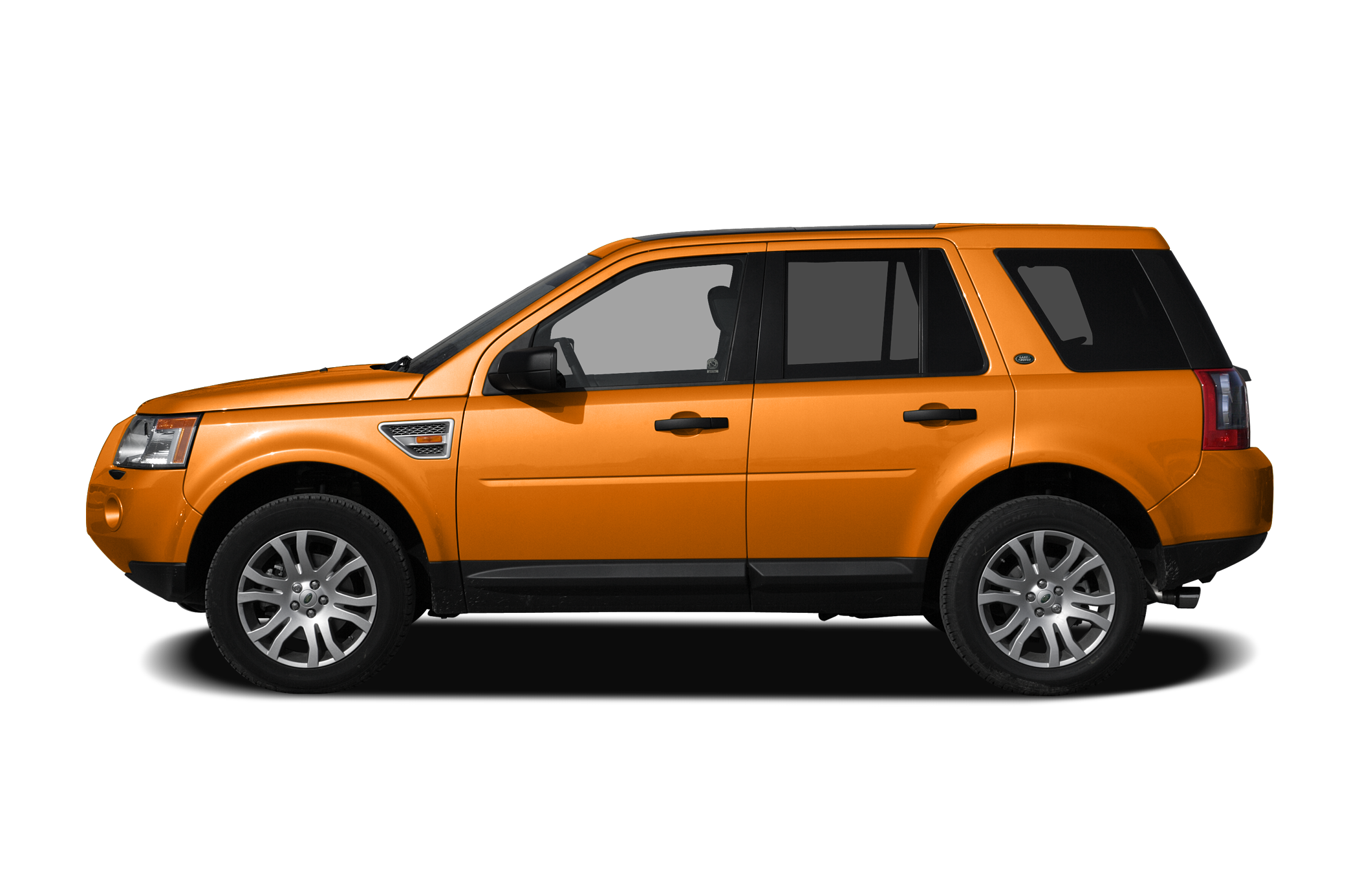
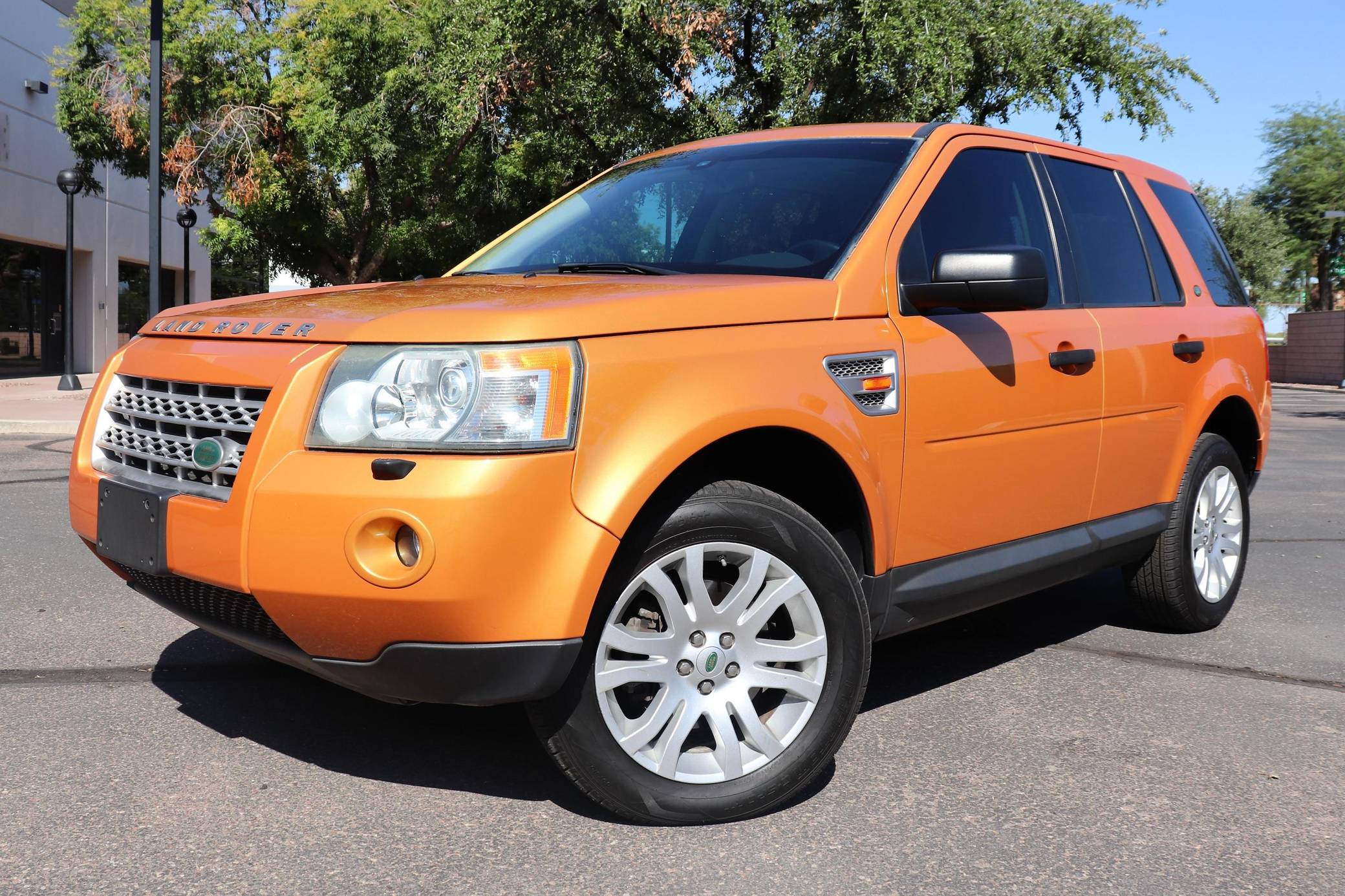
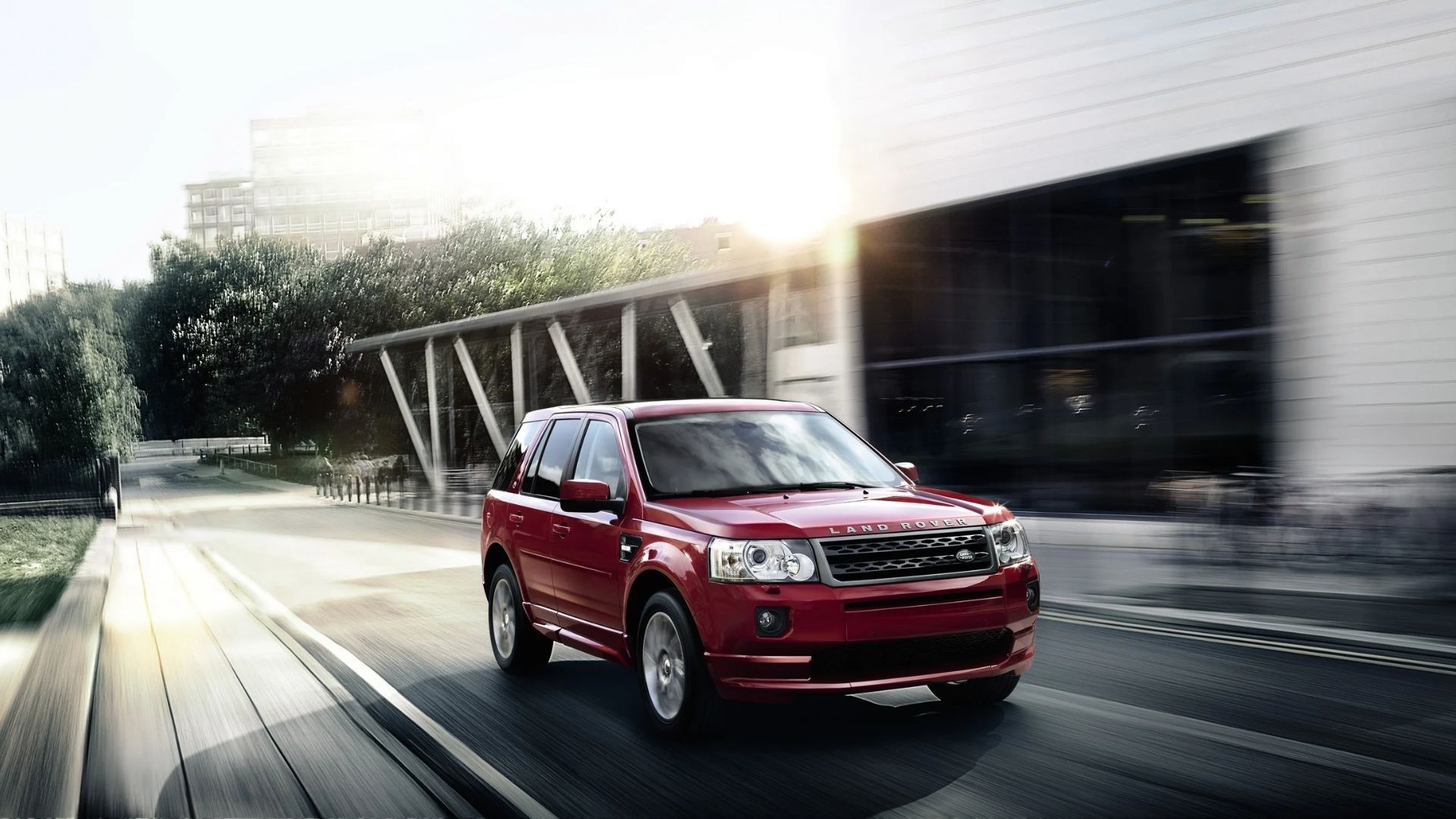
The 2008 Land Rover LR2 features a transversely mounted 3.2-liter inline six-cylinder engine producing 230 horsepower and 234 lb-ft of torque. Paired with an Aisin 6-speed automatic transmission and Haldex permanent all-wheel drive, it offers 8.3 inches of ground clearance alongside Land Rover's signature Terrain Response system for balanced on-road comfort and off-road capability.
Platform Architecture and Powertrain Engineering
Introduced to North America for the 2008 model year to replace the aging Freelander, the Land Rover LR2 (designated internally as the L359 and marketed globally as the Freelander 2) represented a complete ground-up redesign. Built upon a heavily reinforced version of the Ford EUCD platform—shared in varying configurations with contemporary Volvo models like the XC60—the LR2 incorporated structural enhancements to withstand the stresses of off-road articulate driving. Its monocoque steel body shell achieved an exceptional torsional rigidity rating of 28,000 Nm per degree, providing a stable foundation for both suspension tuning and cabin isolation.
- Engine: Transverse 3.2L Inline-6 (SI6)
- Aisin Warner 6-Speed Automatic
- Haldex Gen 3 Active Coupling
- Front Axle (Direct Drive)
- Rear Axle (Controlled Slip via Pinion Rear Diff)
Transverse 3.2-Liter Inline-6 Engine
At the heart of the 2008 LR2 is the naturally aspirated 3.2-liter Short Inline 6 (SI6) engine, designed in collaboration with Volvo and manufactured at the Ford powertrain facility in Skövde, Sweden. Positioned transversely across the engine bay to maximize cabin space and enhance front crash-zone deformation, the engine utilizes a compact architecture achieved by mounting auxiliary components—such as the alternator and air conditioning compressor—behind the engine block driven by a rear-end auxiliary drive (READ) system.
Key engine parameters include:
- Displacement: 3,192 cc (3.2 L)
- Valvetrain: Double Overhead Camshaft (DOHC), 24 valves, with Variable Valve Timing (VVT) and Camshaft Profile Switching (CPS) on the intake side.
- Fuel Delivery: Electronic sequential port fuel injection.
- Power Output: 230 hp @ 6,300 RPM.
- Torque Output: 234 lb-ft @ 3,200 RPM, with roughly 80 percent of peak torque available across a wide 1,500 to 4,500 RPM powerband.
Transmission and All-Wheel-Drive System
Power transfers to the road through an Aisin Warner TF-80SC 6-speed automatic transmission featuring CommandShift gear selection, allowing driver-controlled manual sequential shifting and a dedicated Sport mode.
The full-time intelligent All-Wheel Drive (AWD) system utilizes a third-generation Haldex electro-hydraulic center coupling. Unlike older mechanical differential systems, the Haldex Gen 3 setup incorporates a pre-charge pump that maintains hydraulic pressure even when the vehicle is stationary. This allows instant torque pre-loading, sending power to the rear wheels within 15 degrees of wheel rotation to prevent slippage on loose terrain or icy surfaces before it starts. Under steady-state highway cruising, the system routes approximately 95 percent of engine power to the front wheels to conserve fuel, continuously adjusting split ratios up to a 50/50 front-to-rear distribution based on throttle position, wheel speed sensor inputs, and steering angles.
Technical Specifications Matrix
The table below outlines the full mechanical, dimensional, performance, and operational specifications for the 2008 Land Rover LR2.
| Category | Technical Parameter | Specification Value |
|---|---|---|
| Engine | Type & Layout | 3.2L Inline 6-Cylinder (Transverse) |
| Block / Cylinder Head | Aluminum Alloy / Aluminum Alloy | |
| Bore x Stroke | 84.0 mm x 96.0 mm (3.31 in x 3.78 in) | |
| Compression Ratio | 10.8:1 | |
| Horsepower | 230 hp @ 6,300 RPM | |
| Torque | 234 lb-ft @ 3,200 RPM | |
| Drivetrain | Transmission | 6-Speed Automatic (Aisin Warner TF-80SC) |
| AWD System | Permanent AWD with Haldex Gen 3 Active Coupling | |
| Performance | Acceleration (0–60 mph) | 8.4 seconds |
| Top Speed | 124 mph (199 km/h) electronically limited | |
| Towing Capacity (Braked) | 3,500 lbs (1,587 kg) | |
| Fuel Economy | EPA Rated City / Hwy / Combined | 16 / 23 / 18 MPG |
| Fuel Tank Capacity | 18.5 US gallons (70 Liters) | |
| Required Fuel | Premium Unleaded (91 Octane minimum recommended) | |
| Dimensions | Wheelbase | 104.7 in (2,660 mm) |
| Overall Length | 177.2 in (4,500 mm) | |
| Overall Width (with mirrors) | 85.7 in (2,176 mm) | |
| Overall Height | 68.5 in (1,740 mm) | |
| Curb Weight | 4,250 lbs (1,928 kg) | |
| Off-Road Specs | Minimum Ground Clearance | 8.3 in (210 mm) |
| Wading Depth | 19.7 in (500 mm) | |
| Approach Angle | 31.0 degrees | |
| Breakover Angle | 23.0 degrees | |
| Departure Angle | 34.0 degrees |
Off-Road Capabilities and Chassis Dynamics
Despite operating on a unibody platform, Land Rover designed the LR2 to maintain off-road standards consistent with the brand's heritage. The chassis employs long-travel independent suspension setups at all four corners, utilizing MacPherson struts with lower control arms at the front and a multi-link MacPherson strut arrangement at the rear. These suspension assemblies are mounted on isolated steel subframes to reduce noise, vibration, and harshness (NVH) while allowing generous wheel articulation.
- Terrain Response Control Knob
- General Driving: Standard linear response profile
- Grass/Gravel/Snow: Softened throttle, early upshifts
- Mud & Ruts: Enhanced wheel-slip, Haldex lockup bias
- Sand: Aggressive throttle, late upshifts
Land Rover Terrain Response System
Standard equipment on the 2008 LR2 includes Land Rover’s rotary-dial Terrain Response system. The system integrates the vehicle’s Engine Management System (EMS), transmission control unit, Haldex center coupling, Four-Wheel Electronic Traction Control (ETC), dynamic stability control (DSC), and Anti-lock Braking System (ABS) into four selectable driver modes:
- General Driving Mode: Standard settings optimized for daily paved surface driving, prioritizing fuel efficiency and neutral steering balance.
- Grass/Gravel/Snow Mode: Calibrates the engine management computer to soften throttle response, ensuring smooth acceleration. The transmission selects second gear for launches to prevent wheelspin, while the Haldex system pre-locks more aggressively to maximize traction on slick surfaces.
- Mud & Ruts Mode: Retains lower transmission gears longer, allowing higher wheel slip momentum needed to clear tire treads in mud. The dynamic stability control system adjusts intervention thresholds to allow the vehicle to cut through soft surfaces.
- Sand Mode: Sets the throttle mapping to aggressive output profiles for quick engine response. The transmission holds lower gears longer to maintain momentum, and the Haldex coupling engages high lockup pressures to prevent speed loss in soft sand.
Driver Assistance Systems
Underpinning the chassis electronics are specialized off-road braking control algorithms:
- Hill Descent Control (HDC): Automatically controls vehicle speed on steep downslides using ABS pulse-braking to maintain target speeds without locked-wheel sliding.
- Gradient Release Control (GRC): Integrated into HDC, GRC progressively delays brake pressure release when transitioning off steep slopes to prevent sudden vehicle lurching.
- Roll Stability Control (RSC): Uses gyroscopic sensors to monitor cornering dynamics, applying outer-wheel brakes and modulating engine power if high roll angles are detected.
Exterior Styling and Interior Features
The exterior design of the 2008 LR2 incorporates classic Land Rover visual cues adapted to a compact footprint. These include short front and rear overhangs, a clamshell hood, raised waistlines, dark-painted structural pillars that yield a "floating roof" appearance, and asymmetric rear glass styling accents. Functional exterior components include side air intakes positioned high on the front wings to feed cool air into the engine compartment while maintaining the 19.7-inch wading depth.
- Interior Layout Architecture
- Windshield / Sunroof Array
- Driver Command Position / Passenger
- Stadium Seating (Raised Rear Bench)
- Cargo Bay (26.7 cu. ft. / 58.9 max)
Cabin Layout and Interior Metrics
The LR2 features Land Rover's traditional "Command Driving Position," which places the driver high relative to the cowl and window sills to provide clear sightlines to the front corners of the vehicle—an asset for tight off-road trails and urban parking alike.
Rear occupants benefit from "Stadium Seating," where the rear seat cushion is mounted 1.9 inches higher than the front seats, offering rear passengers improved forward visibility through the windshield.
- Headroom (Front / Rear): 40.2 inches / 39.4 inches
- Legroom (Front / Rear): 41.9 inches / 36.4 inches
- Shoulder Room (Front / Rear): 57.6 inches / 57.3 inches
- Cargo Capacity (Seats Up): 26.7 cubic feet (755 Liters)
- Cargo Capacity (Seats Folded Flat): 58.9 cubic feet (1,670 Liters)
Interior Equipment Standards
For 2008, the North American LR2 was offered primarily in a single, well-equipped trim level (SE) with available optional packages (such as the Technology Package and Cold Climate Package). Standard equipment included leather upholstery, dual-zone automatic climate control, eight-way power front seats, auto-dimming rearview mirror, continuous dual-pane panoramic glass sunroof (front panel tilting/sliding), and a 9-speaker 160-watt Alpine audio system with auxiliary input. Optional upgrades included a 14-speaker Alpine Dolby Pro Logic II 7.1 Surround Sound system, touchscreen DVD navigation, adaptive bi-xenon headlights, integrated Bluetooth connectivity, and heated front seats/windshield.
Common Mechanical Reliability Considerations
When evaluating or maintaining a 2008 Land Rover LR2, several known mechanical and electrical failure points warrant attention. The underlying Ford/Volvo architecture makes the engine and transmission durable, but specific components require regular service.
- Critical Maintenance Areas (2008 LR2)
- Rear Differential Pinion Bearing (Grinding noise - Differential rebuild/replacement)
- Haldex Coupling (Fluid/Filter clogging - Loss of rear torque distribution)
- READ (Rear End Auxiliary Drive) Assembly (Whining gear noise from timing belt side)
- Water Pump & Thermostat Housing (Coolant leaks - Engine overheating risk)
1. Rear Differential Pinion Bearing Failure
The most widely documented defect in early LR2 models is premature wear of the pinion bearings in the rear differential housing.
- Symptom: A low-pitched rumbling or howling sound from the rear of the vehicle that increases with road speed regardless of engine RPM.
- Cause: Insufficient hardness of the factory bearing races or inadequate lubrication flow leads to pitting on the bearing surfaces.
- Resolution: Rebuilding the rear differential with upgraded aftermarket/revision bearing kits or replacing the complete rear drive unit.
2. Haldex Pump and Fluid Degradation
Although original Land Rover service documentation classified the Haldex AWD unit as "filled for life," field usage proves otherwise. Over time, friction material from the internal clutch packs contaminates the hydraulic fluid and clogs the electric pump intake screen.
- Symptom: Failure of the rear wheels to engage, leading to traction loss and dashboard messages indicating "Terrain Response System Fault."
- Resolution: Changing the Haldex fluid and filter mesh screen every 30,000 to 50,000 miles prevents electric pump burnout.
3. Rear End Auxiliary Drive (READ) Wear
Because the 3.2L engine mounts its belt-driven accessories (alternator, power steering, air conditioning) on the transmission side driven via internal gears off the camshafts, this gear assembly is called the READ unit.
- Symptom: High-pitched whining or grinding noises from the right side of the engine bay.
- Resolution: Replacing worn bearing packs within the READ transmission casing. This is a labor-intensive repair requiring partial engine removal or displacement.
4. Cooling System Degradation
The plastic thermostat housing and coolant bypass hoses located beneath the intake manifold degrade due to thermal cycling. Additionally, the water pump is driven by a specialized shaft off the READ system, making water pump replacements more complex than on conventional inline engines. regular inspection of the coolant expansion tank and hose fittings is vital.
2008 LR2 vs. Contemporary Luxury Compact Rivals
When it debuted, the 2008 Land Rover LR2 competed against mid-size and compact luxury crossovers such as the BMW X3 3.0i, Acura RDX, and Audi Q5 (which debuted shortly after).
| Feature / Metric | 2008 Land Rover LR2 | 2008 BMW X3 3.0i | 2008 Acura RDX |
|---|---|---|---|
| Engine Configuration | 3.2L Inline-6 (NA) | 3.0L Inline-6 (NA) | 2.3L Turbo Inline-4 |
| Horsepower / Torque | 230 hp / 234 lb-ft | 260 hp / 225 lb-ft | 240 hp / 260 lb-ft |
| Drivetrain | Haldex Permanent AWD | xDrive AWD System | SH-AWD System |
| Off-Road Terrain System | Standard (4 Modes) | Hill Descent Only | None |
| Ground Clearance | 8.3 inches | 8.0 inches | 6.2 inches |
| Max Towing Capacity | 3,500 lbs | 3,500 lbs | 1,500 lbs |
| EPA Fuel Economy (Comb.) | 18 MPG | 20 MPG | 19 MPG |
| Driving Dynamics Bias | Off-road capability / Comfort | On-road sport handling | On-road sport performance |
The LR2 prioritized wheel travel, ground clearance, and low-traction control over the sharper asphalt handling offered by the BMW X3 or Acura RDX. However, its unibody chassis gave it far better highway composure and ride comfort than traditional frame-based off-road vehicles.
Maintenance Schedules and Fluid Specifications
To ensure long-term mechanical reliability, follow these verified fluid types, capacities, and maintenance schedules for the 2008 LR2:
Service Intervals & Specs
- Engine Oil: 5W-30 synthetic meeting Ford WSS-M2C913-B or ACEA A5/B5 standards.
- Capacity: 8.0 US quarts (7.6 Liters) with filter.
- Change Interval: Every 5,000 to 7,500 miles.
- Transmission Fluid: Mobil ATF 3309 or JWS 3309 compliant fluid.
- Capacity: 7.4 quarts (7.0 Liters) total fill.
- Change Interval: Drain and refill every 50,000 miles.
- Haldex Clutch Coupling Fluid: Original BorgWarner / Statoil Haldex Fluid (VW G 055 175 A2 equivalent).
- Change Interval: Every 30,000 to 40,000 miles alongside filter screen cleaning.
- Rear Differential Oil: 80W-90 Synthetic Gear Oil (API GL-5).
- Capacity: 0.74 US quarts (0.7 Liters).
- Change Interval: Every 40,000 miles.
- Coolant: 50/50 mixture of Organic Additive Technology (OAT) Extended Life Coolant (Specification WSS-M97B44-D).
- Capacity: 6.8 quarts (6.4 Liters).
Frequently Asked Questions
Does the 2008 Land Rover LR2 engine use a timing belt or a timing chain?
The 3.2-liter inline six-cylinder engine in the 2008 LR2 uses a heavy-duty timing chain rather than a rubber timing belt. The timing chain setup is located on the rear side of the engine (transmission end) via the Rear End Auxiliary Drive (READ) system. Under normal maintenance conditions, the timing chain is designed to last the life of the engine.
Is the 2008 Land Rover LR2 reliable for long-distance driving?
When properly maintained, the 2008 LR2 is structurally sound for long distances. The Volvo-sourced 3.2L engine block and Aisin transmission are durable mechanical units. However, ongoing reliability relies heavily on addressing past rear differential maintenance, replacing aged cooling system plastics, and ensuring the Haldex AWD coupling fluid has been regularly serviced.
What causes the "Terrain Response System Fault" error on the dash?
This warning message appears when the main vehicle computer detects a communication loss or operating parameter error within any connected subsystem. Common causes include a low vehicle battery voltage state, a clogged or failed Haldex hydraulic pump motor, damaged ABS wheel speed sensors, or steering angle sensor calibration errors.
What fuel octane rating is required for the 2008 LR2?
Land Rover recommends premium unleaded fuel with a minimum octane rating of 91 (AKI) for the 3.2L engine. While the engine's knock sensors allow it to operate on lower 87-octane regular unleaded fuel in emergencies, doing so causes the ECU to retard timing. This results in decreased engine performance, degraded fuel economy, and potential carbon buildup over extended periods.
Can the 2008 Land Rover LR2 tow a small trailer or camper?
Yes, when equipped with an approved factory or aftermarket Class III hitch receiver, the 2008 LR2 has a maximum braked towing capacity of 3,500 lbs (1,587 kg). Unbraked trailers are limited to a maximum weight of 1,650 lbs (750 kg). The vehicle’s stability control system includes Trailer Stability Assist (TSA) to help counteract trailer sway by selectively applying wheel brakes.
Summary and Buyer Guidance
The 2008 Land Rover LR2 offers a distinctive combination of true off-road capability, structural rigidity, and daily drivability in a compact luxury package. Powered by a durable Volvo-designed 3.2L inline six-cylinder engine coupled to a proven Aisin 6-speed automatic transmission, it stands out for its all-weather confidence and comfortable Command Driving Position.
For prospective buyers or current owners, long-term performance hinges on proactive maintenance. Inspecting the rear differential for bearing noise, changing Haldex AWD fluid regularly, and addressing cooling system component wear will keep this compact luxury SUV operating safely on and off the road.