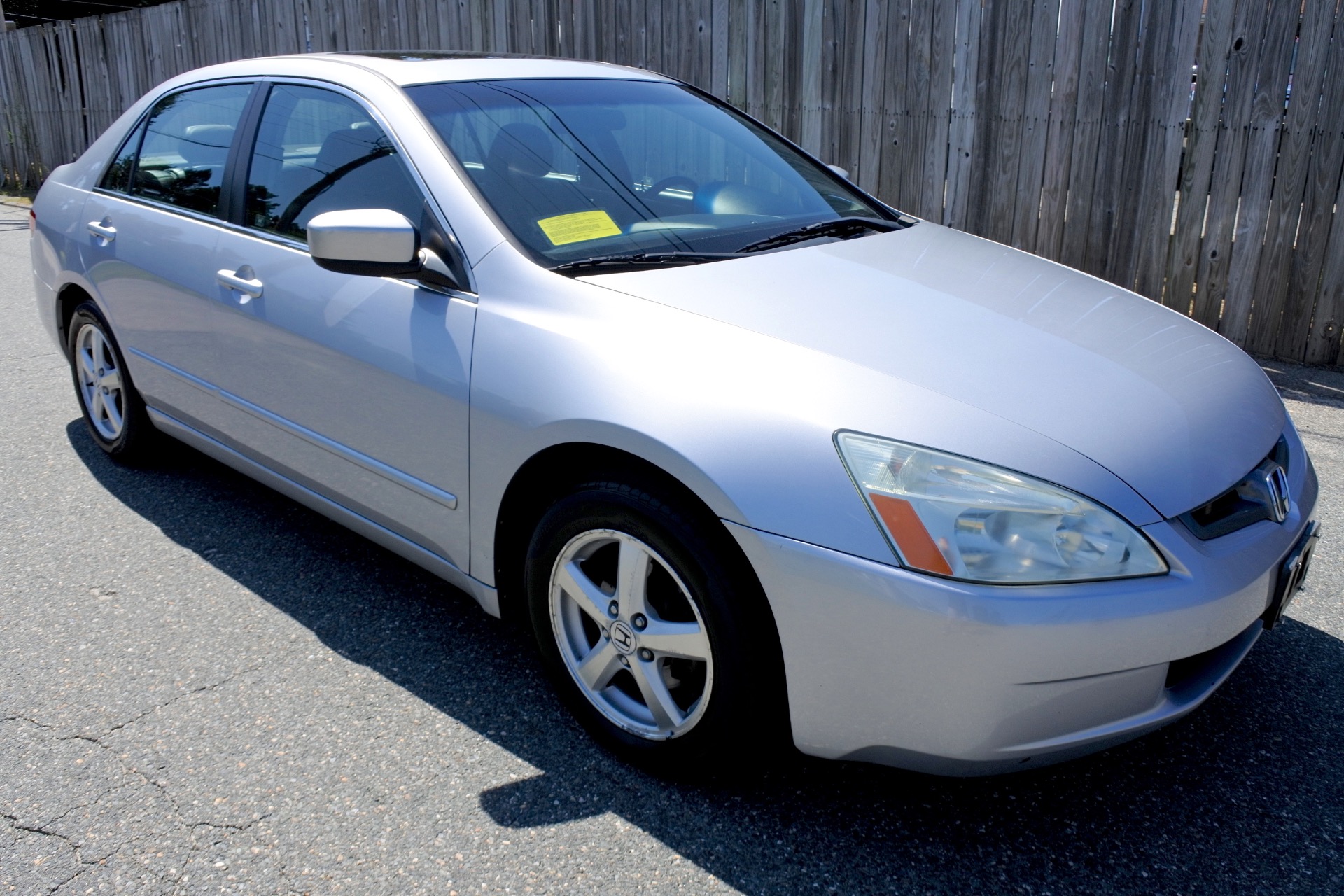
The 2005 Honda Accord EX-L achieves an EPA fuel economy of 20 to 24 mpg in city driving and 29 to 34 mpg on the highway, depending on whether it is equipped with the 2.4-liter 4-cylinder engine or the 3.0-liter V6 engine, as well as the transmission type.
Understanding the fuel economy of the 2005 Honda Accord EX-L requires looking closely at powertrain options, historical EPA testing standards, and real-world driving conditions. As a midsize sedan that remains popular in the used car market, this seventh-generation Accord balances traditional Honda reliability with respectable efficiency. Whether you are evaluating a prospective purchase, troubleshooting a drop in fuel mileage, or comparing it to modern vehicles, analyzing its fuel metrics provides a clear picture of what to expect at the pump.
Overview of the 2005 Honda Accord EX-L Trim
The EX-L trim sits near the top of the 2005 Honda Accord lineup, representing the "Executive" package combined with leather upholstery ("L"). Beyond its luxury features—such as heated leather seats, a power sunroof, automatic climate control, and an upgraded audio system—buyers could choose between two distinct engine configurations: a 2.4-liter inline-four and a 3.0-liter V6.
Because fuel economy is directly tied to displacement, weight, and transmission gearing, the specific MPG figures vary significantly depending on under-the-hood choices. Furthermore, 2005 models were tested under the EPA's older rating system before adjustments were made in 2008 to reflect harsher real-world conditions like higher speeds, rapid acceleration, and air conditioning use. Consequently, older window sticker ratings often appear higher than what drivers experience on modern highways, though the vehicle remains remarkably efficient for its era.
Powertrain Options and EPA Fuel Economy Ratings
When assessing the 2005 Honda Accord EX-L mpg, you must distinguish between the four-cylinder and V6 variants. Each engine brings distinct performance dynamics and fuel consumption profiles to the vehicle.
2.4-Liter 4-Cylinder Engine (K24A4)
The 2.4-liter i-VTEC inline-four engine produces 160 horsepower. It was paired with either a 5-speed manual transmission or a 5-speed automatic transmission.
- Manual Transmission: Historically rated at roughly 23 mpg city and 34 mpg highway under legacy EPA standards.
- Automatic Transmission: Rated at approximately 21 mpg city and 30 mpg highway.
3.0-Liter V6 Engine (J30A4)
The 3.0-liter V6 engine generates 240 horsepower and is exclusively mated to a 5-speed automatic transmission in the EX-L trim.
- V6 Automatic: Rated at approximately 20 mpg city and 29 mpg highway under legacy standards.
When the EPA updated its testing methodology in 2008 to incorporate aggressive driving, air conditioning use, and colder ambient temperatures, these legacy figures were retroactively adjusted downward by roughly 10 to 15 percent. Adjusted figures typically hover closer to 19-20 mpg city and 28-29 mpg highway for the 4-cylinder automatic, and 18 mpg city and 26 mpg highway for the V6.
Official EPA Ratings vs. Revised Estimates
To provide a comprehensive benchmark, the following table outlines the EPA fuel economy ratings for the 2005 Honda Accord EX-L variants, comparing original window sticker numbers with modern adjusted guidelines.
| Engine & Transmission | Original City MPG | Original Hwy MPG | Revised City MPG (Approx.) | Revised Hwy MPG (Approx.) | Fuel Tank Capacity |
|---|---|---|---|---|---|
| 2.4L 4-Cylinder (Manual) | 23 | 34 | 21 | 30 | 17.1 Gallons |
| 2.4L 4-Cylinder (Automatic) | 21 | 30 | 20 | 29 | 17.1 Gallons |
| 3.0L V6 (Automatic) | 20 | 29 | 18 | 26 | 17.1 Gallons |
Real-World Factors Impacting 2005 Accord MPG
Achieving or surpassing the factory fuel economy ratings in a vehicle that is over two decades old depends heavily on maintenance, driving habits, and mechanical health. Several key variables influence daily fuel consumption:
Maintenance and Mechanical Wear
Over time, components degrade and reduce combustion efficiency. Worn spark plugs, a clogged engine air filter, a failing oxygen sensor, or a stuck thermostat can easily drop fuel mileage by 10 to 20 percent. Ensuring that the valves are adjusted properly (particularly on the 4-cylinder engine) and that the fuel injectors are clean is critical for optimal performance.
Tire Pressure and Alignment
Underinflated tires increase rolling resistance, forcing the engine to work harder to maintain momentum. Maintaining the manufacturer-recommended tire pressure—typically around 32 psi for the Accord EX-L—along with a proper wheel alignment ensures minimal energy loss.
Driving Style and Terrain
Aggressive acceleration, frequent idling, and heavy stop-and-go urban commuting heavily penalize fuel economy, especially for the heavier V6 model. Conversely, steady-state highway cruising at moderate speeds (55 to 65 mph) allows the transmission to settle into its highest gear, maximizing fuel efficiency.
Use of Accessories
Running the air conditioning compressor places a mechanical load on the engine, reducing fuel economy during city driving. Modern synthetic oils and clean transmission fluid also contribute to reducing internal parasitic drag.
Common Reasons for Lower-Than-Expected Fuel Mileage
If your 2005 Honda Accord EX-L is failing to achieve acceptable MPG figures, several common mechanical issues are usually to blame. Diagnosing these items can restore performance and save money at the pump:
- Faulty Oxygen (O2) Sensors: A lazy or failing upstream oxygen sensor sends incorrect air-fuel ratio data to the engine control unit (ECU), frequently resulting in a rich running condition and wasted fuel.
- Dragging Brakes: Rusted slide pins or seized brake calipers can cause brake pads to continuously drag against the rotors, creating constant resistance.
- Transmission Slippage: If the automatic transmission slips between gears or fails to engage lock-up in the torque converter on the highway, engine RPMs will remain artificially high, destroying highway fuel economy.
- Clogged Catalytic Converter: Restricted exhaust flow chokes the engine, requiring more throttle input to achieve basic acceleration.
Frequently Asked Questions
What is the gas tank size of a 2005 Honda Accord EX-L?
The fuel tank capacity for both the 4-cylinder and V6 models of the 2005 Honda Accord EX-L is 17.1 gallons. This provides a theoretical driving range of roughly 400 to 500 miles per tank on highway trips, depending on the engine choice and driving conditions.
Is the 4-cylinder or V6 2005 Accord better for fuel economy?
The 2.4-liter 4-cylinder engine is notably better for fuel economy than the 3.0-liter V6. The 4-cylinder manual averages around 34 mpg highway, while the V6 automatic averages closer to 29 mpg highway under legacy ratings. If fuel savings are your primary goal, the 4-cylinder is the superior choice.
Why does my 2005 Honda Accord get worse MPG than the EPA rating?
EPA ratings are calculated under controlled laboratory conditions that do not account for vehicle aging, degraded sensors, clogged air filters, ethanol-blended fuels, or aggressive driving habits. Vehicles with higher mileage often suffer from reduced engine compression and worn ignition components.
Does the 2005 Honda Accord EX-L require premium fuel?
No, the 2005 Honda Accord EX-L is designed to run on standard regular unleaded gasoline with an octane rating of 87. Using premium fuel provides no performance or fuel economy benefits for this standard engine architecture.
How can I improve the fuel economy of my 2005 Accord?
To maximize MPG, replace worn spark plugs, clean the mass air flow (MAF) sensor, ensure your tires are inflated to the correct pressure, replace dirty air and fuel filters, and use a fuel injector cleaner periodically. Regular oil changes with the correct viscosity oil (typically 5W-20) also reduce internal engine friction.
Conclusion and Next Actions
The 2005 Honda Accord EX-L remains a reliable commuter car, and its fuel economy continues to hold its own against many older compact and midsize vehicles. To verify or improve your own vehicle's fuel efficiency, start by calculating your MPG manually over three consecutive tankfuls using the odometer and pump gallons. If your mileage falls significantly below 20 mpg in mixed driving, schedule a diagnostic check to inspect your oxygen sensors, air filters, and tire pressures to restore optimal performance.