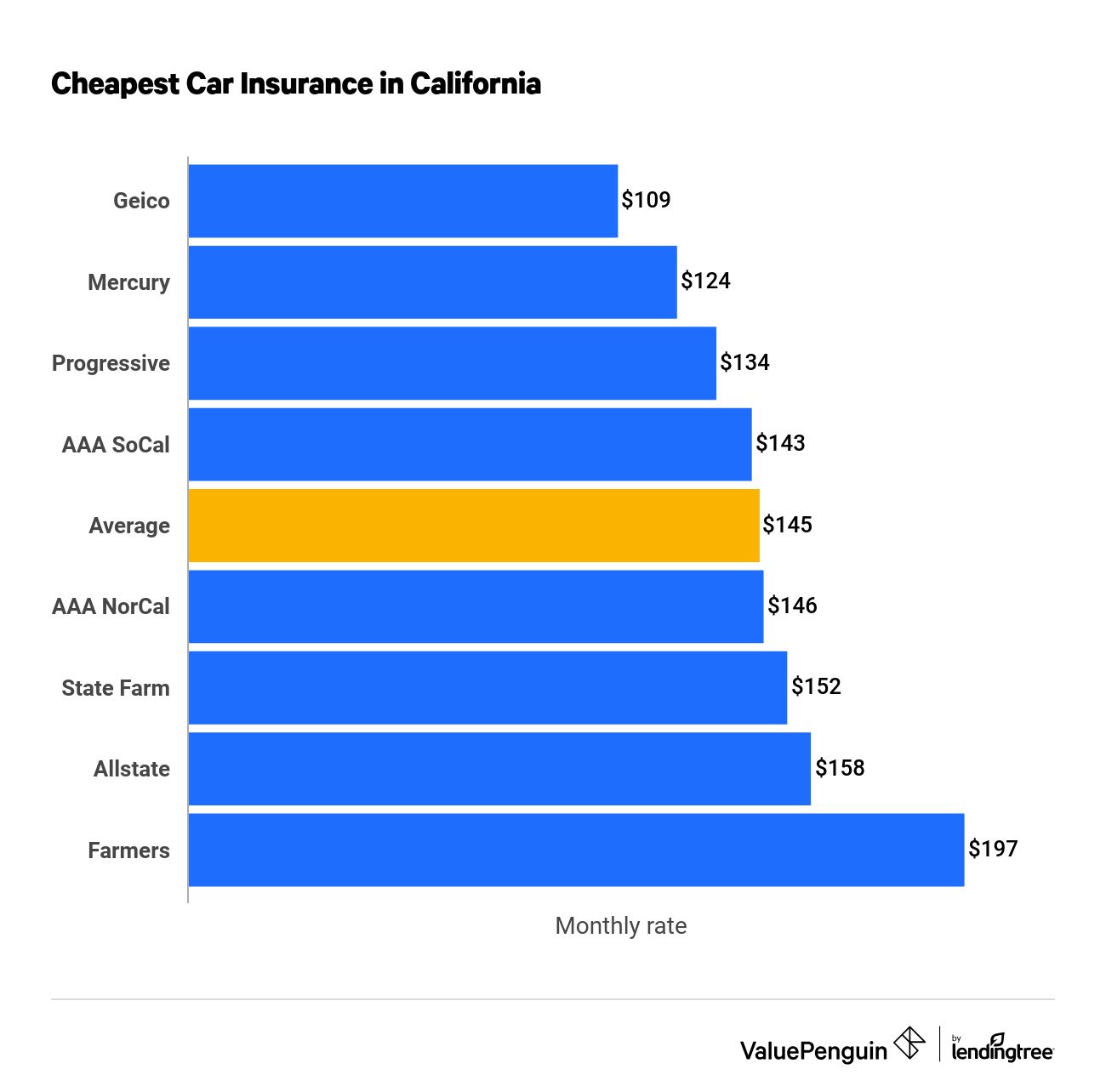
Securing an auto and homeowners insurance bundle in California at a target price point around $2,274 per year requires pairing a clean driving record with a home located in a low-to-moderate wildfire risk zone. Drivers and homeowners achieve the lowest combined rates by stacking multi-policy discounts, optimizing deductibles, and shopping across top regional and national insurance carriers.
Understanding the $2,274 Benchmark for California Insurance Bundles
Combining private passenger auto coverage with primary residential homeowners insurance under a single carrier—commonly referred to as bundling or a multi-policy agreement—is one of the most effective strategies for lowering overall premium expenditure. In California's dynamic insurance market, achieving a target annual expenditure near $2,274 for combined car and home coverage represents a highly competitive rate, significantly below the statewide combined average.
California property owners and drivers face unique economic and regulatory pressures. Cumulative inflation in vehicle repair costs, supply chain expenses for home reconstruction, and increased wildfire risks have driven average individual auto premiums above $1,800 annually and standard home insurance policies over $1,400 annually. When purchased separately, these unbundled policies often cost upwards of $3,200 per year.
| California Combined Cost Breakdown | Details |
|---|---|
| Unbundled Average Auto + Home Premiums | $3,200+ / year |
| Optimized Bundled Target Rate Benchmark | ~$2,274 / year |
| Estimated Multi-Policy Savings | 15% - 25% Total Reduction |
A target combined annual quote of approximately $2,274 is achievable primarily for property owners who meet strict underwriting guidelines:
- Low-Risk Geography: Properties situated in urban or suburban valleys with minimal exposure to High Fire Hazard Severity Zones (FHSZ).
- Favorable Driving Records: Vehicle operators qualifying for the California Good Driver discount on all insured vehicles.
- Moderate Coverage Limits: Single-family homes with dwelling coverage limits (Coverage A) aligned with modest square footage replacement costs and vehicle liability limits tailored to standard commuter requirements.
Disclaimer: Insurance rules, rate filings, and policy availability change frequently. The rates discussed in this guide serve as general analytical benchmarks. Consumers should consult licensed insurance agents or contact the California Department of Insurance for verified statutory disclosures and personalized rate comparisons.
How Multi-Policy Bundling Works in California
Insurance bundling is a contractual discount structure where an insurer grants a reduced premium percentage on one or both policies in exchange for managing multiple risk exposures for a single household. In California, all policy rate structures and discount schedules must be formally filed with and approved by the state insurance commissioner pursuant to Proposition 103.
Credit Allocations Across Auto and Home Contracts
When an applicant purchases an auto policy and a homeowners policy from the same insurance company, the discount is applied through specific mechanics:
- Auto Policy Credit: A discount (typically between 5% and 15%) is applied against the liability, collision, and comprehensive premiums of the auto policy.
- Home Policy Credit: A concurrent discount (typically between 10% and 25%) is applied to the dwelling, personal property, and liability sections of the homeowners insurance contract.
- Companion Policy Structures: If a standard carrier writes the auto insurance but transfers the home underwriting to an affiliated subsidiary or partner carrier, a "companion policy discount" is issued instead of a direct bundle credit.
Regulatory Oversight and Proposition 103
Under California's Proposition 103 regulations, insurance carriers cannot arbitrarily adjust premiums or offer unapproved promotional pricing. Every rate reduction, including multi-policy bundling discounts, must be justified by statistical underwriting data demonstrating that policyholders who bundle represent lower risk profiles and lower administrative overhead for the insurer.
| Regulatory Concept | Impact on Bundled Policies in California |
|---|---|
| Mandatory Good Driver Discount | Underwriters must apply a statutory 20% discount to auto coverage for drivers meeting safety criteria before factoring in bundling savings. |
| Prior Rate Approval | Insurers cannot change discount percentages without formal public filing and regulatory sign-off from state officials. |
| Non-Discriminatory Rating Factors | Credit scores cannot be used in California to determine auto insurance rates, making driving history and property risk the dominant price metrics. |
Key Factors Influencing Combined Auto and Home Premiums
To reach an aggressive cost benchmark like $2,274 per year for both vehicle and residential property coverage, policyholders must understand the variables evaluated by underwriting algorithms during the quoting process.
- Primary Bundled Premium Determinants
- Auto Side
- Driving History (3-Yr Record)
- Annual Commute Mileage
- Vehicle Make & Safety Gear
- Home Side
- Wildfire Hazard Score
- Dwelling Replacement
- Roof Condition & Age
- Auto Side
1. Driving Record and Commute Profiles
Under California Insurance Code Section 1861.025, auto insurance rates are determined primarily by three statutory factors: driving safety record, annual miles driven, and years of driving experience.
- Clean Claims History: Avoidance of at-fault accidents and moving violations over a continuous 36-month period preserves the California Good Driver status, forming the base requirement for a low bundled rate.
- Annual Mileage Attestation: Drivers reporting under 7,500 to 10,000 miles per year receive lower base rates than daily high-mileage commuters.
- Vehicle Classification: Standard sedans, compact crossovers, and vehicles equipped with advanced driver-assistance systems (ADAS) incur lower comprehensive and collision loss costs than high-horsepower sports cars or luxury SUVs.
2. Property Location, Construction, and Wildfire Scoring
Homeowners insurance rates in California are significantly tied to geographic risk mapping. Insurance companies utilize proprietary scoring models alongside brush mapping tools to assess property risk:
- Wildfire Risk Category: Homes situated in heavily forested areas, steep terrain, or interface zones mapped as High Fire Hazard Severity Zones face premium surcharges or standard policy non-renewals. Achieving a $2,274 combined rate generally requires property location in an urban or suburban basin with low vegetation density.
- Replacement Cost (Coverage A): The total estimated dollar amount required to rebuild the home's structure using contemporary labor and material costs directly dictates the base home premium. A home with a $350,000 replacement value costs substantially less to insure than a $900,000 custom structure.
- Roof Age and Structural Hardening: Homes constructed with non-combustible roofing materials (such as tile or metal), dual-paned tempered glass windows, and enclosed eaves qualify for preferred property rates and structural mitigation credits.
3. Deductibles and Liability Limit Alignment
The structure of your coverage limits directly influences the baseline price point before bundling discounts are applied:
- Auto Liability Limits: While California mandates minimum liability coverage limits ($15,000/$30,000/$5,000 historically, moving to higher state thresholds), carrying realistic limits such as 100/300/50 ($100,000 bodily injury per person, $300,000 bodily injury per accident, $50,000 property damage) is recommended to protect home equity.
- Deductible Strategy: Selecting a $1,000 or $2,500 deductible on collision/comprehensive auto coverage, paired with a $2,500 or $5,000 deductible on home property losses, lowers overall annual fixed premiums.
Evaluating Top Insurers for California Auto and Home Bundles
Not all insurance carriers maintain the same risk appetite across California's diverse geographical regions. Comparing top carriers active in the state helps identify where the deepest bundling credits and competitive base rates exist.
| Insurer | Auto Discount | Home Discount | Underwriting Focus |
|---|---|---|---|
| Mercury | 10% - 15% | 15% - 20% | Preferred Metro Risk |
| AAA (CSAA/ACSC) | 8% - 12% | 12% - 18% | Regional Suburban Homes |
| State Farm | 10% - 17% | 15% - 25% | Broad Statewide Network |
| Allstate | 5% - 10% | 10% - 20% | Suburban & Low Brush |
| Farmers | 10% - 15% | 10% - 15% | Established Single Family |
| USAA | 8% - 12% | 10% - 15% | Military Families |
1. Mercury Insurance
Mercury Insurance is widely recognized for offering competitive baseline auto rates for drivers in California metropolitan areas. Their multi-policy discount program provides significant percentage savings when homeowners pair private passenger auto coverage with primary residential policies.
- Strengths: Highly competitive base auto pricing; attractive bundled discounts for suburban single-family homes.
- Considerations: Stricter property underwriting requirements near open brush zones.
2. Auto Club of Southern California / CSAA (AAA)
AAA operates in California through regional clubs (CSAA in Northern California and Auto Club of Southern California in the south). AAA offers robust bundling programs for members who combine auto, homeowners, and umbrella insurance policies.
- Strengths: Strong claims satisfaction ratings; member discounts stacked alongside standard bundling credits.
- Considerations: Requires an active AAA membership subscription fee in addition to insurance premiums.
3. State Farm
As one of the largest property and casualty writers in the country, State Farm maintains a vast network of local captive agents throughout California. Their multi-line discount structure often generates substantial percentage reductions for existing auto policyholders adding property coverage.
- Strengths: High home coverage capacities; strong multi-car and multi-line discount integration.
- Considerations: Binding restrictions may apply in high wildfire-risk postal codes depending on market capacity limits.
4. Farmers Insurance & Allstate
Both Farmers and Allstate offer structured multi-policy savings programs in California. While their unbundled base rates can skew higher than discount carriers, their multi-policy tier structures reward long-term clients who carry auto, home, umbrella, and specialty lines under one umbrella.
- Strengths: Deep policy customization options and optional endorsement packages.
- Considerations: Higher base premiums require careful optimization of deductibles to reach a $2,274 total price point.
5. USAA
USAA consistently delivers industry-leading customer service and competitive pricing for active-duty military service members, veterans, and their eligible family members residing in California.
- Strengths: Outstanding rates for low-mileage commuter vehicles and comprehensive home replacement coverages.
- Considerations: Strict eligibility restrictions limited exclusively to military personnel and immediate family.
Step-by-Step Guide to Securing the Lowest Combined Rate
Finding a bundled auto and homeowners quote that approaches or beats the $2,274 benchmark requires a structured, multi-step shopping strategy.
- Step 1: Audit Current Coverage
- Step 2: Establish Risk & Limits Baseline
- Step 3: Solicit Independent & Direct Quotes
- Step 4: Stack Secondary Discounts
- Step 5: Verify Binding & Finalize Policies
Step 1: Audit Your Current Insurance Files
Gather existing declarations pages for both your auto and home policies. Document your current limits, deductibles, policy expiration dates, and endorsement listings. Request a copy of your personal Comprehensive Loss Underwriting Exchange (CLUE) report to review any property claims recorded over the past five years, and verify your official driving record with the California DMV.
Step 2: Establish Realistic Baseline Coverage Limits
Ensure that low pricing does not come at the expense of crucial protection. Align your target policy parameters:
- Auto Bodily Injury Liability: $100,000 per person / $300,000 per accident recommended to shield residential assets.
- Auto Property Damage Liability: Minimum $50,000 to cover modern EV repair costs.
- Dwelling Coverage (Coverage A): Based on an accurate square-footage reconstruction cost estimate, not current real estate market value.
- Personal Liability (Coverage E): Baseline $300,000 to $500,000 protection for slip-and-fall or property damage claims.
Step 3: Solicit Quotes from Direct Carriers and Independent Brokers
Because insurance appetite varies across carriers by ZIP code, work through two channels:
- Direct Carriers: Request quotes online directly from national carriers that write policies without independent agent intermediaries.
- Independent Insurance Brokers: Engage a licensed independent agent who represents multiple regional carriers (such as Mercury, Travelers, or Safeco). Independent agents can scan multiple underwriting matrices simultaneously to find carriers actively pursuing risk profiles matching your exact location and vehicle mix.
Step 4: Stack Non-Overlapping Discounts
Beyond the standard auto/home bundle credit, maximize secondary discounts allowed under California insurance regulations:
- Defensible Space & Home Hardening: Provide documentation of cleared vegetation (50–100 feet defensible space), ember-resistant vent covers, and class-A fire-rated roofing to secure home mitigation credits.
- Telematics Driving Programs: Enroll in mobile app-based driving monitor programs offered by insurers, which reward smooth braking, low speed variance, and non-peak driving habits with auto discount tiers.
- Anti-Theft and Safety Devices: Install certified auto anti-theft systems and central-station monitored home security alarms (fire and burglar) to trigger additional multi-policy credits.
Step 5: Review Terms and Lock In Annual Premium Statements
Before signing binding agreements, verify that the quotes reflect final underwritten rates rather than initial preliminary estimates. Ensure that payment schedules, installment fees, and potential paperless/EFT billing discounts are integrated into the final billing schedule.
What to Do If Traditional Carriers Deny Home Coverage
In severe wildfire hazard zones across California, homeowners often experience policy non-renewals or flat rejections from standard market carriers. If a standard insurer refuses to write a homeowners contract, obtaining a traditional auto-and-home bundle from a single standard company becomes impossible. However, alternative structures exist to manage total costs.
- High-Risk Alternative Insurance Structure
- California FAIR Plan: Covers Fire / Lightning / Smoke Damage
- DIC Companion Policy: Covers Water Damage, Theft, Liability
- Preferred Auto Carrier: Provides Vehicle Coverage + Companion Policy Discount Credit (Where Offered)
The California FAIR Plan Integration
The California FAIR Plan serves as the state-mandated insurer of last resort, providing basic fire insurance coverage for property owners unable to obtain private market policies.
Because the FAIR Plan provides narrow coverage restricted primarily to fire, lightning, smoke, and internal explosion, property owners must combine it with two additional contracts:
- Difference in Conditions (DIC) Policy: A supplemental contract issued by a private insurer that fills the gaps left by the FAIR Plan, adding coverage for liability, theft, water damage, and secondary perils.
- Private Auto Policy: A separate vehicle insurance contract.
Securing Companion Credits with DIC and Auto Policies
Several regional carriers offer "FAIR Plan Companion Credits" or multi-policy credits on auto and DIC policies if all contracts are placed through the same insurance agency. While the combined cost of a FAIR Plan policy, DIC policy, and auto policy will generally exceed the $2,274 standard bundle target due to elevated property risk surcharges, structuring policies correctly ensures you do not pay unnecessary double premiums for redundant coverage lines.
Frequently Asked Questions
How much money does bundling car and home insurance save in California?
Bundling auto and homeowners insurance in California typically saves policyholders between 10% and 25% across their total combined premiums. The exact dollar savings depend on base property values, vehicle counts, and carrier discount schedules filed with state regulators.
Is $2,274 a realistic annual cost for both home and car insurance in CA?
Yes, $2,274 per year is a realistic benchmark for households insuring a single commuter vehicle with a clean driving record paired with a suburban single-family home located in a low wildfire-risk area. Households with multiple luxury vehicles, recent moving violations, or homes in High Fire Hazard Severity Zones should expect higher baseline rates.
How does Proposition 103 affect insurance bundle discounts in California?
Proposition 103 mandates that all insurance rates, rating factors, and discount schedules receive prior approval from the California Department of Insurance. Insurers must statistically validate that bundled policyholders demonstrate lower loss costs, preventing companies from offering arbitrary, unapproved promotional discounts.
Can I bundle auto insurance if my home is covered by the California FAIR Plan?
While the California FAIR Plan itself does not write auto policies, several private insurance companies offer multi-policy or companion credits on auto or Difference in Conditions (DIC) policies when arranged through a certified agency that manages both filings.
Will canceling my current insurance mid-term to switch to a bundle trigger penalty fees?
California law allows policyholders to cancel auto and homeowners insurance policies at any time. Insurers usually refund unearned premiums on a pro-rata basis, though some carriers may deduct a small administrative processing fee or "short-rate" charge if canceled prior to the formal renewal date.
Final Recommendations for California Drivers and Homeowners
To achieve an optimal rate near or below the $2,274 combined benchmark, take a systematic approach:
- Verify Your Hazard Risk Profile: Check your property's address against local fire boundary maps to identify required brush clearance steps or home hardening improvements that lower property rates.
- Maintain Good Driver Status: Ensure all listed household drivers maintain clean records free of moving violations to preserve mandatory 20% California Good Driver baseline discounts.
- Obtain Three Bundled Quotes: Request comprehensive multi-line quotes from at least one national direct carrier, one regional specialist, and an independent insurance broker representing regional markets.
- Compare Total Net Expenditure: Evaluate policy proposals on total annual combined cost and coverage adequacy rather than focusing solely on individual discount percentages.