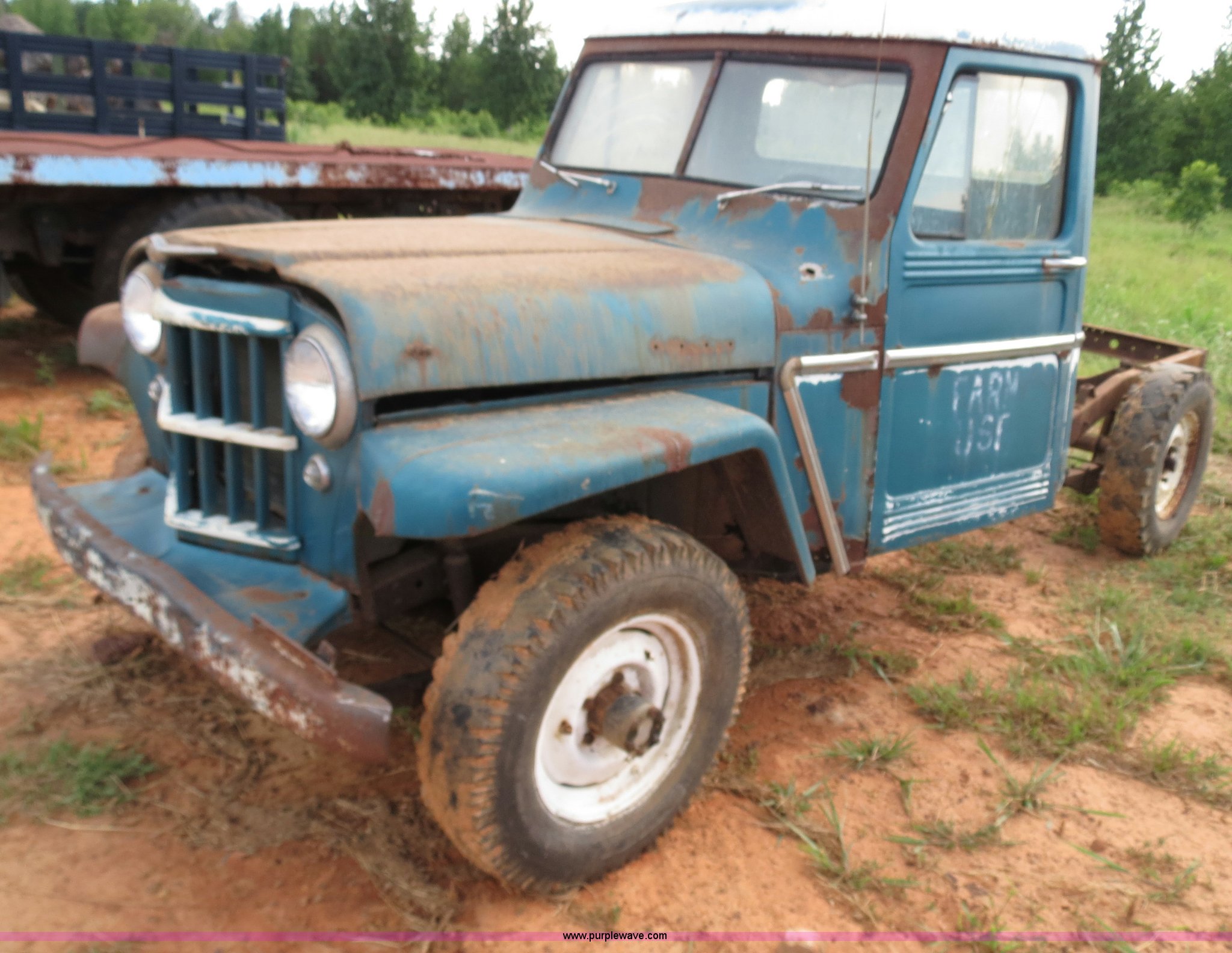
The 1962 Jeep Willys Truck, also known as the Willys Jeep Pickup or Jeep 4-Wheel-Drive Truck, represents a crucial transitional era in American utility vehicles, bridging rugged post-war utilitarian design with the modern consumer pickup trucks that would follow. Powered by options like the legendary Hurricane inline-four or the Tornado overhead-cam inline-six, this 1-ton 4x4 vehicle remains a celebrated collector item, prized for its classic high-hood styling, functional bed, and permanent or part-time four-wheel-drive capability.
Introduction to the 1962 Jeep Willys Truck
The 1962 Jeep Willys Truck occupies a fascinating niche in automotive history. Produced by Willys-Overland (and later Kaiser Jeep), the four-wheel-drive truck series—primarily designated as the 4-75 and later 4-226 or 6-230 series—stemmed from a lineage that began shortly after the Second World War. By 1962, the vehicle was nearing the end of its production run, which ultimately concluded in 1965 when Kaiser Jeep introduced the modern Gladiator series.
For restorers, collectors, and vintage truck enthusiasts, the 1962 model year is especially significant. It showcases a blend of older industrial ruggedness with late-production mechanical refinements. Understanding the historical context, mechanical specifications, common restoration hurdles, and valuation metrics of the 1962 Jeep Willys Truck is essential for anyone looking to purchase, maintain, or restore one of these vintage workhorses.
Historical Evolution and Lineage
The lineage of the Jeep Willys Truck traces back to 1947, when Willys-Overland introduced the Jeep Station Wagon, followed closely by the utility pickup truck in 1947. Built on a modified CJ chassis with a longer 118-inch wheelbase, the truck was designed to offer farmers, contractors, and municipal workers a reliable, heavy-duty 4x4 vehicle that could navigate rough terrain without complaint.
By 1962, ownership had transitioned to Kaiser-Jeep Corporation (following Kaiser's acquisition of Willys-Overland in 1953). The automotive landscape was shifting rapidly. Civilian trucks were beginning to emphasize passenger comfort, styling, and increased payload capacities. Yet, the Willys truck maintained its distinct, upright military-derived styling, flat glass windshield, high-mounted fenders, and utilitarian cabin.
The 1962 model year stands out because it sits right on the cusp of engine evolution. While earlier models relied heavily on the L-head and F-head "Hurricane" 4-cylinder engines or the dependable "Super Hurricane" flathead 6-cylinder engine, 1962 marked the introduction of the advanced Tornado 230 cubic-inch overhead-cam (OHC) inline-six engine in some applications, representing a major technological leap for the brand, albeit one with a complicated reliability history.
Technical Specifications and Powertrain Options
A comprehensive understanding of the 1962 Jeep Willys Truck requires examining its factory mechanical specifications. These vehicles were engineered for utility rather than highway speed, featuring robust frame constructions and heavy-duty running gear.
Engine Configurations
Depending on the specific trim and order sheet, a 1962 model could be equipped with one of three primary engines:
- F-134 Hurricane: A 134 cubic-inch (2.2-liter) F-head inline-four engine producing approximately 75 horsepower. Known for simplicity and low-end torque.
- Super Hurricane 6-226: A 226 cubic-inch (3.7-liter) L-head inline-six engine producing around 115 horsepower. This flathead engine was a staple of mid-to-late 1950s and early 1960s Jeep utility vehicles.
- Tornado 6-230: A 230 cubic-inch (3.8-liter) overhead-cam inline-six engine rated at 140 horsepower. This engine was innovative for its time, featuring a single overhead camshaft driven by a complex chain arrangement, though early units faced durability issues that later revisions attempted to correct.
Drivetrain and Suspension
- Transmission: Typically paired with a Borg-Warner T-90 3-speed manual transmission, coupled to a Dana 18 transfer case providing dual-range four-wheel drive.
- Axles: Equipped with heavy-duty Dana 25 or Dana 44 closed-knuckle front axles and Dana 53 or Dana 60 rear axles, depending on the payload rating.
- Suspension: Semi-elliptic leaf springs on both the front and rear solid axles, paired with tube-type shock absorbers.
- Brakes: 4-wheel hydraulic drum brakes, non-power-assisted.
| Specification Component | Factory Details / Options |
|---|---|
| Wheelbase | 118 inches |
| Payload Capacity | 1 Ton (approx. 2,000 lbs nominal rating) |
| Transmission | Borg-Warner T-90 3-speed manual |
| Transfer Case | Dana 18 (part-time 4WD) |
| Steering | Ross cam-and-lever (non-power) |
| Electrical System | 6-volt or 12-volt (12-volt standard by 1962) |
Identifying Features of the 1962 Model
Distinguishing a 1962 model from earlier or later Willys trucks involves examining specific trim and body characteristics. By 1962, the truck featured a V-shaped or stamped horizontal grille depending on the exact sub-model, though the iconic flat-fender layout remained standard.
The cab featured a simple steel dashboard with centrally mounted instrumentation, a heavy-duty steering wheel, and basic bench seating upholstered in heavy-duty vinyl. The bed was constructed of heavy-gauge steel with wood floor planks in some variations or all-steel corrugated beds in others. Exterior badging typically included "Jeep" lettering stamped into the sides of the hood or tailgate, supplemented by chrome or painted hood emblems indicating the engine type (such as "4-Wheel-Drive" or "Hurricane").
Common Restoration and Maintenance Challenges
Restoring or maintaining a 1962 Jeep Willys Truck presents unique challenges for modern hobbyists. Because these vehicles spent decades working on farms, ranches, and in industrial service, finding an unmolested, rust-free example is increasingly difficult.
Rust and Structural Integrity
The primary enemy of the Willys truck is structural corrosion. Key areas prone to severe rust include:
- Cab corners and rocker panels: Moisture accumulation leads to rapid degradation of the lower cab structure.
- Floor pans: Heavy-duty rubber floor mats often trapped moisture against the bare steel floors, causing rust-through.
- Bed mounts and frame kick-ups: The rear frame sections and crossmembers where the bed attaches are frequent accumulation points for mud and road salt.
Mechanical Upkeep
While the mechanical components are generally robust and straightforward to rebuild, sourcing specific parts requires attention to detail.
- Tornado OHC Engine: If a 1962 truck is equipped with the rare Tornado 6-230 engine, sourcing specialized internal valvetrain components can be difficult. Many owners opt to convert to standard small-block V8s or newer Jeep inline-sixes (like the 4.0L) when original engine parts become unviable, though purists prefer maintaining historical accuracy.
- Brake Systems: Factory drum brakes require precise adjustment and inspection. Upgrading to a dual-reservoir master cylinder or front disc brake conversion kit is a popular safety modification among drivers who use their trucks regularly.
- Steering Play: The Ross cam-and-lever steering box is prone to internal wear over decades of service, resulting in significant play in the steering wheel. Rebuilding the box or installing modern steering upgrades is a standard restoration task.
Purchasing and Valuation Considerations
When evaluating a 1962 Jeep Willys Truck for purchase, buyers must look beyond cosmetic appearances. Prices vary dramatically based on originality, operational status, and rust mitigation.
- Project Condition: Non-running trucks with heavy rust in the frame or cab generally trade as project foundations, requiring substantial fabrication and mechanical overhauls.
- Driver Condition: Mechanically sound trucks with older paint, functional four-wheel-drive systems, and solid structural integrity offer the best entry point for enthusiasts who want to drive immediately.
- Full Restorations: Professionally restored or impeccably maintained original examples command top market value, appealing to collectors looking for pristine agricultural or military-adjacent heritage vehicles.
Prioritize inspecting the frame rails for cracks or previous patch welds, verify that the transfer case shifts smoothly through high and low ranges, and check the title status carefully, as vintage vehicle documentation from this era can sometimes be inconsistent.
Frequently Asked Questions
What engine came stock in a 1962 Jeep Willys Truck?
The 1962 model could come with the F-134 Hurricane inline-four, the Super Hurricane 6-226 flathead inline-six, or the newly introduced Tornado 6-230 overhead-cam inline-six, depending on factory configurations and production month.
Are replacement parts easy to find for a Willys pickup?
Yes, mechanical components like brakes, suspension bushings, transmission rebuild kits, and gaskets are widely available through specialized vintage Jeep parts suppliers. However, specific body panels, trim pieces, and rare engine components for the Tornado six may require hunting through specialty swap meets or enthusiast networks.
What is the towing and payload capacity of this truck?
The Willys 4WD truck was rated as a 1-ton vehicle in period literature, translating to a nominal payload capacity of approximately 2,000 pounds. Towing capacity is limited by modern standards due to lower horsepower, non-synchronized lower transmission gears, and drum brakes.
Is the 1962 Jeep Willys Truck suitable for daily driving?
While mechanically capable of keeping up with secondary road traffic, driving a Willys truck daily requires patience. It features non-power steering, non-power drum brakes, stiff leaf-spring suspension, and a noisy cabin designed for utility rather than highway commuting. Most owners use them as weekend drivers or parade vehicles.
How do I check the vehicle identification number (VIN) on a Willys truck?
The serial number plate is typically located on the driver-side door pillar or under the hood on the firewall. Decoding this serial number reveals the exact model year, body style, and original drivetrain configuration.
Practical Recommendations for Next Steps
If you are preparing to acquire or restore a 1962 Jeep Willys Truck, your first step should be joining a dedicated vintage Jeep registry or online community, such as the Old Willys Forum. Connecting with experienced owners provides access to invaluable technical service manuals, wiring diagrams, and trusted parts vendors. Always conduct a thorough physical inspection of the frame rails and cab structure before committing funds, as addressing hidden structural rust remains the most costly and time-consuming aspect of vintage truck ownership.